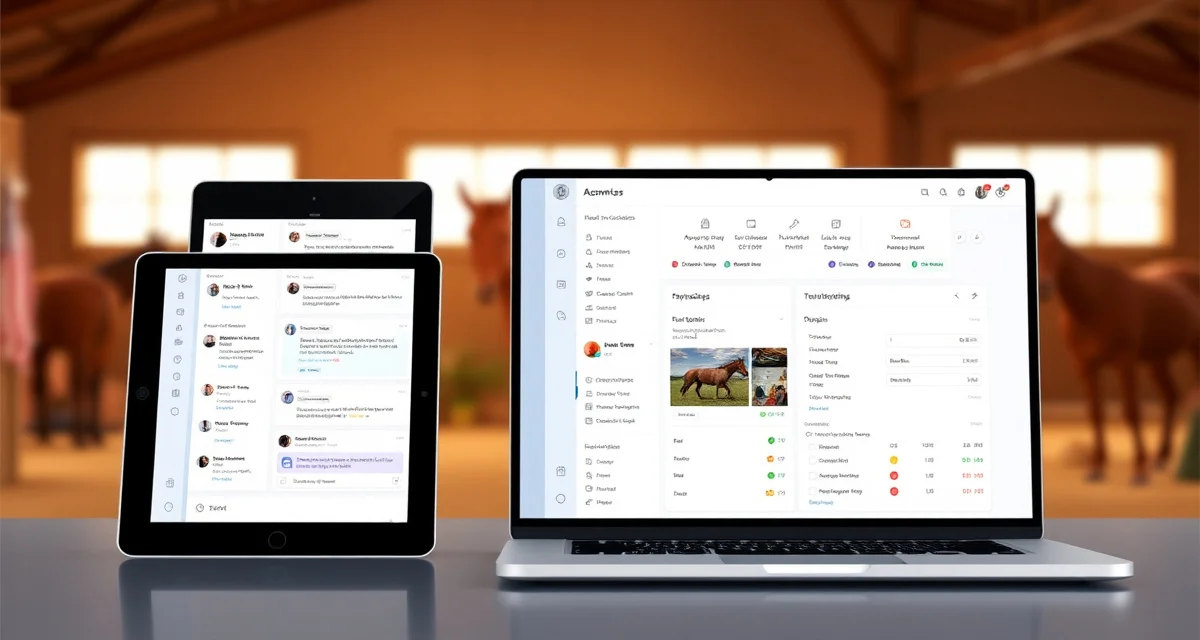
Using a Digital Portal for Boarder Communication
The traditional model of boarding barn communication involves a combination of in-person conversations, text messages, phone calls, posted barn notes, and email threads that multiply and become impossible to track. Information gets lost. Instructions don't reach the right people. Owners feel out of the loop. Staff are interrupted constantly to answer questions that could be answered by a simple online lookup.
A digital boarder communication portal solves most of these problems by giving horse owners a single place to access information about their horse and interact with the facility.
What a Boarder Portal Should Do
At its core, a boarder portal is a secure, owner-facing interface connected to your barn management system. When you log an observation about a horse, that note becomes visible to the owner through the portal. When you generate an invoice, it appears in the portal. When a vet appointment is scheduled, it shows up in the horse's calendar.
The portal functions as the owner's window into what's happening with their horse, available any time on a phone or computer without requiring a phone call or trip to the barn.
Key functions that belong in a boarder portal:
Health and daily care notes: observations staff record about each horse, whether that's feeding behavior, attitude, or anything noteworthy. Owners can review these at their convenience.
Account and billing information: current invoice, payment history, account balance. Owners who can check their own account status don't need to contact you for that information.
Veterinary and farrier records: scheduled appointments, treatments administered, observations from health visits. This is especially valuable for owners whose horses are on regular health maintenance programs.
Messaging: a channel for direct communication between the owner and barn management, separate from personal text or email. Conversations stay in the system rather than in personal inboxes.
Document access: signed boarding agreement, vaccination records, Coggins, and other documents the owner may need to reference.
Benefits for Barn Management
The benefits for boarders are obvious. The benefits for barn management are equally significant.
Reduced interruptions: when owners can check their horse's status and account information themselves, the volume of routine inquiries drops substantially. Staff spend less time answering "how was Rosie today" and more time on actual horse care.
Organized communication records: messages sent through the portal are attached to the relevant horse's record. Six months from now, if a question arises about something that was communicated, you can pull the portal history rather than searching through personal texts.
Professional presentation: a facility that offers a portal communicates competence and organization. Prospective boarders evaluating facilities often ask about how communication is handled. Having a dedicated system signals that you take this seriously.
Billing efficiency: when invoices are delivered through the portal and payment can be made there as well, your monthly billing process becomes significantly more streamlined. BarnBeacon integrates billing directly with the boarder portal so the financial and communication functions are in the same system.
Implementation Considerations
Moving to a portal-based communication model requires a short transition period. Existing boarders who are accustomed to texting you directly need to know about the portal, understand how to access it, and see value in using it.
Walk boarders through portal setup during a transition. A brief one-page guide or a short video showing how to log in and navigate the key features helps adoption significantly. For boarders who are less comfortable with technology, offer to help them get set up in person.
Set expectations about response times through the portal messaging system. If you aim to respond to messages within 24 hours, communicate that. Boarders who know to expect a response within a day won't become frustrated if they don't hear back within an hour.
Maintain the portal consistently. A portal where horse notes are entered every day builds trust. A portal where the last entry is three weeks old tells a different story. If you're going to offer a portal, commit to keeping it current.
Integration with Barn Operations
The portal is only as good as the information flowing into it. Staff need to log observations, services, and updates in the management system consistently for the portal to reflect reality.
Build portal-relevant logging into daily routines. When morning feeding rounds are complete, any noteworthy observations go into the system. When a farrier finishes their visit, services are logged. When medication is administered, it's recorded. This discipline is what makes the portal genuinely useful to owners rather than a tool that shows outdated information.
A well-maintained boarder communication portal is one of the most effective tools a boarding facility can offer for improving client satisfaction and reducing management overhead simultaneously.
FAQ
What is Using a Digital Portal for Boarder Communication?
A digital boarder communication portal is a secure, owner-facing interface connected to your barn management system. It gives horse owners a single place to view daily care notes, health updates, invoices, and scheduled appointments for their horse. Instead of relying on scattered texts, phone calls, and posted barn notes, everything is centralized and accessible anytime from a phone or computer, reducing miscommunication and keeping owners informed without constant staff interruptions.
How much does Using a Digital Portal for Boarder Communication cost?
Cost varies depending on the barn management platform you choose. Many software providers include a boarder portal as part of a monthly subscription ranging from roughly $50 to $200 per month depending on barn size and features. Some platforms charge per-horse fees. While there is an ongoing cost, most barn managers find the time saved on phone calls, texts, and administrative back-and-forth quickly justifies the expense compared to managing communication manually.
How does Using a Digital Portal for Boarder Communication work?
When staff log an observation, generate an invoice, or schedule a veterinary appointment in the barn management system, that information automatically becomes visible to the horse owner through their portal account. Owners log in via a web browser or mobile app using secure credentials. They can view their horse's daily notes, upcoming appointments, billing history, and any facility announcements without needing to contact barn staff directly.
What are the benefits of Using a Digital Portal for Boarder Communication?
A digital portal reduces phone interruptions for staff, keeps owners consistently informed, and creates a documented record of care. Owners feel more connected to their horse even when they cannot visit. Billing becomes transparent, disputes decrease, and no-shows drop when appointment reminders are automated. Facilities also project a more professional image, which can improve boarder retention and make the barn more attractive to prospective clients.
Who needs Using a Digital Portal for Boarder Communication?
Any boarding facility managing multiple horses and owners benefits from a portal. Small barns with five to ten boarders can eliminate phone tag and scattered texts. Large facilities managing dozens of horses gain essential organization and accountability. It is especially valuable when staff turnover is high, when owners travel frequently, or when the barn manager wants to reduce after-hours communication while still keeping owners satisfied and informed.
How long does Using a Digital Portal for Boarder Communication take?
Setup typically takes a few days to a few weeks depending on how much existing data you need to import. Migrating horse records, owner contacts, and billing history is the most time-consuming part. Once live, the system runs continuously with minimal overhead. Staff spend a few extra seconds logging notes per horse, but the time recovered from eliminated phone calls and repeated questions far exceeds that investment within the first month.
What should I look for when choosing Using a Digital Portal for Boarder Communication?
Look for a portal that integrates directly with your barn management system rather than operating as a standalone tool. Key features include real-time note visibility, mobile-friendly design, invoice delivery and payment processing, appointment scheduling, and customizable notification settings. Ease of use matters for both staff and owners. Prioritize platforms with responsive customer support, clear data ownership policies, and a reliable uptime record before committing to a subscription.
Is Using a Digital Portal for Boarder Communication worth it?
For most boarding barns, yes. The combination of reduced administrative interruptions, improved owner satisfaction, and professional billing presentation delivers clear operational value. Boarders who feel informed and connected are more likely to stay long-term, and retention is worth far more than the monthly software cost. If your current system involves chasing down payments, repeating the same updates to multiple owners, or losing track of health notes, a portal directly solves those problems.