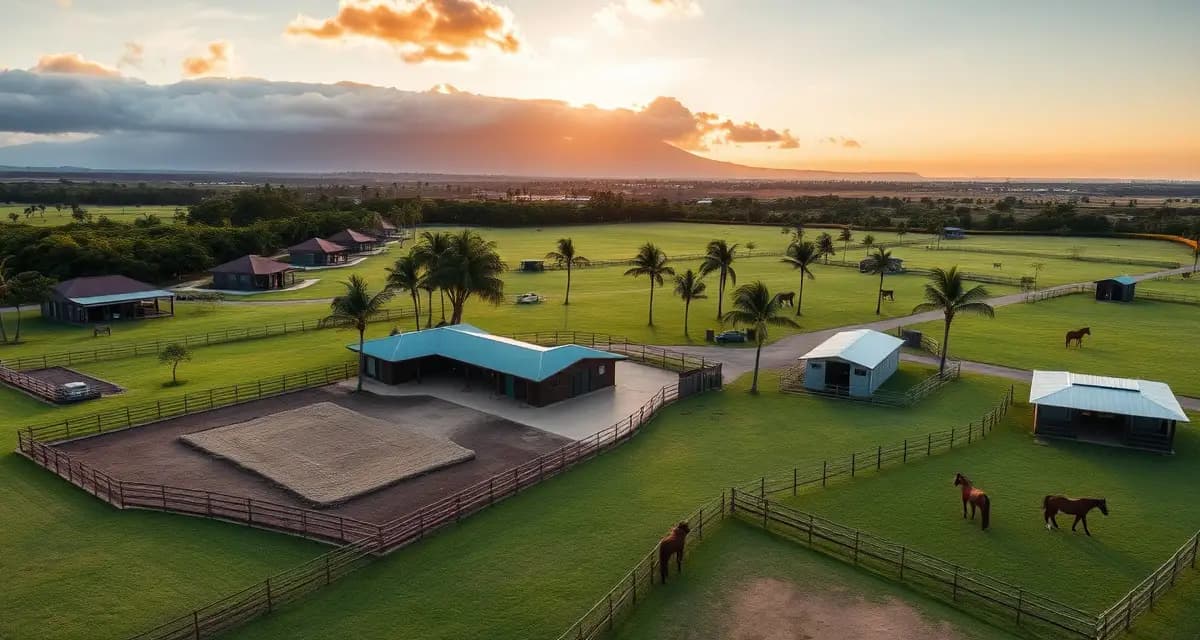
Running a Horse Boarding Business in Hawaii: Guide for Barn Owners
Horse boarding is a $4B+ industry across the United States, and Hawaii represents a meaningful slice of that market. With a strong culture of ranching and recreational riding across Oahu, Maui, the Big Island, and Kauai, demand for quality boarding facilities is real and consistent.
TL;DR
- Horse boarding in Hawaii carries startup costs of $150,000 to $400,000+ for a 10-stall operation before a single horse arrives
- Full care boarding rates vary by region; pricing must cover feed, bedding, labor, insurance, and maintenance with margin for vacancies
- Break-even planning should assume 70% occupancy or less; most barns take four to five months to reach stable occupancy
- Labor is the most consistently underestimated operating expense, often running 40% higher than initial projections
- A 90-day cash reserve is a practical minimum for any new boarding operation
- Digital barn management software reduces administrative labor by hours per week and improves billing accuracy from day one
But running a horse boarding business in Hawaii comes with its own set of challenges: high land costs, import logistics for feed and supplies, and state-specific licensing requirements that mainland guides simply don't cover.
What Makes Hawaii Different for Boarding Barn Owners
Land in Hawaii is expensive and often leased rather than owned outright. Many barn operators work within agricultural land use designations, which carry specific zoning conditions under Hawaii Revised Statutes Chapter 205.
Feed and bedding costs run higher than the continental US because most materials are shipped in. That directly affects your operating margins and should factor into your pricing from day one.
Setting Up Your Operation
Business Structure and Registration
Register your business with the Hawaii Department of Commerce and Consumer Affairs (DCCA). Most barn owners operate as an LLC to separate personal liability from business liability, which matters when horses are involved.
You'll also need a General Excise Tax (GET) license from the Hawaii Department of Taxation. Unlike most states, Hawaii does not have a traditional sales tax. Instead, the GET applies to gross revenue, including boarding fees, at a rate of 4% (4.5% in Honolulu County).
Zoning and Land Use
Confirm your property is zoned for agricultural or commercial equine use before signing any lease or purchase agreement. Contact your county planning department directly. Requirements differ between Hawaii County, Maui County, Honolulu, and Kauai County.
Insurance Requirements
Carry equine liability insurance at a minimum. Most lenders and landowners will require it. Look for policies that cover horse-related injuries to boarders, visitors, and third parties. Umbrella policies are worth the cost given the liability exposure in this industry.
Pricing Horse Boarding in Hawaii
Boarding rates in Hawaii are higher than the national average due to land and feed costs. Full-care boarding on Oahu typically runs $800 to $1,500+ per month. Pasture board on the Big Island can range from $400 to $800 depending on acreage and amenities.
Build your pricing around your actual cost per stall: feed, labor, farrier access, water, and overhead. A common mistake is pricing to match competitors without calculating your own break-even point first.
For a deeper look at building a sustainable pricing model, the horse boarding business guide covers cost structures and rate-setting frameworks in detail.
Contracts and Owner Communication
Every boarder should sign a written boarding agreement before their horse arrives. Your contract should cover payment plans, liability waivers, care standards, termination clauses, and emergency authorization.
Hawaii courts will generally enforce well-drafted equine liability waivers, but the language matters. Have an attorney familiar with Hawaii equine law review your contract before you use it.
Managing Your Barn Day-to-Day
Manual record-keeping creates problems fast once you have more than a handful of horses. Missed invoices, unclear feed cards, and poor communication with owners are the top reasons boarders leave a facility.
Barn management software like BarnBeacon handles billing, owner messaging, feeding and medication tracking, and scheduling in one place. For a Hawaii boarding operation where owners may be off-island or managing horses remotely, that communication layer is especially valuable.
BarnBeacon supports equine boarding operations in HI with tools built specifically for barn owners, not generic small business software adapted for horses.
How many horses do I need to board to be profitable in Hawaii?
Break-even depends on your fixed costs and board rate. A rough rule is that you need occupancy at or above 70% of capacity to cover overhead. In Hawaii, full care board rates range widely by region; model your break-even before setting your rate rather than pricing against local competition and hoping the math works.
What insurance does a boarding barn need in Hawaii?
Most boarding operations in Hawaii need commercial general liability insurance, care custody and control coverage for boarded horses, and property insurance for structures and equipment. Equine-specific insurance brokers are familiar with Hawaii requirements and can structure coverage that matches the actual risks of a boarding operation.
FAQ
What is Running a Horse Boarding Business in Hawaii: Guide for Barn Owners?
Running a horse boarding business in Hawaii means operating a facility where horse owners pay you to house, feed, and care for their animals. Hawaii's boarding market spans Oahu, Maui, the Big Island, and Kauai, with demand driven by a strong ranching and recreational riding culture. Unlike mainland operations, Hawaii barns must navigate high land costs, feed import logistics, and state-specific licensing — making it a specialized niche within the broader $4B+ U.S. horse boarding industry.
How much does Running a Horse Boarding Business in Hawaii: Guide for Barn Owners cost?
Starting a 10-stall boarding operation in Hawaii typically requires $150,000 to $400,000 or more before your first horse arrives. Ongoing costs include feed and bedding (often imported at a premium), labor (frequently 40% above initial projections), insurance, facility maintenance, and utilities. Full care boarding rates must be priced to cover all these expenses plus a margin for vacancies, since most new barns operate below 70% occupancy for the first several months.
How does Running a Horse Boarding Business in Hawaii: Guide for Barn Owners work?
A horse boarding business collects monthly fees from horse owners in exchange for stall space, feed, turnout, and varying levels of hands-on care. Daily operations involve feeding schedules, stall cleaning, turnout rotation, health monitoring, and client communication. Hawaii-specific logistics include coordinating hay and supply shipments from the mainland or local suppliers, managing seasonal climate considerations across different islands, and staying current with state agricultural and business licensing requirements.
What are the benefits of Running a Horse Boarding Business in Hawaii: Guide for Barn Owners?
A well-run Hawaii boarding barn provides horse owners with professional, reliable care in a state where quality facilities are limited. For barn owners, benefits include recurring monthly revenue, a business built around a genuine passion, and a strong community of local riders and ranchers. With digital barn management software, administrative tasks like billing, scheduling, and record-keeping become significantly more efficient — often saving several hours per week and improving payment accuracy from day one.
Who needs Running a Horse Boarding Business in Hawaii: Guide for Barn Owners?
Anyone with land, horse experience, and startup capital who wants to build a service business in Hawaii's equine community should consider this guide. It's especially relevant for existing ranch owners looking to add a revenue stream, equestrians transitioning from riding instruction into boarding, or mainland barn operators relocating to Hawaii. New operators with no equine background but access to suitable property should budget extra time and budget for hiring experienced barn staff before opening.
How long does Running a Horse Boarding Business in Hawaii: Guide for Barn Owners take?
Building a boarding barn from scratch in Hawaii takes six months to over a year from initial planning to your first boarder, depending on permitting, construction, and licensing timelines. Reaching stable occupancy typically takes an additional four to five months after opening. Planning your finances around a 90-day cash reserve minimum is strongly advised. Operations become more efficient over the first year as systems are established, staff is trained, and word-of-mouth referrals begin filling vacancies.
What should I look for when choosing Running a Horse Boarding Business in Hawaii: Guide for Barn Owners?
Look for a business plan that accounts for Hawaii-specific costs including feed import premiums, higher labor rates, and island-specific insurance requirements. A strong barn should have transparent, market-rate pricing that reflects full operating costs — not rates that look attractive but can't sustain the business. Evaluate facilities for proper drainage, ventilation suited to Hawaii's climate, and safe turnout space. Ask about occupancy rates, boarder contracts, and whether the operation uses barn management software for billing and records.
Is Running a Horse Boarding Business in Hawaii: Guide for Barn Owners worth it?
For the right operator, yes — Hawaii's boarding market has consistent demand and relatively limited competition compared to mainland states. Success requires realistic financial planning, experienced labor, and a willingness to manage island-specific logistics. Margins are achievable when pricing reflects true costs and occupancy stays above break-even. Operators who treat it as a lifestyle business without rigorous financial controls often struggle. Those who combine genuine horse knowledge with solid business management tend to build stable, rewarding operations over time.
Sources
- American Association of Equine Practitioners (AAEP)
- American Horse Council
- Kentucky Equine Research
- UC Davis Center for Equine Health
- American Horse Council Economic Impact Study
Get Started with BarnBeacon
Running a profitable boarding barn in Hawaii requires more than good horsemanship. The administrative side, billing, client communication, health records, and staff coordination, determines whether your margins hold as you scale. BarnBeacon gives Hawaii barn owners the operational infrastructure to run the business side as professionally as the care side. Start a free trial with your first month's data and see where the gaps are.