Managing Relationships With Horse Owners
Boarding barn owner management is not a phrase that gets used in polite company, but it describes something real. Your relationships with horse owners are the foundation of your business, and like all relationships, they require intentional management. The owners who stay for five years, refer their friends, and forgive the occasional problem are the ones who feel genuinely cared for as partners in their horse's well-being.
Setting the Relationship Up Correctly
The quality of a boarding relationship is largely determined in the first thirty days. This is when expectations are set, when trust is built or damaged, and when the owner learns whether your operation works the way you described it.
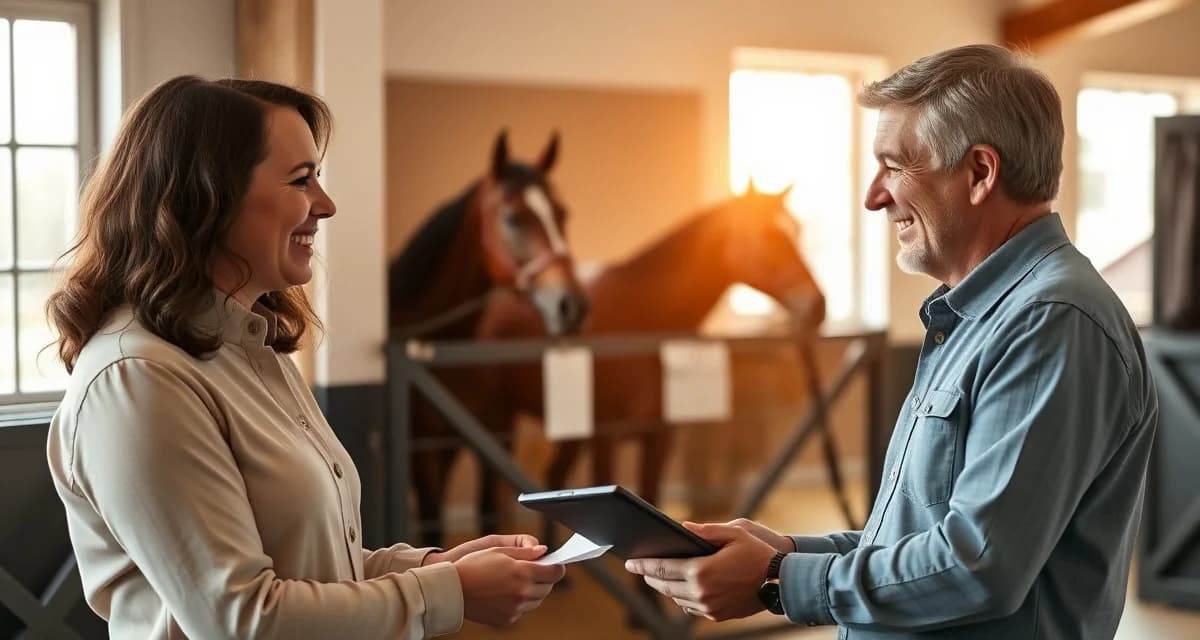
Start with a thorough intake process. Walk new boarders through your facility, your daily routine, and your policies in person. Show them where their horse will live, how it will be fed, and how turnout is managed. This is not just orientation. It is relationship building.
The boarding contract matters here. It should be comprehensive and it should be reviewed together, not just signed without discussion. When both parties understand exactly what is agreed to, disputes are less common because there is less room for "I thought it was included."
Follow up one week after a horse's arrival to check in. Ask how the owner is feeling about the transition, whether their horse seems settled, whether they have any questions. This proactive check-in signals that their satisfaction matters to you.
Understanding What Different Owners Need
Owners are not a monolithic group. They vary considerably in their horse experience, their expectations, their communication style, and their emotional relationship to their horses.
An experienced horse person who has managed their own horses for twenty years may prefer minimal intervention. They trust their own judgment, they want to be informed of problems but not of every minor observation, and they value being treated as an equal.
A newer owner who recently purchased their first horse may need more reassurance, more explanation, and more frequent communication. They are learning, they are anxious, and they benefit from a barn manager who is patient and explanatory.
The owner who visits daily and the owner who visits monthly have different relationships to the barn. The daily visitor sees everything and has opinions about everything. The monthly visitor needs comprehensive updates when they do come.
Know your owners well enough to adjust your management approach appropriately.
Handling Owner Concerns Professionally
Every boarding operation will have owners who raise concerns, some valid and some not. How you handle these concerns defines the relationship going forward.
For valid concerns: acknowledge them, take them seriously, address them specifically, and follow up to confirm the resolution. An owner who feels heard and whose concern was actually addressed becomes a more loyal boarder.
For concerns that are not valid or that reflect a misunderstanding: be direct and factual, not defensive. Explain your practices and their rationale. Offer evidence where you have it. Maintain your professional standards rather than adjusting them in response to pressure that is not warranted.
Document significant concerns and your responses to them. This protects you if a pattern of complaints develops or if a dispute escalates.
When the Relationship Is Not Working
Some boarding relationships do not work out. An owner who consistently fails to pay on time, who creates problems with other boarders, who has unrealistic expectations that cannot be met, or who is disrespectful to your staff may not be the right fit for your facility.
Your boarding contract should include clear terms for termination of the boarding agreement by either party. Know what those terms are and follow them if termination becomes necessary.
Giving notice professionally and following the contract terms protects you legally and maintains your reputation. Even difficult departures handled professionally do not typically generate the same reputational damage as departures handled poorly.
See horse owner retention for strategies focused on keeping the good relationships you have built, and horse owner communication for the day-to-day communication practices that underpin all of it.
FAQ
What is Managing Relationships With Horse Owners?
Managing relationships with horse owners refers to the intentional practices boarding barn owners use to build trust, set expectations, and maintain strong communication with the people who board their horses. It covers everything from the intake process and contract review to ongoing updates and conflict resolution. Strong owner relationships are the foundation of a healthy boarding business, directly impacting retention, referrals, and the overall reputation of your facility.
How much does Managing Relationships With Horse Owners cost?
There is no direct monetary cost to managing horse owner relationships—it is a set of practices, not a paid service. However, the indirect investment includes staff time for communication, onboarding, and follow-ups. Barn management software that supports owner portals and billing can range from free to a few hundred dollars per month. The cost of not managing these relationships—through lost boarders and negative word of mouth—is typically far greater.
How does Managing Relationships With Horse Owners work?
Effective horse owner relationship management works by establishing clear expectations early, maintaining consistent communication, and addressing issues proactively. It starts with a thorough intake process, a clearly reviewed boarding contract, and a one-week follow-up after arrival. Ongoing, it involves regular updates on horse health and behavior, transparent billing, and a respectful process for handling complaints. The goal is to make owners feel like partners, not just paying customers.
What are the benefits of Managing Relationships With Horse Owners?
The benefits include higher boarder retention, more referrals, fewer disputes, and a more stable revenue base for your barn. Owners who feel informed and respected are more likely to forgive occasional problems and stay long-term. A well-managed relationship also reduces the emotional and administrative burden of constant turnover, making your operation easier and more enjoyable to run for you and your staff.
Who needs Managing Relationships With Horse Owners?
Any boarding barn owner or stable manager who accepts horses on a paid basis needs to actively manage owner relationships. This is especially important for facilities with more than a handful of boarders, where informal communication becomes difficult to scale. It is also critical for barns in competitive markets where owners have choices, and for any facility looking to grow through referrals rather than paid advertising.
How long does Managing Relationships With Horse Owners take?
Relationship management is ongoing—it does not have a defined endpoint. The most critical period is the first thirty days of a new boarder's arrival, when trust and expectations are established. After that, it becomes a continuous background practice maintained through regular communication, consistent service delivery, and periodic check-ins. The time investment per owner is modest when routines are in place, but it compounds significantly over months and years.
What should I look for when choosing Managing Relationships With Horse Owners?
Look for clear communication systems, a thorough and transparent intake process, and a boarding contract that is reviewed together rather than just signed. A barn that proactively shares updates about your horse—rather than waiting for you to ask—is practicing strong relationship management. Also consider how the barn handles problems: a facility with a fair, calm conflict resolution process is a sign that the ownership team values the relationship, not just the revenue.
Is Managing Relationships With Horse Owners worth it?
Yes. Boarders who feel genuinely cared for stay longer, refer friends, and are more forgiving when things go wrong. The effort required to manage owner relationships well is far less than the cost of constant turnover, empty stalls, and reputation damage from avoidable disputes. For boarding barns operating in competitive areas or relying on word-of-mouth growth, strong owner relationship practices are one of the highest-return investments a barn owner can make.