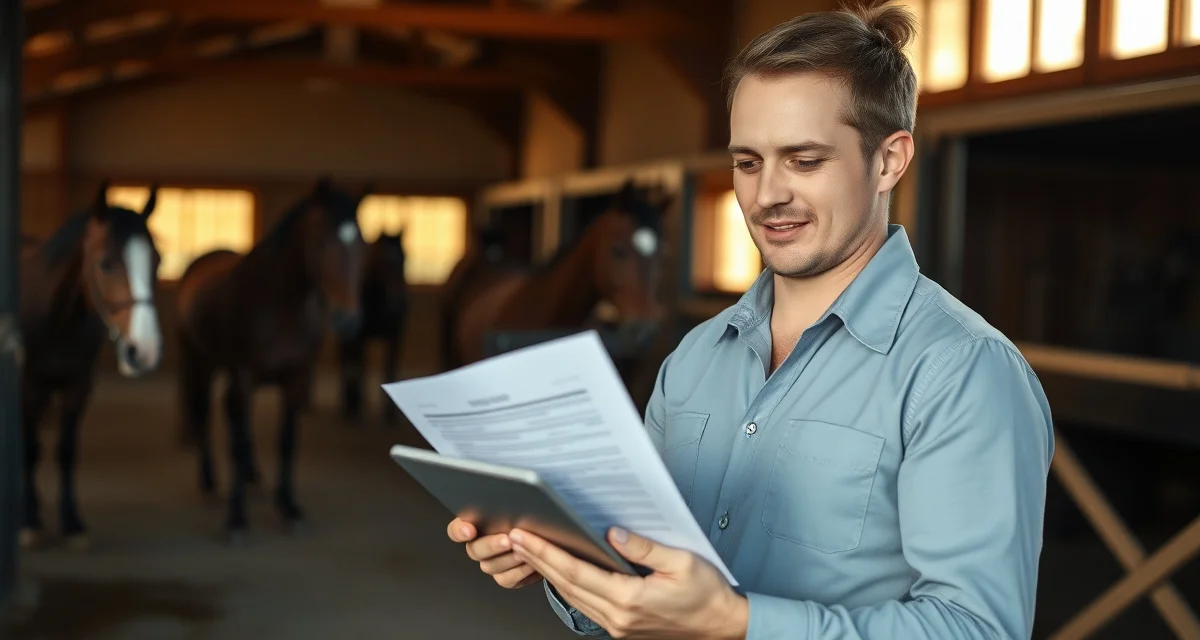
Endurance Barn Owner Communication: Reporting and Updates
Endurance barn management runs on a different clock than other disciplines. Horses are out on 50- and 100-mile training rides, vet checks happen at odd hours, and owners are often remote or traveling to competitions. Endurance barn owner communication has to account for all of that, and generic barn software rarely does.
TL;DR
- Incident reports filed within 24 hours of an event carry significantly more weight than ones completed days later
- A signed liability waiver does not eliminate negligence claims; documented protocols and completed checklists do
- Insurance requirements at equine facilities vary by state; most carriers require annual safety inspections as a policy condition
- Staff training records are part of your legal defense if a staff action is questioned after an incident
- Photo documentation of a horse's condition at arrival and at regular intervals creates a baseline for any future dispute
- Safety inspection checklists completed and filed on a fixed schedule demonstrate due diligence in facility management
Most platforms built for boarding facilities assume a horse stands in a stall, gets fed twice a day, and has a farrier visit every six weeks. Endurance barns deal with conditioning logs, electrolyte protocols, heart rate recovery data, and post-ride lameness checks. The communication gap between what managers need to report and what standard tools support is real.
The Problem With Generic Reporting for Endurance Barns
Endurance disciplines have unique owner communication patterns not covered by generic barn software. When a horse completes a 25-mile conditioning ride and the manager needs to report recovery metrics, gut sounds, and hydration status, a simple "daily update" field doesn't cut it.
Owners in this discipline are also more technically engaged. They want specifics. They track their horse's CRI (cardiac recovery index) over time, compare back-to-back ride performance, and make training decisions based on data you send them. Vague updates create friction and erode trust.
Step 1: Audit What Endurance Owners Actually Need to Know
Before you build any reporting system, list the information your owners consistently ask for. For most endurance barns, that breaks into three categories.
Conditioning and Training Data
- Distance covered per session
- Terrain type (flat, hill work, trail)
- Estimated pace or time
- Heart rate recovery if monitored
- Rider or handler notes on attitude and movement
Health and Recovery Observations
- Post-ride hydration and gut sounds
- Any heat, swelling, or soreness noted
- Electrolyte administration
- Feed and water intake after hard efforts
- Vet check outcomes if applicable
Incident and Concern Flags
- Any lameness, even mild
- Behavioral changes
- Tack fit issues observed during or after rides
- Anything that warrants owner awareness before the next session
Getting this list right upfront means your reporting template covers what owners actually care about, not what's easy to fill in.
Step 2: Build a Reporting Template Specific to Endurance
A good endurance update template is structured but not bureaucratic. It should take a manager three to five minutes to complete after a ride, not fifteen.
Core Template Fields
Date and ride summary: Date, distance, terrain, duration. One line.
Horse condition during: Attitude, energy level, any concerns noted mid-ride. Two to three sentences max.
Post-ride assessment: Hydration check, gut sounds, limb palpation, any heat or swelling. Structured fields work better than free text here.
Recovery notes: Time to normal heart rate if tracked, appetite, behavior in the paddock after.
Action taken: Electrolytes given, ice applied, vet called, anything done in response to what was observed.
Next session plan: What's scheduled, any modifications based on today's ride.
Keep the template consistent. Owners who receive the same structure every time can scan it quickly and spot changes without reading every word.
Step 3: Choose the Right Communication Channel
Email works for detailed post-ride reports. Text or push notifications work for urgent flags. The mistake most barns make is using one channel for everything.
Match the Channel to the Message
For routine conditioning updates, a daily or post-ride summary sent through an owner communication portal keeps everything in one searchable place. Owners can look back at three months of data before a competition and see trends.
For urgent issues, a direct text or phone call is still the right move. No owner wants to find out their horse was lame from a portal notification they checked two hours later.
For vet check results or competition prep notes, a structured report with attachments works best. Photos of any swelling, a PDF from the vet, or a conditioning chart all add context that a text message can't carry.
Step 4: Set a Reporting Cadence That Matches Endurance Training Cycles
Endurance training isn't linear. A horse might do a hard 40-mile ride on Saturday, have two light days, then a vet check on Wednesday. Your reporting cadence should follow the training cycle, not a fixed daily schedule.
Recommended Cadence
- Post-ride reports: Within 2-4 hours of completing any conditioning ride over 10 miles
- Rest day check-ins: Brief daily observation notes during recovery periods
- Pre-competition updates: Detailed report 48-72 hours before any sanctioned ride
- Post-competition debrief: Full report within 24 hours of returning from a ride event, including vet card results if available
Owners preparing for a 100-mile ride want to know their horse came home from the last training block in good shape. Timely reporting is part of your professional value.
Step 5: Use Software That Supports Endurance-Specific Workflows
This is where discipline-specific tools matter. BarnBeacon's owner portal adapts to endurance barn workflows and reporting needs in ways that generic platforms don't. You can configure custom report fields for conditioning data, set up automated post-ride report prompts, and give owners read-only access to their horse's full history.
For barn managers running endurance barn operations at scale, with multiple horses at different training stages, the ability to batch reports and track each horse's conditioning arc in one place saves significant time.
What to Look For in Any Platform
- Custom field configuration (not just preset categories)
- Owner portal with historical data access
- Photo and document attachment support
- Notification controls so owners get the right alerts, not everything
- Mobile-friendly for managers reporting from the trail
No competitor has built discipline-specific owner communication guides or templates for endurance barns. That gap means most managers are improvising, which creates inconsistency and missed information.
Common Mistakes in Endurance Barn Owner Communication
Reporting Only When Something Goes Wrong
Owners who only hear from you when there's a problem start to dread your messages. Regular conditioning updates build the baseline that makes incident reports meaningful.
Using Vague Language
"Horse seemed tired" tells an owner nothing. "Horse showed reduced forward energy in miles 15-20, recovered well post-ride, gut sounds normal, drank 8 gallons" tells them everything. Be specific.
Skipping the Recovery Window
The 24-48 hours after a hard ride are when most issues surface. Managers who report immediately post-ride but go quiet during recovery miss the window when owners most need information.
Treating All Owners the Same
Some endurance owners want every data point. Others want a summary and a flag if something needs attention. Ask each owner at onboarding what level of detail they prefer, then deliver it.
How do I communicate with endurance horse owners?
Use a structured reporting system that matches the training cycle, not a fixed daily schedule. Post-ride reports should go out within a few hours of any significant conditioning work, with a clear template covering condition, recovery, and next steps. Pair routine reports with direct contact for anything urgent.
What do endurance owners want to know about their horses?
Endurance owners are data-oriented and want specifics: distance, terrain, recovery metrics, hydration status, gut sounds, and any lameness or soreness observations. They also want to know what action was taken in response to anything noted, and what the plan is for the next session. Vague updates frustrate this owner demographic more than most.
What owner portal features matter for endurance barns?
Custom report fields that go beyond standard boarding categories, historical data access so owners can track conditioning trends, photo and document attachment for vet records and ride results, and notification controls that separate urgent alerts from routine updates. A mobile-friendly interface matters too, since managers are often reporting from the field rather than a desk.
How does BarnBeacon compare to spreadsheets for barn management?
Spreadsheets require manual updates, lack real-time notifications, and create version control problems when multiple staff members are working from different files. BarnBeacon centralizes records, pushes alerts automatically based on logged events, and connects care records to billing and owner communication in one system. Most facilities report saving several hours per week after switching from spreadsheets.
What is the setup process like for BarnBeacon?
Most facilities complete the initial setup in under a week. Horse profiles, service templates, and billing configurations can be imported from existing records or entered directly. BarnBeacon's US-based support team is available to assist with setup, and most managers are running their first billing cycle through the platform within days of starting.
Can BarnBeacon support a barn with multiple staff members?
Yes. BarnBeacon supports multiple user accounts with role-based access, so barn managers, barn staff, and owners each see the information relevant to their role. Task assignments, completion logs, and communication history are all attached to the barn's account rather than to individual staff phones or email addresses.
FAQ
What is Endurance Barn Owner Communication: Reporting and Updates?
Endurance barn owner communication covers the systems and protocols used to keep horse owners informed during long-distance training and competition. Unlike standard boarding, endurance management involves conditioning logs, electrolyte tracking, heart rate recovery data, and post-ride lameness checks. Reporting and updates refers to the structured process of documenting these events, filing incident reports promptly, and ensuring owners receive timely, accurate information whether they are on-site or traveling to competitions hundreds of miles away.
How much does Endurance Barn Owner Communication: Reporting and Updates cost?
Dedicated endurance barn communication software typically ranges from $50 to $200 per month depending on barn size and feature set. Some platforms charge per horse, others by user seat. Free tools like spreadsheets and group texts have no direct cost but carry hidden costs in liability exposure and missed documentation. Investing in a purpose-built system often pays for itself through better incident records, stronger insurance standing, and fewer disputes with owners.
How does Endurance Barn Owner Communication: Reporting and Updates work?
Endurance barn communication works by centralizing updates, conditioning logs, and incident reports into a single system accessible to owners, staff, and managers. Staff log post-ride observations, vet check results, and any health concerns in real time. Owners receive automated notifications or can check a portal for updates. When an incident occurs, a timestamped report is filed within 24 hours, creating a defensible paper trail that generic messaging apps cannot replicate.
What are the benefits of Endurance Barn Owner Communication: Reporting and Updates?
Structured reporting reduces liability exposure, builds owner trust, and creates clear documentation if a dispute or insurance claim arises. Prompt incident reports filed within 24 hours carry far more legal weight than delayed ones. Photo logs of a horse's condition at intake and at regular intervals establish a baseline that protects both the barn and the owner. Consistent communication also reduces anxious owner calls and supports stronger long-term client retention.
Who needs Endurance Barn Owner Communication: Reporting and Updates?
Any barn housing endurance horses needs a communication and reporting system suited to the discipline. This includes training facilities managing conditioning programs, competition barns coordinating multi-day events, and private barns with absentee owners who travel frequently. Barn managers overseeing staff, veterinarians conducting remote consultations, and insurance carriers expecting documented safety inspections all benefit from a reliable reporting workflow built around endurance-specific needs rather than standard boarding assumptions.
How long does Endurance Barn Owner Communication: Reporting and Updates take?
Setting up a basic communication and reporting system takes one to three days for initial configuration, staff training, and owner onboarding. Building a complete documentation baseline, including intake photos, signed waivers, and completed safety inspection checklists, typically takes two to four weeks. Once in place, daily reporting requires only a few minutes per horse. The investment up front is modest compared to the hours lost reconstructing records after an incident without proper documentation.
What should I look for when choosing Endurance Barn Owner Communication: Reporting and Updates?
Look for a platform that supports endurance-specific data fields such as conditioning logs, heart rate recovery tracking, electrolyte protocols, and post-ride lameness notes. Confirm it allows timestamped incident reports, photo uploads, and owner-facing notifications. Check whether it stores signed liability waivers and staff training records in a retrievable format. Ensure the system meets your state's insurance inspection requirements and that reports can be exported in a format usable by legal counsel or carriers if needed.
Is Endurance Barn Owner Communication: Reporting and Updates worth it?
For endurance barn managers, yes. Generic messaging apps and paper logs create gaps that become expensive the moment an owner disputes a horse's condition or an insurer questions your safety protocols. Documented checklists, prompt incident reports, and photo baselines have a measurable impact on legal defensibility and owner confidence. The discipline's unique demands make a purpose-built system far more valuable than adapting tools designed for horses that never leave the property.
Sources
- American Association of Equine Practitioners (AAEP)
- American Endurance Ride Conference (AERC)
- American Competitive Trail Horse Association (ACTHA)
- American Horse Council
- Kentucky Equine Research
Get Started with BarnBeacon
Good documentation is the foundation of every well-run endurance barn. BarnBeacon gives managers the digital record-keeping, task logging, and audit trail tools to run operations that hold up to inspection, comply with regulations, and protect the facility in any dispute. Start a free trial and see how your documentation changes when it runs through a purpose-built equine management platform.