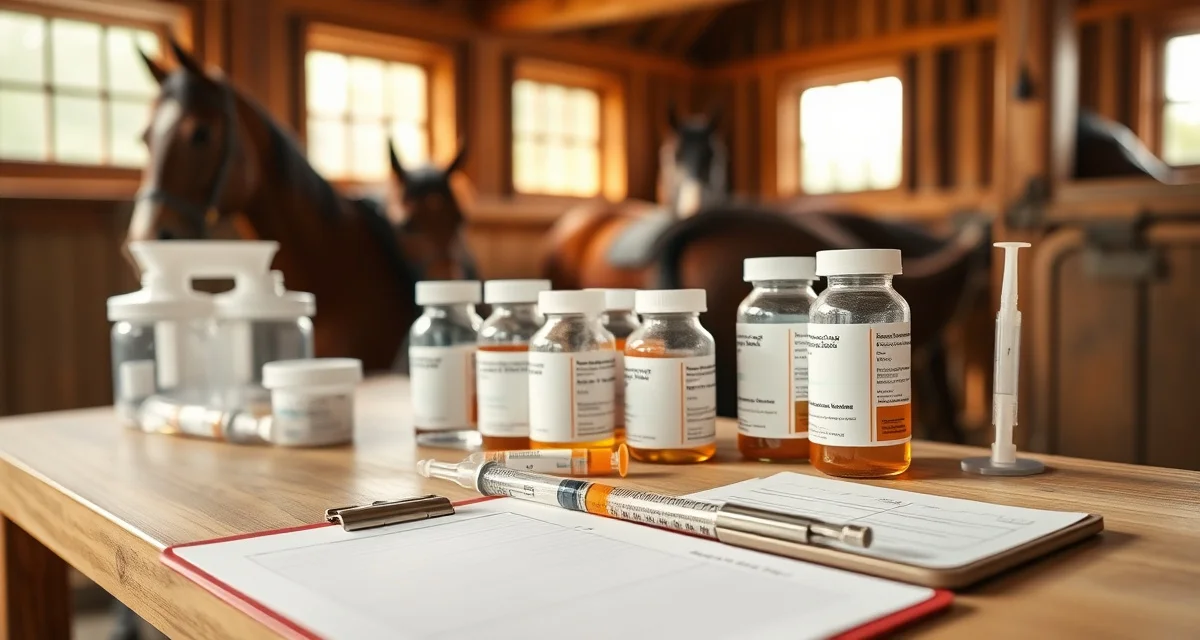
Preventing and Documenting Medication Administration Errors at Horse Barns
Medication errors at a barn are more common than most barn managers like to admit, and the consequences range from minor to serious. A horse that gets the wrong supplement misses a dose; that is usually not a crisis. A horse that gets another horse's prescription medication, receives the wrong dose of a controlled substance, or is given a drug that interacts badly with another treatment can suffer real harm. Understanding where errors happen, how to prevent them, and how to document them when they do occur is a core responsibility of barn management.
Where Medication Errors Happen
Most medication errors at barns fall into a handful of categories:
Wrong horse. Staff member administers a medication intended for one horse to a different horse. This is especially common when horses share similar names, look alike, or when the medication is prepared without confirming horse identity first.
Wrong dose. The prescribed dose is misread, miscalculated, or incorrectly measured. Paste medications given without reading the weight-based dosing. Liquid medications measured with imprecise tools. Doses split without clear instructions.
Wrong medication. Multiple medications stored in a shared area without clear individual labeling. Similar packaging leading to confusion. A label that is outdated after a change in protocol.
Wrong timing. Medication given at the wrong time of day, skipped, or doubled up because the first administration was not documented and a second staff member administered another dose.
Wrong route. Oral medication given by injection or vice versa. Less common with standard barn medications, but possible in facilities that handle more complex protocols.
Expired medication. An old tube of paste or an outdated vial used because inventory was not checked.
Unauthorized substitution. A staff member substitutes a different product when the prescribed one runs out, without checking with the veterinarian.
Prevention Protocols
Effective error prevention requires both physical organization and procedural consistency.
Individual horse medication storage. The single most effective prevention measure is keeping each horse's medications physically separate, labeled with the horse's name, and stored in a location that requires intentional selection. A medication cabinet with individual compartments or labeled bins makes it much harder to grab the wrong item.
Verify before administering. Train staff to confirm horse identity before giving any medication. This means checking the stall card, the horse's halter tag, or a physical identifier against the horse's name on the medication. "This looks like that horse" is not a verification.
Complete documentation before or immediately after administration. Require staff to document each medication administration at the time it happens, not at the end of the shift. BarnBeacon's medication tracking feature makes this easy by allowing staff to log administration directly from their phone as they work through the barn.
Clear written protocols. Every horse on a medication should have a written protocol specifying the medication name, dose, frequency, route, and duration. This protocol should be physically accessible at the stall and in the barn management system.
Regular inventory checks. Review medication inventory regularly to remove expired products, identify low stock, and confirm that what is on hand matches current prescriptions.
When an Error Occurs
Even with good protocols, errors happen. What you do when one occurs matters as much as your prevention efforts.
Stop and assess. If you discover an error has occurred, your first step is to assess what was given, to which horse, when, and at what dose. Gather this information as quickly and accurately as possible.
Contact your veterinarian immediately. Do not wait to see what happens. Your vet needs to know as soon as possible so they can advise on monitoring, potential antidote or treatment, and any other interventions required.
Notify the owner. The horse's owner should be notified promptly. This is a difficult conversation, but it is the right thing to do, and delayed disclosure is worse than prompt honesty.
Document fully. Write a detailed incident report covering what happened, when it was discovered, what actions were taken, and the outcome. See our guide on incident documentation at the barn for the complete documentation format.
Building a Culture of Safety
Barn managers who create an environment where staff fear reporting errors will have errors that go unreported until they become crises. A culture where errors are reported promptly, addressed without blame when protocols were followed and a mistake still happened, and used as learning opportunities to improve systems is safer for horses than a culture of fear and cover-up.
For related guidance, see our articles on medication administration records and medication audit trails.
FAQ
What is Preventing and Documenting Medication Administration Errors at Horse Barns?
Preventing and documenting medication administration errors at horse barns refers to the systems, protocols, and record-keeping practices barn managers use to reduce the risk of giving the wrong medication, dose, or treatment to a horse. It covers staff training, labeling standards, identity verification before dosing, and maintaining accurate logs that capture what was given, when, by whom, and at what dose. These practices protect horse health and create an audit trail if questions arise later.
How much does Preventing and Documenting Medication Administration Errors at Horse Barns cost?
There is no single price tag for implementing medication error prevention at a barn. Basic improvements like labeling supplies, creating log templates, and training staff cost little beyond time. Digital barn management tools that include medication tracking typically range from free basic tiers to $30–$100 per month depending on features and herd size. The real cost of not having a system — a harmed horse, a veterinary emergency, or a competition disqualification — is almost always higher.
How does Preventing and Documenting Medication Administration Errors at Horse Barns work?
A medication error prevention system works by building verification steps into every part of the administration process. Before dosing, staff confirm horse identity, check the medication label, and verify dose against written instructions. During administration, they use calibrated tools and follow prescribed routes. Afterward, they log the details immediately. When errors occur, they are documented honestly and reported to the veterinarian. Over time, pattern review helps identify where the process is breaking down and where additional safeguards are needed.
What are the benefits of Preventing and Documenting Medication Administration Errors at Horse Barns?
The core benefits are horse safety, staff accountability, and cleaner veterinary communication. When every dose is logged, there is no guessing whether a medication was given or skipped. Errors caught early can be reported to the vet before harm compounds. For competition horses, documentation supports compliance with regulatory requirements. For boarding facilities, a transparent medication log builds trust with horse owners and reduces liability exposure when something does go wrong.
Who needs Preventing and Documenting Medication Administration Errors at Horse Barns?
Any barn that administers medications to multiple horses needs these practices. This includes private facilities with multiple horses on different treatment plans, boarding and training barns with rotating staff, competition yards where horses are under veterinary protocols, and rehabilitation facilities. Even small operations benefit: errors are not limited to large barns. If more than one person ever gives medications, or if any horse has a prescription treatment, a formal system is warranted.
How long does Preventing and Documenting Medication Administration Errors at Horse Barns take?
Setting up a basic system takes a few hours — drafting a log template, labeling medication storage, and reviewing protocols with staff. Ongoing, each medication administration takes one to two minutes to document properly. Staff training on verification habits is typically completed in a single session, with reinforcement over the following weeks. The time investment is minimal compared to the time spent managing the aftermath of a medication error, including emergency vet calls and owner communication.
What should I look for when choosing Preventing and Documenting Medication Administration Errors at Horse Barns?
Look for a system that is simple enough that staff will actually use it under time pressure. The log format should capture horse identity, medication name, dose, route, time, and the name of the person administering. Storage protocols should enforce individual horse labeling and separation. Verification steps should be built into the routine, not treated as optional. If using software, confirm it supports medication scheduling, dose history, and vet communication without requiring significant technical skill from barn staff.
Is Preventing and Documenting Medication Administration Errors at Horse Barns worth it?
Yes. Medication errors at barns cause real harm to horses and create significant stress for managers, owners, and staff. A consistent prevention and documentation system reduces that risk materially. It also provides protection when things go wrong: a clear record of what happened, when, and who was involved makes it far easier to respond quickly and accurately. The habits required are not complicated, and the time cost per day is small. The protection they provide — to horses, staff, and the operation — is substantial.