Polo Barn Staff Management: Complete Guide for Facility Managers
Polo ponies require 6 to 8 weeks of conditioning between match seasons, and the staff who manage that conditioning and match-day preparation are skilled workers with specialized knowledge that's genuinely hard to replace. Polo grooms who know how to prepare a string for a match, fit leg wraps correctly for polo play, and manage ponies under match conditions are not interchangeable with general barn staff.
TL;DR
- Staff-to-horse ratios at boarding barns typically run 1 staff member per 8 to 15 horses depending on care level
- Clear task assignment with named accountability reduces both missed tasks and blame disputes between staff members
- Written shift handover protocols prevent the verbal information gaps where health changes go unreported between crews
- Staff turnover at equine facilities averages 35-40% annually; onboarding systems that document care protocols reduce the cost of each transition
- Digital task logs tell managers which tasks are consistently late or missed, enabling coaching before problems escalate
- staff communication tools that separate horse care updates from administrative messages reduce information overload
This guide covers how to staff a polo facility effectively, with specific attention to the specialized roles, the match day demands, and the seasonal structure that makes polo barn staffing different from other equine disciplines.
The Staff Roles at a Polo Facility
Polo trainer / string manager. The primary trainer is responsible for conditioning programs, match rotation decisions, and patron relationships. At a club or multi-patron facility, this person manages multiple strings simultaneously and serves as the primary point of contact for patrons on their horse's fitness and performance.
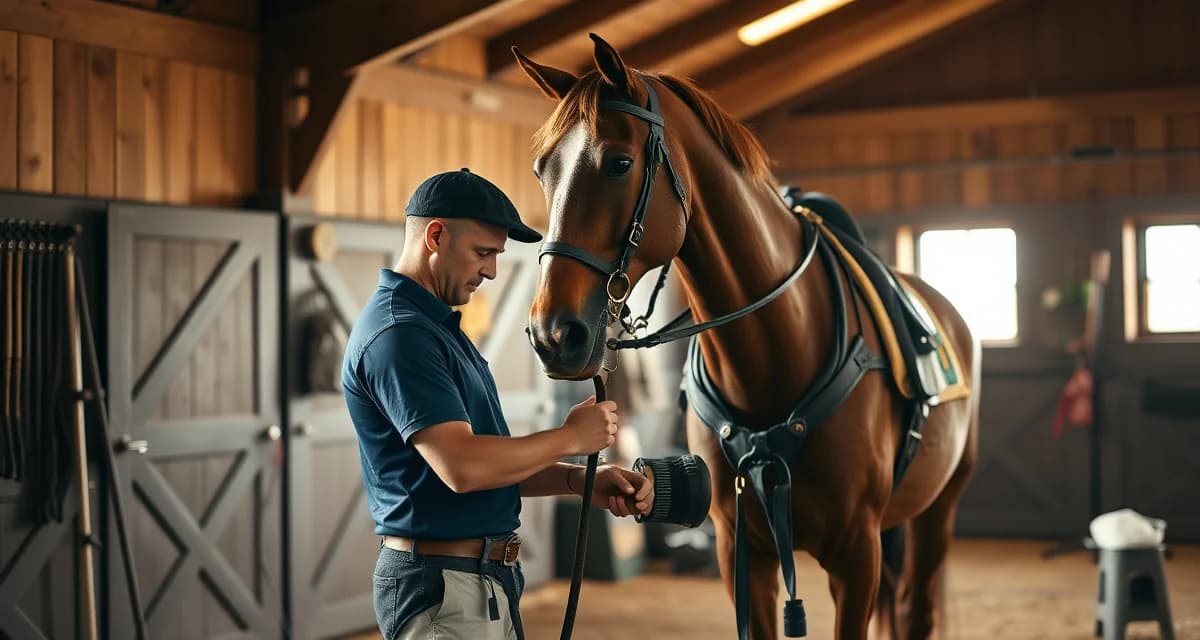
Grooms and string grooms. In polo, groom assignments often follow strings: a specific groom is responsible for a specific patron's string. This creates accountability and ensures that each pony's care is consistent. String grooms know their ponies' individual quirks, equipment preferences, and recovery patterns in a way that general barn staff can't match.
Match day grooms / "bandage men." During matches, someone is responsible for swapping ponies between chukkers: removing tack, re-wrapping legs, checking condition, and handing fresh ponies to the patron at the right moment. This role is high-pressure and requires experience. Some facilities have dedicated match day staff; others cross-train their grooms for match day responsibilities.
Field crew. Polo fields require specialized maintenance. Divot repair after matches, regular mowing and dragging, irrigation management, and field striping are specialized tasks. The field crew may be separate from barn staff entirely, or there may be overlap in smaller operations.
Barn support staff. General barn work: feeding, stall cleaning protocols, turnout, and facility maintenance. At smaller polo operations, this may overlap with groom responsibilities.
The Staffing Challenges at Polo Facilities
Specialized knowledge requirements. Polo groom work is specific. Polo leg wraps (run-down patches and bandages) are different from standard exercise bandages. Tacking a polo pony with a polo saddle, running martingale, and polo wraps takes practice. Match day logistics under pressure require experience. Finding staff who already have these skills, or investing in training them, is a genuine challenge.
Match day intensity. Match days are the most demanding operational periods. Between strings, grooms are managing multiple ponies: cooling out the ponies that just played while having fresh ponies tacked and ready. This requires precision timing and clear role assignments. A staff member who's unclear on their responsibility during a between-chukker changeover creates problems in real time.
Seasonal structure. Polo has distinct seasons, which means staffing needs vary significantly across the year. During the conditioning window, training staff are at full demand but match day support needs are lower. During match season, the reverse is true. Managing that variation without overstaffing the off-season or understaffing the peak requires advance planning.
International and immigrant workforce. Polo facilities in the United States and internationally draw significantly on Argentine and other South American workers who bring deep polo expertise. Managing employment compliance, housing (if provided), and cultural integration is a real administrative responsibility at facilities that rely on this workforce.
Frequently Asked Questions
How do polo barn managers handle staff management?
Polo barn staff management centers on building a team that understands the specific care requirements of the discipline and can execute them consistently across shifts. Polo barn staff need to manage horses before, during, and after play, which requires clear task assignments that reflect each horse's role in the string and condition after their most recent chukker. Clear task assignment, written protocols, and completion logging are the tools that keep care standards consistent without requiring constant supervision.
What software do polo facilities use for staff management?
Staff management at polo facilities requires tools that assign tasks to specific individuals, track completion with timestamps, and make protocols accessible to every team member regardless of experience level. BarnBeacon's task management module supports shift-specific assignments, per-horse care protocols, and completion reporting that gives managers visibility without requiring them to be physically present for every task.
What are the staff management challenges at polo barns?
The core staff management challenges at polo facilities involve maintaining care consistency through shift changes and staff turnover, ensuring that discipline-specific protocols are documented and followed, and keeping communication between shifts clear enough that nothing is missed. The fast-paced environment of match day requires every staff member to know their assignments without confusion, making pre-match briefing and documented protocols essential. Systems that document expectations and track completion reduce these risks significantly.
How does BarnBeacon compare to spreadsheets for barn management?
Spreadsheets require manual updates, lack real-time notifications, and create version control problems when multiple staff members are working from different files. BarnBeacon centralizes records, pushes alerts automatically based on logged events, and connects care records to billing and owner communication in one system. Most facilities report saving several hours per week after switching from spreadsheets.
What is the setup process like for BarnBeacon?
Most facilities complete the initial setup in under a week. Horse profiles, service templates, and billing configurations can be imported from existing records or entered directly. BarnBeacon's US-based support team is available to assist with setup, and most managers are running their first billing cycle through the platform within days of starting.
Can BarnBeacon support a barn with multiple staff members?
Yes. BarnBeacon supports multiple user accounts with role-based access, so barn managers, barn staff, and owners each see the information relevant to their role. Task assignments, completion logs, and communication history are all attached to the barn's account rather than to individual staff phones or email addresses.
What is Polo Barn Staff Management: Complete Guide for Facility Managers?
Polo Barn Staff Management: Complete Guide for Facility Managers is a comprehensive resource covering how to effectively staff a polo facility. It addresses staff-to-horse ratios, shift handover protocols, task accountability systems, and communication tools specific to polo operations. The guide recognizes that polo grooms require specialized knowledge—including match-day preparation, leg wrap fitting, and conditioning management—and treats this expertise accordingly, helping facility managers build stable, high-functioning teams around those unique demands.
How much does Polo Barn Staff Management: Complete Guide for Facility Managers cost?
This is an editorial guide published on BarnBeacon, not a product or service, so there is no cost to access it. The information is freely available on the BarnBeacon website. Polo facility managers, barn owners, and equine operations professionals can read the full article at no charge as part of BarnBeacon's library of practical management resources for equine facilities of all disciplines.
How does Polo Barn Staff Management: Complete Guide for Facility Managers work?
The guide works by breaking polo barn staffing into actionable components: calculating appropriate staff-to-horse ratios, assigning named accountability for tasks, implementing written shift handover protocols, and using digital task logs to identify recurring gaps. Each section translates the specialized demands of polo pony care—including 6-to-8-week conditioning cycles and match-day routines—into practical systems managers can implement immediately without disrupting existing operations.
What are the benefits of Polo Barn Staff Management: Complete Guide for Facility Managers?
Key benefits include reduced staff turnover costs through better onboarding systems, fewer missed care tasks through clear accountability structures, and improved communication by separating horse health updates from administrative messages. Facilities following these protocols report fewer blame disputes between staff, faster identification of health changes during handovers, and more consistent conditioning outcomes for polo ponies during the critical weeks between match seasons.
Who needs Polo Barn Staff Management: Complete Guide for Facility Managers?
This guide is most valuable for polo facility managers, barn owners overseeing multiple staff members, and equine operations directors managing match-season schedules. It is also relevant to anyone transitioning into polo barn management from a general equine background, since polo grooms are specialist workers not interchangeable with standard barn staff. Facilities with 10 or more horses and multiple shift workers will see the greatest return from implementing these systems.
Related Articles
Sources
- American Association of Equine Practitioners (AAEP)
- United States Polo Association (USPA)
- American Horse Council
- Kentucky Equine Research
- UC Davis Center for Equine Health
Get Started with BarnBeacon
Staff accountability and care continuity depend on systems that work even when the barn manager is not present. BarnBeacon gives polo operations the task assignment, completion logging, and shift handover tools to maintain care standards across every shift and through every staffing change. Start a free trial and see what your task completion picture looks like after two weeks on the platform.