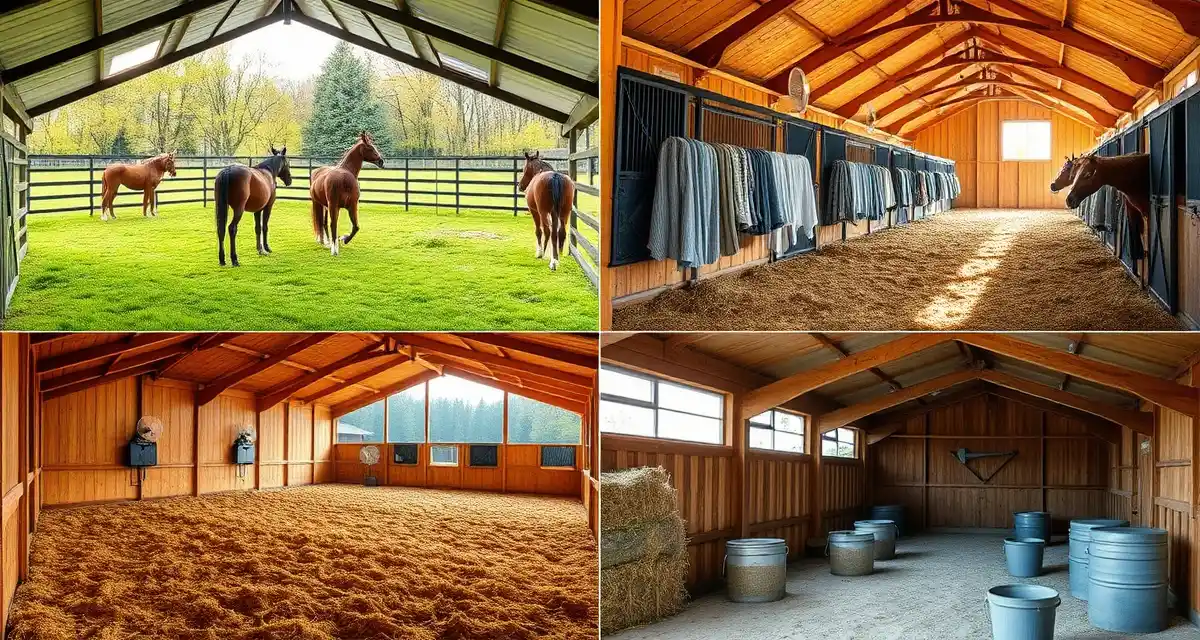
Seasonal Barn Management: Adjusting Your Operation Through the Year
Running a barn means your work changes with the calendar. What works in July does not work in January, and the barn manager who treats all four seasons as identical is the one who ends up scrambling when the first hard freeze hits or when summer heat sends horses off feed. Seasonal management is not just about comfort. It is about safety, health, and keeping your operation running smoothly no matter what the weather is doing.
Spring: Health Checks, Pasture Transitions, and Parasite Control
Spring is the busiest season for barn managers. Pastures are greening up, which means laminitis risk climbs for easy keepers and metabolic horses. Most barns schedule a spring vet visit for dental floats, spring vaccines, and Coggins pulls. If you have not already confirmed your vet's spring schedule, do it in February before their calendar fills.
Parasite management ramps up in spring. Fecal egg counts should be done before you deworm to avoid contributing to anthelmintic resistance. Keep records of which horses were treated, with what product, and on what date. Those records matter for both health management and if you are ever asked for documentation by a new owner or trainer.
Pasture transitions need to be gradual. Two weeks of limited turnout on fresh grass prevents most grass-related digestive and metabolic issues. Build a specific turnout rotation into your spring schedule rather than leaving it to daily judgment calls.
Summer: Heat, Hydration, and Fly Control
Heat is the primary enemy of horse health in summer. Horses need access to fresh water at all times, and consumption rates go up dramatically when temperatures rise. Monitor water tanks daily. Automatic waterers should be checked for function and cleanliness, not just assumed to be working.
Electrolyte supplementation is appropriate for horses working in heat and humidity, but not all horses need it. Know which horses in your care are hard workers and which are pasture ornaments so you can target supplementation appropriately.
Fly control is both a welfare issue and a facility management issue. A consistent fly spray program, fly sheets for horses who need them, and clean manure management are the foundation. Many barns add fly predators in summer. Whatever program you use, document it so staff follow the same protocol rather than improvising.
BarnBeacon lets you log daily observations, flag health concerns, and update feeding and supplement notes in real time so your summer protocols actually get followed across shifts.
Fall: Conditioning, Blanketing Prep, and Winter Readiness
Fall is when many horses gain weight from lush late-season grass, which creates problems heading into winter. Body condition scoring in early fall gives you a baseline before blanketing makes visual assessment harder. Horses coming off a heavy show season may need a different feeding approach than horses who have been on pasture all summer.
Pre-season blanketing decisions need to be documented per horse. Some owners have specific preferences about blanket weights. Others leave it to barn staff judgment. Know which situation you are in before the first cold snap and record those preferences where your whole team can see them.
Equipment checks in fall cover a lot of ground: heaters in water pipes, heat tape on exposed plumbing, hay storage for winter volume, and fencing that may need repairs before the ground freezes and digging becomes impossible.
Winter: Water, Forage, and Frozen Everything
Water is the top concern in winter. Horses who do not drink enough in cold weather are at elevated colic risk. Heated water buckets or tank heaters are worth the cost. Track water intake when you can, and note any horse that seems reluctant to drink.
Forage needs increase in cold weather. Horses burn more calories maintaining body temperature. A horse that holds weight easily in summer may need an extra feeding in winter. Review each horse's body condition monthly and adjust hay rations as needed.
Winter also creates staffing challenges. Icy footing, longer indoor shifts, and holiday schedules put pressure on your team. Having clear shift handoff protocols and documented daily care routines means the morning crew knows exactly what the overnight crew observed, regardless of who is working.
Year-Round: Documentation Is the Constant
Every seasonal adjustment you make needs to be documented. Changes to feeding protocols, blanket assignments, turnout schedules, and parasite management plans are only useful if the whole team knows about them. A barn that runs on verbal communication and sticky notes will always have gaps.
Solid staff communication protocols combined with per-horse records that reflect the current season are what separate well-run facilities from chaotic ones. When a new employee starts in October, they should be able to look at each horse's profile and understand exactly what care that horse is receiving right now, not what they were getting in May.
Seasonal management is fundamentally about anticipation. The barn manager who plans ahead for each season's demands runs a calmer, safer, more profitable facility than the one who reacts to problems after they have already developed.
FAQ
What is Seasonal Barn Management: Adjusting Your Operation Through the Year?
Seasonal barn management is the practice of adapting your equine facility's routines, protocols, and priorities to match each season's unique demands. It covers everything from spring pasture transitions and parasite control to summer heat management, fall winterization prep, and cold-weather feeding adjustments. Rather than running a one-size-fits-all operation, seasonal management ensures horse health, facility safety, and operational efficiency are all aligned with what the weather and calendar actually require.
How much does Seasonal Barn Management: Adjusting Your Operation Through the Year cost?
Seasonal barn management is not a paid service or product — it is an operational framework any barn owner or manager can implement. Costs vary based on your specific needs: spring vet visits for vaccines and Coggins pulls, fecal egg counts for parasite control, winterization supplies, and feed adjustments all carry real expenses. Budgeting seasonally rather than month-to-month helps spread these costs predictably and avoids emergency spending when problems arise from lack of preparation.
How does Seasonal Barn Management: Adjusting Your Operation Through the Year work?
Seasonal barn management works by breaking the year into four distinct operational phases. In spring, focus shifts to health checks, pasture transitions, and parasite control. Summer priorities include heat and hydration management. Fall is for winterization and feed adjustments as horses build condition. Winter centers on water access, footing safety, and blanket monitoring. Each season has specific tasks, timelines, and health watch-outs that guide daily barn decisions and scheduling.
What are the benefits of Seasonal Barn Management: Adjusting Your Operation Through the Year?
The benefits include healthier horses, fewer emergency vet calls, lower long-term costs, and a barn that runs predictably rather than reactively. Proactive seasonal planning reduces laminitis risk in spring, heat stress in summer, colic risk in winter, and facility damage year-round. Horses maintained on a seasonal schedule tend to hold weight better, have fewer metabolic issues, and experience less stress from abrupt routine changes as weather shifts.
Who needs Seasonal Barn Management: Adjusting Your Operation Through the Year?
Any barn owner, barn manager, or equine facility operator benefits from a seasonal management approach. It is especially critical for those managing metabolic or easy-keeper horses prone to laminitis, facilities with large pasture acreage, operations in climates with significant seasonal swings, and barns offering boarding where multiple owners depend on consistent, documented care. Even small private barns with just a few horses benefit from seasonal planning over reactive, ad hoc management.
How long does Seasonal Barn Management: Adjusting Your Operation Through the Year take?
Seasonal barn management is an ongoing, year-round commitment rather than a one-time task. Each season brings roughly three months of adjusted priorities, but preparation for the next season should begin four to six weeks before the transition. For example, winterization planning starts in early fall, and spring vet appointments should be booked in February. Think of it as a continuous cycle rather than discrete projects with defined start and end dates.
What should I look for when choosing Seasonal Barn Management: Adjusting Your Operation Through the Year?
Look for a framework that is specific to your region and climate, since a barn in the Southeast has different winter concerns than one in the upper Midwest. Prioritize guidance that addresses your horse types — metabolic horses need different spring protocols than performance horses. Good seasonal management plans include clear timelines, documented health records, vet coordination schedules, and contingency protocols for extreme weather events rather than generic seasonal checklists.
Is Seasonal Barn Management: Adjusting Your Operation Through the Year worth it?
Yes. Barn managers who plan seasonally spend less time scrambling during weather transitions, catch health issues earlier, and avoid costly emergency interventions. The investment is primarily time and organization — building checklists, scheduling vet visits in advance, and adjusting feed and turnout proactively. The alternative is reactive management, which typically costs more in emergency vet bills, feed waste, facility repairs, and horse health setbacks. For any serious equine operation, seasonal planning is simply good management.