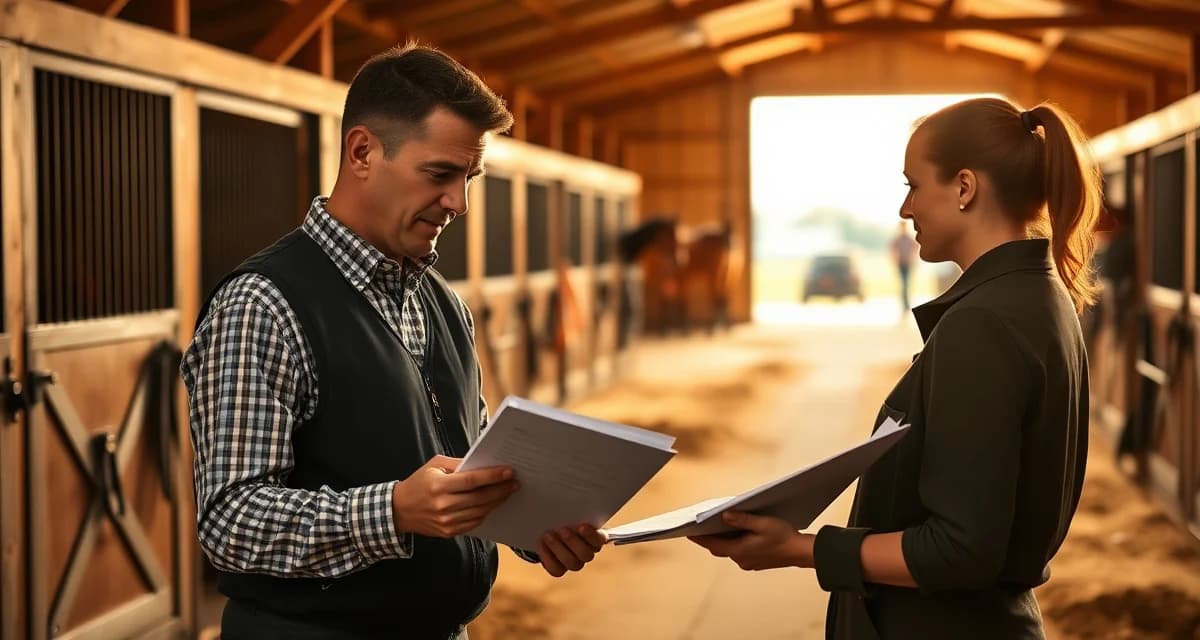
Show Season Barn Management: Preparing Horses and Staff
Show season doesn't sneak up on you. It arrives with a calendar full of conflicts, a barn half-empty on weekends, and a staff stretched thin across competing priorities. For barn managers running active competition programs, the months between March and October can feel like a sustained operational emergency.
TL;DR
- Show season demands on staff, equipment, and finances peak simultaneously and require proactive planning.
- A show season checklist prevents dropped tasks when the operation runs at peak demand with reduced on-site staff.
- Capture show expenses at the time they occur, not during post-event billing reconstruction.
- Owner communication during show season should increase, not decrease, as horses travel and conditions change.
- Digital task and health logs during show season create the documentation record that paper systems cannot maintain at pace.
The average barn manager juggles 6 or more separate tools to keep things running, from spreadsheets tracking medications to group texts for staff scheduling. Research shows that consolidating those tools saves 2.4 hours per day, time that gets reinvested into horses, clients, and the actual work of running a facility. This guide covers the full scope of show season barn management: how to prepare horses for departure, keep the home barn running, manage travel medication logs, and maintain clear communication with owners while their horses are away.
Why Show Season Breaks Normal Barn Operations
A barn that runs smoothly in January often struggles by May. The reason isn't incompetence. It's that show season introduces variables that standard operating procedures weren't built to handle.
Horses leave and return on irregular schedules. Staff coverage gaps appear mid-week when trainers haul out for multi-day shows. Owners expect real-time updates on horses they can't see. Medications that live in the barn tack room suddenly need to travel, be documented, and be administered by someone other than the usual person.
The operational load doesn't decrease when horses leave. In many cases, it increases. You're managing two environments simultaneously: the horses at the show and the horses left behind.
Pre-Departure Preparation: What to Do Before a Horse Leaves
Getting a horse ready to leave for a show is more than braiding and packing tack. The preparation that happens in the 48 to 72 hours before departure sets the foundation for everything that follows.
Health Checks and Veterinary Clearance
Every horse leaving for a show should have a documented health check within 24 to 48 hours of departure. This isn't just good practice. Many competitions require a current Coggins test (within 6 to 12 months depending on the state) and a health certificate issued within 30 days for interstate travel.
Pull the horse's health record and confirm the following are current:
- Coggins test
- Health certificate (if crossing state lines)
- Vaccination records required by the show venue
- Any active treatment plans or vet instructions
If a horse is on a prescribed medication, confirm the withdrawal period relative to competition rules. Some medications are prohibited in competition; others require documentation. This is not the time to rely on memory.
Medication Packing and Travel Logs
Medication management during show season is one of the highest-risk areas for barn managers. Errors here can result in a horse missing a dose, a prohibited substance violation, or a liability issue if something goes wrong on the road.
Before a horse departs, create a travel medication log that includes:
- Medication name, dose, and frequency
- Administering party (trainer, groom, or owner)
- Administration times and dates
- Any special storage requirements (refrigeration, light sensitivity)
- Emergency contact for the prescribing vet
This log should travel with the horse and be updated in real time. A paper log works, but it creates a documentation gap when the horse returns. A digital record that syncs back to the barn's central system is far more reliable for continuity of care.
Equipment and Supply Inventory
Run a departure checklist for every horse leaving the property. This protects your equipment, prevents supply shortages at the show, and gives you a baseline for what should return.
Standard departure inventory includes:
- Tack (saddle, bridle, pads, boots)
- Grooming supplies
- Feed and supplements (enough for the full trip plus two extra days)
- First aid kit specific to that horse
- Medications with travel log attached
- Copies of health records and registration papers
Assign one person to verify this checklist before the trailer loads. Don't leave it to the morning-of chaos.
Barn Coverage During Show Season
When horses and trainers leave for shows, the barn doesn't close. The horses that stay behind still need full care. The facility still needs to function. And the staff left behind often has to cover more ground with fewer hands.
Staffing Schedules That Account for Show Absences
Build your show schedule into your staffing calendar at the start of the season, not the week before a show. If you know your head trainer hauls out every other weekend from April through September, plan coverage for those weekends in advance.
Cross-train staff so that at least two people can handle every critical task: feeding, turnout, stall cleaning, medication administration, and emergency response. Single points of failure in barn staffing are a liability.
Consider a tiered coverage model:
- Primary coverage: The staff member responsible for all daily tasks
- Secondary coverage: A backup who can step in if the primary is unavailable
- Emergency contact: A vet, farrier, or senior staff member reachable 24/7
Post this coverage schedule where all staff can see it. Ambiguity about who is responsible for what is how horses get missed.
Maintaining Routine for Horses Left Behind
Horses are creatures of habit. When half the barn leaves for a show, the remaining horses notice the disruption. Maintaining consistent feeding times, turnout schedules, and handling routines reduces stress-related issues like ulcers, colic, and behavioral changes.
If a horse's usual turnout partner has left for a show, adjust groupings proactively. Don't wait for a horse to start weaving or fence-walking before you address the social disruption.
Document any behavioral changes in horses left behind. Show season is a common time for stress-related health issues to surface, and early documentation helps your vet make faster, more accurate assessments.
Managing Horses at the Show: Remote Oversight
Your responsibility for a horse doesn't end when it leaves your property. As the barn manager, you're often the central point of contact for health records, medication history, and owner communication, even when you're not at the show.
Keeping Health Records Accessible on the Road
Paper records get lost. Binders left in tack rooms don't help a trainer standing ringside at 7 AM trying to answer a show vet's question. Health records need to be accessible digitally, from any device, by anyone who needs them.
At minimum, the following should be accessible remotely:
- Current Coggins and health certificate
- Vaccination history
- Active medications and dosing instructions
- Vet contact information
- Any known allergies or sensitivities
If your barn is still managing records in physical files or disconnected spreadsheets, show season is the stress test that exposes that gap. Barn management software that centralizes health records and makes them accessible from a mobile device isn't a luxury during show season. It's a functional necessity.
Real-Time Medication Logging at the Show
The travel medication log that left with the horse needs to stay current throughout the show. This is where many barns fall apart. The log gets filled in at the start of the trip and then ignored until something goes wrong.
Establish a clear protocol: whoever administers a medication logs it immediately, not at the end of the day. If you're using a digital system, this takes 30 seconds. If you're using paper, the log needs to be in a consistent, accessible location.
When the horse returns, the travel log should be reconciled with the barn's central health record. Any gaps, missed doses, or unexpected treatments need to be documented and flagged for the vet.
Coordinating with Trainers and Grooms on the Road
Communication between the barn and the show team needs structure. Group texts work until they don't. When a horse colics at 11 PM at a show three states away, you need a clear chain of communication, not a 40-message thread.
Define in advance:
- Who is the primary contact at the show for health issues?
- What constitutes an emergency that requires calling the barn manager?
- What is the protocol for contacting the horse's vet?
- Who authorizes veterinary treatment when the owner isn't present?
Put these protocols in writing before the season starts. Review them with your show team. Don't assume everyone knows the answer.
Owner Communication During Show Season
Horse owners are paying clients. During show season, many of them are watching their horses compete, following results from home, or anxiously waiting for updates on horses they've entrusted to your care. Communication is not optional. It's part of the service.
Setting Expectations Before the Season Starts
The best time to establish communication expectations is before the first show, not after an owner sends their third unanswered text. At the start of the season, communicate clearly:
- How often will owners receive updates on their horses?
- What channel will you use (email, app, text)?
- What types of updates will be proactive versus on-request?
- What constitutes an emergency that warrants an immediate call?
Owners who know what to expect are easier to manage than owners who feel left in the dark. A brief pre-season communication sets the tone for the entire competition season.
Departure and Arrival Notifications
Every owner should receive a notification when their horse departs for a show and when it returns. This is basic accountability. It also protects you. If a horse is injured in transit and the owner wasn't notified of the departure time, you have a problem.
Departure notifications should include:
- Departure date and estimated arrival at the show
- Who is accompanying the horse (trainer, groom)
- Contact information for the show team
- Any health notes relevant to the trip
Arrival notifications should confirm the horse arrived safely and note any observations from the trip.
Updates During the Show
Owners who aren't at the show want to know their horse is okay. A brief daily update during multi-day shows goes a long way. It doesn't need to be elaborate. A photo, a note on how the horse is eating and moving, and any relevant competition results is enough.
If something goes wrong, communicate immediately. Don't wait until you have all the answers. A message that says "your horse had a mild colic episode, the vet has been called, I'll update you within the hour" is far better than silence followed by a delayed explanation.
Post-Show Health Updates
When a horse returns from a show, the owner should receive a post-show health summary. This includes:
- General condition on return
- Any treatments administered at the show
- Observations from the travel medication log
- Recommended rest or monitoring period
- Any follow-up vet care needed
This communication closes the loop on the show trip and demonstrates the level of care you're providing. It also creates a paper trail that protects both you and the owner.
Billing and Invoicing During Show Season
Show season creates billing complexity that flat-rate board agreements weren't designed to handle. Extra farrier visits, show prep services, medication administration fees, and supply reimbursements all need to be tracked and invoiced accurately.
Tracking Show-Related Expenses
Every expense incurred on behalf of a horse during a show trip needs to be documented at the time it occurs. Trying to reconstruct a week's worth of show expenses from memory or receipts stuffed in a tack bag is a recipe for errors and disputes.
Categories to track per horse per show:
- Medication costs and administration fees
- Farrier or vet services at the show
- Supplies purchased on behalf of the owner
- Hauling fees (if applicable)
- Show entry fees (if managed by the barn)
Assign one person at the show to track these expenses in real time. If you're using a digital system, this data should flow directly into the horse's account without manual re-entry.
Invoicing After the Show
Owners expect accurate, itemized invoices. A line item that says "show expenses: $340" without a breakdown invites questions and disputes. An itemized invoice that shows exactly what was spent, when, and why builds trust.
Billing and invoicing tools designed for equine facilities can automate much of this process, pulling from expense logs and generating itemized statements without manual data entry. This is especially valuable during show season when the volume of transactions spikes and the margin for error is low.
Send invoices promptly after the show. Waiting until the end of the month to invoice for show expenses that happened three weeks ago creates confusion and delays payment.
Building a Show Season Operations Calendar
Reactive management during show season is exhausting and error-prone. The barn managers who handle competition season well are the ones who plan it in advance.
Mapping the Season Before It Starts
At the start of the year, sit down with your trainers and map out every show on the calendar. For each show, identify:
- Which horses are likely to attend
- Staffing requirements at the show and at home
- Health certificate and Coggins deadlines
- Equipment and supply needs
- Communication touchpoints with owners
This isn't a perfect forecast. Shows get added, horses get scratched, plans change. But having a baseline calendar gives you a framework to work from instead of reacting to each show as if it's a surprise.
Weekly Show Season Check-Ins
During show season, run a brief weekly check-in with your team. This doesn't need to be a long meeting. Fifteen minutes to review the upcoming week's show schedule, confirm staffing coverage, and flag any health or logistics issues is enough.
The goal is to surface problems before they become emergencies. A horse that's been slightly off for two days is a conversation. A horse that colics the morning of departure is a crisis. Weekly check-ins create the visibility to catch the former before it becomes the latter.
Equine Competition Season Operations: The Integration Problem
Most barn managers running active show programs are managing equine competition season operations across a fragmented set of tools. One system for health records. Another for billing. A group chat for staff communication. A spreadsheet for the show calendar. A paper log for medications.
Each of these tools works in isolation. None of them talk to each other. When a horse returns from a show with a medication log that needs to be reconciled with the health record, and a set of expenses that need to be invoiced, and an owner who needs a post-show update, you're manually moving information between four or five different places.
This is where most barn management tools fall short. They handle isolated tasks well but don't connect the operational threads that run through an entire show season. What barn managers actually need is a platform where health records, billing, communication, and scheduling exist in the same place, updated by the same people, visible to everyone who needs them.
BarnBeacon was built specifically for this. It connects health records, travel medication logs, billing, owner communication, and staff scheduling in one platform designed for horse facilities. When a horse leaves for a show, everything that needs to happen, from the departure notification to the post-show invoice, flows through one system instead of six.
Common Show Season Mistakes to Avoid
Even experienced barn managers make predictable mistakes during show season. Knowing what they are helps you avoid them.
Waiting to update medication logs. Logs filled in at the end of the day are logs filled in from memory. Errors accumulate. Update in real time.
Assuming staff know the coverage plan. Post it. Review it. Confirm it. Don't assume.
Delaying owner communication when something goes wrong. Silence is worse than uncertainty. Communicate early, even if you don't have all the answers.
Failing to reconcile show expenses promptly. The longer you wait, the harder it is to reconstruct what happened. Invoice within 48 hours of the horse's return.
Not cross-training staff before the season starts. Cross-training takes time. Do it in February, not May.
FAQ
What is the most important thing a barn manager can do to improve operations?
Build systems before you need them. The barn managers who handle show season well aren't more talented than those who struggle. They've built documented protocols for departures, medication management, staff coverage, and owner communication before the season starts. When something goes wrong, and it will, they have a framework to fall back on instead of improvising under pressure.
How do I reduce time spent on barn administration?
Consolidate your tools. The average barn manager uses six or more separate systems to manage health records, billing, scheduling, and communication. Each handoff between systems costs time and introduces errors. Switching to an integrated platform like barn management software that handles multiple functions in one place is the single highest-leverage change most barn managers can make. The time savings, often 2 hours or more per day, compound across an entire show season.
What tools do professional barn managers use?
The most effective barn managers use integrated platforms rather than collections of single-purpose tools. They need health record management, medication logging, billing and invoicing, owner communication, and staff scheduling to work together. Spreadsheets and group texts work at small scale but break down during show season when the volume of information and the number of stakeholders increases. Purpose-built equine facility software handles the complexity that general tools can't.
How do I handle billing disputes after a major show event?
The most effective way to prevent post-show billing disputes is real-time expense capture: log entry fees when submitted, stall charges when confirmed, and haul allocations when determined. Owners who receive itemized invoices with documented amounts are far less likely to dispute charges than owners who receive a single lump-sum bill weeks after the event. If a dispute does occur, your contemporaneous records give you the documentation needed to walk through each charge with confidence.
Should I send owners an estimated show invoice before the event?
Yes. Sending a pre-show cost estimate once entries are confirmed sets realistic expectations and gives owners the chance to ask questions before costs are incurred. The estimate should clearly label variable items (stabling, hay, bedding) as approximate. Owners who approve an estimate upfront are significantly less likely to question the final invoice, even when variable costs land slightly higher than projected.
What is Show Season Barn Management: Preparing Horses and Staff?
Show Season Barn Management: Preparing Horses and Staff is a comprehensive guide for barn managers running active competition programs from March through October. It covers the full operational scope of show season: staff scheduling, equipment readiness, expense tracking, owner communication, and health documentation. The guide addresses how simultaneous peaks in staffing, logistics, and finances create sustained pressure on facilities, and offers practical strategies to stay organized when horses are traveling and on-site staff is reduced.
How much does Show Season Barn Management: Preparing Horses and Staff cost?
This guide is free editorial content published on BarnBeacon. There is no cost to read or apply its frameworks. BarnBeacon is a barn management resource platform, and some tools or software referenced within the guide may have associated subscription costs depending on the provider. The guide itself serves as a planning reference, not a paid product or course.
How does Show Season Barn Management: Preparing Horses and Staff work?
The guide works by breaking show season into manageable operational categories: pre-season checklists, real-time expense capture, staff coverage planning, owner communication protocols, and digital health logging. Barn managers can apply each section independently or as a full system. The core principle is proactive preparation—building repeatable processes before peak demand hits so nothing falls through the cracks when the barn is running at reduced capacity on show weekends.
Sources
- United States Equestrian Federation (USEF)
- American Horse Council
- University of Kentucky Equine Initiative
- The Chronicle of the Horse
- Horse & Rider magazine
Get Started with BarnBeacon
Show season billing is one of the most complex administrative challenges a barn manager faces, with variable expenses accumulating across entries, stabling, and haul costs that are easy to miss if not captured immediately. BarnBeacon's billing tools let you log show expenses in real time and generate itemized owner invoices without post-event reconstruction. If show season consistently produces billing disputes or month-end reconciliation headaches at your facility, BarnBeacon can help you get ahead of it.