Summer Barn Management Guide
Summer barn management is defined by heat, humidity, and the peak of competition season for most disciplines. Research from equine performance studies shows that horses working in temperatures above 90 degrees Fahrenheit with high humidity face meaningful heat stress risk, with performance and recovery time both affected at conditions that many facilities experience routinely in July and August. Managing those risks requires specific protocols, not just awareness that it's hot.
TL;DR
- Summer heat management requires proactive protocols for water access, ventilation, and turnout timing adjustments.
- Horses in peak summer heat may need 20 or more gallons of water daily; monitoring water intake is a daily staff responsibility.
- Early morning and evening turnout schedules reduce heat stress during peak summer temperatures.
- Fly and insect control during summer months directly affects feed consumption, rest quality, and wound management.
- A summer operations checklist reviewed before peak heat season prevents reactive scrambling when temperatures spike.
This guide covers the major operational dimensions of summer barn management: heat stress prevention, fly control, water management, scheduling adjustments, show season operations, and how BarnBeacon's barn management software supports summer operations. The complete barn management guide covers year-round management in more detail.
Heat Stress Prevention and Management
Heat stress in horses is a genuine health risk during summer, particularly for horses in active work. The combination of high ambient temperature and high humidity impairs the horse's ability to cool through sweating, because humid air is less able to absorb moisture from the skin surface.
Recognizing heat stress early is the most important management skill. Early signs include: elevated respiration that doesn't recover quickly after work stops, sweating that seems excessive or, conversely, inadequate sweating for the work level, elevated heart rate that takes longer than normal to return to resting range, and a dull or depressed demeanor after work. Any horse showing these signs after summer work should be cooled actively and observed carefully.
Active cooling after work in summer conditions should be standard practice. Cold water hosing, applying cold water to the large muscle groups, neck, and head repeatedly, is the most effective active cooling method. Removing the water with a sweat scraper between hosing applications is traditional but not supported by current research; the water cools more effectively if left on and re-applied. Fans, shade, and offering water or electrolytes support recovery.
Scheduling work around heat is the most effective preventive measure. Many facilities in hot climates shift to early-morning and late-evening riding schedules in summer, avoiding peak temperature hours of 11 AM to 4 PM. This requires some adjustment to client expectations and staff schedules, but it meaningfully reduces heat stress risk.
Acclimation to heat takes two to three weeks for horses moving from a cooler environment to a hotter one. Horses at events or competitions in significantly hotter regions than their home facility need additional time and monitoring during the first days of competition before they are heat-acclimated.
Logging post-work health observations in BarnBeacon during summer, including heart rate recovery time, sweating patterns, and demeanor, builds a per-horse summer baseline. Deviations from that baseline are the early warning system for developing heat tolerance issues.
Water Management in Summer
Water access and intake in summer is as critical as in winter, but for different reasons. Horses in work during hot weather can lose significant amounts of fluid through sweating and need to replenish that fluid consistently to maintain performance and health.
Multiple water access points for pastured horses reduce competition and ensure that lower-ranked horses in a group have consistent access to water. A single water source in a large group pasture may not be adequate if dominant horses are controlling access.
Water trough cleanliness matters because horses will not drink adequately from algae-fouled or debris-filled troughs. Scrubbing and rinsing water troughs at least weekly in summer, and more frequently during algae bloom conditions, maintains water quality and intake.
Electrolyte management in summer supports water intake and replaces minerals lost in sweat. Salt, either free-choice loose salt or a salt block, is a basic electrolyte supplement that most horses should have access to year-round. Horses in hard work during hot weather may benefit from additional electrolyte supplementation, though electrolytes should always be offered with free access to fresh water.
Post-work water offering should be standard practice after summer work. Offering water after exercise, in moderate amounts if the horse is still hot, supports recovery. The traditional caution about not letting hot horses drink has been moderated by current research; small, frequent water offerings to a hot horse are appropriate, while unrestricted cold water consumption immediately after hard work in extreme heat is the scenario to manage more carefully.
Monitoring water intake in summer requires attention. A horse that is not drinking adequately in summer heat is a health concern that can progress rapidly. BarnBeacon's daily health monitoring logs provide the place to note water intake observations, giving the barn manager a multi-day picture rather than a single-day snapshot.
Fly Control
Flies are one of the most significant welfare concerns at summer barns, and managing them effectively requires a multi-pronged approach because no single fly control method is adequate on its own.
Environmental management is the foundation of fly control. Flies breed in manure, wet organic matter, and standing water. Frequent manure removal from stalls, paddocks, and high-traffic areas, at minimum every other day, and daily in high-fly-pressure periods, reduces the breeding population. Eliminating standing water reduces mosquito breeding, which is important both for horse and human health.
Biological fly control using parasitic wasps is an effective supplement to environmental management at facilities where manure composting is practiced. Parasitic wasps attack fly pupae in manure, reducing fly emergence before adult flies are present. These programs work best when started early in the season before fly populations build.
Fly traps and baits around the barn perimeter and manure storage areas capture adult flies and reduce the population density at peak summer periods.
Topical fly control products applied to horses include fly sprays, roll-on products, and spot treatments. Product effectiveness varies by active ingredient, application frequency, and individual horse response. Rotating products over the summer reduces the development of resistance in fly populations.
Fly sheets, masks, and leg wraps provide physical barrier protection for horses that are sensitive to flies or are in pasture situations where topical products are not practical for daily application.
Feed-through fly control products are available and can be part of a comprehensive fly control program, though they work best in combination with other methods rather than as a standalone solution.
Summer Scheduling
Training and lesson schedules at most facilities shift significantly in summer to accommodate heat, show season activity, and changing daylight patterns.
Early-morning scheduling is the most common adaptation. Facilities in hot climates often schedule the first rides at 6 or 7 AM and are finished with the bulk of the riding day by 11 AM. This requires early start times for staff and may require adjusting client lesson schedules.
Evening scheduling expands as summer daylight extends into the evening hours. Facilities with well-lit arenas can schedule lessons and training sessions from 6 PM onward, when temperatures begin to fall. Many clients with day jobs prefer evening lessons in summer regardless of heat, building evening availability into the schedule captures this demand.
Show season scheduling creates complexity at training facilities during peak summer show months. When multiple horses are at shows on any given weekend, the home barn schedule changes significantly. Planning for this in advance, knowing which horses will be away and when, and scheduling the home barn accordingly, prevents the chaos that comes from treating each show weekend as a surprise.
Client summer scheduling expectations may include reduced lesson frequency, owner ride times, or facility access during peak heat periods. Communicating summer scheduling policies clearly in advance reduces client frustration when they arrive for a scheduled ride and find the barn in the middle of the hottest part of the day.
Show Season Operations in Summer
Summer is peak competition season for most English and western disciplines, which means show-related billing, logistics, and horse management are at their most demanding.
Show health documentation must be current before departure. Coggins tests, health certificates, and any required vaccine documentation should be confirmed two weeks before each show to allow time for any needed veterinary appointments.
Heat management at shows often requires more active effort than at home because competition venues may have less shade, less breeze, and more horses generating body heat per unit of space than your own facility. Bringing fans, having cooling supplies readily available, and planning for shade access during the day are part of effective show management.
Hydration monitoring at shows is particularly important. Horses that travel to shows in hot weather and are then in stall situations with less consistent water access than at home may not drink as well as usual. Monitoring water intake and offering electrolytes at shows supports hydration maintenance.
BarnBeacon at shows: Logging show-related charges, health observations, and vet check findings at competition venues from the BarnBeacon mobile app ensures that records are created in real time rather than reconstructed from memory after returning home.
Barn Facility Management in Summer
Summer creates specific facility management considerations beyond heat and fly control.
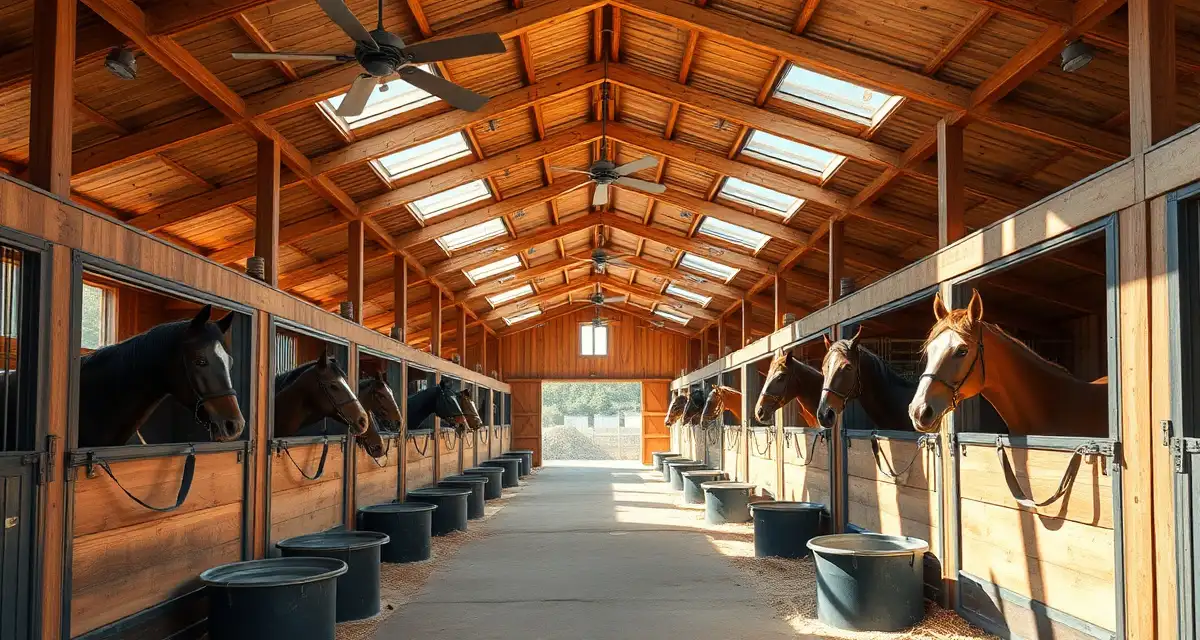
Ventilation in barn aisles and stalls is a significant horse health factor in summer. Stall fans, ridge vents, and open barn ends all contribute to airflow. Horses in stalls with poor ventilation on hot, humid nights are at heat stress risk even without exercise. Confirming that your barn's ventilation is adequate before peak summer heat arrives is worth the effort.
Shade in pastures and paddocks is a welfare requirement for summer turnout. Horses without shade access in direct summer sun are at heat stress risk and will often choose not to eat or move rather than expose themselves to peak sun. Natural shade from trees, or shade structures, should be available for all horses in turnout.
Manure management acceleration is typically needed in summer because decomposition is faster in warm weather and odor is more significant. More frequent removal, active composting management, and attention to compost pile location relative to the barn and neighbors are all summer management considerations.
Frequently Asked Questions
How do I prevent heat stroke in horses during summer?
Heat stroke prevention in horses starts with scheduling work during cooler parts of the day, early morning before 10 AM and evening after 5 or 6 PM in hot climates. Provide adequate water access before, during (for horses that work for extended periods), and after exercise. Have active cooling supplies ready, cold water hoses and fans, and cool horses actively after summer work rather than relying on passive cooling. Know the early signs of heat stress: respiratory rate that doesn't recover quickly after work stops, heart rate that stays elevated, and a dull or depressed demeanor. Log post-work health observations in BarnBeacon so that developing patterns in recovery time are visible before they become emergencies.
How do I manage flies effectively at my barn?
Effective fly control requires multiple approaches working together. Environmental management, frequent manure removal and elimination of standing water, addresses the breeding population at its source. Biological fly control using parasitic wasps reduces fly emergence before adults are present. Fly traps and baits around the perimeter capture adult flies. Topical products on horses provide individual protection. Physical barriers, fly sheets, masks, leg wraps, supplement topical products for sensitive horses. No single method is adequate; the combination is what makes fly control effective. Starting early in the season, before populations build, reduces how much pressure you're managing at peak summer.
How should I adjust training schedules in summer heat?
Shift the bulk of work to early morning and evening hours when temperatures are lowest. In regions with regularly extreme summer heat, early morning, finishing significant work by 10 or 11 AM, is the most effective scheduling strategy. Evening work, starting as temperatures begin to fall after 5 or 6 PM, is a good option for clients who can't ride in early morning. Reduce work intensity during heat waves even when scheduling allows for it. Cool horses actively after every summer work session. Log post-work health observations in BarnBeacon including recovery time and sweating patterns, this builds the per-horse summer baseline that tells you when a horse's heat tolerance is declining.
How do I manage horse water intake during extreme summer heat?
Horses in hot weather may need 20 or more gallons of water daily during peak heat. Keeping water cool and fresh encourages intake; water that has been sitting in a hot bucket or trough all day is a significant deterrent. Adding electrolytes to feed or water can increase voluntary intake in horses that are sweating heavily with exercise. Staff should note water levels at each check and flag any horse that appears to be drinking less than normal, as declining intake during heat is an early sign of heat stress.
What fly and pest control methods are most effective at boarding barns in summer?
An integrated pest management approach using a combination of biological controls (fly predators released monthly), physical controls (screens, fans, manure management frequency), and targeted chemical controls is more effective and less resistance-prone than chemical treatment alone. Flies complete their breeding cycle in manure within 8-10 days, so increasing removal frequency during peak summer months reduces population more effectively than insecticide use alone.
What is Summer Barn Management Guide?
The Summer Barn Management Guide is a comprehensive operational resource for horse facility managers covering heat stress prevention, water management, fly and insect control, turnout scheduling, and show season logistics. It outlines specific protocols for managing horses safely during peak summer heat and humidity, when temperatures above 90°F can meaningfully impact horse performance and recovery. The guide is designed to help barn staff move from general awareness to structured, proactive summer operations.
How much does Summer Barn Management Guide cost?
The Summer Barn Management Guide is a free editorial resource published by BarnBeacon. There is no cost to read or reference it. BarnBeacon offers barn management software with its own pricing, but the guide itself is publicly available to any barn manager, horse owner, or equine facility operator looking for summer operational guidance without a purchase or subscription requirement.
How does Summer Barn Management Guide work?
The guide works by breaking summer barn operations into distinct management areas: heat stress prevention, water intake monitoring, ventilation, fly control, turnout timing, and show season planning. Each section provides actionable protocols rather than general advice. Barn managers can use it to build or audit their own summer checklists, identify gaps in current operations, and prepare staff before peak heat conditions arrive in July and August.
What are the benefits of Summer Barn Management Guide?
The guide helps barn facilities reduce reactive scrambling when summer temperatures spike by encouraging proactive planning. Key benefits include improved horse welfare through structured heat stress protocols, better water intake monitoring habits, reduced fly pressure through systematic control programs, and optimized turnout schedules that shift activity to cooler morning and evening hours. Facilities that implement these protocols typically see improved horse performance, faster recovery times, and fewer heat-related health incidents.
Who needs Summer Barn Management Guide?
Any horse facility operator managing horses through summer months can benefit from this guide, including boarding barns, training facilities, breeding operations, and private horse owners. It is particularly relevant for facilities in regions that experience July and August temperatures above 90°F with high humidity. Show barns managing competition schedules during peak heat season will find the scheduling and show season operations sections especially applicable to their staffing and logistics challenges.
How long does Summer Barn Management Guide take?
Reading the guide takes roughly 15 to 20 minutes. Implementing its recommendations is an ongoing seasonal commitment that begins before peak heat arrives. BarnBeacon recommends reviewing your summer operations checklist before temperatures consistently exceed 90°F, which in most regions means completing your planning and staff training by late spring. Water monitoring, fly control, and turnout adjustments then run continuously through the summer season until conditions moderate in early fall.
Sources
- American Association of Equine Practitioners (AAEP)
- University of Minnesota Extension Equine Program
- Rutgers Cooperative Extension Equine Program
- Kentucky Equine Research
- The Horse magazine
Get Started with BarnBeacon
Summer barn management requires tracking more variables -- water intake, heat protocols, fly management, adjusted turnout schedules -- across a full horse population at the same time. BarnBeacon's health monitoring and task management tools give your team the structure to apply summer protocols consistently without relying on verbal reminders. If summer typically means more reactive management and more owner calls about heat-related concerns, BarnBeacon helps you get ahead of it.