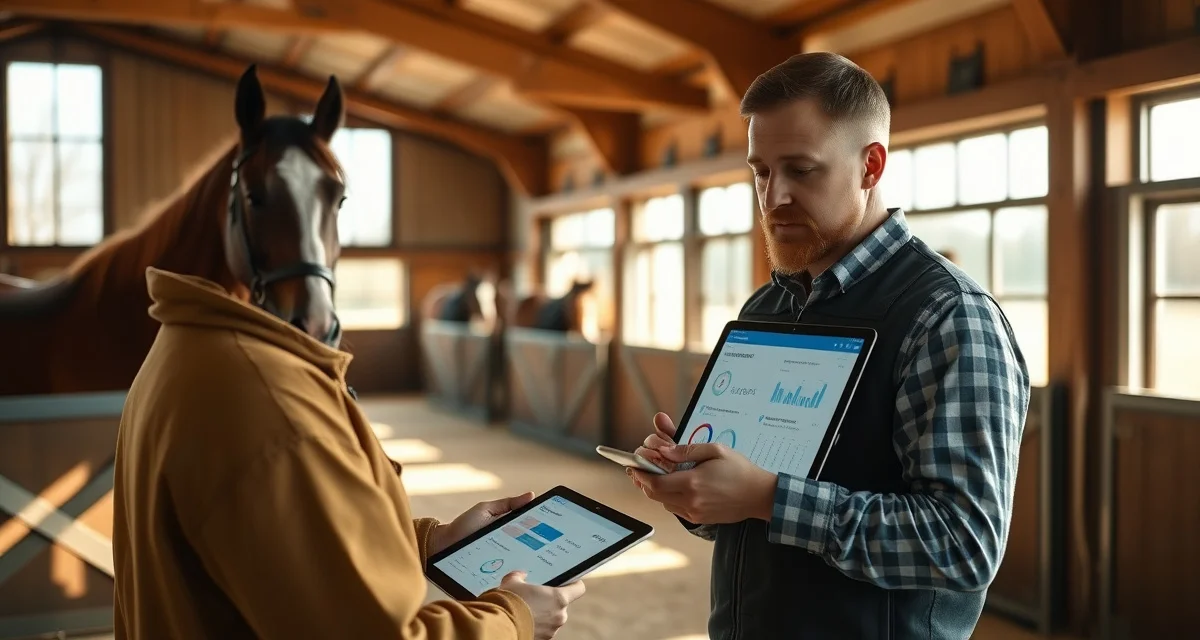
Combined Driving Barn Owner Communication: Progress and Updates
Most barn management software treats all disciplines the same. That's a problem when you're running a combined driving operation, where owners want to know about marathon hazard schooling, cone course accuracy, and carriage fitness work, not just "horse was ridden today."
TL;DR
- Combined Driving clients need training progress updates that use concrete, objective markers rather than general impressions.
- Each horse entering a combined driving training program should have a documented program goal and rough timeline at intake.
- Monthly progress reviews comparing current status against the original program plan demonstrate value to clients and protect the trainer.
- Progress documentation with timestamps creates a record that supports the trainer if a client disputes whether advancement occurred.
- Video and photo updates tied to specific milestones give combined driving owners visibility that written reports alone cannot provide.
Combined driving disciplines have unique owner communication patterns that generic barn software simply doesn't cover. This guide walks through exactly how to structure progress updates, what combined driving owners actually want to hear, and how to build a communication system that keeps clients informed and confident in your program.
Why Combined Driving Owner Communication Is Different
Combined driving has three distinct phases: dressage, marathon, and cones. Each phase demands different conditioning, different equipment checks, and different performance metrics. An owner whose horse is prepping for a CDE needs updates that reflect all three phases, not a single daily note.
Owners in this discipline also tend to be deeply invested. Many have significant money tied up in purpose-built carriages, specialized harness, and multi-year training programs. They expect detailed, accurate reporting, and they notice when updates are vague.
Step 1: Set Up Phase-Based Progress Categories
Define Your Training Phases in Writing
Before you send a single update, map your training program to the three competition phases. Create named categories: Dressage Work, Marathon Conditioning, Obstacle/Cones Schooling, Harness and Equipment Checks, and General Fitness.
Every update you send should be tagged to one or more of these categories. This gives owners a clear picture of where their horse is in the prep cycle, not just what happened on a given day.
Build a Weekly Progress Template
A consistent template removes guesswork for both you and the owner. A solid weekly update for a combined driving horse should include:
- Phase focus this week (e.g., marathon conditioning, dressage refinement)
- Distance or duration logged for conditioning work
- Specific hazards or obstacles schooled
- Harness and equipment condition notes
- Behavioral or soundness observations
- Next week's planned focus
Consistency matters more than length. A 150-word structured update beats a 400-word narrative that buries the key information.
Step 2: Communicate Marathon and Conditioning Metrics
Track and Share Actual Numbers
Marathon fitness is measurable. If you're conditioning a horse for a 22-kilometer marathon phase, owners want to know the horse completed 8 kilometers at trot on Tuesday, not just "had a good conditioning drive."
Log distance, terrain type, and recovery observations. Share heart rate data if you're using a monitor. These specifics tell an owner their horse is on track for the demands of the competition calendar.
Report Hazard Schooling Specifically
When you school a hazard, name it. "Worked through a water complex with a tight turn to a log element" is useful. "Did some obstacle work" is not.
Note which hazards the horse handled confidently and which need more repetition. This level of detail builds owner trust and demonstrates your expertise in the discipline.
Step 3: Use an Owner Portal Built for This Workflow
Why Generic Software Falls Short
Most barn management platforms offer a basic daily log and maybe a photo upload. That's not enough for combined driving clients who want to track phase-specific progress over weeks and months.
What some tools lack is the ability to organize updates by training phase, attach video of hazard schooling, or give owners a timeline view of their horse's conditioning arc. Without that structure, owners either get overwhelmed by raw notes or feel under-informed.
How BarnBeacon Fits Combined Driving Operations
BarnBeacon's owner communication portal is built to adapt to discipline-specific workflows. You can configure update categories to match your training phases, attach media directly to session logs, and give each owner a clean view of their horse's progress over time.
Owners log in and see a structured timeline, not a wall of text. They can view this week's marathon conditioning notes alongside last month's dressage scores, which is exactly the kind of context combined driving clients need.
For a deeper look at how this fits into your overall operation, see the guide on combined driving barn operations.
Step 4: Set Communication Frequency Expectations Early
Establish a Communication Agreement at Onboarding
Before a horse arrives, agree in writing on how often updates will go out and through what channel. Weekly structured updates work well for most combined driving clients. Add event-triggered updates for anything significant: a new hazard introduced, a soundness concern, a carriage or harness issue.
Owners who know what to expect don't send anxious check-in texts at 10pm. A clear communication agreement protects your time and keeps the relationship professional.
Use Pre-Competition Update Protocols
In the two weeks before a CDE or recognized event, increase your update frequency. Send a pre-event readiness summary covering all three phases, equipment status, and the horse's current fitness level.
This summary serves double duty: it keeps the owner informed and it forces you to do a structured readiness review before competition day.
Step 5: Handle Difficult Updates Professionally
Soundness and Health Issues
If a horse comes up lame or shows signs of illness, the owner hears from you the same day. No exceptions. A brief, factual message with what you observed, what you've done, and what the next step is covers the bases without causing unnecessary alarm.
Avoid speculative language. "I noticed some mild stiffness in the left hind after the conditioning drive. I've given him the day off and will monitor tomorrow. I'll update you by noon" is professional and clear.
Equipment and Carriage Concerns
Combined driving owners have significant investment in their equipment. If you notice harness wear, a carriage component that needs attention, or a bitting issue, document it with a photo and send it through your portal.
Owners appreciate proactive equipment reporting. It demonstrates that you're paying attention to the full picture, not just the horse's performance.
Common Mistakes in Combined Driving Owner Communication
Sending generic updates. "Horse worked well today" tells a combined driving owner nothing. Always tie the update to a specific phase and specific observations.
Ignoring the equipment side. Combined driving is as much about the vehicle and harness as the horse. Updates that never mention equipment miss half the picture.
Inconsistent timing. Sending updates whenever you get around to it trains owners to follow up with you. A fixed schedule eliminates that friction.
Burying concerns in long narratives. If there's a health or soundness issue, lead with it. Don't make an owner read three paragraphs to find the important information.
No media. A 30-second video clip of a horse working through a water hazard is worth more than a paragraph of description. Use your portal to attach media to session logs.
How do I communicate with combined driving horse owners?
Use a structured, phase-based update system delivered through a dedicated owner portal. Send weekly updates organized by training phase (dressage, marathon, cones), and add event-triggered updates for health concerns, equipment issues, or significant training milestones. Establish a communication agreement at onboarding so owners know exactly what to expect and when.
What do combined driving owners want to know about their horses?
Combined driving owners want phase-specific progress data: conditioning distances, hazards schooled, dressage work, and equipment condition. They also want to know about soundness observations, behavioral changes, and how their horse is tracking against the competition calendar. Vague updates frustrate this client base more than most because the discipline demands precise preparation.
What owner portal features matter for combined driving barns?
Look for a portal that supports discipline-specific update categories, media attachments (video is especially valuable for hazard schooling), and a timeline view that lets owners track progress across weeks and months. BarnBeacon's owner communication portal allows you to configure these workflows to match how combined driving training actually runs, rather than forcing your operation into a generic daily log format.
Combined driving barn owner communication works best when it's structured, specific, and consistent. Build your update system around the three competition phases, use a portal that supports your workflow, and set clear expectations with owners from day one. The result is a client base that trusts your program and stays engaged through the full competition season.
How often should training progress updates be sent to combined driving clients?
A consistent weekly or bi-weekly update schedule works better than updates sent only when something notable happens. Combined Driving owners who receive regular updates on a predictable schedule are significantly less likely to initiate check-in calls or express concern about their horse's progress. Set the update frequency at intake and hold to it; consistency matters as much as content.
How do I document combined driving training progress in a way that demonstrates value to clients?
Document progress against the specific goals established at the start of the program, not against general training benchmarks. A combined driving client who enrolled with a defined competition goal needs to see their horse's development measured against that goal. When progress is slower than expected, proactive documentation of the reason maintains owner confidence far better than silence or vague reassurance.
FAQ
What is Combined Driving Barn Owner Communication: Progress and Updates?
Combined driving barn owner communication refers to the structured system trainers use to keep horse owners informed about their animal's progress across all three combined driving phases: dressage, marathon, and cones. Unlike generic updates, this approach uses discipline-specific language and objective markers—such as hazard schooling completion, cone course time penalties, and carriage fitness benchmarks—to give owners a clear, accurate picture of where their horse stands in the training program.
How much does Combined Driving Barn Owner Communication: Progress and Updates cost?
Implementing a structured combined driving communication system typically costs nothing beyond the time invested in documentation and the right barn management software. Many platforms charge monthly subscription fees ranging from $30 to $150 depending on features. The real value calculation is protecting trainer-client relationships and reducing disputes—both of which have significant financial implications if left unmanaged.
How does Combined Driving Barn Owner Communication: Progress and Updates work?
The system works by documenting each horse's intake goals, creating milestone checkpoints tied to combined driving phases, and delivering regular progress updates using objective metrics. Trainers record marathon hazard schooling results, cone accuracy scores, and fitness progression with timestamps and media. Monthly reviews compare current status against the original program plan, giving both trainer and owner a shared reference point for every conversation.
What are the benefits of Combined Driving Barn Owner Communication: Progress and Updates?
The core benefits include stronger client retention, fewer misunderstandings about training pace, and a documented record that protects trainers if disputes arise. Owners who receive specific, measurable updates feel more connected to their horse's development. Trainers benefit from a defensible paper trail showing exactly what work was completed, when milestones were reached, and how the horse progressed toward the agreed program goals.
Who needs Combined Driving Barn Owner Communication: Progress and Updates?
Any trainer managing horses for combined driving owners needs this communication framework. It is especially important for professional facilities handling multiple horses across different competitive levels—from green four-in-hand teams to seasoned single horse competitors. Owners who are not present daily for training sessions rely entirely on updates to justify their investment, making clear, discipline-specific reporting essential for maintaining trust and long-term client relationships.
How long does Combined Driving Barn Owner Communication: Progress and Updates take?
Setting up the initial framework takes a few hours—defining intake templates, milestone categories, and update schedules. Once established, weekly updates take roughly 15 to 30 minutes per horse, and monthly progress reviews add another 30 minutes. The time investment pays back quickly by reducing back-and-forth emails, minimizing misunderstandings, and allowing trainers to handle more clients without sacrificing communication quality.
What should I look for when choosing Combined Driving Barn Owner Communication: Progress and Updates?
Look for a system that supports discipline-specific milestone tracking rather than generic ride logs, allows photo and video attachments tied to specific milestones, and generates timestamped reports owners can access directly. The ability to document program goals at intake and compare current progress against those goals is essential. Prioritize tools that work on mobile devices so trainers can log updates from the barn or competition grounds in real time.
Is Combined Driving Barn Owner Communication: Progress and Updates worth it?
Yes, for any professional combined driving operation managing more than two or three horses for outside clients. The alternative—informal text updates and verbal check-ins—creates ambiguity about what was promised, what was delivered, and whether the horse is on track. A structured communication system demonstrably reduces client churn, supports premium pricing, and gives trainers legal protection. The investment in building it is small compared to losing a long-term client over a preventable misunderstanding.
Sources
- United States Equestrian Federation (USEF)
- American Horse Council
- University of Kentucky Equine Initiative
- The Chronicle of the Horse
- Horse & Rider magazine
Get Started with BarnBeacon
Combined Driving clients who receive consistent, objective progress updates stay enrolled longer and refer more clients than those who hear only when something goes wrong. BarnBeacon's training log and owner communication tools make it straightforward to document session progress and share updates through a client portal -- without adding significant time to a trainer's day. If structured combined driving client communication is not yet part of your program, BarnBeacon makes it practical to start.