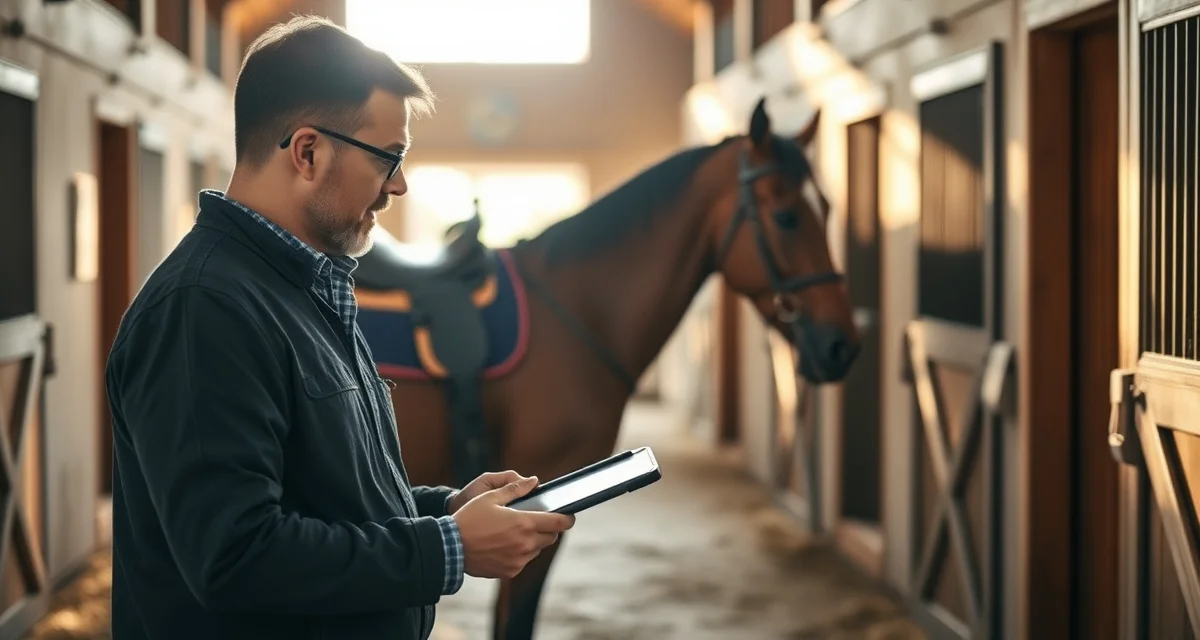
Trail Riding Barn Owner Communication: Progress and Updates
Trail-riding barn owner communication has a problem that generic barn software ignores: trail horses live in a completely different world than arena horses. Owners want to know about trail condition exposure, herd behavior on the trail, and fitness progress over varied terrain, not dressage scores or jump heights. Trail riding disciplines have unique owner communication patterns that most barn management tools were never designed to handle.
TL;DR
- Trail Riding clients need training progress updates that use concrete, objective markers rather than general impressions.
- Each horse entering a trail riding training program should have a documented program goal and rough timeline at intake.
- Monthly progress reviews comparing current status against the original program plan demonstrate value to clients and protect the trainer.
- Progress documentation with timestamps creates a record that supports the trainer if a client disputes whether advancement occurred.
- Video and photo updates tied to specific milestones give trail riding owners visibility that written reports alone cannot provide.
If you're running a trail riding operation and still sending vague text messages or monthly paper reports, you're leaving owners frustrated and your barn vulnerable to churn.
Why Trail Riding Owner Communication Is Different
Trail horse owners care about specific things: how their horse handled a creek crossing, whether it spooked at mountain bikes, how it performed on a 10-mile conditioning ride. These are not checkbox updates.
Arena disciplines have structured metrics built into their routines. Trail riding progress is more narrative, more situational, and harder to standardize without the right system in place. That gap is exactly why so many trail barns struggle to keep owners informed consistently.
Step 1: Define What Trail Riding Owners Actually Want to Track
Identify the Core Progress Metrics
Before you build any communication system, get clear on what matters to your clients. For trail riding barns, that typically includes:
- Trail exposure milestones (water crossings, bridges, traffic, wildlife)
- Conditioning progress (distance, elevation, pace over time)
- Herd and group ride behavior
- Tack and equipment fit notes from the trail
- Farrier and vet observations specific to trail work
Survey your current owners with three questions: What do you most want to know after each ride? What would make you feel confident your horse is progressing? What information do you currently not get but wish you did?
Set a Reporting Frequency That Matches Your Ride Schedule
Trail barns often operate on irregular schedules tied to weather, trail access, and seasonal conditions. Your communication cadence should reflect that reality. A weekly summary works well for active conditioning clients. A per-ride update model works better for owners who board horses used on guided trail rides.
Step 2: Build a Trail-Specific Update Template
What to Include in Every Update
Generic barn software often provides templates built around arena work. You need something that captures trail-specific context. A solid trail riding update template includes:
- Date and trail location (name the trail or route)
- Distance and duration (miles covered, total ride time)
- Terrain and conditions (mud, rocky sections, water crossings encountered)
- Horse behavior highlights (specific reactions, improvements, concerns)
- Fitness observation (recovery time, energy level at end of ride)
- Next session goal (what you're working toward)
Keep the narrative section short and specific. "Crossed the wooden bridge without hesitation for the first time" tells an owner more than "good ride today."
Add Photo and Video Documentation
Trail riding is visual. Owners who can't be present on the trail respond strongly to a quick photo of their horse on a scenic stretch or a 30-second clip of a successful water crossing. This kind of documentation builds trust faster than any written report.
Step 3: Choose the Right Communication Channel
Why Email and Text Alone Fall Short
Most trail barn managers rely on a mix of text messages and occasional emails. The problem is that information gets buried, there's no searchable history, and owners have no way to see progress over time. When an owner asks "how has my horse improved over the last three months?" you shouldn't have to dig through your phone.
A dedicated owner communication portal solves this by centralizing all updates, photos, and notes in one place that owners can access anytime. It also removes the back-and-forth that eats up your time.
Match the Channel to the Message Type
Not every update needs the same delivery method:
- Routine ride updates: portal or app notification
- Health or injury concerns: phone call first, then written follow-up in the portal
- Billing and scheduling: portal or email
- Milestone moments: portal post with photo, optionally shared to a client group
Step 4: Set Up a Consistent Review Cycle
Monthly Progress Reviews
Once a month, send each owner a summary that pulls together the ride log, any health notes, and a short assessment of where their horse stands against the goals you set together. This doesn't need to be long. A structured one-page summary with three sections (what we did, what we observed, what's next) is enough.
Owners who receive consistent monthly reviews are significantly more likely to renew board contracts and refer new clients. Consistency signals professionalism, and professionalism builds retention.
Quarterly Goal-Setting Check-Ins
Every quarter, schedule a brief call or in-person conversation to revisit goals. Trail riding goals shift with seasons. A horse that was working on basic trail confidence in spring may be ready for multi-day conditioning rides by fall. Documenting these evolving goals inside your communication system keeps everyone aligned.
Step 5: Use Software Built for How Trail Barns Actually Operate
What to Look for in a Trail Barn Management Tool
Most barn software was designed around arena disciplines. When evaluating tools for trail riding barn operations, look for:
- Flexible update templates you can customize for trail-specific fields
- Photo and video attachment support
- A searchable ride log owners can access independently
- Mobile-friendly interface for updates from the trail
- Notification controls so owners get updates without being overwhelmed
Some tools lack the ability to customize what fields appear in an update, which forces trail barn managers to either leave fields blank or add awkward workarounds.
How BarnBeacon Fits Trail Riding Workflows
BarnBeacon's owner portal is built to adapt to discipline-specific reporting needs, which matters for trail barns that don't fit the arena mold. You can configure update templates to include trail-specific fields, attach media directly from your phone after a ride, and give owners a clean timeline view of their horse's progress.
Owners log in and see a real history, not a string of disconnected texts. That visibility reduces the "how's my horse doing?" calls and builds the kind of confidence that keeps clients long-term.
Common Mistakes Trail Barn Managers Make
Sending updates only when something goes wrong. Owners who only hear from you during problems start to associate your communication with bad news. Regular positive updates change that dynamic.
Using the same template as arena barns. If your update form asks about arena work and flatwork scores, you've already lost credibility with a trail horse owner. Discipline-specific templates matter.
Letting the ride log live only in your head. If you're the only one who knows what happened on Tuesday's ride, you have a single point of failure. Document everything in a system, not just your memory.
Overcomplicating the update. A two-paragraph update sent consistently beats a detailed report sent twice a year. Frequency and reliability matter more than length.
How do I communicate with trail riding horse owners?
Use a combination of ride-specific updates, monthly summaries, and quarterly goal reviews. The key is consistency and trail-specific detail, not generic barn updates. A dedicated owner portal keeps all communication in one searchable place and reduces the time you spend on back-and-forth messages.
What do trail riding owners want to know about their horses?
Trail horse owners prioritize behavioral progress on the trail (water crossings, traffic exposure, group ride behavior), fitness and conditioning metrics, and specific observations from each ride. They want narrative context, not just checkbox data. Photos and short videos from the trail are especially valued by owners who can't be present.
What owner portal features matter for trail riding barns?
Look for customizable update templates that support trail-specific fields, photo and video attachment from mobile, a searchable ride history owners can access independently, and flexible notification settings. Portals built only for arena disciplines often lack the template flexibility trail barns need to communicate meaningfully with their clients.
How often should training progress updates be sent to trail riding clients?
A consistent weekly or bi-weekly update schedule works better than updates sent only when something notable happens. Trail Riding owners who receive regular updates on a predictable schedule are significantly less likely to initiate check-in calls or express concern about their horse's progress. Set the update frequency at intake and hold to it; consistency matters as much as content.
How do I document trail riding training progress in a way that demonstrates value to clients?
Document progress against the specific goals established at the start of the program, not against general training benchmarks. A trail riding client who enrolled with a defined competition goal needs to see their horse's development measured against that goal. When progress is slower than expected, proactive documentation of the reason maintains owner confidence far better than silence or vague reassurance.
Related Articles
- Endurance Barn Owner Communication: Progress and Updates
- Mounted Patrol Barn Owner Communication: Progress and Updates
FAQ
What is Trail Riding Barn Owner Communication: Progress and Updates?
Trail riding barn owner communication covers how barn managers and trainers keep horse owners informed about their horse's progress on trails, fitness development, herd behavior, and terrain exposure. Unlike arena disciplines, trail riding requires tracking outdoor conditions, varied terrain performance, and real-world behavior. Effective communication uses concrete milestones, timestamped updates, photos, and video to give owners clear visibility into their horse's development throughout the training program.
How much does Trail Riding Barn Owner Communication: Progress and Updates cost?
Structured trail riding owner communication is typically included as part of your barn management software subscription or training program fees. Dedicated barn management platforms range from free basic tools to $50–$150 per month for full-featured systems. The cost of not having a structured system is higher: poor communication is a leading driver of client churn, making the investment in proper tools well worth the expense for most operations.
How does Trail Riding Barn Owner Communication: Progress and Updates work?
Effective trail riding barn owner communication works by documenting each horse's program goals at intake, then delivering regular updates tied to specific milestones. Trainers track trail condition exposure, fitness progress over varied terrain, and herd dynamics, then share timestamped reports, photos, and videos with owners. Monthly reviews compare current status against the original program plan, giving owners a clear, objective picture of their horse's development over time.
What are the benefits of Trail Riding Barn Owner Communication: Progress and Updates?
Structured owner communication builds trust, reduces misunderstandings, and protects trainers from disputes. Owners gain real visibility into their horse's trail fitness, behavior, and readiness for new terrain. Trainers benefit from documented records that demonstrate measurable progress and justify their fees. Regular updates also reduce the volume of ad hoc owner inquiries, saving staff time and allowing trainers to focus on horses rather than managing worried phone calls.
Who needs Trail Riding Barn Owner Communication: Progress and Updates?
Any barn or trainer running a trail riding program with paying clients needs structured owner communication. This includes trail riding schools, boarding barns offering trail conditioning programs, competitive endurance or pleasure riding trainers, and youth programs. If owners are paying for training and cannot observe sessions directly, they need a reliable, consistent update system. Barns with more than a handful of clients especially benefit from a documented, scalable communication process.
How long does Trail Riding Barn Owner Communication: Progress and Updates take?
Setting up a structured communication system typically takes one to two weeks: define intake documentation, build your milestone templates, and select your delivery tool. Once running, monthly progress reviews take 30–60 minutes per horse. Individual update touchpoints, such as post-ride notes or milestone videos, take only a few minutes each. The upfront investment in building the system pays back quickly through reduced owner friction and fewer time-consuming dispute conversations.
What should I look for when choosing Trail Riding Barn Owner Communication: Progress and Updates?
Look for a system that supports trail-specific milestone tracking, not just arena metrics. It should allow photo and video attachments tied to specific progress points, timestamped records for dispute protection, and easy monthly report generation. Integration with your existing barn management workflow matters too. Prioritize tools that let you document intake goals, track terrain and condition exposure, and deliver updates through a channel your clients actually check, whether that is email, app, or text.
Is Trail Riding Barn Owner Communication: Progress and Updates worth it?
Yes, for any barn with paying trail riding clients, structured communication is worth it. Vague updates frustrate owners and accelerate churn. A documented system with concrete milestones, timestamped records, and visual proof of progress gives owners confidence and gives trainers protection. Barns that implement consistent communication routines consistently report stronger client retention and fewer billing disputes. The time invested in building the system is recovered quickly through improved owner relationships and reduced administrative firefighting.
Sources
- American Trail Horse Association
- American Horse Council
- Back Country Horsemen of America
- University of Minnesota Extension Equine Program
- American Association of Equine Practitioners (AAEP)
Get Started with BarnBeacon
Trail Riding clients who receive consistent, objective progress updates stay enrolled longer and refer more clients than those who hear only when something goes wrong. BarnBeacon's training log and owner communication tools make it straightforward to document session progress and share updates through a client portal -- without adding significant time to a trainer's day. If structured trail riding client communication is not yet part of your program, BarnBeacon makes it practical to start.