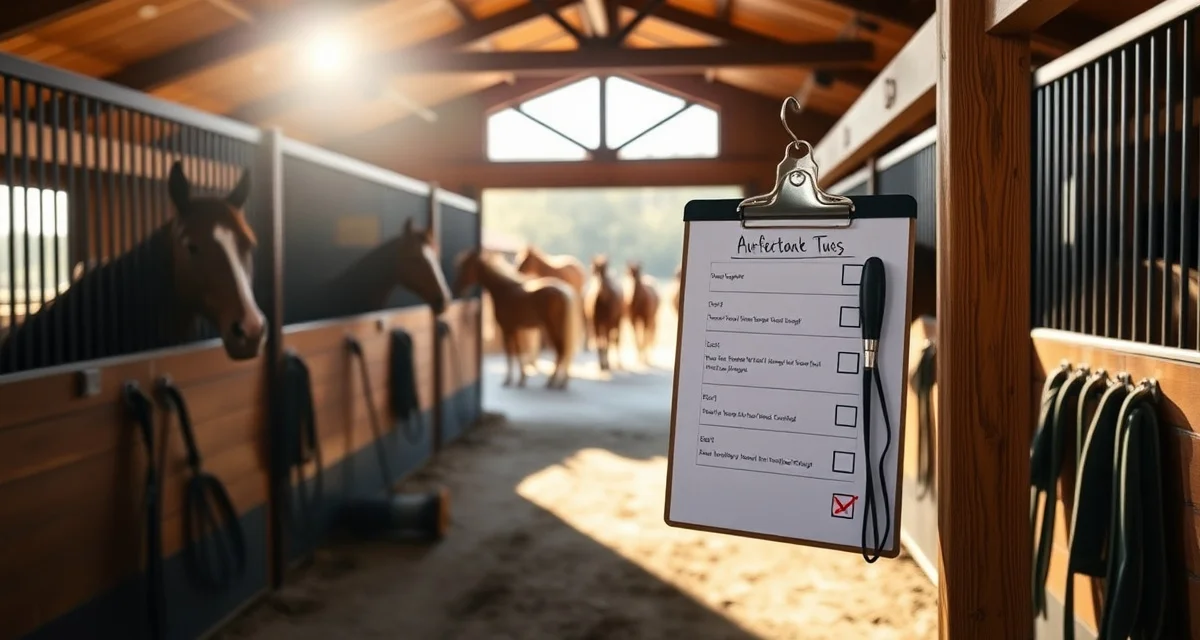
Western [barn daily checklist](/barn-daily-checklist): Complete Guide for Facility Managers
Western horse events generated $2.4 billion in economic activity in 2024, and the horses powering that economy need consistent daily care that doesn't vary based on who shows up to work. A daily checklist is how you ensure that consistency at a western facility where horses have different discipline-specific care needs, where show travel disrupts routine, and where the team includes staff at different experience levels.
TL;DR
- Western facilities carry billing complexity -- cattle fees, arena time, split partner charges, discipline-specific packages -- that generic barn software was not built to handle.
- Multi-discipline operations running cutting, reining, and western pleasure under one roof need billing tools that differentiate by competition organization.
- Futurity development timeline visibility shifts owner communication from reactive to proactive, reducing check-in calls and disputes.
- NRHA, NCHA, and AQHA compliance requirements for drug testing and withdrawal periods require records tied to planned show entry dates.
- Purpose-built western facility software eliminates the spreadsheet workarounds that most operations currently use to fill software gaps.
This guide gives you a complete daily checklist framework for western barns, adapted for the specific requirements of barrel racing, reining, cutting, and multi-discipline facilities.
Morning Checklist
Individual horse assessment (for each horse):
- Attitude and comfort from stall front
- Water consumption overnight (bucket level check or automatic waterer reading)
- Manure: normal volume and consistency
- Appetite: overnight hay consumed, any feed left from previous evening
- All four lower limbs: feel for heat and filling before any exercise
- Any new cuts, scrapes, or swelling
Feeding:
- Morning grain and supplements per individual diet sheet
- Correct hay type and amount per diet sheet
- Any morning medications given and logged (with time)
- Any special feeds for horses in heavy training, coming off events, or on veterinary protocols
Stall and facility:
- Stalls cleaned and bedded
- Water buckets emptied, scrubbed if needed, refilled (or automatic waterers checked)
- Aisles swept and hazard-free
Discipline-specific morning tasks:
- Reiners in show prep: check muscle soreness or stiffness indicators before asking for collected work
- Barrel horses returning from weekend events: extra leg check, check for travel fatigue signs
- Cutting horses with cattle sessions scheduled: confirm cattle availability with the cattle provider
Pre-Work Checklist
Before each horse is worked:
- Confirm horse is cleared for work (no health restrictions, no vet notes, no rest protocol active)
- Tack check: saddle fit, girth or cinch, headstall, bit cleanliness
- For barrel horses: any protective boots or bell boots per individual protocol
- For reining horses: bandages or sport boots per individual protocol
- Any pre-work medications (joint supplements, electrolytes) given and logged
- Rider or trainer briefed on any health notes from the morning check
Post-Work Checklist
After each horse is unsaddled:
- Proper cool-out completed (walking until respiration and heart rate normalized)
- Body rinse or spot bath as needed (especially for horses worked in warm weather)
- All four legs checked after work: compare to pre-work check for any new filling or heat
- Leg wraps or standing wraps applied per individual protocol
- Horse returned to stall or turnout per schedule
- Tack cleaned and stored correctly
- Saddle pad hung to dry
Mid-Day and Afternoon Checklist
Water and feeding:
- Water buckets checked and topped off mid-day for horses in stalls
- Afternoon grain and supplements per diet sheet (if two grain feedings)
- Horses on restricted diet noted and confirmed
- Horses in turnout checked mid-day
- Any horses that need to come in before evening feeding identified and scheduled
Health observation:
- Walk the barn at least once in the early afternoon
- Note any changes from morning: horses that look uncomfortable, off their feed, or showing unusual behavior
Evening Checklist
Horse health re-check:
- Visual check at evening feeding for each horse
- Note any changes since morning in appetite, comfort, or legs
- Any concerns flagged to manager or on-call trainer
Feeding:
- Evening grain and supplements per diet sheet
- Hay provided per diet sheet
- Evening medications given and logged
Stall care:
- Stalls picked after evening feeding
- Water buckets checked and refilled
- Blankets applied if overnight temperatures require
Facility close:
- Barn aisle clear and hazard-free
- All gates and stall latches confirmed
- Lights and water off in areas not needed overnight
Night check (last person at barn):
- Walk through all stalls
- Any horse that looks off gets a closer check and a note in the daily log
- Night log written and accessible for morning team
Show Travel Checklist
Before departure:
- Coggins and vaccination records printed or digitally accessible for all traveling horses
- All required medications packed with dosing instructions
- Feed and supplements for the trip duration packed per each horse's program
- Leg wraps, shipping boots, or bandages applied per individual protocol
- Water source confirmed at destination (familiar water in a jug for horses that refuse new water)
At the event:
- Horses check in after arrival: attitude, legs, gut sounds, hydration
- Feeding on schedule regardless of arrival time
- Horses walked post-travel before stabling
- Daily checks continue at the event per home protocol
On return:
- Post-travel leg check for all horses
- Monitor closely for 48 hours: shipping fatigue, travel colic, respiratory changes
- Log any concerns in health record
Adapting the Checklist for Your Facility
The checklists above are a framework. Your facility will have additional tasks or different protocols for specific horses or disciplines. The key is that whatever your standard is, it's written down, assigned to specific people, and actually used.
BarnBeacon's barn management software lets you build these checklists digitally, assign them to specific staff members, and track completion. When a task is marked done, it's logged with a timestamp. When something is missed, it shows up as incomplete. Managers can review daily completion from anywhere without being at the barn in person.
For how daily checklists connect to your broader management approach, see the western barn operations guide.
Making Checklists Work
The most common reason checklists fail is that they're created but not used. Here's how to build a checklist culture:
- Introduce checklists as tools, not as mistrust. Frame them as a way to make everyone's job clearer, not as surveillance.
- Review the checklist with new staff during onboarding. Walk through it physically at the barn.
- Update checklists when protocols change. A checklist that doesn't match current practice creates confusion.
- Address gaps quickly. When a task regularly gets skipped, have a direct conversation. Don't let it become normal.
Frequently Asked Questions
How do western barn managers handle daily checklists?
The most organized western facilities run digital checklists assigned to specific staff, with completion tracked centrally so managers can verify without being physically present. Paper checklists work at smaller operations if someone reviews them daily and updates them when protocols change.
What software do western facilities use for daily checklists?
Western barn managers increasingly use barn management platforms with task management modules where daily checklists can be built, assigned, and tracked. BarnBeacon lets you create discipline-specific task templates and assign them at the individual horse or barn-wide level.
What are the unique daily checklist challenges at western barns?
The discipline diversity at multi-discipline western facilities means that one standard checklist doesn't cover every horse's needs. Barrel horses returning from events need different post-travel checks than reiners who stayed home all week. Show travel checklists are an additional layer that doesn't exist at non-competitive facilities.
How do western facilities handle billing for cattle-related charges?
Cattle charges -- whether per-head fees for working specific cattle, pen rental, or cattle sourcing costs -- should be captured at the time of each session rather than estimated at month end. Create dedicated billing categories for cattle-related charges in your management system so they are clearly separate from board, training, and arena fees on the owner's invoice. When multiple clients use the same cattle group in a session, the cost allocation method should be defined in writing and agreed to before the session occurs.
What compliance records are most critical for western performance facilities?
For NRHA and NCHA competing horses, joint injection records with specific product names, administration dates, and calculated clearance dates tied to planned competition entries are the highest-stakes compliance records. AQHA registration compliance -- ensuring competing horses have current registration and eligibility for entered classes -- is a second critical documentation area. Maintain these records in a system that allows date-based queries so you can pull clearance status for any horse before submitting an entry.
What is Western barn daily checklist: Complete Guide for Facility Managers?
A western barn daily checklist is a structured task management framework designed specifically for western horse facilities. It standardizes essential care routines — feeding, stall cleaning, health monitoring, equipment checks — across disciplines like cutting, reining, and western pleasure. Unlike generic barn checklists, it accounts for discipline-specific needs, show travel disruptions, NRHA/NCHA/AQHA compliance requirements, and multi-staff operations where consistency regardless of who is working is critical to horse welfare and facility performance.(/barn-daily-checklist): Complete Guide for Facility Managers. Target 50-150 words.]
How much does Western barn daily checklist: Complete Guide for Facility Managers cost?
A western barn daily checklist itself costs nothing — it is a free operational framework. However, purpose-built western facility management software that digitizes and automates the checklist typically runs $50–$300 per month depending on barn size and features. This investment replaces costly spreadsheet workarounds and reduces administrative time spent on billing, compliance recordkeeping, and owner communication, making it cost-effective for most multi-discipline operations handling cattle fees, arena bookings, and futurity development tracking.(/barn-daily-checklist): Complete Guide for Facility Managers. Target 50-150 words.]
How does Western barn daily checklist: Complete Guide for Facility Managers work?
A western barn daily checklist works by breaking facility care into timed task blocks — typically morning, midday, and evening rounds. Staff work through standardized items covering feed, water, stall condition, health observation, equipment, and arena readiness. Digital versions assign tasks to specific team members, log completion with timestamps, flag anomalies, and integrate with billing and compliance records. This creates an auditable daily record that supports NRHA, NCHA, and AQHA drug testing and withdrawal period documentation.(/barn-daily-checklist): Complete Guide for Facility Managers. Target 50-150 words.]
What are the benefits of Western barn daily checklist: Complete Guide for Facility Managers?
The core benefits are consistency, accountability, and compliance. Consistent daily execution protects horse health and performance regardless of staff turnover or show-travel disruptions. Accountability is built in through assigned tasks and completion logs. For western facilities specifically, compliance benefits are significant — checklist records tied to show entry dates support drug withdrawal documentation required by NRHA, NCHA, and AQHA. Owners receive proactive updates rather than reactive check-in calls, reducing disputes and strengthening client retention across cutting, reining, and pleasure programs.(/barn-daily-checklist): Complete Guide for Facility Managers. Target 50-150 words.]
Who needs Western barn daily checklist: Complete Guide for Facility Managers?
Any western horse facility with multiple staff members, multiple disciplines, or horses preparing for NRHA, NCHA, or AQHA competition needs a formal daily checklist system. This includes professional training barns, breeding operations, show facilities, and multi-discipline ranches running cattle programs alongside performance horses. The need is especially acute at facilities where show travel regularly pulls key personnel away, where junior staff handle morning rounds, or where billing complexity across disciplines creates gaps that generic barn management tools cannot address.(/barn-daily-checklist): Complete Guide for Facility Managers. Target 50-150 words.]
How long does Western barn daily checklist: Complete Guide for Facility Managers take?
Completing a western barn daily checklist takes 15–30 minutes per round for a staff member managing 10–20 horses, depending on barn layout and task volume. Total daily checklist time across morning, midday, and evening rounds runs roughly 60–90 minutes of structured task execution per barn section. Initial setup of a digital checklist system takes a few hours to configure. Once implemented, the time investment pays back through fewer missed tasks, faster owner communication, and streamlined compliance documentation before show entries.(/barn-daily-checklist): Complete Guide for Facility Managers. Target 50-150 words.]
Sources
- American Quarter Horse Association (AQHA)
- National Reining Horse Association (NRHA)
- National Cutting Horse Association (NCHA)
- American Horse Council
- Oklahoma State University Extension Equine Program
Get Started with BarnBeacon
Western facility billing, compliance tracking, and futurity program management require tools built for the specific demands of competitive western operations -- not generic barn software adapted with workarounds. BarnBeacon handles multi-discipline billing, NRHA and NCHA compliance records with withdrawal period alerts, and futurity development tracking with owner portal visibility in a single platform. If your western operation is managing these workflows across spreadsheets and manual entries, BarnBeacon gives you an integrated alternative.