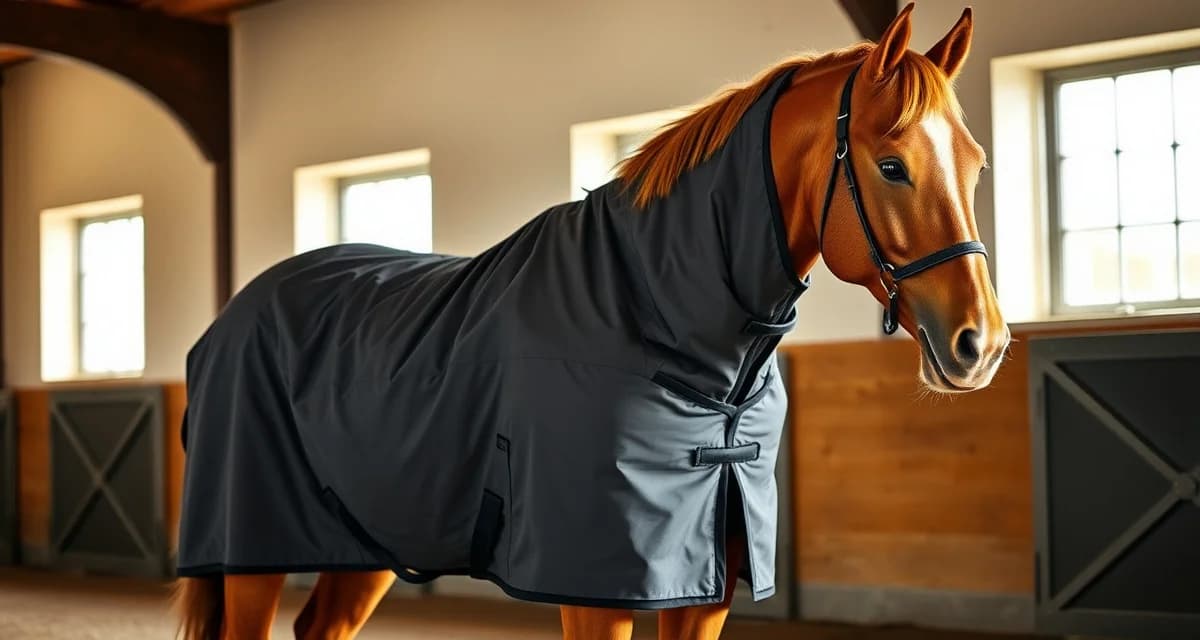
When and How to Blanket Horses: A Practical Barn Guide
Blanketing is one of the more contentious topics in equine management. Ask five horse owners whether their horse needs a blanket in 40-degree weather and you'll get five different answers delivered with conviction. As a barn manager, your job is to have a defensible policy and apply it consistently, while respecting the individual needs of the horses in your care.
Understanding How Horses Regulate Temperature
Horses are remarkably well equipped to handle cold. A healthy horse with a full winter coat, adequate body weight, shelter from wind and moisture, and enough forage to fuel internal heat production can comfortably tolerate temperatures well below freezing without a blanket.
The key variables are coat condition, body condition score, shelter availability, and moisture. A horse that has been clipped, is underweight, lives in an exposed paddock, or has gotten wet is far more vulnerable to cold than an unclipped horse in good condition with access to a run-in shed.
Horses heat themselves primarily through hindgut fermentation. When they eat forage, the microbial activity in the hindgut produces heat as a byproduct. This is why access to free-choice hay in cold weather is more important for warmth than most blankets. A horse that runs out of hay on a cold night is a horse at risk of getting chilled regardless of what's on its back.
Temperature Guidelines
These thresholds are starting points, not absolute rules. Adjust based on the individual horse's coat, health, and housing.
Unclipped horses in good condition with shelter typically don't need blankets until temperatures drop consistently below 20 degrees Fahrenheit, and many don't need them even then. Clipped horses, senior horses, horses with health conditions, and horses that are underweight have much lower thresholds, often needing a blanket once temperatures drop below 40 to 50 degrees.
Wind chill matters significantly. A still 30-degree day is far less stressful than a 35-degree day with sustained wind and rain. Factor in what the weather actually feels like, not just the thermometer reading.
Blanket Types and When to Use Them
Sheet (0g fill): appropriate for clipped horses in mild temperatures, typically 40 to 60 degrees, or as a fly and rain barrier in warmer weather.
Light blanket (100 to 150g fill): suitable for clipped horses when temperatures are in the 30s to 40s, or unclipped horses in wet, windy conditions.
Medium blanket (200 to 250g fill): for clipped horses in the 20s, or unclipped horses in the teens. Good transition blanket for variable spring and fall weather.
Heavy blanket (300g or more fill): for clipped horses in extreme cold or horses with very little coat. Most unclipped horses in good condition rarely need this level of insulation.
A waterproof outer shell is important if horses live outside or in paddocks without complete shelter. A blanket that loses its waterproofing becomes a liability in wet weather, trapping moisture against the horse's coat.
Checking Fit
A poorly fitting blanket causes rubs, restricts movement, and can slip into dangerous positions. Check fit at the neck opening first. You should be able to fit two to three fingers between the horse and the blanket at the chest, and the blanket should sit well clear of the withers without pulling. The shoulder seams should sit at the point of the horse's shoulder to allow free movement.
The belly surcingles should be snug enough to prevent the blanket from swinging but not so tight they restrict breathing. Crossing surcingles is the standard configuration. Leg straps should allow the horse to walk and lie down comfortably. Check for rubbing behind the elbows and at the chest regularly.
Blanket Care
Wet blankets should be removed and dried before being put back on. A wet blanket defeats its purpose and can cause skin issues. Have a backup blanket available for horses that get wet frequently.
Clean blankets at least once per season, more often for horses prone to skin conditions. Most horse blanket laundry services charge $20 to $40 per blanket and re-waterproof the shell at the same time. Budget for this as part of your facility's seasonal preparation.
Inspect blankets at the start of each cold season. Check the waterproofing, the fill integrity, stitching on the surcingles and leg straps, and the buckle hardware. A blanket that looked fine in storage may have developed problems.
Managing Barn-Wide Blanketing
At a facility with 20 or 30 horses, blanketing becomes a significant daily task. Establish clear preferences for each horse in their profile, noting which blanket to use at which temperatures. BarnBeacon lets you log blanketing instructions per horse so staff always know the owner's preferences without having to ask.
Build a blanketing schedule based on the forecast so staff can prepare in advance. Morning turnout and evening stalling are the two transition points where most blanketing happens. Having a clear plan for each horse reduces the time spent making decisions and the risk of mistakes when the barn is busy.
Communicate blanket-on and blanket-off decisions to owners, especially when you're deviating from normal protocol due to unusual weather. Owners appreciate knowing their horse's care is being actively managed rather than left to chance.
FAQ
What is When and How to Blanket Horses: A Practical Barn Guide?
This is a practical guide for barn managers and horse owners covering the principles and decision-making behind horse blanketing. It explains how horses regulate body temperature, which factors make a horse more cold-vulnerable, and how to build a consistent, defensible barn blanketing policy that accounts for individual horse needs.
How much does When and How to Blanket Horses: A Practical Barn Guide cost?
The guide is free to read on BarnBeacon. There is no cost or subscription required. It is part of BarnBeacon's library of equine management resources designed to help barn managers and horse owners make better-informed care decisions without paying for a consultant.
How does When and How to Blanket Horses: A Practical Barn Guide work?
The guide walks you through the key variables that determine whether a horse needs a blanket — coat condition, body condition score, shelter access, and moisture exposure — and explains how horses generate warmth through hindgut fermentation. It then helps you apply those factors to real barn scenarios and individual horses.
What are the benefits of When and How to Blanket Horses: A Practical Barn Guide?
The main benefit is a clearer, more consistent approach to blanketing decisions. Rather than guessing or following blanket rules, you learn the underlying physiology. This reduces the risk of horses getting chilled or overheated, helps you communicate your policy to boarders, and gives you a defensible framework when horse owners disagree.
Who needs When and How to Blanket Horses: A Practical Barn Guide?
This guide is most useful for barn managers responsible for multiple horses with varying needs, as well as individual horse owners navigating their first winters or managing clipped, older, or underweight horses. Anyone who has felt uncertain about whether to blanket in borderline weather will find the structured framework helpful.
How long does When and How to Blanket Horses: A Practical Barn Guide take?
Reading the guide takes roughly five to ten minutes. Applying it meaningfully — assessing each horse's coat, body condition, and shelter situation and adjusting your barn policy — may take a barn check or two at the start of the season. The goal is a repeatable routine you can execute quickly each day as temperatures shift.
What should I look for when choosing When and How to Blanket Horses: A Practical Barn Guide?
Look for coverage of the key blanketing variables: coat clip status, body condition score, wind and moisture exposure, and forage access. A good guide should explain horse thermoregulation, not just list temperature cutoffs. It should also address how to adjust for individual horses rather than applying a single rule across an entire barn.
Is When and How to Blanket Horses: A Practical Barn Guide worth it?
Yes, if you manage horses through cold weather. Understanding that forage access matters more than most blankets, and knowing which horses are genuinely vulnerable versus well-equipped to handle cold, prevents both under-blanketing and the more common mistake of over-blanketing horses that would regulate fine on their own.