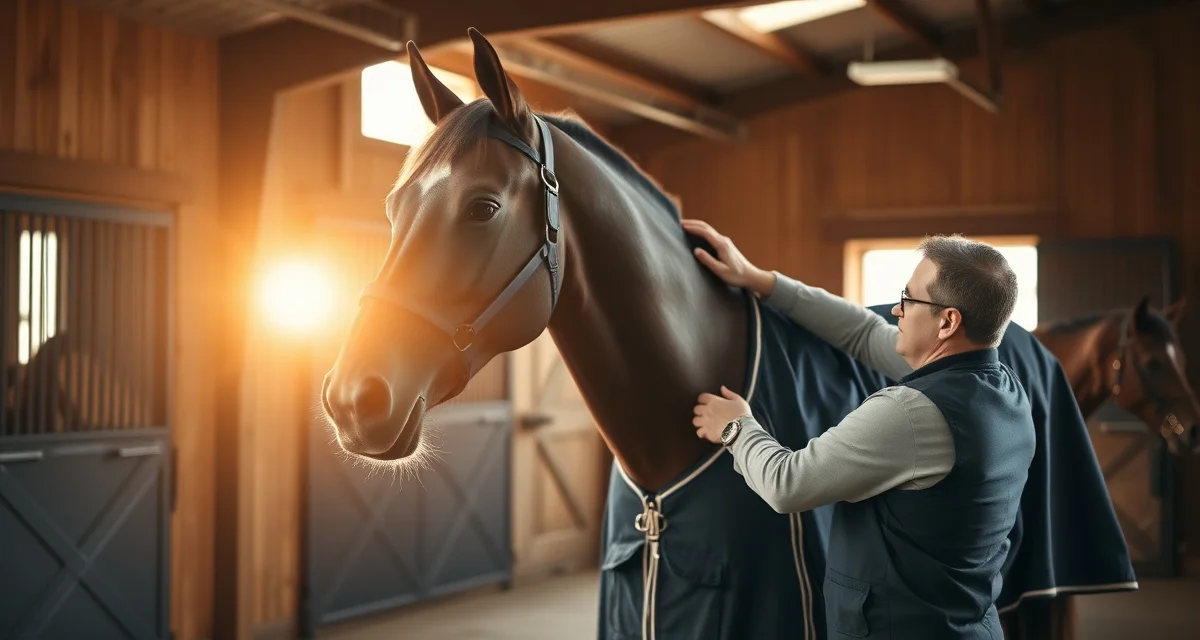
Horse Blanket Management by Temperature: Barn Manager Guide
Incorrect blanketing causes 18% of skin conditions in stabled horses, making it one of the most preventable welfare issues in any barn. Getting horse blanket management by temperature right is not just about comfort, it is about avoiding overheating, pressure sores, and the kind of staff confusion that leads to a clipped horse standing in a cold stall with nothing on.
TL;DR
- Blanketing decisions based on posted temperature thresholds reduce staff judgment calls and inconsistency across shifts
- A horse's clip level is the primary variable that changes blanketing needs relative to air temperature
- Wet blankets left on horses overnight create a greater health risk than going unblanketed in many temperature ranges
- Owner preference documentation prevents liability disputes when a horse is found with or without a blanket
- Blanket rotation logs help track wear and flag repairs before a blanket fails during a cold snap
- Digital task systems that push blanketing decisions to staff phones based on current temperatures reduce missed changes
This guide covers weight selection by temperature range, how clip status and age change the math, and how to build a communication system that keeps every horse correctly covered, every night.
The Real Cost of Getting Blanketing Wrong
Most blanketing mistakes fall into two categories: over-blanketing and under-blanketing. Both cause harm.
An over-blanketed horse sweats under its rug, which breaks down the natural coat oils, creates a warm damp environment for fungal and bacterial growth, and can cause significant weight loss over a winter season. Under-blanketing a clipped or elderly horse in a cold snap burns calories the horse cannot afford to lose, and in extreme cases contributes to hypothermia.
The problem is compounded in larger operations. When you have 30, 50, or 80 horses in your care, each with a different clip status, age, body condition score, and owner preference, a single blanket policy does not work. You need a system.
Understanding the Temperature Baseline
Horses are not humans. Their thermoneutral zone, the temperature range where they maintain body heat without extra energy expenditure, sits between approximately 41°F and 68°F (5°C to 20°C) for a healthy, unclipped adult horse with a full winter coat.
Below 41°F, an unclipped horse in good body condition starts working harder to stay warm. Below 18°F (-8°C), even a full-coated horse benefits from a light blanket. The numbers shift significantly for clipped horses, young horses, seniors, and horses with low body condition scores.
Use this as your starting framework, then adjust per horse.
Horse Blanket Weight Chart by Temperature
This chart applies to a healthy, unclipped adult horse in average body condition. Adjustments for clip status follow in the next section.
| Temperature Range | Recommended Blanket |
|---|---|
| Above 50°F (10°C) | No blanket needed |
| 40–50°F (4–10°C) | Sheet or no blanket |
| 30–40°F (-1–4°C) | Lightweight blanket (100–150g fill) |
| 20–30°F (-7–-1°C) | Medium blanket (200–250g fill) |
| 10–20°F (-12–-7°C) | Heavy blanket (300–400g fill) |
| Below 10°F (-12°C) | Heavy blanket + neck cover |
Wind chill and precipitation change these numbers. A 35°F day with 25 mph wind and rain is functionally closer to 20°F for a horse standing in a field. Factor weather conditions, not just the thermometer reading.
Adjusting for Clip Status
Clip status is the single biggest variable in any equine blanketing decision guide. A fully clipped horse has lost its primary insulation and needs blanket coverage starting at temperatures that would leave a full-coated horse perfectly comfortable.
Full Clip and Hunter Clip
Add approximately 10–15°F to your threshold temperatures. A fully clipped horse needs a lightweight blanket at 50°F and a heavy blanket at 30°F. In sub-zero conditions, a neck cover and a high-fill blanket are non-negotiable.
Trace Clip and Low Clip
These horses retain belly and leg coverage, which helps. Add roughly 5–8°F to your thresholds. A trace-clipped horse in good condition can often manage with a medium blanket where a full clip would need a heavy.
Unclipped Horses
Follow the base chart above. The main risk here is over-blanketing during mild spells. A full-coated horse at 45°F in a well-ventilated barn does not need a blanket. Putting one on traps heat and moisture.
Age and Health Adjustments
Senior Horses (18+)
Older horses lose muscle mass and thermoregulatory efficiency. A 22-year-old horse in moderate body condition should be treated like a clipped horse in terms of blanketing thresholds, even if they carry a full coat. Add 10°F to your base thresholds and monitor body condition monthly through winter.
Young Horses (Under 2)
Foals and yearlings have less developed thermoregulation. They also tend to move around more, which generates heat. Follow owner and vet guidance, but generally treat young horses similarly to seniors in cold snaps.
Horses Recovering from Illness or Surgery
Any horse with a compromised immune system, recent surgery, or significant weight loss needs individual assessment. Default to warmer coverage and check with the attending vet.
How does BarnBeacon compare to spreadsheets for barn management?
Spreadsheets require manual updates, lack real-time notifications, and create version control problems when multiple staff members are working from different files. BarnBeacon centralizes records, pushes alerts automatically based on logged events, and connects care records to billing and owner communication in one system. Most facilities report saving several hours per week after switching from spreadsheets.
What is the setup process like for BarnBeacon?
Most facilities complete the initial setup in under a week. Horse profiles, service templates, and billing configurations can be imported from existing records or entered directly. BarnBeacon's US-based support team is available to assist with setup, and most managers are running their first billing cycle through the platform within days of starting.
Can BarnBeacon support a barn with multiple staff members?
Yes. BarnBeacon supports multiple user accounts with role-based access, so barn managers, barn staff, and owners each see the information relevant to their role. Task assignments, completion logs, and communication history are all attached to the barn's account rather than to individual staff phones or email addresses.
Related Articles
- Barn Manager Salary Guide: US Equine Industry Data
- Barn Manager Tools and Software: Complete 2025 Guide
- Barn Staff Management Guide
FAQ
What is Horse Blanket Management by Temperature: Barn Manager Guide?
Horse Blanket Management by Temperature: Barn Manager Guide is a practical framework for making consistent, temperature-based blanketing decisions across your barn. It covers how to select blanket weights by temperature range, adjust for a horse's clip level and age, and build communication systems that prevent staff errors between shifts. Incorrect blanketing causes 18% of skin conditions in stabled horses, making this one of the most impactful welfare protocols a barn manager can implement.
How much does Horse Blanket Management by Temperature: Barn Manager Guide cost?
This is a free educational resource, not a paid product. The guide itself costs nothing to read and apply. Any costs associated with implementation depend on your barn's existing setup — digital task management tools that push temperature-based blanketing decisions to staff phones vary in price, but the core blanketing protocol can be built using posted temperature charts, owner preference sheets, and a simple rotation log at no additional expense.
How does Horse Blanket Management by Temperature: Barn Manager Guide work?
The system works by anchoring blanketing decisions to posted temperature thresholds rather than individual staff judgment. A horse's clip level is the primary variable — a fully clipped horse needs significantly more coverage than an unclipped one at the same temperature. Owner preferences are documented in advance, blanket rotation is logged to catch wear before failure, and digital tools can automate change reminders based on current conditions, reducing missed blanket changes across shifts.
What are the benefits of Horse Blanket Management by Temperature: Barn Manager Guide?
Consistent temperature-based blanketing prevents overheating, pressure sores, and skin conditions caused by wet or ill-fitted blankets left on overnight. It eliminates the staff confusion that leaves a clipped horse uncovered in a cold stall. Owner preference documentation reduces liability disputes, rotation logs flag repairs before a blanket fails during a cold snap, and clear protocols reduce the decision burden on staff during early morning or late-night checks.
Who needs Horse Blanket Management by Temperature: Barn Manager Guide?
Any barn manager overseeing multiple horses with different clip levels, ages, or owner expectations needs this system. It is especially critical in facilities with rotating staff or shared-care arrangements where no single person has full context on every horse. Private barns with only a few horses benefit from the documentation structure; larger commercial operations gain the most from digital automation that pushes blanket decisions to staff phones in real time.
How long does Horse Blanket Management by Temperature: Barn Manager Guide take?
Building the system takes an initial investment of a few hours — drafting temperature thresholds, collecting owner preferences, and creating rotation log sheets. Once in place, daily execution adds minimal time to existing barn routines. Staff training is typically covered in a single walkthrough. The ongoing time cost is low; the greater risk is the time lost managing skin conditions, owner complaints, or equipment failures that the system is designed to prevent.
What should I look for when choosing Horse Blanket Management by Temperature: Barn Manager Guide?
Look for a framework that accounts for clip status as the primary variable, not just air temperature. It should include clear wet-blanket protocols, since leaving a wet blanket on overnight creates more risk than going unblanketed in many temperature ranges. Owner preference documentation and a repair-tracking rotation log are non-negotiables. If you are evaluating software tools, prioritize systems that push decisions to staff phones based on live temperature data rather than requiring staff to check a separate system.
Is Horse Blanket Management by Temperature: Barn Manager Guide worth it?
Yes. Incorrect blanketing is one of the most preventable welfare issues in any barn, and the downstream costs — vet bills, owner disputes, staff time managing skin conditions — far exceed the effort of building a clear protocol. Barns that document temperature thresholds, clip status, and owner preferences report fewer missed changes and fewer blanket-related health incidents. The system pays for itself the first time it prevents a clipped horse from standing uncovered through a cold night.
Sources
- American Association of Equine Practitioners (AAEP)
- United States Equestrian Federation (USEF)
- American Competitive Trail Horse Association (ACTHA)
- American Horse Council
- Kentucky Equine Research
Get Started with BarnBeacon
Blanketing decisions made consistently across every shift protect horses and protect the facility. BarnBeacon gives equine facilities the tools to post temperature-based blanketing protocols, notify staff of threshold changes in real time, and log blanket applications and removals with timestamps. Start a free trial and put your blanketing system on a digital protocol.