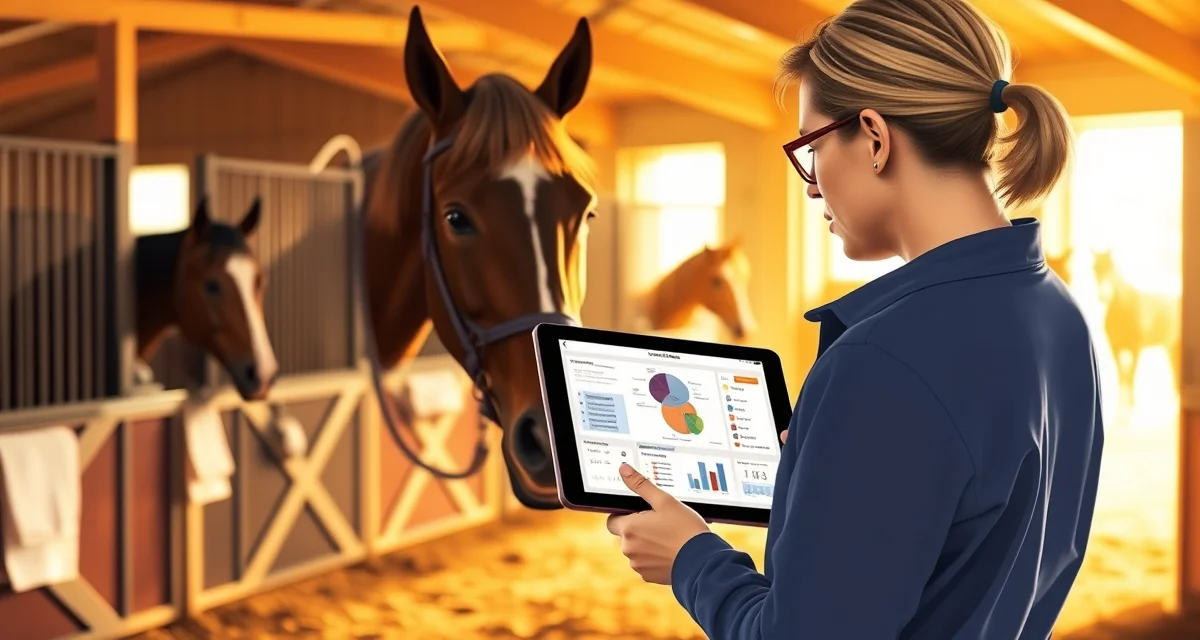
Digital Horse Passport: Owner Access to Complete Horse Records
Owner communication quality is the #1 boarding satisfaction driver, according to industry surveys of equine facility clients. Yet most barns still rely on group texts, scattered emails, and phone tag to keep owners informed. That gap is exactly where digital horse passport owner access changes how barns operate.
TL;DR
- Purpose-built equine barn management software outperforms general tools like spreadsheets or generic project apps for facility operations.
- Integrated platforms that connect billing, health records, scheduling, and owner communication outperform collections of separate tools.
- Cloud-based systems accessible from a phone allow managers and staff to log and access data anywhere on the property.
- Digital health records are more valuable than paper records because they are searchable, shareable, and timestamped.
- Staff adoption is the single largest factor determining whether a software investment delivers its expected value.
- Most facilities that commit to consistent use reach positive ROI within 60 to 90 days of full implementation.
A digital horse passport is a centralized, living record for each horse, covering health history, medications, farrier visits, competition records, and daily care notes. When owners can access that record directly through a portal, the back-and-forth stops, and trust builds fast.
The Problem With How Most Barns Share Information
Walk into any boarding barn and ask how owners get updates. The answer is almost always some version of "we text them when something comes up." That works until it doesn't.
A missed text about a medication change, a forgotten farrier appointment, or a delayed call about a health concern can turn a satisfied owner into a former client. Structured owner communication is not a nice-to-have. It is the foundation of a well-run facility.
How to Set Up Digital Horse Passport Owner Access
Step 1: Create a Complete Horse Profile
Start by building out each horse's digital record before you invite owners to view it. A complete profile should include:
- Health history: vaccinations, vet visits, illness, injury
- Medications: current prescriptions, dosage, administration schedule
- Farrier records: trim and shoe dates, notes from the farrier
- Competition history: events entered, results, travel dates
- Feeding and care instructions: grain amounts, supplements, turnout preferences
The more complete the record at launch, the more value owners see immediately. Incomplete profiles undermine confidence in the system.
Step 2: Configure Owner Portal Permissions
Not every owner needs to see every field. A boarding client may only need health records and daily notes. A competition owner may want full access including travel and performance history.
Set permissions by horse or by owner tier. Most platforms let you control which sections are visible and whether owners can add notes or only view. Keep edit access restricted to barn staff to maintain record integrity.
Step 3: Automate Daily Reports
This is where most barns leave value on the table. Manual updates require staff time and get skipped when the barn is busy. Automated daily reports solve that problem.
BarnBeacon automates owner communication with daily reports, photo sharing, and health alerts sent directly through the owner communication portal. Owners receive a structured update each day without a staff member having to write a single message. That consistency is what builds long-term trust.
Set your daily report to include:
- Feed and water intake observations
- Turnout time and behavior notes
- Any health flags or temperature readings
- One or two photos from that day
Step 4: Set Up Health Alerts
Routine updates are one thing. Urgent alerts are another. Your equine digital health record owner portal should support real-time push notifications or SMS alerts for anything outside normal parameters.
Define your alert thresholds clearly: a temperature above 101.5°F, a missed feed, a vet call, a lameness observation. When owners receive a structured alert rather than a panicked text, they respond more calmly and trust your judgment more.
Step 5: Link Billing to the Horse Record
Owners who can see their horse's care history alongside their invoices ask fewer questions and pay faster. Connecting the horse passport to your billing and invoicing system means an owner can see exactly what they are paying for, line by line.
A farrier visit logged in the horse record should automatically generate a billable line item. A vet call should do the same. Transparency in billing reduces disputes and shortens payment cycles.
Step 6: Invite Owners and Walk Them Through Access
Send a direct invitation with clear instructions. Do not assume owners will figure out the portal on their own. A short video walkthrough or a one-page PDF showing where to find each section cuts support requests significantly.
Follow up after the first week to confirm they have logged in and can find what they need. Owners who never activate their portal access will revert to texting you for updates.
Common Mistakes to Avoid
Launching with incomplete records. If an owner logs in and sees a horse profile with three fields filled out, they lose confidence in the system immediately. Build out records fully before sending invitations.
Skipping the daily report setup. The portal is only as valuable as the information flowing through it. A static record that never updates is not much better than a paper file. Automated daily reports are what make the system feel alive.
Using the portal as a replacement for real conversations. Digital records handle routine communication. They do not replace a phone call when a horse colics or a face-to-face conversation when an owner has concerns. Use the portal to handle the volume so you have time for the conversations that matter.
Ignoring mobile access. Most owners check updates on their phones. If your platform is not mobile-optimized, adoption will be low. Test the owner experience on a phone before you roll it out.
Related Articles
- Endurance Barn Owner Communication: Complete Guide for Facility Managers
- Equine Medical Records: Keeping Complete Documentation for Every Horse
FAQ
How do I improve communication with horse owners at my barn?
Start by replacing ad hoc texts and emails with a structured system. An owner portal that delivers daily reports, health alerts, and complete horse records gives owners consistent information without requiring staff to manually respond to every inquiry. The goal is proactive communication, not reactive. When owners feel informed, they ask fewer questions and stay longer.
What should I tell horse owners every day?
A daily update should cover feed and water intake, turnout time, behavior observations, and any health flags. One or two photos go a long way toward making owners feel connected to their horse's day. Keep it factual and brief. Owners do not need a novel, they need confirmation that their horse is well and cared for. Automated daily reports through a digital platform make this consistent without adding staff workload.
How do I handle a horse owner who demands too many updates?
First, check whether your current communication system is actually meeting their needs. Owners who send frequent texts are often filling a gap left by inconsistent updates. When you implement structured daily reports and portal access, most high-demand owners settle down within a few weeks because their anxiety is addressed proactively. For owners who continue to require excessive contact beyond what is reasonable, a direct conversation about communication expectations, backed by the documented updates you are already providing, gives you a clear and professional position.
What is the most common mistake barn managers make with record-keeping?
The most common record-keeping mistake is logging health events, billing items, and care tasks after the fact from memory rather than at the time they occur. Delayed logging introduces errors, omissions, and disputes that are difficult to resolve because the original record does not exist. Moving to real-time digital logging, from any device, is the single most impactful record-keeping improvement available to most facilities.
How does barn management software save time at a multi-horse facility?
The largest time savings come from eliminating manual tasks that recur at high frequency: sending owner updates, generating monthly invoices, tracking care task completion across shifts, and scheduling recurring appointments. At a facility with 25 or more horses, these tasks can consume several hours per day when done manually. Automating the routine layer returns that time without reducing quality of communication or care.
What is Digital Horse Passport: Owner Access to Complete Horse Records?
A digital horse passport is a centralized, living record for each horse stored within equine barn management software. It consolidates health history, medications, farrier visits, competition records, and daily care notes into one accessible profile. Platforms like BarnBeacon give owners direct access to their horse's complete records in real time, eliminating reliance on group texts or phone calls. This transparency is a proven driver of boarding satisfaction and reduces the administrative burden on barn managers.
How much does Digital Horse Passport: Owner Access to Complete Horse Records cost?
Access to a digital horse passport is typically included as part of a barn's equine management software subscription. Costs vary by platform and facility size, but most purpose-built systems are priced per stall or as a monthly facility fee. Owners generally access their horse's records at no additional charge through an owner portal or mobile app provided by their barn. Contact your facility or a software provider like BarnBeacon for current pricing details relevant to your situation.
How does Digital Horse Passport: Owner Access to Complete Horse Records work?
A digital horse passport works by centralizing all records for an individual horse into a single cloud-based profile. Barn staff log health updates, farrier visits, medications, and daily care notes directly in the software from anywhere on the property. Owners receive access through a secure portal or app, where they can view their horse's complete history in real time. Timestamped entries keep all records searchable and shareable with veterinarians, making communication between owners and barn staff seamless and transparent.
Sources
- American Horse Council, equine industry economic impact and facility operations research
- American Association of Equine Practitioners (AAEP), equine health care and management guidelines
- University of Kentucky Equine Initiative, equine business management and industry resources
- Rutgers Equine Science Center, equine management research and extension publications
- The Horse magazine, published by Equine Network, equine facility management reporting
Get Started with BarnBeacon
BarnBeacon brings billing, health records, owner communication, and daily operations into one platform built for equine facilities, so the time you spend on administration goes back to the horses. Start a free 30-day trial with full access to every feature, or schedule a demo to see how it handles your specific facility type.