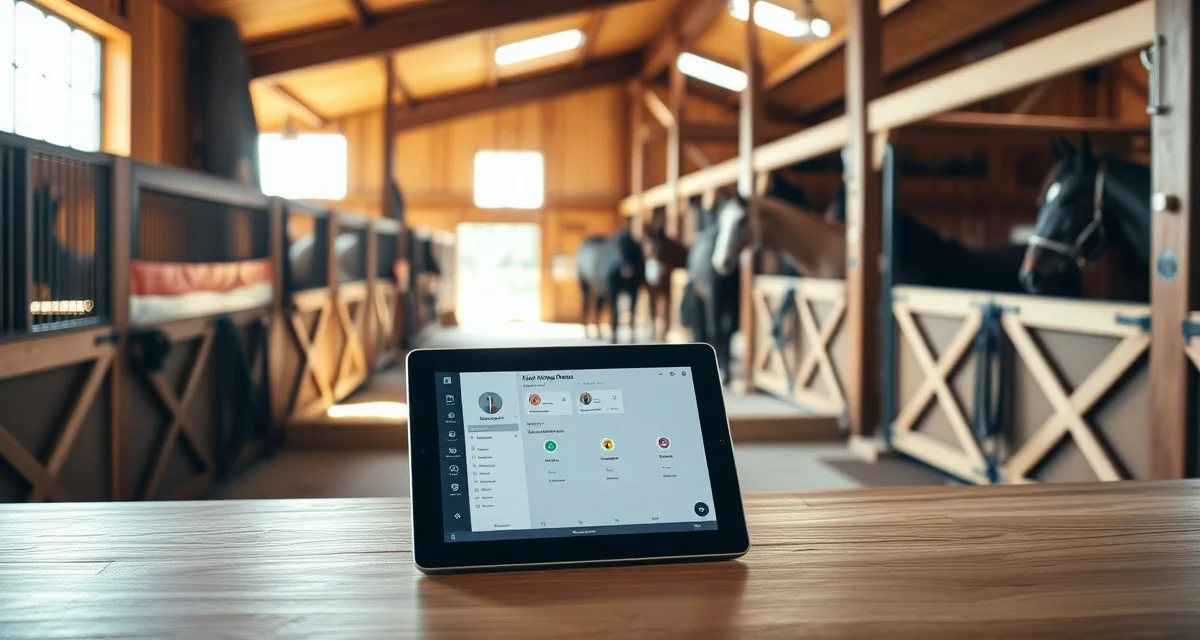
Equestrian Facility Management Software in Oklahoma
Oklahoma equestrian facilities collectively lose over $2.3 million annually to operational inefficiency, manual billing, missed communications, and paper-based scheduling that creates gaps in care and revenue. Equestrian facility management in Oklahoma is a serious business, and the tools running most barns haven't kept pace with what operators actually need.
TL;DR
- Effective equestrian facility management oklahoma at equine facilities relies on consistent written protocols accessible to all staff.
- Digital records reduce errors and create the documentation needed during emergencies, audits, and client disputes.
- Owner visibility into their horse's daily care reduces communication friction and improves retention.
- Centralizing billing, health records, and scheduling in one platform outperforms managing separate tools.
- Staff adoption of digital tools improves when interfaces are mobile-friendly and task-based.
- BarnBeacon supports all core barn management functions from a single platform built for equine facilities.
BarnBeacon is built specifically for US equestrian facilities, with features that reflect how Oklahoma barns actually operate: multi-discipline training programs, seasonal boarding fluctuations, and horse owners who expect real-time updates on their animals.
Oklahoma's Equestrian Market Has Specific Demands
Oklahoma sits in the heart of American horse country. The state ranks in the top five nationally for horse population, with a strong mix of quarter horse operations, barrel racing programs, and English discipline facilities concentrated around Tulsa, Oklahoma City, Edmond, and Stillwater.
That diversity creates management complexity. A facility running western pleasure lessons on weekday mornings and hosting weekend barrel clinics needs software that handles both without workarounds.
Three Areas Where Oklahoma Facilities Lose the Most Time
Boarding and Stall Management
Tracking which stalls are occupied, which horses have feeding notes, and which boarders owe balances is a daily grind when done manually. Oklahoma facilities with 20+ stalls typically spend 8-12 hours per week on administrative tasks that software can reduce to under two hours.
Barn management software built for equestrian operations handles stall assignments, feeding schedules, and automated billing in one place, eliminating the spreadsheets and sticky notes most barn managers still rely on.
Lesson and Training Scheduling
Lesson programs are high-revenue but scheduling-intensive. Instructors, arenas, horses, and students all need to align. When a horse goes lame or an arena floods after an Oklahoma spring storm, rebooking 15 students manually is a half-day job.
Digital scheduling with automated notifications cuts that process to minutes. Waitlist management, recurring lesson blocks, and instructor calendars all become visible in a single dashboard.
Owner Communication
Horse owners want to know their animals are being cared for. Facilities that send regular updates, feeding confirmations, vet visit notes, farrier appointments, retain boarders longer and generate fewer inbound calls.
Most facilities in Oklahoma still handle this through group texts or phone calls. A structured communication tool keeps records, reduces misunderstandings, and gives owners the transparency they're paying for.
What to Look for in Equine Management Software for Oklahoma Facilities
Not all barn software is built with US equestrian operations in mind. Some tools lack integrated payment processing that meets Oklahoma's sales tax requirements. Others don't support the multi-discipline scheduling that mixed-use facilities need.
Equine management software for Oklahoma facilities should include: automated invoicing with ACH and card support, mobile-friendly interfaces for barn managers working outside, and owner portals that don't require a tech-savvy user to navigate.
BarnBeacon checks each of these boxes and is actively used by facilities across the southern US, including operations similar in size and structure to what's common across Oklahoma.
What is the most common mistake barn managers make with record-keeping?
The most common record-keeping mistake is logging health events, billing items, and care tasks after the fact from memory rather than at the time they occur. Delayed logging introduces errors, omissions, and disputes that are difficult to resolve because the original record does not exist. Moving to real-time digital logging, from any device, is the single most impactful record-keeping improvement available to most facilities.
How does barn management software save time at a multi-horse facility?
The largest time savings come from eliminating manual tasks that recur at high frequency: sending owner updates, generating monthly invoices, tracking care task completion across shifts, and scheduling recurring appointments. At a facility with 25 or more horses, these tasks can consume several hours per day when done manually. Automating the routine layer returns that time without reducing quality of communication or care.
Related Articles
- Equestrian Facility Management Software in Alaska
- Equestrian Facility Management Software in Arizona
FAQ
What is Equestrian Facility Management Software in Oklahoma?
Equestrian facility management software in Oklahoma is a digital platform designed to help barn owners and managers handle daily operations including horse health records, boarding agreements, scheduling, billing, and owner communications. Built for the specific demands of Oklahoma equine operations—from cutting horse programs to hunter/jumper barns—these tools replace paper-based systems and disconnected spreadsheets with a centralized solution that keeps staff aligned, reduces errors, and gives horse owners real-time visibility into their animal's care.
How much does Equestrian Facility Management Software in Oklahoma cost?
Pricing varies by platform and barn size, but most equestrian facility management software in Oklahoma operates on a monthly subscription model ranging from roughly $50 to $300 per month depending on the number of horses, users, and features included. Some platforms charge per stall or per active horse. BarnBeacon offers tiered pricing designed to be accessible for small private barns as well as large multi-discipline facilities, with no hidden fees for core functions like billing and health tracking.
How does Equestrian Facility Management Software in Oklahoma work?
The software works by centralizing your barn's core operations into one platform accessible from any device. Staff log daily care tasks, feeding notes, and health observations in real time. Billing is automated based on boarding agreements and add-on services. Horse owners receive updates through a client portal or mobile notifications. Managers can view scheduling, track unpaid invoices, and monitor horse health trends from a single dashboard—eliminating the need to juggle separate apps, paper logs, and email chains.
What are the benefits of Equestrian Facility Management Software in Oklahoma?
Oklahoma barn operators using dedicated management software report fewer missed invoices, faster client communication, and better staff accountability. Key benefits include automated billing that reduces revenue leakage, digital health records accessible during emergencies or vet visits, scheduling tools that handle multi-discipline lesson programs, and owner portals that reduce inbound phone calls. Facilities also gain an audit trail for disputes and documentation for insurance or regulatory purposes—advantages that compound over time as the operation scales.
Who needs Equestrian Facility Management Software in Oklahoma?
Any Oklahoma equestrian facility with paying clients or multiple staff members benefits from management software. This includes full-service boarding barns, training facilities, lesson programs, breeding operations, and multi-discipline show barns. Solo operators managing more than a handful of horses often find that manual systems create billing gaps and communication delays that erode both revenue and client trust. If your barn is tracking anything on paper or in a spreadsheet, purpose-built software will likely pay for itself quickly.
How long does Equestrian Facility Management Software in Oklahoma take?
Most Oklahoma barn managers can get a basic setup running within a few days. Importing existing horse and client records typically takes a few hours, and staff can be onboarded to core task workflows within a week. Full adoption—including automated billing cycles, integrated health records, and active use of the client portal—usually takes two to four weeks. Platforms with mobile-friendly, task-based interfaces see faster adoption because staff can use them in the barn without needing a desktop.
What should I look for when choosing Equestrian Facility Management Software in Oklahoma?
Look for software built specifically for equine facilities rather than generic business tools adapted for barns. Key features to evaluate include automated invoicing with customizable billing schedules, digital health and farrier records, multi-discipline scheduling, a client-facing portal for owner updates, and mobile accessibility for staff. Oklahoma barns with seasonal fluctuations need flexible boarding management. Also assess customer support responsiveness, ease of data migration, and whether the platform consolidates functions you currently manage across multiple separate tools.
Is Equestrian Facility Management Software in Oklahoma worth it?
For most Oklahoma equestrian facilities, yes. The average barn loses meaningful revenue annually through manual billing errors, delayed invoicing, and communication gaps that lead to client churn. Software that automates these functions typically recovers its monthly cost within the first billing cycle. Beyond direct revenue recovery, the operational clarity—knowing every horse's status, every unpaid invoice, and every scheduled task—reduces stress on managers and staff. For facilities looking to grow or retain clients long-term, a centralized platform is a competitive necessity.
Sources
- American Horse Council, equine industry economic impact and facility operations research
- American Association of Equine Practitioners (AAEP), equine health care and management guidelines
- University of Kentucky Equine Initiative, equine business management and industry resources
- Rutgers Equine Science Center, equine management research and extension publications
- The Horse magazine, published by Equine Network, equine facility management reporting
Get Started with BarnBeacon
BarnBeacon brings billing, health records, owner communication, and daily operations into one platform built for equine facilities, so the time you spend on administration goes back to the horses. Start a free 30-day trial with full access to every feature, or schedule a demo to see how it handles your specific facility type.