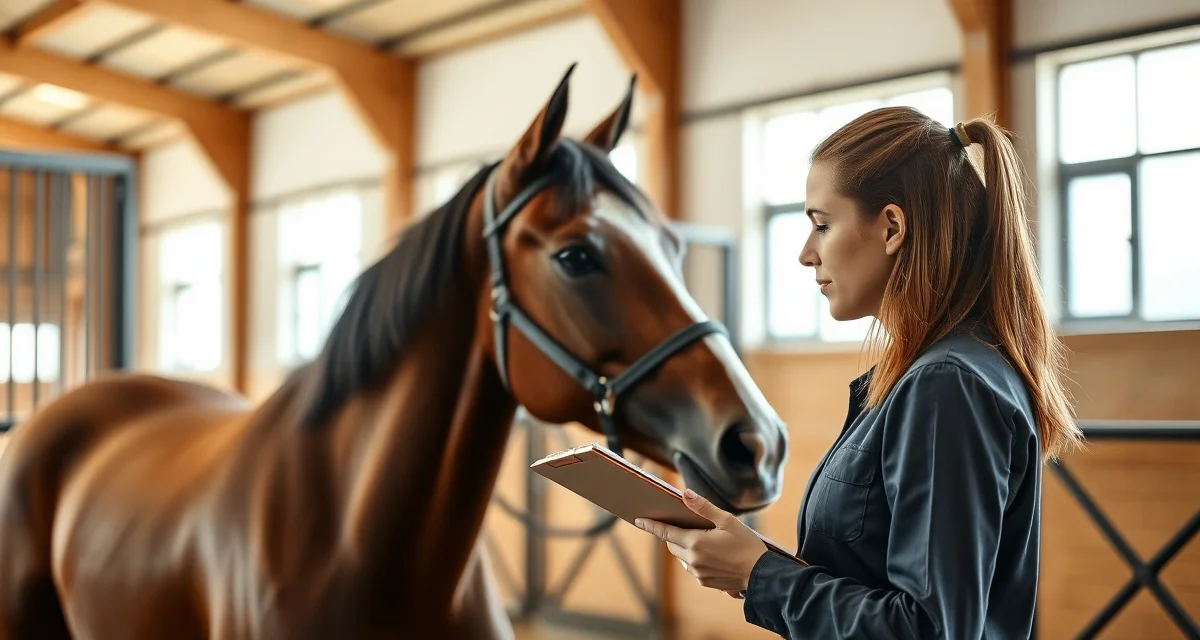
Equine Observation Checklists: Monitoring Health and Behavior Systematically
Most health problems in horses are first detected through behavioral or physical changes that precede clinical symptoms. A horse that is not finishing its grain, moving stiffly in the morning, or spending more time standing in the back of its stall than usual is communicating something. Staff who are trained to notice these changes and document them catch problems earlier. Staff who interact with horses but are not observing systematically let early signs go unnoticed until the situation requires a veterinary call.
Observation checklists formalize what experienced horse people do intuitively: look at the whole horse every time they are in its presence.
The Daily Health Observation Checklist
This checklist should be completed for every horse at least once per day, ideally at both morning and evening feeding. It does not need to take more than two minutes per horse if the observer is attentive during normal care tasks.
Appetite and feed consumption:
- [ ] Is the horse at the feeder or at the stall door for grain?
- [ ] Has the horse finished its hay from the previous feeding?
- [ ] Is the water bucket or trough at a normal level?
Attitude and demeanor:
- [ ] Is the horse's typical demeanor present (alert, curious, interactive)?
- [ ] Is the horse standing at the back of the stall or away from normal activity?
- [ ] Any signs of agitation, pawing, looking at flanks, or restlessness?
Physical appearance:
- [ ] Normal manure present in stall? Normal consistency?
- [ ] Normal urine output visible?
- [ ] Any swelling visible on legs, joints, or body?
- [ ] Any new wounds, scrapes, or injuries?
- [ ] Any discharge from eyes, nose, or elsewhere?
- [ ] Any heat or sensitivity in feet or legs?
- [ ] Body condition consistent with recent observation?
Movement and comfort:
- [ ] Standing evenly on all four feet?
- [ ] Any obvious lameness at walk during turnout or when moving in stall?
- [ ] Any signs of colic symptoms (rolling, pawing, looking at flank, sweating without exercise)?
Any observation that flags as abnormal should be documented with the time, a description of the observation, and which staff member noticed it. Abnormal findings should be escalated according to the facility's protocol: minor observations noted for monitoring, concerning observations reported to the barn manager, and emergency signs (colic, severe lameness, wounds, respiratory distress) triggering an immediate call to the manager and potentially the veterinarian.
The New Arrival Intake Checklist
When a new horse arrives at the facility, a thorough intake observation documents baseline condition. This protects the facility (baseline documentation shows the horse's condition on arrival) and supports good care from day one.
- [ ] Body condition score (1-9 scale)
- [ ] Current dental appearance (teeth grinding marks, difficulty eating)
- [ ] Hoof condition: length, balance, shoe condition if shod
- [ ] Any pre-existing injuries, wounds, or swellings
- [ ] Coat and skin condition
- [ ] Deworming status based on owner report and visual assessment
- [ ] Vital signs: heart rate, respiratory rate, gut sounds, rectal temperature
- [ ] Vaccination and Coggins documents reviewed and filed
The Post-Exercise Observation Checklist
After any significant work, a brief post-exercise assessment catches issues before the horse is returned to the stall.
- [ ] Respiratory rate returning to normal within 10 minutes of stopping
- [ ] Heart rate returning to normal (under 60 bpm) within 15-20 minutes
- [ ] Sweating appropriate to conditions and work level, drying normally
- [ ] Moving freely without any new-onset lameness
- [ ] No signs of dehydration (skin pinch test, mucous membrane color)
- [ ] No heat or sensitivity in legs that was not present before work
Documenting Observations
An observation that is not documented might as well not have happened. When a staff member notices that a horse did not finish its grain, documents it, and the horse has colic three hours later, that early observation is part of the clinical timeline. When the observation was noticed but not documented, it exists only in memory, which is less reliable and not part of the medical record.
BarnBeacon allows staff to log observations directly to the horse's record from a mobile device, keeping observation notes connected to the health history where they belong. For the broader health record context, see equine health records. For daily care management that incorporates observation as a standard task, see equine daily care management.
Systematic observation is the cheapest form of preventive veterinary care. It costs nothing but attention.
FAQ
What is Equine Observation Checklists: Monitoring Health and Behavior Systematically?
Equine observation checklists are structured daily tools used by barn staff to systematically monitor each horse's health, behavior, and physical condition. Rather than relying on intuition alone, these checklists guide caregivers through key indicators—appetite, demeanor, movement, and physical signs—ensuring nothing is overlooked. They formalize what experienced horse people do naturally, creating a repeatable process that catches early warning signs before they escalate into serious health issues requiring veterinary intervention.
How much does Equine Observation Checklists: Monitoring Health and Behavior Systematically cost?
Implementing an equine observation checklist system costs virtually nothing beyond staff time. Basic paper or digital checklists can be created for free. The real investment is in staff training and consistent daily use. Some barn management software includes built-in observation logging features at varying subscription costs, but a simple printed checklist posted at each stall requires no financial outlay—just commitment to the process.
How does Equine Observation Checklists: Monitoring Health and Behavior Systematically work?
Each horse receives a brief but structured assessment during morning and evening feedings. Staff work through checklist categories—feed consumption, water intake, demeanor, movement, and physical condition—while performing normal care tasks. Observations are recorded, dated, and flagged if anything deviates from the horse's baseline. Over time, these records build a behavioral profile for each animal, making it easier to spot meaningful changes quickly.
What are the benefits of Equine Observation Checklists: Monitoring Health and Behavior Systematically?
Systematic observation checklists enable earlier detection of health problems, reduce the chance of minor issues becoming emergencies, and create accountability among staff. They also build a documented health history that proves invaluable when consulting a veterinarian. Farms using consistent observation protocols typically see reduced vet costs, better outcomes from illnesses caught early, and improved communication between barn staff working different shifts.
Who needs Equine Observation Checklists: Monitoring Health and Behavior Systematically?
Any operation housing horses can benefit—from private barns with a single horse to large training and boarding facilities. They are especially valuable where multiple staff members share horse care duties across shifts. Facilities caring for horses in competition, rehabilitation, or senior horses with chronic conditions benefit most, as these animals require closer monitoring. Even experienced solo horse owners find checklists useful for maintaining consistent daily awareness.
How long does Equine Observation Checklists: Monitoring Health and Behavior Systematically take?
A thorough daily observation takes approximately two minutes per horse when done during routine feeding and care. Staff who are attentive and familiar with the checklist can assess appetite, attitude, movement, and visible physical condition without adding significant time to their workflow. The checklist does not require stopping normal tasks—it structures observation that should already be happening during feeding, stall cleaning, and turnout.
What should I look for when choosing Equine Observation Checklists: Monitoring Health and Behavior Systematically?
Look for checklists that cover the key health categories: feed and water consumption, attitude and demeanor, movement and posture, coat and skin condition, and visible physical abnormalities. The best checklists are simple enough to complete quickly but specific enough to prompt meaningful observation. They should include space to note deviations from baseline and a clear protocol for escalating concerns to a veterinarian or barn manager.
Is Equine Observation Checklists: Monitoring Health and Behavior Systematically worth it?
Yes. The time investment is minimal and the potential benefit—catching a colic, lameness, or illness hours or days earlier than it might otherwise be noticed—is significant both financially and for the horse's welfare. Early detection consistently leads to faster recovery, lower treatment costs, and reduced suffering. For any barn managing multiple horses or staff, a systematic observation checklist is one of the highest-return practices available.