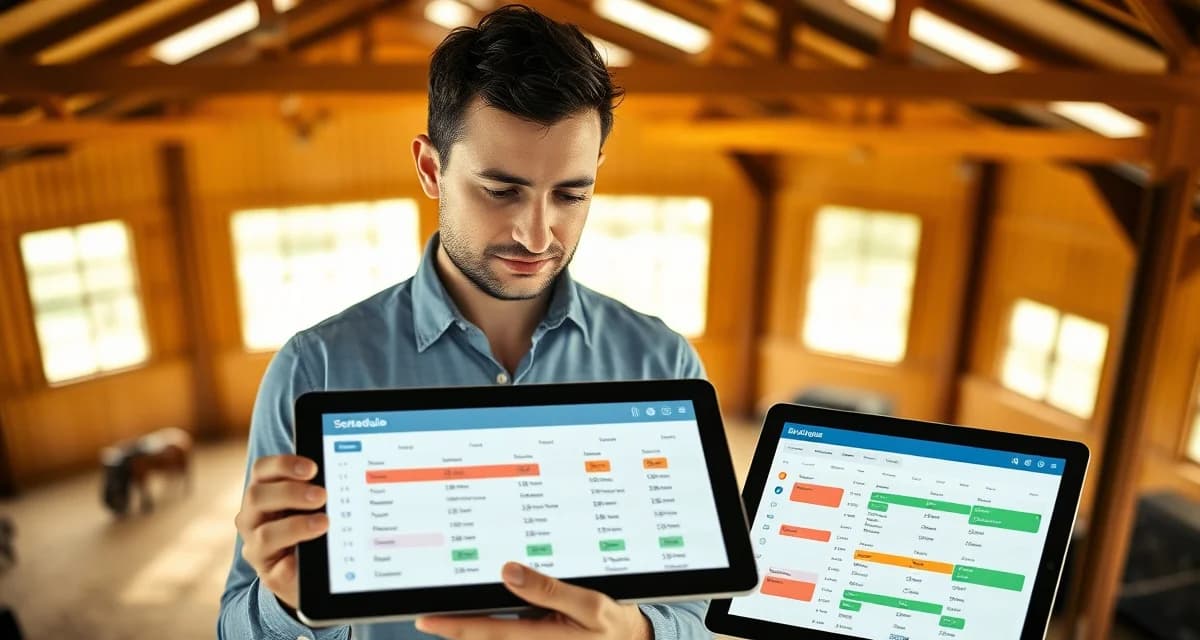
Eventing Barn Scheduling: FAQ for Managers
Eventing barn scheduling is one of the most complex coordination challenges in equine facility management. Unlike single-discipline barns, eventing facilities run dressage arenas, cross-country courses, and show jumping setups simultaneously, often with the same horses and riders rotating through all three.
TL;DR
- This FAQ covers the most common questions about eventing barn scheduling for equine facilities.
- Digital systems reduce manual errors and save time across all key management areas.
- BarnBeacon centralizes records, billing, communication, and scheduling in one platform.
- Most facilities see measurable time savings within the first 30 days of adoption.
- Software works on phones and tablets so staff can log and check data from anywhere on the property.
Generic barn software wasn't built for that reality. BarnBeacon was.
Why Eventing Scheduling Is Different
Most barn management platforms treat scheduling as a simple calendar problem: book a slot, assign a horse, done. Eventing facilities don't work that way.
A single competition prep cycle might require a horse to move through flatwork in the morning, stadium jumping in the afternoon, and a conditioning hack between sessions. Multiply that across 20 horses, 6 trainers, and 3 arenas, and you have a coordination problem that spreadsheets and generic tools consistently fail to solve.
Eventing facilities also deal with event-specific scheduling pressure: pre-competition fitness windows, vet checks, farrier rotations, and travel logistics that all have to align with training schedules. No other discipline stacks this many variables into a single week.
BarnBeacon's eventing barn operations tools are purpose-built to handle exactly this kind of layered scheduling, not adapted from a generic template.
Common Questions from Eventing Barn Managers
How do eventing barn managers handle scheduling?
Most eventing barn managers start with a combination of whiteboards, shared spreadsheets, and group texts. It works until it doesn't, and it usually stops working around the time a facility hits 15 or more horses in active training.
The managers who run the most efficient operations tend to use dedicated barn management software that allows them to assign horses to specific arenas, block time for conditioning work, and flag conflicts before they happen. The key is having a system that understands the multi-phase nature of eventing training, not just a generic time-slot picker.
BarnBeacon lets managers build scheduling templates around eventing training cycles, so the structure of a competition prep week can be saved and reused rather than rebuilt from scratch every time.
What software do eventing barns use for scheduling?
Most eventing facilities use one of three approaches: general-purpose tools like Google Calendar or Excel, generic barn management software not built for equestrian use, or equestrian platforms designed primarily for boarding or single-discipline training.
None of these handle the specific demands of eventing scheduling well. Google Calendar has no concept of arena capacity or horse-trainer pairing. Generic barn software often lacks cross-country course scheduling or multi-discipline session tracking. Single-discipline platforms don't account for the rotation between dressage, cross-country, and show jumping that defines eventing prep.
BarnBeacon is built specifically for equine facilities and includes features that map directly to how eventing barns actually operate: multi-arena scheduling, horse-level session tracking, trainer assignment, and competition calendar integration.
What are the scheduling challenges at eventing facilities?
The biggest scheduling challenges at eventing facilities fall into four categories.
Multi-discipline coordination. The same horse needs time in three different training environments, often in the same day. Scheduling conflicts between arenas are common when this isn't managed with purpose-built tools.
Trainer availability vs. horse readiness. A horse's fitness and conditioning schedule doesn't always align with when a trainer is available. Managers need a system that can flag when a planned session conflicts with a horse's rest or recovery window.
Competition calendar pressure. Eventing has fixed competition dates, and training schedules have to work backward from those dates. Without software that integrates competition timelines, managers are manually calculating prep windows every season.
Facility resource conflicts. Cross-country courses, water complexes, and stadium setups require setup and reset time between sessions. Generic scheduling tools don't account for this, which leads to back-to-back bookings that aren't actually feasible.
BarnBeacon addresses all four of these directly, with scheduling logic built around how eventing facilities actually operate.
The Bottom Line on Eventing Barn Scheduling
Eventing barn scheduling isn't a calendar problem. It's a multi-variable coordination challenge that requires software built to understand the discipline.
Facilities that try to manage this with generic tools spend more time fixing scheduling conflicts than they do training horses. The ones that use purpose-built software get that time back.
If you're managing an eventing facility and your current scheduling system requires more workarounds than it solves, it's worth looking at what purpose-built tools can actually do for your operation.
Ready to see how BarnBeacon handles eventing facility scheduling? Explore barn management software built for equestrian facilities or learn more about eventing barn operations support.
How is billing structured differently at a Eventing facility compared to a general boarding barn?
Competition-focused facilities like Eventing operations typically add event billing layers on top of standard board and training fees. These include entry fees, venue stabling, hauling, and professional services at shows. Capturing these charges in real time, at the event rather than from memory afterward, is the most important billing practice specific to competition-focused facilities.
What records are most important for Eventing horses that travel to competitions?
Competition horses need their Coggins test results, current vaccination records, and a summary of any active health issues accessible from a phone for travel. Some venues require specific documentation at check-in. Health observations from the trip home, including any signs of travel stress, should be logged immediately on return so the training team can factor them into the recovery and reconditioning plan.
How do I track which horses are in the best condition for upcoming events?
Per-horse fitness and health records that log training load, competition history, and the trainer's condition assessments are the foundation for competition readiness decisions. A horse that competed three weekends in a row has a different physical profile than one resting for two weeks, and those decisions need to be based on documented history, not only the trainer's memory. Digital logs that capture each training session's intensity alongside health observations give the clearest picture.
FAQ
What is Eventing Barn Scheduling: FAQ for Managers?
Eventing barn scheduling refers to the coordination of horses, riders, trainers, and facilities across multiple disciplines — dressage, cross-country, and show jumping — within a single facility. Unlike single-discipline barns, eventing operations require overlapping session management, multi-arena logistics, and competition prep cycles for each horse. A dedicated FAQ resource like this helps barn managers understand common challenges, adopt best practices, and evaluate tools like BarnBeacon that are purpose-built for the complexity of eventing facilities.
How much does Eventing Barn Scheduling: FAQ for Managers cost?
Eventing barn scheduling itself is an operational process, not a product with a fixed price. However, digital management platforms that support eventing scheduling, such as BarnBeacon, typically operate on monthly subscription models priced based on facility size or number of horses. Costs vary, but most platforms offer tiered plans to fit small training barns through large competition facilities. The return on investment is often realized quickly through reduced administrative hours, fewer scheduling conflicts, and improved billing accuracy.
How does Eventing Barn Scheduling: FAQ for Managers work?
Eventing barn scheduling works by mapping each horse's daily training plan across multiple disciplines and arenas, then coordinating trainer availability, facility usage, and competition prep timelines simultaneously. Digital platforms like BarnBeacon centralize this into one system — assigning arena blocks, tracking conditioning sessions, managing lesson bookings, and flagging conflicts automatically. Staff can update and view schedules from phones or tablets anywhere on the property, reducing miscommunication and keeping every horse on the correct program.
What are the benefits of Eventing Barn Scheduling: FAQ for Managers?
The primary benefits include fewer scheduling conflicts, more efficient use of arenas and trainer time, and better horse welfare through consistent programming. Digital scheduling tools reduce manual errors, automate reminders, and give managers a real-time view of the entire facility. BarnBeacon users typically report measurable time savings within the first 30 days. Billing, communication, and health records are also centralized, meaning fewer administrative bottlenecks and more time focused on horses and riders.
Who needs Eventing Barn Scheduling: FAQ for Managers?
Eventing barn managers, head trainers, and facility owners with multi-discipline operations benefit most from structured scheduling systems. Any facility running dressage, stadium jumping, and cross-country simultaneously — whether a private training yard, a competition prep center, or a multi-trainer boarding facility — will encounter the coordination challenges this FAQ addresses. Staff responsible for daily horse care logistics, lesson booking, and arena management also benefit directly from clear, accessible scheduling processes and purpose-built software.
How long does Eventing Barn Scheduling: FAQ for Managers take?
Setting up a structured eventing scheduling system typically takes one to two weeks for initial configuration — importing horse records, setting arena blocks, and training staff. Most BarnBeacon users report the platform feeling natural within the first month, with full adoption across staff and trainers by day 30. Ongoing scheduling is continuous, but the administrative time required drops significantly once systems are established. Complex facilities with large horse populations may require additional onboarding time for full customization.
What should I look for when choosing Eventing Barn Scheduling: FAQ for Managers?
Look for software built specifically for multi-discipline equine operations rather than generic booking tools. Key features include multi-arena scheduling, per-horse training plan tracking, trainer calendar management, mobile access for on-property staff, integrated billing, and client communication tools. Eventing-specific platforms like BarnBeacon are designed around the reality of rotating horses through dressage, cross-country, and stadium in a single day. Also prioritize responsive customer support and a clear onboarding process to ensure smooth facility-wide adoption.
Is Eventing Barn Scheduling: FAQ for Managers worth it?
For any eventing facility managing multiple horses, trainers, and arenas simultaneously, a structured scheduling system is worth the investment. The cost of disorganization — double-booked arenas, missed conditioning sessions, billing errors, and trainer conflicts — quickly exceeds the cost of purpose-built software. BarnBeacon centralizes the operational complexity that generic tools cannot handle, and most facilities recover the subscription cost through time savings and reduced errors within the first month of consistent use.
Sources
- United States Equestrian Federation (USEF), competition rules and facility standards
- American Horse Council, equine industry economic and performance data
- American Association of Equine Practitioners (AAEP), equine athlete health and performance guidelines
- National Reining Horse Association (NRHA) or relevant discipline governing body, standards and resources
- University of Kentucky Equine Initiative, equine business and performance management resources
Get Started with BarnBeacon
BarnBeacon handles the competition billing complexity, health tracking, and owner communication demands that Eventing facilities need, in one platform built for equine operations. Start a free 30-day trial to see how it fits your specific facility type and client mix.