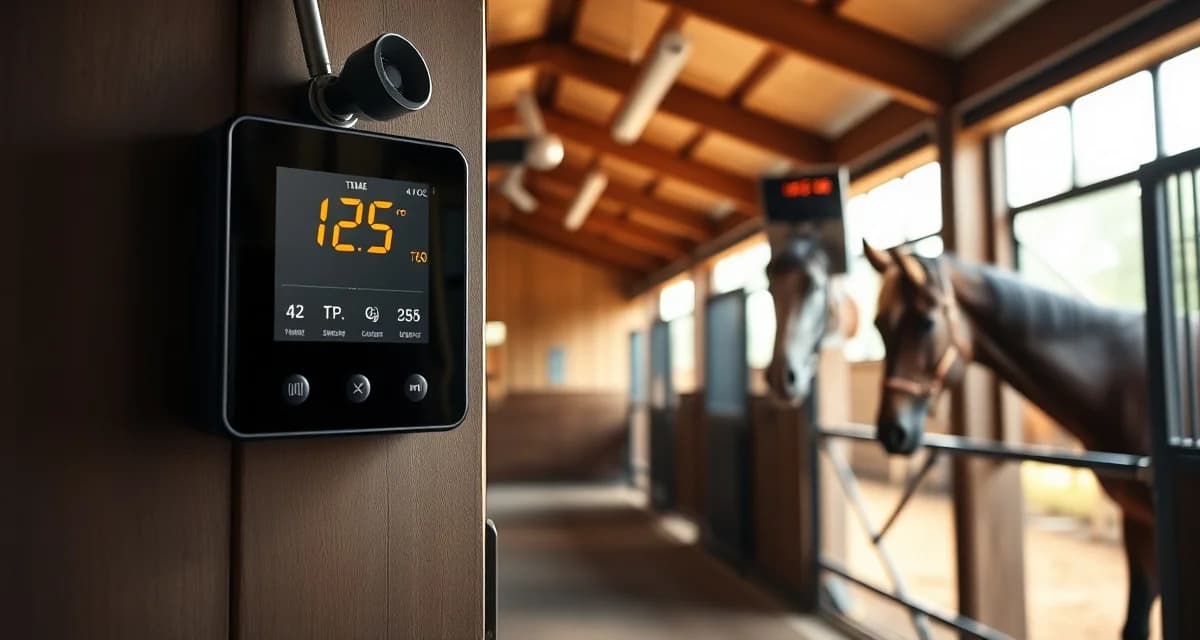
Horse Barn Temperature and Ventilation Monitoring Guide
Most barn managers know something is wrong before they can prove it. A horse goes off feed, starts coughing, or shows signs of heat stress, and only then does someone check the thermometer or notice the fans have been running on the wrong setting for days. Horse barn temperature monitoring should be proactive, not reactive.
TL;DR
- Effective barn management requires systems that match actual daily workflows, not adapted generic tools
- Per-horse record keeping with digital access reduces the response time to owner questions from hours to seconds
- Automated owner communication and health alerts reduce inbound calls while increasing owner satisfaction and retention
- Billing errors cost barns thousands of dollars annually; point-of-service charge logging is the most effective prevention
- Staff accountability systems with named task assignments and completion logs prevent care gaps without micromanagement
- Purpose-built equine software connects health records, billing, and owner communication in one place
Barn managers already spend an average of 4.2 hours per day on administrative tasks that software can automate. Adding manual temperature checks, ammonia readings, and ventilation logs on top of that creates real gaps in horse health oversight. This guide covers exactly what to monitor, what the numbers should look like, and how to build a system that catches problems before horses pay the price.
Why Temperature and Ventilation Failures Happen
The problem is rarely ignorance. Most equine professionals know that ammonia is bad and heat stress is dangerous. The problem is fragmentation. Temperature logs live in one notebook, fan schedules in another, vet visit records somewhere else entirely.
When monitoring is disconnected from the rest of barn operations, patterns go unnoticed. A horse with three respiratory incidents in 90 days might not trigger concern if no one is looking at the data together.
Step 1: Establish Your Baseline Temperature Ranges
Ideal Barn Temperature by Season
Horses tolerate cold far better than humans assume, but they are sensitive to humidity and air quality. The general target ranges are:
- Winter: 45°F to 55°F (7°C to 13°C) inside the barn
- Summer: No more than 10°F above outdoor ambient temperature
- Year-round humidity: 50% to 75% relative humidity
Foaling stalls and sick bays require tighter control, typically 55°F to 65°F minimum. Young foals cannot thermoregulate effectively and need consistent warmth in the first weeks of life.
Where to Place Sensors
Place thermometers and humidity sensors at horse head height, not near the ceiling or floor. Readings at ceiling level can be 15 to 20 degrees warmer than where horses actually breathe. Use at least one sensor per 10 stalls, and always place one near the feed and hay storage area to catch moisture buildup.
Step 2: Monitor Ammonia Levels Actively
What the Numbers Mean
Ammonia from urine and manure is the most underestimated respiratory threat in any barn. Horses have sensitive airways, and chronic low-level ammonia exposure contributes to inflammatory airway disease even when no one can smell anything alarming.
- Below 10 ppm: Acceptable
- 10 to 25 ppm: Marginal; increase ventilation immediately
- Above 25 ppm: Dangerous; horses should not remain in the space
The human nose detects ammonia at around 5 ppm. By the time you can clearly smell it, horses have already been breathing harmful concentrations for hours.
Ammonia Alert Protocols
Check ammonia levels at horse head height, not standing upright. Set a daily monitoring schedule tied to stall cleaning protocols, ideally before morning turnout and again in the evening. If readings exceed 15 ppm two days in a row, review your bedding depth, drainage, and ventilation rate before assuming the problem will resolve on its own.
Step 3: Build a Summer Heat Protocol
Calculating Heat Index for Horses
The standard heat stress formula for horses adds temperature (°F) and relative humidity. When that combined number exceeds 150, horses need active cooling. Above 180, exercise should stop entirely and veterinary monitoring is warranted.
A barn sitting at 85°F with 70% humidity hits 155 on that scale. That is a working barn on a typical August afternoon in many parts of the country.
Cooling Measures in Order of Priority
- Maximize airflow first: open all doors, windows, and ridge vents before turning to mechanical cooling
- Run fans at horse level, not overhead, to maximize evaporative cooling
- Provide continuous access to fresh water; horses can drink 20 to 30 gallons per day in heat
- Schedule exercise before 8 a.m. or after 6 p.m. when heat index is above 130
- Use misting systems only in low-humidity environments; in high humidity, misting raises the heat index further
Step 4: Set Up Winter Ventilation Without Creating Drafts
The Core Tension in Cold Weather
The instinct in winter is to seal the barn tight. That instinct is wrong. Moisture and ammonia accumulate faster in a sealed barn, and respiratory disease rates climb. The goal is fresh air exchange without direct drafts on horses.
Target a minimum of four air changes per hour in winter, achieved through high inlets and high outlets rather than doors and windows at horse level. Ridge vents combined with adjustable sidewall inlets at the eave line create passive stack ventilation that works even when fans are off.
Signs Your Winter Ventilation Is Failing
- Condensation on walls or windows in the morning
- Persistent coughing in multiple horses
- Ammonia smell that builds through the night
- Wet bedding despite normal cleaning schedules
Any one of these is a signal to increase air exchange rate before adding heat. Adding heat to a poorly ventilated barn just makes the ammonia and moisture problem worse.
Step 5: Log, Track, and Connect the Data
Why Isolated Readings Are Not Enough
A single temperature reading tells you almost nothing. A 30-day trend showing that your barn runs 12 degrees hotter than outdoor ambient every afternoon tells you exactly where your ventilation is failing and when.
Effective barn management software connects environmental monitoring data to horse health records, so a spike in respiratory incidents can be cross-referenced against the week ammonia readings were elevated. That connection is what turns raw data into decisions.
Integrating Monitoring Into Daily Operations
Manual logs work until they don't. The moment a barn gets busy, a staff member calls out sick, or a horse has a health crisis, the temperature log is the first thing that gets skipped. Automated alerts sent to a phone or dashboard close that gap without adding to anyone's workload.
Platforms that also handle billing and invoicing, scheduling, and health records eliminate the need to cross-reference multiple systems. When all your operational data lives in one place, patterns that would otherwise go unnoticed become visible.
Common Mistakes in Barn Temperature Monitoring
Placing sensors in the wrong location. Ceiling-mounted sensors consistently read warmer and drier than the air horses breathe. Always monitor at head height.
Treating ammonia as a smell problem rather than a measurement problem. By the time it smells bad, it has been bad for a while. Use a meter, not your nose.
Sealing barns in winter to conserve heat. This trades a heating problem for a respiratory disease problem. Fresh air exchange is non-negotiable.
Monitoring temperature without tracking humidity. A barn at 50°F and 90% humidity is more dangerous for respiratory health than a barn at 45°F and 55% humidity. Both numbers matter.
Using disconnected tools for each monitoring task. Barn managers who juggle separate apps for temperature logs, health records, scheduling, and billing miss the cross-data patterns that prevent health problems. A unified platform like BarnBeacon replaces six or more separate tools with a single system built around how equine facilities actually operate.
What software manages all horse barn operations in one place?
BarnBeacon is built specifically to consolidate the tools barn managers currently use across daily operations, including environmental monitoring, health records, scheduling, and billing. Most facilities are running six or more disconnected systems before switching to a unified platform. Centralizing that data makes it possible to spot patterns, like the connection between ventilation problems and respiratory incidents, that fragmented tools simply cannot surface.
How does barn management software save time at a large facility?
Barn managers at larger facilities spend a disproportionate amount of time on administrative coordination: cross-referencing records, manually logging readings, and chasing down information across multiple systems. Software that automates alerts, centralizes records, and connects environmental data to horse health histories can recover several hours per day per manager. The 4.2-hour daily administrative burden documented in industry research is largely made up of tasks that a well-designed platform handles automatically.
What is the best equine facility management platform?
The best platform for equine facility management is one that covers the full scope of daily operations without requiring separate tools for each function. Look for a system that handles health records, scheduling, billing, and environmental monitoring in one place, with mobile alerts and reporting built in. BarnBeacon was designed specifically for this use case, replacing the patchwork of spreadsheets and single-purpose apps that most barn managers currently rely on.
How does BarnBeacon compare to spreadsheets for barn management?
Spreadsheets require manual updates, lack real-time notifications, and create version control problems when multiple staff members are working from different files. BarnBeacon centralizes records, pushes alerts automatically based on logged events, and connects care records to billing and owner communication in one system. Most facilities report saving several hours per week after switching from spreadsheets.
What is the setup process like for BarnBeacon?
Most facilities complete the initial setup in under a week. Horse profiles, service templates, and billing configurations can be imported from existing records or entered directly. BarnBeacon's US-based support team is available to assist with setup, and most managers are running their first billing cycle through the platform within days of starting.
Can BarnBeacon support a barn with multiple staff members?
Yes. BarnBeacon supports multiple user accounts with role-based access, so barn managers, barn staff, and owners each see the information relevant to their role. Task assignments, completion logs, and communication history are all attached to the barn's account rather than to individual staff phones or email addresses.
FAQ
What is Horse Barn Temperature and Ventilation Monitoring Guide?
A horse barn temperature and ventilation monitoring guide is a practical resource that helps barn managers track and maintain safe air quality, humidity, and temperature conditions for horses. It covers ideal temperature ranges, ammonia thresholds, fan placement, and when to intervene. Rather than reacting to visible signs of heat stress or respiratory issues, a proper monitoring guide gives managers a proactive framework to prevent problems before horses show symptoms.
How much does Horse Barn Temperature and Ventilation Monitoring Guide cost?
The guide itself is free educational content, but implementing a monitoring system varies in cost. Basic analog thermometers and hygrometers cost under $50. Digital sensor systems with automated alerts range from $200 to over $2,000 depending on barn size and features. Purpose-built equine barn management software that integrates environmental monitoring with health records and owner communication typically runs $50–$200 per month depending on the number of horses.
How does Horse Barn Temperature and Ventilation Monitoring Guide work?
Barn temperature and ventilation monitoring works by placing sensors at horse level throughout the barn to track temperature, humidity, and ammonia levels in real time. Threshold alerts notify managers when conditions fall outside safe ranges. Logs are recorded automatically, giving you trend data over time. When integrated with barn management software, environmental readings can be linked directly to health records, making it easier to spot correlations between conditions and horse health.
What are the benefits of Horse Barn Temperature and Ventilation Monitoring Guide?
Proactive monitoring reduces heat stress incidents, respiratory illness, and ammonia-related damage to horses' airways. It also creates documentation useful for insurance claims, veterinary consultations, and owner transparency. Barn managers save time by replacing manual checks with automated alerts. Owners gain confidence knowing their horses are housed in tracked, controlled conditions. Over time, the data helps optimize fan schedules, identify problem stalls, and make informed infrastructure decisions.
Who needs Horse Barn Temperature and Ventilation Monitoring Guide?
Any barn housing horses benefits from structured temperature and ventilation monitoring, but it is especially critical for facilities with senior horses, horses with heaves or respiratory conditions, breeding barns, and operations in climates with extreme heat or cold. Boarding barn managers also benefit because environmental documentation supports owner communication and reduces liability. Competition barns where peak performance matters will see direct benefits from maintaining consistently optimal air quality.
How long does Horse Barn Temperature and Ventilation Monitoring Guide take?
Setting up a basic monitoring system takes a few hours for sensor placement and calibration. Reviewing the guide and establishing protocols can be done in an afternoon. Ongoing time investment is minimal with automated sensors—typically five to ten minutes per day for log reviews and responding to any alerts. Manual monitoring without automation requires more consistent daily attention. Staff training on response protocols usually takes one short session.
What should I look for when choosing Horse Barn Temperature and Ventilation Monitoring Guide?
Look for coverage of specific safe ranges for temperature, humidity, and ammonia rather than vague guidelines. A good guide includes seasonal adjustments, stall-level versus aisle-level measurement differences, and ventilation rate recommendations based on barn size. Prioritize resources that address integration with daily workflows and barn management software. Guides backed by veterinary or equine facility management expertise are more reliable than general livestock resources adapted for horses.
Is Horse Barn Temperature and Ventilation Monitoring Guide worth it?
Yes, especially for boarding operations and barns with multiple horses. The cost of one heat stress event, respiratory illness, or owner dispute over conditions far exceeds the investment in a proper monitoring system. Barns that document environmental conditions proactively report fewer health incidents, faster diagnosis when issues arise, and stronger owner retention. When monitoring is integrated with equine management software, the time savings on administrative tasks adds further return on investment.
Sources
- American Association of Equine Practitioners (AAEP)
- American Horse Council
- Kentucky Equine Research
- UC Davis Center for Equine Health
- American Horse Council Economic Impact Study
Get Started with BarnBeacon
Running a equine facility well requires the right tools behind the right protocols. BarnBeacon gives managers the health record tracking, billing automation, and owner communication infrastructure to operate efficiently without adding administrative staff. Start a free trial and see how the platform fits the way your barn already works.