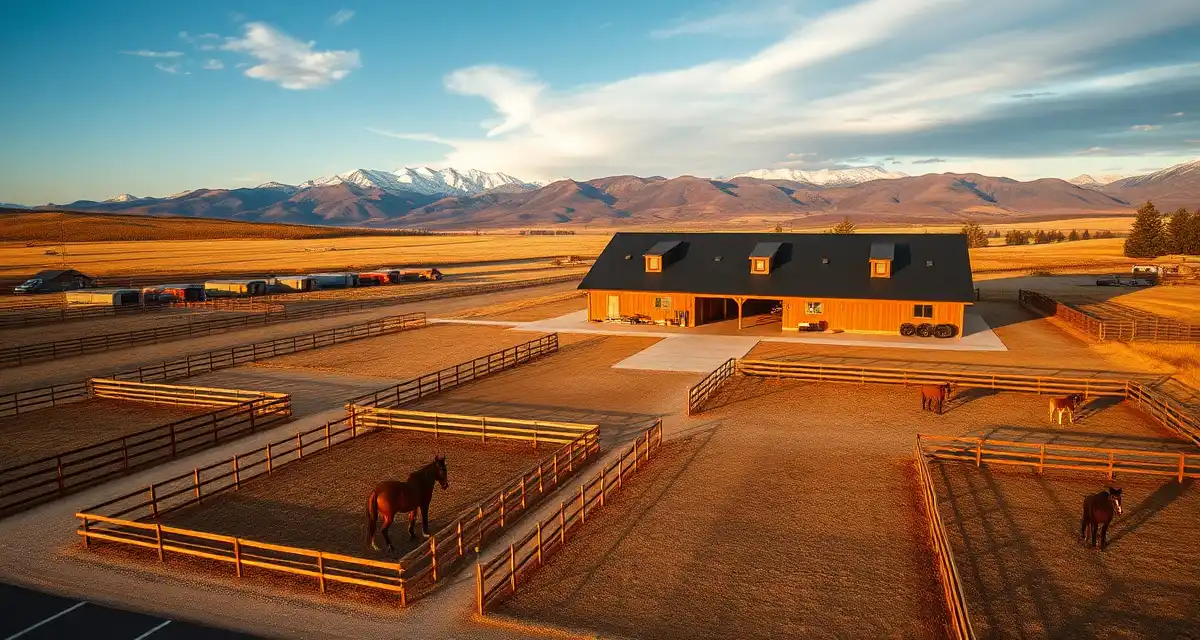
Running a Horse Boarding Business in Colorado: Guide for Barn Owners
Horse boarding is a $4B+ industry across the United States, and Colorado ranks among the top states for equine activity, with over 256,000 horses and a strong culture of recreational and competitive riding. If you're running or starting a horse boarding business in Colorado, the opportunity is real, but so is the complexity.
TL;DR
- Horse boarding in Colorado carries startup costs of $150,000 to $400,000+ for a 10-stall operation before a single horse arrives
- Full care boarding rates vary by region; pricing must cover feed, bedding, labor, insurance, and maintenance with margin for vacancies
- Break-even planning should assume 70% occupancy or less; most barns take four to five months to reach stable occupancy
- Labor is the most consistently underestimated operating expense, often running 40% higher than initial projections
- A 90-day cash reserve is a practical minimum for any new boarding operation
- Digital barn management software reduces administrative labor by hours per week and improves billing accuracy from day one
This guide covers what Colorado barn owners actually need to know: licensing, pricing, insurance, contracts, and how to manage daily operations without drowning in admin work.
What Colorado Barn Owners Need to Handle First
Before you take on your first boarder, you need the legal and financial foundation in place. Colorado doesn't require a specific "horse boarding license," but you still have several obligations.
Business registration: Register your business with the Colorado Secretary of State. An LLC is the most common structure for boarding operations because it separates personal liability from business liability.
Zoning compliance: Check with your county. Agricultural zoning typically permits boarding operations, but some counties require a conditional use permit if you're operating commercially on residential or mixed-use land.
Water rights: Colorado's prior appropriation water law is strict. If you're drawing from a well or stream to water horses, confirm your water rights cover commercial agricultural use.
Pricing Horse Boarding in Colorado
Rates vary significantly by region and service level. Along the Front Range (Denver, Boulder, Fort Collins), full-care boarding typically runs $600 to $1,200 per month. In rural areas like the San Luis Valley or Eastern Plains, rates can drop to $300 to $500 per month.
Pasture board is the most affordable option, usually $200 to $450 per month in Colorado. Stall board with full care, including feeding, turnout, and stall cleaning, sits at the higher end of the range.
When setting your rates, factor in:
- Hay and grain costs (Colorado hay prices fluctuate significantly by season)
- Water and utility costs
- Labor for feeding and stall cleaning
- Facility maintenance and depreciation
Don't underprice to fill stalls. A barn running at 80% capacity with correct pricing outperforms a full barn with rates set too low.
Insurance and Contracts: Non-Negotiables
Colorado follows the general rule that equine liability waivers are enforceable, supported by the Colorado Equine Activity Act (C.R.S. 13-21-119). This law limits liability for inherent risks of equine activities, but it doesn't protect you from negligence claims.
Carry at minimum:
- Commercial general liability insurance (minimum $1M per occurrence)
- Care, custody, and control coverage for horses in your care
- Property insurance for your barn, fencing, and equipment
Your boarding contract should specify feeding schedules, turnout policies, veterinary authorization procedures, payment plans, and your lien rights under Colorado law. Colorado's agister's lien (C.R.S. 38-20-102) gives you the right to hold a horse for unpaid boarding fees, but the process has specific legal steps. Have an equine attorney review your contract before you use it.
Managing Daily Operations at Scale
Manual tracking, paper records, and text message chains with horse owners don't scale past 10 to 15 horses. Most Colorado boarding barns that grow past that threshold move to dedicated barn management software to handle billing, feed cards, and owner communication in one place.
BarnBeacon is built specifically for equine boarding operations, handling invoicing, digital contracts, health logs, and owner messaging without requiring you to stitch together multiple apps. For a Colorado equine boarding operation managing seasonal fluctuations, multiple service tiers, and a mix of full-care and pasture boarders, that kind of consolidated system saves hours per week.
For a deeper look at building a boarding operation from the ground up, the horse boarding business guide covers business planning, staffing, and growth strategy in detail.
How many horses do I need to board to be profitable in Colorado?
Break-even depends on your fixed costs and board rate. A rough rule is that you need occupancy at or above 70% of capacity to cover overhead. In Colorado, full care board rates range widely by region; model your break-even before setting your rate rather than pricing against local competition and hoping the math works.
What insurance does a boarding barn need in Colorado?
Most boarding operations in Colorado need commercial general liability insurance, care custody and control coverage for boarded horses, and property insurance for structures and equipment. Equine-specific insurance brokers are familiar with Colorado requirements and can structure coverage that matches the actual risks of a boarding operation.
FAQ
What is Running a Horse Boarding Business in Colorado: Guide for Barn Owners?
Running a horse boarding business in Colorado means providing housing, feed, and care for horses owned by others, in exchange for monthly fees. Colorado is one of the top equine states in the US, with over 256,000 horses and strong demand for quality boarding facilities. Operations range from small backyard barns to large full-service equestrian centers offering training, arenas, and trail access. It combines agricultural management, customer service, and business operations into a single enterprise.
How much does Running a Horse Boarding Business in Colorado: Guide for Barn Owners cost?
Startup costs for a 10-stall horse boarding operation in Colorado typically range from $150,000 to $400,000 or more before the first horse arrives. Monthly operating expenses include feed, bedding, labor, insurance, utilities, and facility maintenance. Full care boarding rates vary by region and amenities, but must be priced to cover all costs plus a margin for vacancies. Labor alone often runs 40% higher than initial projections, making accurate budgeting critical from day one.
How does Running a Horse Boarding Business in Colorado: Guide for Barn Owners work?
A horse boarding business works by leasing stall space and providing daily care services to horse owners who lack their own facilities. Barn owners manage feeding schedules, turnout rotations, stall cleaning, and veterinary coordination. Boarders sign contracts specifying services, liability terms, and payment schedules. Revenue comes from monthly boarding fees, with optional add-ons like training, blanketing, or trailer parking. Digital barn management software streamlines billing, scheduling, and communication across multiple clients.
What are the benefits of Running a Horse Boarding Business in Colorado: Guide for Barn Owners?
Benefits include recurring monthly revenue from long-term boarding contracts, strong demand in Colorado's active equestrian community, and the ability to build equity in agricultural property. Well-run barns develop loyal client bases with low churn. Additional income streams like lessons, arena rentals, and clinics can improve margins. For horse-passionate entrepreneurs, it also offers the rare opportunity to build a profitable business around a lifestyle they already love.
Who needs Running a Horse Boarding Business in Colorado: Guide for Barn Owners?
This guide is designed for anyone starting or currently operating a horse boarding facility in Colorado — whether you're converting a family farm, expanding a hobby operation, or launching a purpose-built equestrian center. It's also useful for experienced horse owners considering the business side of boarding for the first time, and for barn managers who want to improve operational efficiency, pricing strategy, or client retention without relying solely on trial and error.
How long does Running a Horse Boarding Business in Colorado: Guide for Barn Owners take?
Reaching stable occupancy in a new Colorado boarding operation typically takes four to five months. Full operational setup — including licensing, insurance, facility readiness, and initial client acquisition — can take six to twelve months from concept to first boarder. Barn owners should plan for a 90-day cash reserve minimum to cover operating costs during the ramp-up period. Experienced operators with existing client networks or strong local marketing can shorten this timeline significantly.
What should I look for when choosing Running a Horse Boarding Business in Colorado: Guide for Barn Owners?
When evaluating how to structure your boarding business, prioritize three things: a well-drafted boarding contract that clearly defines liability, services, and payment terms; properly structured equine liability insurance that complies with Colorado law; and a pricing model built on realistic occupancy assumptions of 70% or below. Beyond the basics, look for barn management software that reduces administrative hours, and consider your facility's ability to retain clients through consistent care standards and clear communication.
Is Running a Horse Boarding Business in Colorado: Guide for Barn Owners worth it?
For the right operator, yes. Colorado's large horse population, outdoor recreation culture, and shortage of quality boarding options in many regions create genuine demand. However, profitability requires disciplined cost management, realistic break-even planning, and strong client relationships. Barns that treat it as a lifestyle business without financial structure often struggle. Those that invest in proper contracts, insurance, pricing strategy, and operational tools from the start are far more likely to build a sustainable, rewarding enterprise.
Sources
- American Association of Equine Practitioners (AAEP)
- American Horse Council
- Kentucky Equine Research
- UC Davis Center for Equine Health
- American Horse Council Economic Impact Study
Get Started with BarnBeacon
Running a profitable boarding barn in Colorado requires more than good horsemanship. The administrative side, billing, client communication, health records, and staff coordination, determines whether your margins hold as you scale. BarnBeacon gives Colorado barn owners the operational infrastructure to run the business side as professionally as the care side. Start a free trial with your first month's data and see where the gaps are.