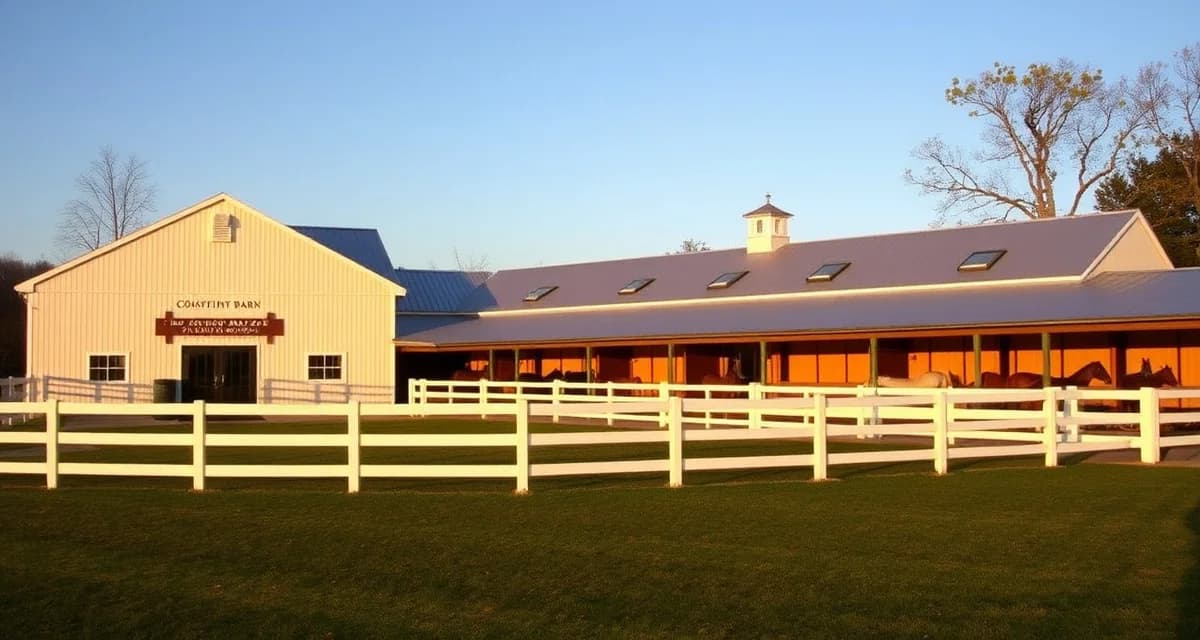
Running a Horse Boarding Business in Connecticut: Guide for Barn Owners
Horse boarding is a $4B+ industry in the United States, and Connecticut punches well above its weight in that market. With dense suburban horse communities across Fairfield, Litchfield, and Hartford counties, demand for quality boarding stays high, and so does the bar for running a professional operation.
TL;DR
- Horse boarding in Connecticut carries startup costs of $150,000 to $400,000+ for a 10-stall operation before a single horse arrives
- Full care boarding rates vary by region; pricing must cover feed, bedding, labor, insurance, and maintenance with margin for vacancies
- Break-even planning should assume 70% occupancy or less; most barns take four to five months to reach stable occupancy
- Labor is the most consistently underestimated operating expense, often running 40% higher than initial projections
- A 90-day cash reserve is a practical minimum for any new boarding operation
- Digital barn management software reduces administrative labor by hours per week and improves billing accuracy from day one
This guide covers what Connecticut barn owners actually need to know: licensing, pricing, insurance, contracts, and the tools that keep daily operations from becoming a second full-time job.
The Real Challenge of Running a Boarding Barn in CT
Most boarding barn owners got into this business because they love horses, not spreadsheets. But a horse boarding business in Connecticut requires you to manage billing cycles, boarder communications, state compliance, and facility maintenance simultaneously.
Miss any one of those, and you feel it fast, whether it's a late payment handling, a lapsed liability policy, or a boarder who didn't get notified about a vet visit.
Licensing and Legal Requirements in Connecticut
Connecticut does not require a single unified "boarding barn license," but you will need to satisfy several overlapping requirements before you open.
Key requirements include:
- Business registration with the Connecticut Secretary of State (LLC or sole proprietor)
- Local zoning approval for commercial equine use, which varies significantly by town
- DEEP compliance if your property involves wetlands, manure management, or water runoff
- Sales tax registration if you sell goods or taxable services on-site
Some municipalities, particularly in Fairfield County, have specific ordinances around the number of horses per acre and facility setbacks. Check with your town's planning and zoning office before signing any lease or purchase agreement.
Pricing Horse Boarding in Connecticut
Connecticut is one of the higher-cost boarding markets in the Northeast. Full-care board typically runs between $1,200 and $2,200 per month depending on location, amenities, and included services.
Typical CT pricing tiers:
| Board Type | Monthly Range |
|---|---|
| Pasture board | $400 - $700 |
| Partial care / self-care | $600 - $900 |
| Full care (stall) | $1,200 - $1,800 |
| Full care (premium facility) | $1,800 - $2,200+ |
Litchfield County tends to run lower than Fairfield County, where land costs and operating expenses are significantly higher. Factor in your hay, bedding, and labor costs before setting rates, not after.
Insurance and Contracts
General liability insurance for equine operations in Connecticut typically starts around $500 to $1,500 per year for basic coverage, but most barn owners carrying 10+ horses will want a commercial equine policy in the $2,000 to $4,000 range.
Your boarding contract should include a liability waiver that complies with Connecticut's equine liability statute (CGS Section 52-557p), which provides some protection to equine activity sponsors when participants are injured due to inherent risks. This does not replace proper insurance, and it does not cover negligence.
Have an equine attorney review your contract before you use it. A one-time legal review costs far less than a single uninsured claim.
Managing Day-to-Day Operations
Once you have the legal and financial foundation in place, the ongoing challenge is operational efficiency. Billing, feeding schedules, farrier and vet coordination, and boarder communication all need systems.
Many Connecticut barn owners still rely on spreadsheets and text messages, which works until it doesn't. A purpose-built barn management software platform handles invoicing, digital contracts, and boarder messaging in one place, which reduces the administrative load significantly.
If you are building out your full business plan, the horse boarding business guide covers the complete operational framework from startup through scaling.
BarnBeacon is built specifically for operations like yours, supporting Connecticut boarding barns with billing automation, owner communication tools, and record-keeping that keeps your barn running without the paperwork pile-up.
How many horses do I need to board to be profitable in Connecticut?
Break-even depends on your fixed costs and board rate. A rough rule is that you need occupancy at or above 70% of capacity to cover overhead. In Connecticut, full care board rates range widely by region; model your break-even before setting your rate rather than pricing against local competition and hoping the math works.
What insurance does a boarding barn need in Connecticut?
Most boarding operations in Connecticut need commercial general liability insurance, care custody and control coverage for boarded horses, and property insurance for structures and equipment. Equine-specific insurance brokers are familiar with Connecticut requirements and can structure coverage that matches the actual risks of a boarding operation.
FAQ
What is Running a Horse Boarding Business in Connecticut: Guide for Barn Owners?
Running a horse boarding business in Connecticut means providing stabling, feed, and care for client-owned horses in exchange for monthly fees. Connecticut's dense suburban horse communities in Fairfield, Litchfield, and Hartford counties create strong demand. Operators manage daily feeding, stall cleaning, turnout, and facility maintenance while navigating state regulations, liability contracts, and insurance requirements. It is both an agricultural enterprise and a customer service business requiring consistent operational standards year-round.
How much does Running a Horse Boarding Business in Connecticut: Guide for Barn Owners cost?
Startup costs for a 10-stall Connecticut boarding operation typically range from $150,000 to $400,000 before the first horse arrives, covering facility improvements, fencing, equipment, and initial supplies. Monthly operating expenses include feed, bedding, labor, insurance, and utilities. Full care boarding rates vary by county and amenities. Labor consistently runs 40% higher than initial projections, and operators should maintain a 90-day cash reserve to weather slow fill periods.
How does Running a Horse Boarding Business in Connecticut: Guide for Barn Owners work?
A boarding barn operates by charging monthly fees per stall in exchange for daily horse care. Owners sign boarding contracts outlining services, liability terms, and payment schedules. Staff handle feeding, stall cleaning, and turnout on fixed daily routines. Billing cycles, health records, and incident logs are tracked through barn management software. Most Connecticut barns reach stable occupancy within four to five months, with break-even planning built around 70% occupancy or lower.
What are the benefits of Running a Horse Boarding Business in Connecticut: Guide for Barn Owners?
Running a boarding barn in Connecticut provides recurring monthly revenue from a loyal client base with low turnover when service quality is high. Operators build equity in agricultural property while serving an underserved suburban horse community. A well-run barn creates a stable local business with strong word-of-mouth growth. Digital management tools reduce administrative hours significantly, allowing owners to focus on horse care and client relationships rather than paperwork and manual billing.
Who needs Running a Horse Boarding Business in Connecticut: Guide for Barn Owners?
This guide is for aspiring and existing barn owners in Connecticut who want to build or improve a professional horse boarding operation. It is especially relevant for those in Fairfield, Litchfield, and Hartford counties where boarding demand is highest. It also applies to equestrians considering converting private property into a revenue-generating facility, farm owners exploring agricultural business diversification, and anyone currently running an informal boarding arrangement who wants to formalize and scale operations.
How long does Running a Horse Boarding Business in Connecticut: Guide for Barn Owners take?
Reaching stable occupancy typically takes four to five months from opening, assuming active local marketing and a facility ready for immediate move-in. Licensing, zoning approvals, and facility preparation can add several months before the first horse arrives. Building a full client roster at 80% to 90% occupancy may take one to two years depending on competition and reputation in the local equestrian community. Financial planning should account for this ramp-up period explicitly.
What should I look for when choosing Running a Horse Boarding Business in Connecticut: Guide for Barn Owners?
When evaluating how to structure or improve your Connecticut boarding business, prioritize a clear written boarding contract reviewed by a local equine attorney, proper agricultural and equine liability insurance, and compliance with local zoning regulations. Look for barn management software that handles invoicing, health records, and communication in one platform. Ensure your pricing model covers feed, bedding, labor, insurance, and maintenance with a margin buffer for vacancies and unexpected veterinary or facility costs.
Is Running a Horse Boarding Business in Connecticut: Guide for Barn Owners worth it?
For the right operator, yes. Connecticut's horse density and affluent suburban equestrian market support premium pricing and consistent demand. However, profitability requires disciplined cost controls, realistic occupancy projections, and a genuine commitment to daily horse care standards. Barns that underestimate labor costs or skip formal contracts face serious financial and legal exposure. With proper planning, adequate capital reserves, strong contracts, and digital management tools in place from day one, a Connecticut boarding operation is a viable long-term business.
Sources
- American Association of Equine Practitioners (AAEP)
- American Horse Council
- Kentucky Equine Research
- UC Davis Center for Equine Health
- American Horse Council Economic Impact Study
Get Started with BarnBeacon
Running a profitable boarding barn in Connecticut requires more than good horsemanship. The administrative side, billing, client communication, health records, and staff coordination, determines whether your margins hold as you scale. BarnBeacon gives Connecticut barn owners the operational infrastructure to run the business side as professionally as the care side. Start a free trial with your first month's data and see where the gaps are.