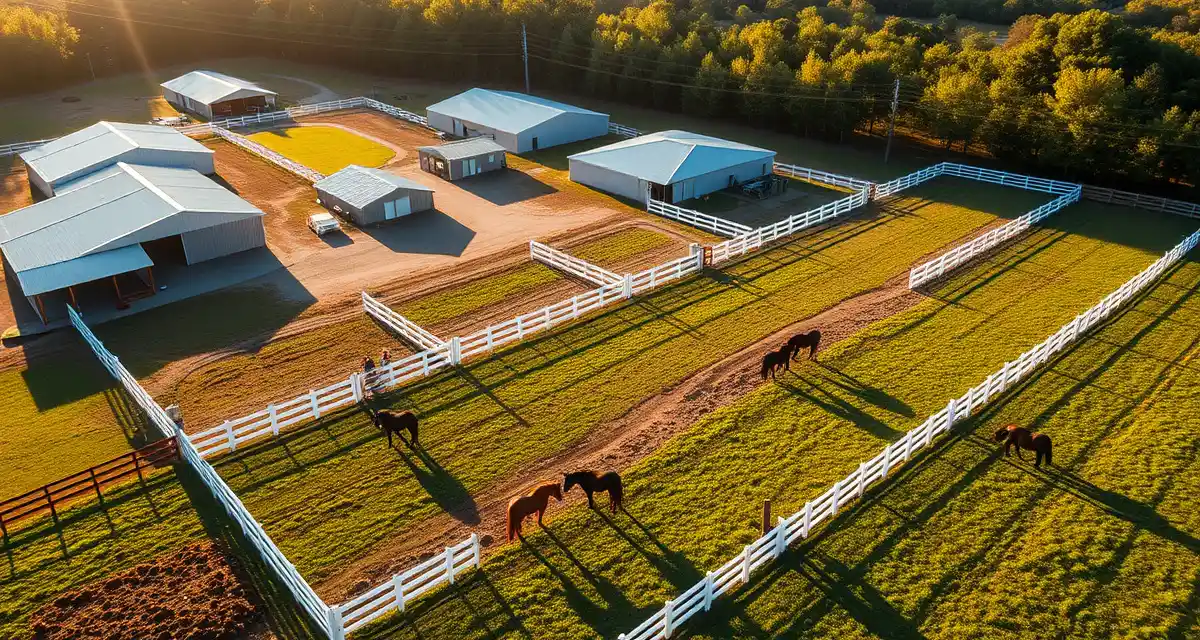
Running a Horse Boarding Business in Georgia: Guide for Barn Owners
Horse boarding is a $4B+ industry across the United States, and Georgia's mix of rural land, active equestrian communities, and year-round rideable weather makes it one of the stronger regional markets in the Southeast. If you're running or starting a horse boarding business in Georgia, the details matter: pricing, compliance, contracts, and daily operations all affect whether your barn turns a profit.
TL;DR
- Horse boarding in Georgia carries startup costs of $150,000 to $400,000+ for a 10-stall operation before a single horse arrives
- Full care boarding rates vary by region; pricing must cover feed, bedding, labor, insurance, and maintenance with margin for vacancies
- Break-even planning should assume 70% occupancy or less; most barns take four to five months to reach stable occupancy
- Labor is the most consistently underestimated operating expense, often running 40% higher than initial projections
- A 90-day cash reserve is a practical minimum for any new boarding operation
- Digital barn management software reduces administrative labor by hours per week and improves billing accuracy from day one
This guide covers what Georgia barn owners specifically need to know.
The Georgia Boarding Market: What You're Working With
Georgia has a concentrated equestrian population in areas like Alpharetta, Canton, Cumming, and the counties surrounding Atlanta, plus strong rural boarding demand in middle and south Georgia. Competition varies significantly by region. In suburban Atlanta, boarders expect amenities. In rural counties, price sensitivity is higher and word-of-mouth carries more weight.
Understanding your local market before setting rates or investing in infrastructure is the first step to building a sustainable equine boarding operation in GA.
Licensing and Legal Requirements in Georgia
Georgia does not require a specific state-issued license to operate a horse boarding facility. However, you still have real compliance obligations.
Key requirements include:
- Business registration: Register your LLC or sole proprietorship with the Georgia Secretary of State
- County zoning approval: Agricultural zoning is required in most counties; verify with your local planning office before signing a lease or purchasing land
- Sales tax: Boarding services are generally exempt from Georgia sales tax, but feed and supply sales may not be; consult a CPA familiar with agricultural businesses
- Equine Activity Liability Act: Georgia's statute (O.C.G.A. § 4-12-1) provides liability protection for equine professionals, but only if you post the required warning signs and include the correct language in your boarding contracts
Getting your contracts and signage right is not optional. One lawsuit without proper documentation can end a small barn operation.
How to Price Horse Boarding in Georgia
Rates vary by region and service level. As a general benchmark:
- Pasture board: $200 to $350/month
- Stall board (basic): $400 to $600/month
- Full care stall board: $600 to $900/month
- Premium/show barn board: $900 to $1,500+/month
Suburban Atlanta barns with arenas, wash racks, and trail access command the higher end. Rural barns with pasture-only setups compete on price. Factor in your hay, bedding, labor, and facility costs before setting rates. Many Georgia barn owners underprice in the first year and struggle to raise rates later without losing clients.
Add-on services like blanketing, medication administration, and trailer parking are legitimate revenue streams. Price them separately and include them in your boarding agreement.
Insurance and Contracts
General liability insurance for equine facilities in Georgia typically runs $1,000 to $3,000 per year depending on herd size and services offered. You should also carry care, custody, and control coverage for horses in your care.
Your boarding contract should specify: payment plans, late fees, notice periods, feed and care standards, liability waivers, and emergency authorization. A Georgia equine attorney can draft a template for a few hundred dollars. It's worth it.
Managing Daily Operations Efficiently
Most boarding barns in Georgia are owner-operated with minimal staff. That means administrative tasks like invoicing, tracking feed schedules, and communicating with horse owners eat into time you should be spending on the barn.
Barn management software built specifically for boarding operations handles billing, digital contracts, and owner communication in one place. BarnBeacon is designed to support exactly this kind of operation, whether you're managing 10 horses or 60.
For a broader look at building a boarding business from the ground up, the horse boarding business guide covers financials, marketing, and growth planning in detail.
How many horses do I need to board to be profitable in Georgia?
Break-even depends on your fixed costs and board rate. A rough rule is that you need occupancy at or above 70% of capacity to cover overhead. In Georgia, full care board rates range widely by region; model your break-even before setting your rate rather than pricing against local competition and hoping the math works.
What insurance does a boarding barn need in Georgia?
Most boarding operations in Georgia need commercial general liability insurance, care custody and control coverage for boarded horses, and property insurance for structures and equipment. Equine-specific insurance brokers are familiar with Georgia requirements and can structure coverage that matches the actual risks of a boarding operation.
FAQ
What is Running a Horse Boarding Business in Georgia: Guide for Barn Owners?
A horse boarding business in Georgia provides stabling, feed, and care services for horses owned by others. Georgia's year-round rideable climate, active equestrian communities, and abundant rural land make it a strong regional market. Barn owners earn revenue by offering stall space, turnout, and varying levels of care — from pasture board to full-service stalls — serving recreational riders, competitive equestrians, and horse owners who lack their own land.
How much does Running a Horse Boarding Business in Georgia: Guide for Barn Owners cost?
Startup costs for a 10-stall operation in Georgia typically run $150,000 to $400,000 before a single horse arrives, covering land, fencing, stalls, water systems, and equipment. Ongoing monthly expenses include feed, bedding, labor, insurance, and maintenance. Full care boarding rates vary by region and must be priced to cover all costs plus a vacancy buffer, since most barns should plan for 70% occupancy or less during the first year.
How does Running a Horse Boarding Business in Georgia: Guide for Barn Owners work?
Barn owners lease stall space and provide agreed-upon services — feeding, mucking, turnout, and sometimes training or farrier coordination — under a signed boarding contract. Boarders pay monthly fees based on the care level selected. Daily operations involve feeding schedules, health monitoring, turnout rotation, and facility upkeep. Digital barn management software streamlines billing, communication, and record-keeping, reducing administrative hours and improving payment accuracy from the start.
What are the benefits of Running a Horse Boarding Business in Georgia: Guide for Barn Owners?
Running a boarding barn in Georgia offers stable recurring revenue from monthly contracts, relatively low customer acquisition costs once reputation is established, and the ability to expand services over time. Georgia's mild winters allow year-round operations without the seasonal revenue dips common in northern states. Owners who manage labor and occupancy carefully can build a profitable, community-anchored business that appreciates alongside their land asset.
Who needs Running a Horse Boarding Business in Georgia: Guide for Barn Owners?
Anyone with suitable rural property, a genuine understanding of horse care, and the capital to cover a 90-day cash reserve can pursue horse boarding in Georgia. The business suits experienced equestrians looking to monetize their property, agricultural landowners diversifying income, and investors partnering with barn managers. It is not suited to those underestimating labor demands — staffing consistently runs 40% higher than initial projections for new operations.
How long does Running a Horse Boarding Business in Georgia: Guide for Barn Owners take?
Reaching stable occupancy typically takes four to five months from opening. Full build-out and permitting before opening can add several more months depending on construction scope and local zoning timelines. Break-even depends on your cost structure and local rates, but barns that open with pre-signed boarders and strong community ties tend to stabilize faster. Budget for at least 90 days of operating expenses before your first full month of revenue.
What should I look for when choosing Running a Horse Boarding Business in Georgia: Guide for Barn Owners?
Look for proven experience handling horses, a well-maintained facility with adequate turnout, clear and fair boarding contracts, and transparent pricing that covers all services. In Georgia specifically, verify the barn carries appropriate equine liability insurance and complies with local agricultural and zoning regulations. Strong communication practices and use of barn management software signal a professionally run operation. References from current boarders are one of the most reliable indicators of quality.
Is Running a Horse Boarding Business in Georgia: Guide for Barn Owners worth it?
For barn owners, yes — if capitalized properly and managed with realistic labor and occupancy assumptions. Georgia's equestrian market is active, land values support long-term investment, and recurring monthly revenue provides predictable cash flow. For horse owners, quality boarding saves the cost and responsibility of maintaining a private facility. The key risk for barn owners is underpricing services or underestimating operating costs, which is why detailed financial planning before opening is essential.
Sources
- American Association of Equine Practitioners (AAEP)
- American Competitive Trail Horse Association (ACTHA)
- American Horse Council
- Kentucky Equine Research
- UC Davis Center for Equine Health
Get Started with BarnBeacon
Running a profitable boarding barn in Georgia requires more than good horsemanship. The administrative side, billing, client communication, health records, and staff coordination, determines whether your margins hold as you scale. BarnBeacon gives Georgia barn owners the operational infrastructure to run the business side as professionally as the care side. Start a free trial with your first month's data and see where the gaps are.