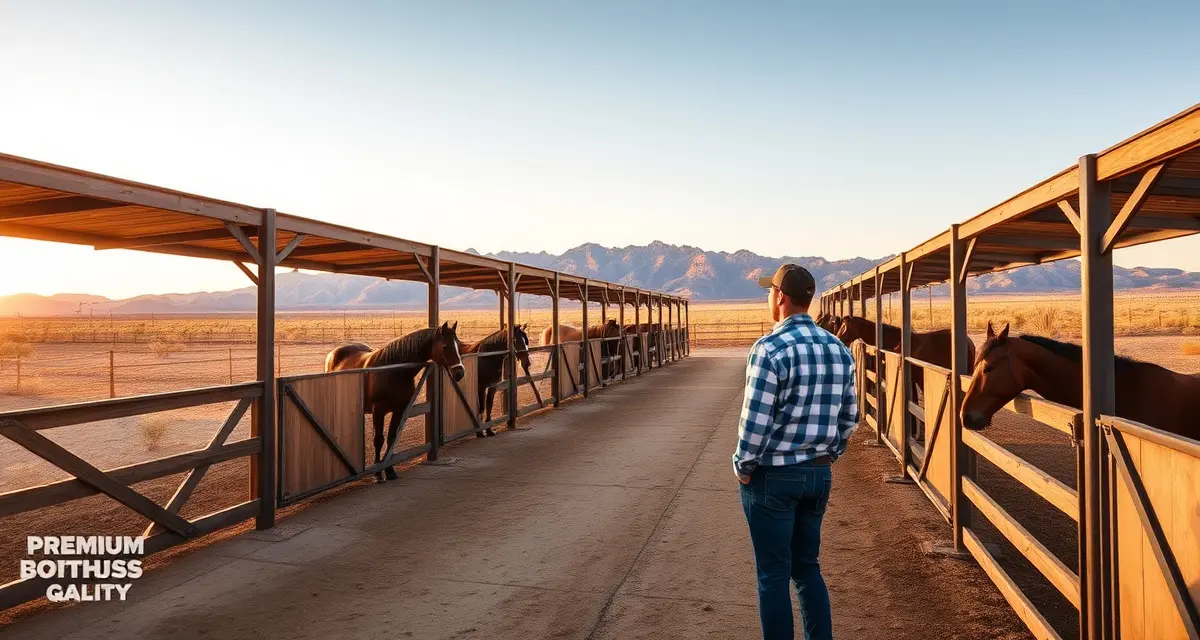
Running a Horse Boarding Business in Nevada: Guide for Barn Owners
Horse boarding is a $4B+ industry in the United States, and Nevada's mix of rural land, desert climate, and active equestrian communities makes it a meaningful slice of that market. Whether you're operating near Reno, Las Vegas, or in rural counties like Elko or Douglas, running a profitable horse boarding business in Nevada requires more than good horsemanship.
TL;DR
- Horse boarding in Nevada carries startup costs of $150,000 to $400,000+ for a 10-stall operation before a single horse arrives
- Full care boarding rates vary by region; pricing must cover feed, bedding, labor, insurance, and maintenance with margin for vacancies
- Break-even planning should assume 70% occupancy or less; most barns take four to five months to reach stable occupancy
- Labor is the most consistently underestimated operating expense, often running 40% higher than initial projections
- A 90-day cash reserve is a practical minimum for any new boarding operation
- Digital barn management software reduces administrative labor by hours per week and improves billing accuracy from day one
This guide covers what Nevada barn owners actually need to know: licensing, pricing, insurance, contracts, and the tools that keep operations running without chaos.
What Nevada Barn Owners Need to Get Right From Day One
Most boarding operations fail not because of bad horse care, but because of bad business structure. Missed invoices, unclear liability, and verbal agreements that fall apart when a horse gets injured are the real killers.
Nevada has specific considerations that generic boarding guides skip entirely. State-level agricultural zoning, water rights, and liability statutes all affect how you set up and run your barn.
Licensing and Legal Requirements in Nevada
Nevada does not require a single statewide "horse boarding license," but that doesn't mean you operate without oversight. Here's what you need to address:
Business registration: Register your boarding operation as an LLC or corporation with the Nevada Secretary of State. This separates personal assets from business liability.
County zoning and permits: Each county sets its own agricultural and commercial zoning rules. Washoe County, Clark County, and Douglas County all have different requirements for keeping livestock commercially. Contact your county planning department before you build or expand.
Water rights: Nevada is a prior appropriation state. If your barn relies on well water or surface water, confirm your water rights are in order before scaling up stall count.
Agritourism liability: If you offer lessons, trail rides, or events alongside boarding, Nevada's agritourism statutes (NRS Chapter 41) provide some liability protection, but only if you post required signage and meet specific conditions.
How to Price Horse Boarding in Nevada
Boarding rates in Nevada vary significantly by region and service level. Urban-adjacent facilities near Las Vegas or Reno typically charge $500 to $900 per month for full care. Rural operations in smaller counties often run $300 to $550 per month.
When setting your rates, factor in:
- Feed and hay costs: Nevada's dry climate means most hay is imported, which raises your input costs compared to wetter states
- Water costs: Irrigation and water delivery add up fast in desert regions
- Labor: Full-care boarding requires consistent daily labor; price accordingly
- Stall type: Pasture board, paddock board, and stall board should each carry different price points
Review your rates annually. Many Nevada barn owners undercharge because they haven't updated pricing since hay costs jumped. A well-structured horse boarding business guide can help you build a pricing model that actually covers your costs.
Contracts and Insurance: Don't Skip These
A signed boarding contract is your first line of defense. It should cover feed and care responsibilities, liability waivers, payment plans, and what happens if a horse requires emergency veterinary care.
For insurance, Nevada barn owners typically need:
- General liability insurance covering horse-related injuries to people on your property
- Care, custody, and control coverage for horses in your care
- Property insurance for structures, equipment, and feed inventory
Work with an insurer who specializes in equine operations. Standard farm policies often have gaps that only show up at claim time.
Managing Your Nevada Boarding Operation Day-to-Day
Manual systems break down fast once you pass 10 to 15 horses. Missed invoices, lost feeding notes, and unanswered owner messages create churn and reputation damage.
Barn management software like BarnBeacon handles billing, owner communication, feeding schedules, and health records in one place. For a Nevada equine boarding operation, that means less time chasing payments and more time running your barn.
How many horses do I need to board to be profitable in Nevada?
Break-even depends on your fixed costs and board rate. A rough rule is that you need occupancy at or above 70% of capacity to cover overhead. In Nevada, full care board rates range widely by region; model your break-even before setting your rate rather than pricing against local competition and hoping the math works.
What insurance does a boarding barn need in Nevada?
Most boarding operations in Nevada need commercial general liability insurance, care custody and control coverage for boarded horses, and property insurance for structures and equipment. Equine-specific insurance brokers are familiar with Nevada requirements and can structure coverage that matches the actual risks of a boarding operation.
FAQ
What is Running a Horse Boarding Business in Nevada: Guide for Barn Owners?
Running a horse boarding business in Nevada means providing stabling, feed, care, and facility access to horse owners who don't have their own land. Nevada's rural counties and active equestrian communities create consistent demand. Operations range from small backyard barns to full-service facilities near Reno or Las Vegas. Success requires balancing horsemanship with business fundamentals: licensing, insurance, contracts, pricing strategy, and efficient daily management across feed, bedding, labor, and maintenance.
How much does Running a Horse Boarding Business in Nevada: Guide for Barn Owners cost?
Startup costs for a 10-stall Nevada boarding operation typically run $150,000 to $400,000 before the first horse arrives, covering land, fencing, stalls, water infrastructure, and equipment. Monthly operating costs vary by region but include feed, bedding, labor, insurance, and maintenance. Full care boarding rates must be priced to cover all expenses at realistic occupancy levels—most new barns should plan for 70% occupancy or less during their first year.
How does Running a Horse Boarding Business in Nevada: Guide for Barn Owners work?
A Nevada horse boarding business works by leasing stall space and care services to horse owners on monthly contracts. Barn owners manage daily feeding, turnout, stall cleaning, and health monitoring. Revenue comes primarily from monthly boarding fees, with optional add-ons like training, lessons, or farrier coordination. Digital barn management software handles billing, scheduling, and communication, reducing administrative hours and improving cash flow accuracy from the start.
What are the benefits of Running a Horse Boarding Business in Nevada: Guide for Barn Owners?
A well-run Nevada boarding barn provides reliable recurring revenue, community connection with local equestrians, and the ability to work with horses professionally. Owners benefit from land utility, potential tax advantages of agricultural use, and a business that scales with added stalls or services. For horse lovers, it combines passion with income. Strong contracts and management systems protect the business and give boarders confidence in professional, consistent care.
Who needs Running a Horse Boarding Business in Nevada: Guide for Barn Owners?
Anyone with suitable Nevada land, equine experience, and the capital to cover startup costs and a 90-day cash reserve should consider horse boarding. It suits former equestrians, agricultural landowners seeking income diversification, and equine professionals expanding beyond training or lessons. It's especially viable near Reno, Las Vegas, or in established horse communities like Douglas County, where boarder demand is higher and local support networks for vets, farriers, and feed suppliers exist.
How long does Running a Horse Boarding Business in Nevada: Guide for Barn Owners take?
Reaching stable occupancy typically takes four to five months for a new Nevada boarding barn. Full buildout before opening—stalls, fencing, water, and equipment—can take six to twelve months depending on construction scope and permitting. Once open, most barns see gradual boarder growth rather than immediate fill rates. Planning for a slow ramp-up is essential; underestimating this timeline is one of the most common financial mistakes new barn owners make.
What should I look for when choosing Running a Horse Boarding Business in Nevada: Guide for Barn Owners?
Look for a location with reliable water access, quality forage availability, and proximity to your target boarder base. Evaluate whether your pricing model covers all costs at realistic occupancy. Prioritize solid boarding contracts that address liability, care standards, and termination terms. Secure equine liability insurance before taking a single horse. Use barn management software from day one to handle billing and records. And account for labor honestly—it typically runs 40% higher than initial projections.
Is Running a Horse Boarding Business in Nevada: Guide for Barn Owners worth it?
For those with the right land, experience, and capital, horse boarding in Nevada can be a financially sustainable and personally rewarding business. It is not passive income—labor, weather, animal health emergencies, and boarder turnover require constant attention. Success depends on disciplined pricing, strong contracts, cash reserves, and efficient systems. Barns that treat it as a real business rather than a lifestyle hobby consistently outperform those that don't. Done right, it is absolutely worth it.
Sources
- American Association of Equine Practitioners (AAEP)
- American Competitive Trail Horse Association (ACTHA)
- American Horse Council
- Kentucky Equine Research
- UC Davis Center for Equine Health
Get Started with BarnBeacon
Running a profitable boarding barn in Nevada requires more than good horsemanship. The administrative side, billing, client communication, health records, and staff coordination, determines whether your margins hold as you scale. BarnBeacon gives Nevada barn owners the operational infrastructure to run the business side as professionally as the care side. Start a free trial with your first month's data and see where the gaps are.