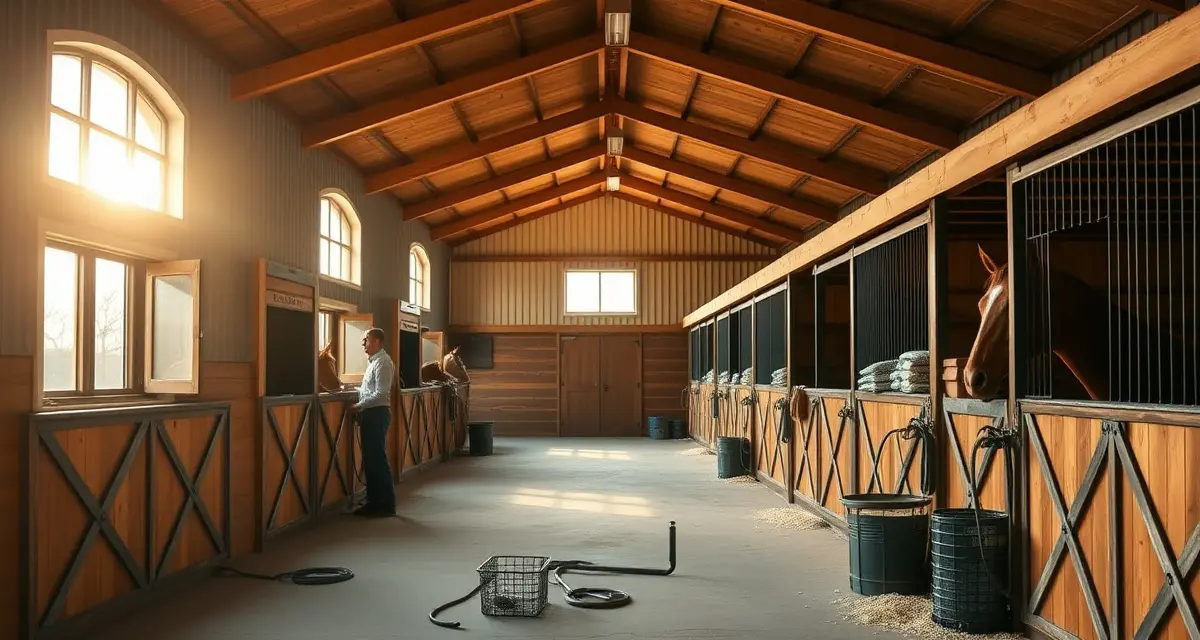
Running a Horse Boarding Business in Ohio: Guide for Barn Owners
Horse boarding is a $4B+ industry across the United States, and Ohio ranks among the top states for equine activity, with over 300,000 horses and a strong base of competitive riders, trail enthusiasts, and hobby owners. If you're running or starting a horse boarding business in Ohio, the margin between a profitable operation and a struggling one often comes down to how well you manage pricing, compliance, and client communication.
TL;DR
- Horse boarding in Ohio carries startup costs of $150,000 to $400,000+ for a 10-stall operation before a single horse arrives
- Full care boarding rates vary by region; pricing must cover feed, bedding, labor, insurance, and maintenance with margin for vacancies
- Break-even planning should assume 70% occupancy or less; most barns take four to five months to reach stable occupancy
- Labor is the most consistently underestimated operating expense, often running 40% higher than initial projections
- A 90-day cash reserve is a practical minimum for any new boarding operation
- Digital barn management software reduces administrative labor by hours per week and improves billing accuracy from day one
This guide covers what Ohio barn owners specifically need to know.
Ohio's Boarding Market: What You're Working With
Ohio's equine industry is concentrated in rural counties like Holmes, Licking, and Delaware, but suburban boarding demand is strong near Columbus, Cleveland, and Cincinnati. Horse owners in these metro-adjacent areas often pay premium rates for proximity and amenities.
Understanding your local market segment matters before you set a single price or sign a single boarder.
Licensing and Legal Requirements in Ohio
Ohio does not require a specific state-issued license to operate a boarding barn, but several legal obligations apply. You must comply with local zoning ordinances, which vary by county and township. Agricultural zoning typically permits boarding operations, but you should verify with your county auditor's office before expanding capacity.
Ohio's Equine Activity Liability Act (Ohio Revised Code Section 2305.321) provides meaningful liability protection for barn owners, but only if you post the required warning notices and include proper language in your boarding contracts. Skipping this step removes your statutory protection entirely.
Business registration with the Ohio Secretary of State is required if you operate as an LLC or corporation, which most barn owners should do for liability separation.
Pricing Horse Boarding in Ohio
Monthly boarding rates in Ohio vary significantly by region and service level. Rough benchmarks:
- Pasture board: $150 to $300/month
- Partial care/dry stall: $300 to $500/month
- Full care stall board: $500 to $900/month
- Premium full care (near Columbus/Cleveland): $900 to $1,400/month
Pricing below your actual cost of care is one of the most common mistakes new barn owners make. Calculate your per-stall cost including feed, bedding, labor, utilities, insurance, and facility maintenance before setting rates. Many Ohio barns undercharge by $75 to $150 per month and don't realize it until cash flow becomes a problem.
Add-on services like blanketing, extra feedings, and medication administration should be itemized separately. Bundling everything into a flat rate leaves money on the table.
Insurance for Ohio Boarding Barns
General liability insurance is non-negotiable. A standard equine liability policy for a small Ohio boarding barn typically runs $800 to $2,500 per year depending on horse count and facility size. You'll also want care, custody, and control coverage, which protects you if a horse in your care is injured or dies.
Farm property insurance should cover your barn structure, equipment, and hay inventory. Talk to an agent who specializes in agricultural or equine coverage, not a general commercial lines broker.
Contracts and Client Communication
A written boarding agreement protects both parties and reinforces your liability protections under Ohio law. Your contract should cover payment plans, late fees, notice periods for departure, emergency veterinary authorization, and feed/care specifications.
Clear, consistent communication with horse owners reduces disputes and improves retention. Many Ohio barns still rely on text threads and paper sign-in sheets, which creates gaps. A purpose-built tool like barn management software centralizes billing, daily logs, and owner messaging in one place.
For a deeper look at structuring your operation from the ground up, the horse boarding business guide covers contracts, staffing, and growth planning in detail.
How BarnBeacon Supports Ohio Boarding Barns
BarnBeacon is built for equine boarding operations like yours. It handles automated billing, digital boarding agreements, daily care logs, and direct owner communication from a single dashboard. Ohio barn owners use it to cut administrative time and reduce the payment follow-up that eats into every month.
How many horses do I need to board to be profitable in Ohio?
Break-even depends on your fixed costs and board rate. A rough rule is that you need occupancy at or above 70% of capacity to cover overhead. In Ohio, full care board rates range widely by region; model your break-even before setting your rate rather than pricing against local competition and hoping the math works.
What insurance does a boarding barn need in Ohio?
Most boarding operations in Ohio need commercial general liability insurance, care custody and control coverage for boarded horses, and property insurance for structures and equipment. Equine-specific insurance brokers are familiar with Ohio requirements and can structure coverage that matches the actual risks of a boarding operation.
FAQ
What is Running a Horse Boarding Business in Ohio: Guide for Barn Owners?
Running a horse boarding business in Ohio means providing stabling, feed, and care services to horse owners across one of the country's most active equine states. With over 300,000 horses statewide and demand from competitive riders, trail enthusiasts, and hobbyists, Ohio barn owners operate in a mature, regionally segmented market. The business involves managing facilities, clients, compliance, and daily animal care — often simultaneously — while maintaining profitability in a capital-intensive industry.
How much does Running a Horse Boarding Business in Ohio: Guide for Barn Owners cost?
Startup costs for a 10-stall boarding operation in Ohio typically range from $150,000 to $400,000 before a single horse arrives, covering construction, equipment, fencing, and initial operating reserves. Ongoing costs include feed, bedding, labor, insurance, and maintenance. Full care boarding rates vary by region and must be priced to cover all expenses plus a vacancy buffer — most operators plan for 70% occupancy or less when modeling break-even.
How does Running a Horse Boarding Business in Ohio: Guide for Barn Owners work?
Horse boarding works by charging horse owners a monthly fee in exchange for stall space, feed, turnout, and varying levels of care. Ohio barn owners typically offer tiered options — full care, partial care, or pasture board — each with different pricing and labor demands. Revenue is generated per stall per month, so occupancy rate is the primary lever for profitability. Billing, scheduling, and client communication are managed daily.
What are the benefits of Running a Horse Boarding Business in Ohio: Guide for Barn Owners?
A well-run Ohio boarding barn provides steady recurring revenue, community connection with the local equine network, and the ability to scale by adding stalls or services like training and lessons. Ohio's large horse population and active show circuit create consistent demand. Barns that invest in digital management tools, clear contracts, and strong client communication tend to retain boarders longer and reduce administrative overhead significantly.
Who needs Running a Horse Boarding Business in Ohio: Guide for Barn Owners?
This guide is primarily for existing barn owners looking to improve profitability and for entrepreneurs evaluating whether to start a boarding operation in Ohio. It's also relevant to property owners with acreage considering the equine market, farm managers transitioning into boarding services, and investors assessing the viability of a rural equine business. Anyone responsible for pricing, compliance, staffing, or client relations at an Ohio barn will find it directly applicable.
How long does Running a Horse Boarding Business in Ohio: Guide for Barn Owners take?
Reaching stable occupancy in a new Ohio boarding operation typically takes four to five months. Full break-even depends on stall count, pricing, and local demand, but most barns operate at a deficit during the first two to three months while building clientele. Operators are advised to maintain a minimum 90-day cash reserve to cover this ramp-up period. Established barns can stabilize faster when reopening under new ownership or after expansion.
What should I look for when choosing Running a Horse Boarding Business in Ohio: Guide for Barn Owners?
When evaluating how to structure or improve a boarding business in Ohio, prioritize pricing that accounts for all true costs — including labor, which typically runs 40% higher than initial projections. Look for barn management software that reduces administrative hours and improves billing accuracy. Ensure your boarding contracts are legally sound under Ohio law, your liability insurance is adequate, and your facility meets any applicable county zoning or agricultural regulations.
Is Running a Horse Boarding Business in Ohio: Guide for Barn Owners worth it?
For the right operator, yes. Ohio's equine market is large, regionally diverse, and supported by an active show and trail-riding culture. The business is demanding and capital-intensive, but barns that price correctly, manage labor efficiently, and retain boarders through strong client communication can build a stable, recurring-revenue operation. Success depends less on passion for horses than on disciplined financial management, realistic occupancy projections, and consistent service delivery from day one.
Sources
- American Association of Equine Practitioners (AAEP)
- American Competitive Trail Horse Association (ACTHA)
- American Horse Council
- Kentucky Equine Research
- UC Davis Center for Equine Health
Get Started with BarnBeacon
Running a profitable boarding barn in Ohio requires more than good horsemanship. The administrative side, billing, client communication, health records, and staff coordination, determines whether your margins hold as you scale. BarnBeacon gives Ohio barn owners the operational infrastructure to run the business side as professionally as the care side. Start a free trial with your first month's data and see where the gaps are.