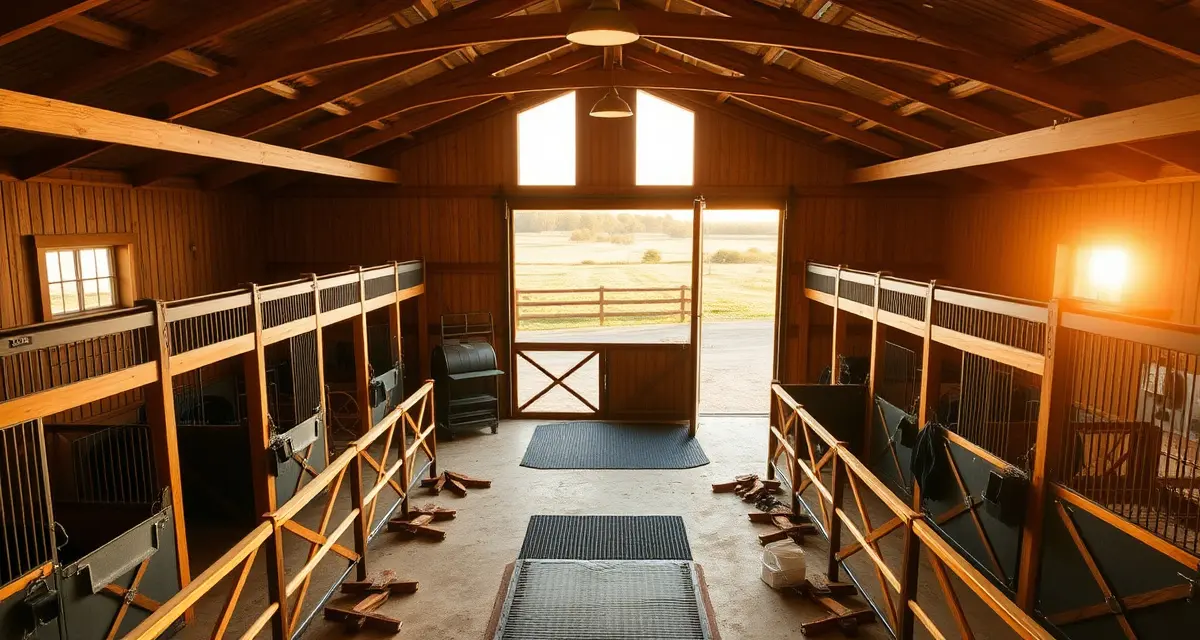
Running a Horse Boarding Business in Wisconsin: Guide for Barn Owners
Horse boarding is a $4B+ industry across the United States, and Wisconsin's strong rural economy, active trail riding community, and competitive show circuit make it one of the Midwest's more active equine markets. If you're running or starting a horse boarding business in Wisconsin, the operational details matter as much as the acreage.
TL;DR
- Horse boarding in Wisconsin carries startup costs of $150,000 to $400,000+ for a 10-stall operation before a single horse arrives
- Full care boarding rates vary by region; pricing must cover feed, bedding, labor, insurance, and maintenance with margin for vacancies
- Break-even planning should assume 70% occupancy or less; most barns take four to five months to reach stable occupancy
- Labor is the most consistently underestimated operating expense, often running 40% higher than initial projections
- A 90-day cash reserve is a practical minimum for any new boarding operation
- Digital barn management software reduces administrative labor by hours per week and improves billing accuracy from day one
This guide covers what Wisconsin barn owners actually need to know: licensing, pricing, insurance, contracts, and how to manage day-to-day operations without drowning in paperwork.
What Wisconsin Barn Owners Need to Get Right
Running a horse boarding business in Wisconsin isn't just about having the right facilities. It's about building a business that can handle liability, communicate clearly with horse owners, and collect revenue consistently.
Most barns that struggle aren't undercapitalized on land or horses. They're undercapitalized on systems.
Licensing and Legal Requirements in Wisconsin
Wisconsin does not require a specific state-issued license to operate a horse boarding facility, but several requirements apply depending on your setup.
- Business registration: You'll need to register your business with the Wisconsin Department of Financial Institutions if operating as an LLC or corporation.
- Zoning compliance: Agricultural zoning typically permits boarding operations, but check with your county. Dane, Waukesha, and Washington counties each have different land use rules.
- Water and waste: If you're on a well or managing manure at scale, Wisconsin DNR regulations around nutrient management may apply.
- Sales tax: Boarding services are generally exempt from Wisconsin sales tax, but feed and supply sales may not be. Confirm with the Wisconsin Department of Revenue.
An attorney familiar with Wisconsin agricultural law can help you structure your boarding contracts to limit liability under Wisconsin's equine activity statutes (Wis. Stat. § 895.481).
How to Price Horse Boarding in Wisconsin
Boarding rates in Wisconsin vary significantly by region and service level. Rough benchmarks:
- Pasture board: $150 to $300/month
- Stall board (basic): $350 to $550/month
- Full care stall board: $600 to $900/month
- Training or show barns: $900 to $1,500+/month
Urban-adjacent facilities near Milwaukee, Madison, or Green Bay can charge at the higher end. Rural barns in central or northern Wisconsin typically price lower but may have lower overhead to match.
Factor in your hay costs, bedding, labor, and facility debt service before setting rates. Many Wisconsin barn owners undercharge because they price against neighbors rather than against their actual cost per stall.
For a deeper look at building a sustainable pricing model, see our horse boarding business guide.
Insurance and Contracts
Wisconsin barn owners should carry at minimum:
- General liability insurance specific to equine operations
- Care, custody, and control coverage for horses in your care
- Property insurance covering structures, equipment, and feed
Standard homeowner or farm policies often exclude commercial boarding activity. Work with an insurer who understands equine operations.
Your boarding contract should include a liability waiver referencing Wisconsin's equine activity statute, a clear payment plans, a feed and care protocol, and a lien clause for unpaid board. Have a Wisconsin attorney review it before you use it.
Managing Daily Operations
This is where most barns lose time and money. Tracking feeding schedules, managing invoices, communicating with 20 or 30 horse owners, and keeping vet and farrier records manually is unsustainable past a certain scale.
BarnBeacon is built specifically for equine boarding operations like yours. It handles billing, owner communication, horse health records, and scheduling in one place, so you're not managing a boarding barn through a spreadsheet and a group text.
For Wisconsin barn owners looking to tighten up operations, barn management software is one of the highest-leverage investments you can make per hour saved.
How many horses do I need to board to be profitable in Wisconsin?
Break-even depends on your fixed costs and board rate. A rough rule is that you need occupancy at or above 70% of capacity to cover overhead. In Wisconsin, full care board rates range widely by region; model your break-even before setting your rate rather than pricing against local competition and hoping the math works.
What insurance does a boarding barn need in Wisconsin?
Most boarding operations in Wisconsin need commercial general liability insurance, care custody and control coverage for boarded horses, and property insurance for structures and equipment. Equine-specific insurance brokers are familiar with Wisconsin requirements and can structure coverage that matches the actual risks of a boarding operation.
FAQ
What is Running a Horse Boarding Business in Wisconsin: Guide for Barn Owners?
Running a horse boarding business in Wisconsin means providing stabling, feed, turnout, and care services for horse owners who lack their own facilities. Wisconsin's active trail riding community, competitive show circuit, and strong rural economy make it a viable equine market. Barn owners must navigate licensing, insurance, contracts, and daily operations while managing feed, bedding, labor, and facility upkeep for multiple horses—often simultaneously balancing the roles of caretaker, property manager, and small business owner.
How much does Running a Horse Boarding Business in Wisconsin: Guide for Barn Owners cost?
Startup costs for a 10-stall Wisconsin boarding operation typically range from $150,000 to $400,000 before the first horse arrives. Ongoing monthly expenses include feed, bedding, labor, insurance, utilities, and maintenance. Full care boarding rates vary by region but must cover all operating costs plus a margin for vacancies. Most new operations should maintain a minimum 90-day cash reserve and plan financials around 70% occupancy or lower during the stabilization period.
How does Running a Horse Boarding Business in Wisconsin: Guide for Barn Owners work?
Horse boarding operations work by charging monthly fees in exchange for housing, feeding, and caring for horses. Barn owners set pricing tiers—full care, partial care, or pasture board—based on service level. Daily routines include feeding, stall cleaning, turnout management, and health monitoring. Administrative tasks like billing, contract management, and scheduling run parallel to physical care. Digital barn management software can significantly reduce paperwork and improve billing accuracy from day one.
What are the benefits of Running a Horse Boarding Business in Wisconsin: Guide for Barn Owners?
A well-run Wisconsin boarding barn provides reliable income from a recurring monthly billing model, leverages existing rural land, and serves a community with genuine demand. Benefits include building long-term client relationships, operating within a growing $4B+ national industry, and creating a business that aligns with an equestrian lifestyle. When managed properly, boarding operations can achieve stable cash flow, though success depends on disciplined pricing, occupancy management, and controlling labor costs.
Who needs Running a Horse Boarding Business in Wisconsin: Guide for Barn Owners?
This guide is for anyone starting or currently operating a horse boarding facility in Wisconsin. It's especially relevant for new barn owners underestimating labor costs—which commonly run 40% above initial projections—or those struggling with occupancy, pricing, or contracts. It also applies to experienced equestrians transitioning into a business model for the first time, and to property owners evaluating whether their land and capital can sustainably support a boarding operation.
How long does Running a Horse Boarding Business in Wisconsin: Guide for Barn Owners take?
Most Wisconsin boarding barns take four to five months to reach stable occupancy after opening. Planning should assume this ramp-up period and budget accordingly. Licensing, insurance, and facility preparation can take additional weeks or months before boarding begins. Operationally, establishing reliable routines, client contracts, and billing systems is an ongoing process. Owners who implement barn management software early typically reduce their administrative learning curve significantly compared to manual tracking methods.
What should I look for when choosing Running a Horse Boarding Business in Wisconsin: Guide for Barn Owners?
When evaluating how to structure your Wisconsin boarding operation, prioritize legally sound boarding contracts, adequate liability insurance specific to equine businesses, and a pricing model that accounts for all costs—including labor, which is the most underestimated expense. Look for barn management software that handles billing and scheduling. Also assess your facility's capacity honestly: stall count, turnout availability, water access, and your ability to handle veterinary emergencies or bad-weather protocols.
Is Running a Horse Boarding Business in Wisconsin: Guide for Barn Owners worth it?
For the right person with realistic expectations, running a horse boarding business in Wisconsin is worth pursuing. The market has genuine demand, recurring revenue is predictable, and rural land in Wisconsin can support a viable operation. However, success requires disciplined financial planning, with break-even analysis built around 70% occupancy, a 90-day cash buffer, and honest labor cost projections. Those who treat it as a business—not just a lifestyle—consistently outperform those who underestimate the operational complexity.
Sources
- American Association of Equine Practitioners (AAEP)
- American Competitive Trail Horse Association (ACTHA)
- American Horse Council
- Kentucky Equine Research
- UC Davis Center for Equine Health
Get Started with BarnBeacon
Running a profitable boarding barn in Wisconsin requires more than good horsemanship. The administrative side, billing, client communication, health records, and staff coordination, determines whether your margins hold as you scale. BarnBeacon gives Wisconsin barn owners the operational infrastructure to run the business side as professionally as the care side. Start a free trial with your first month's data and see where the gaps are.