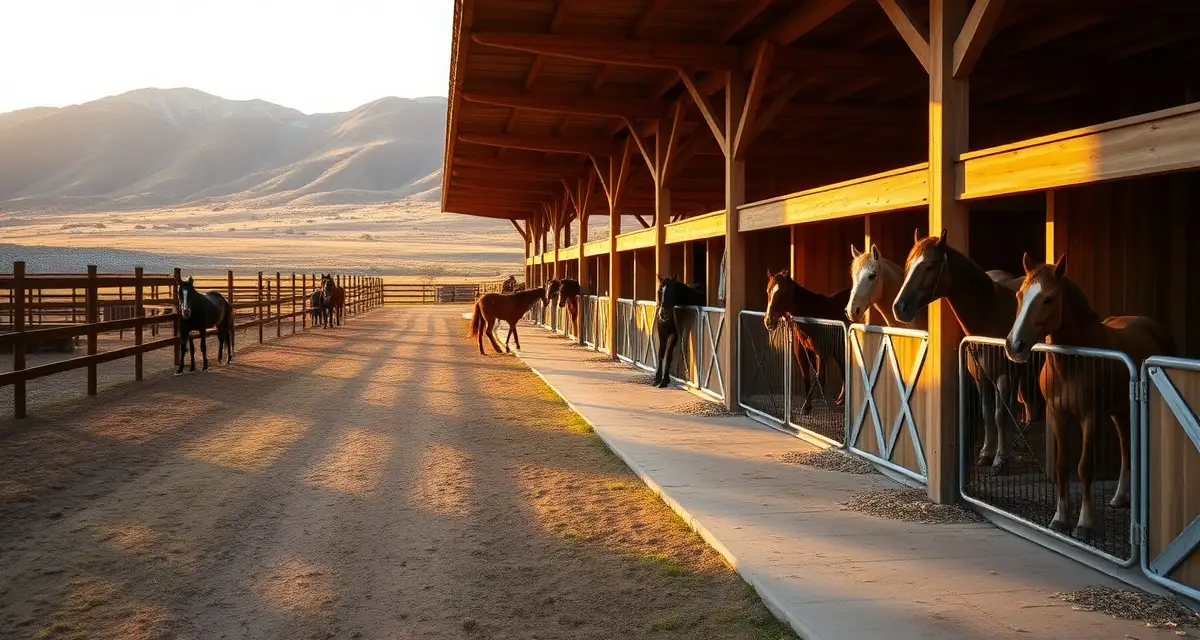
Running a Horse Boarding Business in Wyoming: Guide for Barn Owners
Horse boarding is a $4B+ industry across the United States, and Wyoming's deep equestrian culture makes it one of the more active markets in the Mountain West. Whether you're running a full-care facility near Cheyenne or a pasture board operation outside Sheridan, the business fundamentals are the same: pricing that covers your costs, contracts that protect you, and systems that keep operations from eating your day.
TL;DR
- Horse boarding in Wyoming carries startup costs of $150,000 to $400,000+ for a 10-stall operation before a single horse arrives
- Full care boarding rates vary by region; pricing must cover feed, bedding, labor, insurance, and maintenance with margin for vacancies
- Break-even planning should assume 70% occupancy or less; most barns take four to five months to reach stable occupancy
- Labor is the most consistently underestimated operating expense, often running 40% higher than initial projections
- A 90-day cash reserve is a practical minimum for any new boarding operation
- Digital barn management software reduces administrative labor by hours per week and improves billing accuracy from day one
BarnBeacon is built specifically for boarding barn owners like you, handling billing, owner communication, and daily management in one place.
Wyoming's Equine Boarding Market: What You're Working With
Wyoming has one of the highest horse-per-capita rates in the country. That means real demand, but also real competition from private landowners who board informally and undercut market rates.
Your advantage as a professional operation is reliability, liability coverage, and documented care. Boarders with valuable horses want a barn that can prove it's running a legitimate business, not just a neighbor with extra pasture.
Three Things Wyoming Boarding Barns Need to Get Right
1. Licensing and Legal Structure
Wyoming does not require a specific state license to operate a horse boarding facility, but you still have several legal boxes to check. You'll need a business license from your county or municipality, and if you're operating as an LLC (which you should be), you'll file with the Wyoming Secretary of State.
Wyoming's Recreational Safety Act offers some liability protection for equine activities, but it does not replace a solid boarding agreement. Have an attorney familiar with Wyoming equine law review your agreement before you take on your first boarder.
2. Pricing That Reflects Your Real Costs
Wyoming boarding rates vary significantly by region and service level. Full-care stall board in the Cheyenne or Jackson areas typically runs $400 to $700 per month. Pasture board in rural counties can be as low as $150 to $250 per month.
Before you set a number, calculate your actual cost per horse: hay, bedding, labor, utilities, insurance, and facility maintenance. Many barn owners underprice by 20 to 30 percent in the first year because they don't account for time. If you need a framework for building a pricing model, the horse boarding business guide covers cost-per-stall calculations in detail.
3. Insurance That Covers Your Operation
A general farm liability policy is not enough for a commercial boarding operation. You need care, custody, and control coverage, which protects you if a boarded horse is injured or dies while in your care.
Get quotes from insurers who specialize in equine operations. Expect to pay $1,500 to $4,000 annually depending on your herd size and facility type. Document every horse's condition at intake with photos and a signed health record.
Managing Day-to-Day Operations Without Burning Out
The administrative side of boarding, tracking payments, sending invoices, logging feeding and medication notes, and communicating with 15 different horse owners, can consume hours every week that should go toward actual barn work.
Barn management software built for equine operations handles this automatically. BarnBeacon lets Wyoming barn owners send invoices, collect payments, log daily care notes, and message boarders from a single dashboard. When a boarder asks whether their horse got its evening feed, you have a timestamped answer in seconds.
How many horses do I need to board to be profitable in Wyoming?
Break-even depends on your fixed costs and board rate. A rough rule is that you need occupancy at or above 70% of capacity to cover overhead. In Wyoming, full care board rates range widely by region; model your break-even before setting your rate rather than pricing against local competition and hoping the math works.
What insurance does a boarding barn need in Wyoming?
Most boarding operations in Wyoming need commercial general liability insurance, care custody and control coverage for boarded horses, and property insurance for structures and equipment. Equine-specific insurance brokers are familiar with Wyoming requirements and can structure coverage that matches the actual risks of a boarding operation.
FAQ
What is Running a Horse Boarding Business in Wyoming: Guide for Barn Owners?
Running a horse boarding business in Wyoming means providing housing, feed, and care for horses owned by others, in exchange for monthly fees. Wyoming's strong ranching and equestrian culture supports a healthy demand for boarding facilities, from full-care stalls near Cheyenne to pasture board operations outside Sheridan. Owners manage daily feeding, turnout, stall cleaning, and horse owner communication while navigating licensing, insurance, and local zoning requirements specific to Wyoming.
How much does Running a Horse Boarding Business in Wyoming: Guide for Barn Owners cost?
Startup costs for a 10-stall Wyoming boarding operation typically range from $150,000 to $400,000 before the first horse arrives, covering land, fencing, stall construction, water systems, and equipment. Monthly operating expenses vary by service level — full-care board must account for feed, bedding, labor, insurance, and maintenance. Labor alone often runs 40% higher than initial projections, making detailed financial planning essential before opening.
How does Running a Horse Boarding Business in Wyoming: Guide for Barn Owners work?
A Wyoming horse boarding business works by charging horse owners a monthly fee in exchange for stall or pasture space, daily feed and water, turnout, and varying levels of hands-on care. Owners set pricing tiers — pasture, partial care, or full care — and collect recurring payments. Operations rely on contracts, daily checklists, and increasingly, barn management software to handle billing, communication, and scheduling efficiently.
What are the benefits of Running a Horse Boarding Business in Wyoming: Guide for Barn Owners?
The benefits include steady recurring revenue from monthly board fees, participation in Wyoming's active equestrian community, and the ability to scale services over time. A well-run boarding barn builds long-term client relationships and can add income streams through lessons, training, or arena rentals. Digital management tools like BarnBeacon reduce administrative hours, improve billing accuracy, and help owners focus on horses rather than paperwork.
Who needs Running a Horse Boarding Business in Wyoming: Guide for Barn Owners?
Anyone with suitable Wyoming land, an affinity for horses, and solid business fundamentals can pursue horse boarding. It suits working ranchers looking to diversify income, equestrians transitioning from competition to business ownership, or investors entering the $4B+ U.S. boarding market. Success requires understanding local zoning and water rights, Wyoming's agricultural regulations, and the operational reality that labor and maintenance costs are consistently higher than most first-time owners expect.
How long does Running a Horse Boarding Business in Wyoming: Guide for Barn Owners take?
Reaching stable occupancy typically takes four to five months for a new Wyoming boarding operation, assuming active marketing and a competitive pricing structure. Building to break-even occupancy — realistically planned at 70% or below — can take six to twelve months depending on local demand and reputation. Financial planning should include a 90-day cash reserve minimum to cover operating costs during the ramp-up period before consistent revenue stabilizes.
What should I look for when choosing Running a Horse Boarding Business in Wyoming: Guide for Barn Owners?
Look for a solid boarding contract that clearly defines services, payment terms, liability, and termination conditions. Prioritize facilities with proper water access, safe fencing, and adequate shelter for Wyoming winters. Evaluate the operator's feeding and care routines, their communication practices, and whether they use management software for transparent billing. Ask about emergency protocols, vet access, and how many horses the facility currently boards relative to its maximum capacity.
Is Running a Horse Boarding Business in Wyoming: Guide for Barn Owners worth it?
For the right owner, yes — Wyoming's equestrian culture creates genuine demand, and recurring monthly board fees provide more revenue predictability than many agriculture-based businesses. That said, profitability requires realistic cost modeling, disciplined pricing, and systems to control labor overhead. Barns that invest early in management software, strong contracts, and financial reserves consistently outperform those that underestimate operational complexity. It is a rewarding business, but only a sustainable one with proper planning.
Sources
- American Association of Equine Practitioners (AAEP)
- American Horse Council
- Kentucky Equine Research
- UC Davis Center for Equine Health
- American Horse Council Economic Impact Study
Get Started with BarnBeacon
Running a profitable boarding barn in Wyoming requires more than good horsemanship. The administrative side, billing, client communication, health records, and staff coordination, determines whether your margins hold as you scale. BarnBeacon gives Wyoming barn owners the operational infrastructure to run the business side as professionally as the care side. Start a free trial with your first month's data and see where the gaps are.