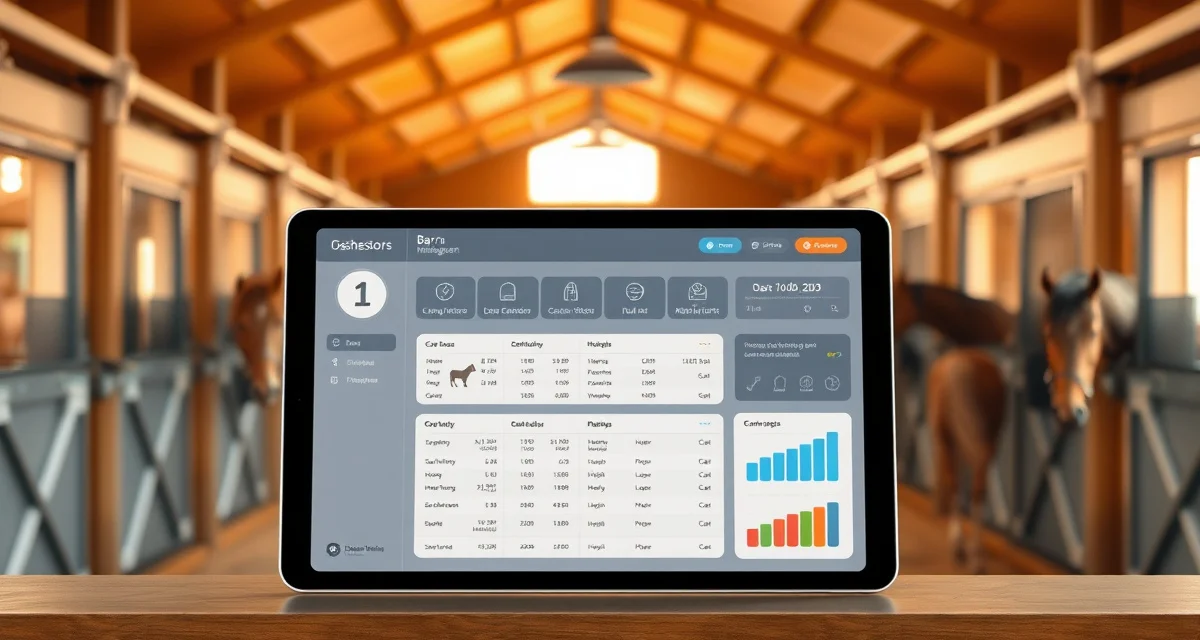
Horse Farm Management Software: What It Does and Who Needs It
Horse farm management software is a purpose-built digital tool that helps barn owners, managers, and staff track horses, schedule care tasks, manage boarders, and run the business side of an equine operation from one place. These platforms replace the clipboards, spreadsheets, and scattered text threads that most barns still rely on today.
TL;DR
- Purpose-built equine software outperforms adapted generic tools because it matches actual barn workflows from the start
- Mobile access lets barn staff log care observations from the aisle, feed room, or field without returning to an office
- Software that connects health records to billing to owner communication eliminates the re-entry steps that cause errors
- Free trial periods let facilities evaluate software against real operational needs before committing to a subscription
- Flat monthly pricing without per-horse fees keeps costs predictable as a facility's horse count changes
- US-based support matters for equine software because American barn practices differ from international defaults
The questions below represent the top 20 horse barn management questions searched monthly, which means real barn managers are actively looking for answers. This page addresses the most important ones directly.
What Horse Farm Management Software Actually Does
At its core, horse farm management software centralizes the information that keeps a barn running. That includes horse health records, feeding schedules, farrier and vet appointments, stall assignments, and boarder billing.
Most platforms also handle communication between staff and horse owners, reducing the back-and-forth that eats up a barn manager's day. Some include mobile apps so tasks can be logged from the barn aisle, not just a desk.
The better platforms connect daily operations to financial tracking, so you can see which horses are current on board payments, which services are outstanding, and where your revenue is coming from.
Who Benefits Most From These Platforms
Boarding Barn Operators
If you manage more than 10 horses for outside clients, manual tracking becomes a liability. Missed billing, undocumented health events, and miscommunicated feeding instructions are common failure points. Software closes those gaps.
Breeding and Training Facilities
These operations deal with complex, horse-specific records: breeding cycles, performance logs, training milestones, and veterinary histories that need to follow a horse across years. A spreadsheet breaks down fast at that level of detail.
Lesson Programs and Equestrian Centers
Scheduling is the core challenge here. Managing instructor availability, horse rotation, student bookings, and arena time requires a system that updates in real time and is visible to everyone involved.
What to Look For When Choosing a Platform
Not every platform built for "barn management" was designed with equine operations in mind. Some are adapted from general livestock or farm tools and lack the horse-specific fields that matter, like shoeing cycles, dental records, or competition history.
Look for software that includes:
- Horse profiles with health, farrier, and vet record tracking
- Task scheduling with staff assignment and completion logging
- Boarder management with invoicing and payment tracking
- Mobile access for use in the barn, not just the office
- Communication tools for owner updates and staff coordination
The barn management software category has grown significantly, but the depth of horse-specific features varies widely between products.
How Digital Tools Change Daily Barn Operations
The most immediate change is accountability. When tasks are assigned digitally and logged on completion, nothing falls through the cracks. A horse's evening feed isn't skipped because someone assumed another staff member handled it.
The second change is documentation. When a horse shows a health issue, having a searchable record of the last 90 days of feeding, turnout, and vet visits is far more useful than trying to reconstruct events from memory.
Using a structured barn daily checklist within a software platform means those records are created automatically as part of normal workflow, not as extra administrative work.
Common Challenges These Tools Solve
Boarder billing disputes are one of the most common friction points at boarding barns. Software that logs every service as it's performed creates a clear, timestamped record that resolves disputes before they escalate.
Staff turnover is another. When care instructions, horse preferences, and daily routines live in one system, a new hire can get up to speed without relying on institutional knowledge that walks out the door with the last employee.
Regulatory and insurance documentation is increasingly important for equine operations. Having organized, exportable health and care records simplifies compliance and speeds up insurance claims when something goes wrong.
How does BarnBeacon compare to spreadsheets for barn management?
Spreadsheets require manual updates, lack real-time notifications, and create version control problems when multiple staff members are working from different files. BarnBeacon centralizes records, pushes alerts automatically based on logged events, and connects care records to billing and owner communication in one system. Most facilities report saving several hours per week after switching from spreadsheets.
What is the setup process like for BarnBeacon?
Most facilities complete the initial setup in under a week. Horse profiles, service templates, and billing configurations can be imported from existing records or entered directly. BarnBeacon's US-based support team is available to assist with setup, and most managers are running their first billing cycle through the platform within days of starting.
Can BarnBeacon support a barn with multiple staff members?
Yes. BarnBeacon supports multiple user accounts with role-based access, so barn managers, barn staff, and owners each see the information relevant to their role. Task assignments, completion logs, and communication history are all attached to the barn's account rather than to individual staff phones or email addresses.
Related Articles
FAQ
What is Horse Farm Management Software: What It Does and Who Needs It?
Horse farm management software is a purpose-built digital platform that centralizes every aspect of running an equine facility. It handles horse health records, feeding schedules, farrier and vet appointments, boarder billing, and owner communication in one place. Unlike spreadsheets or generic tools, it's designed around actual barn workflows, so tasks like logging a daily observation or generating a board invoice take seconds rather than requiring manual cross-referencing across multiple systems.
How much does Horse Farm Management Software: What It Does and Who Needs It cost?
Most horse farm management software uses flat monthly subscription pricing, typically ranging from $50 to $200 per month depending on facility size and features. The best platforms charge a fixed rate regardless of horse count, which keeps costs predictable as your operation grows. Some offer tiered plans based on the number of users or stalls. Free trials are common, allowing barns to test the software against real operational needs before committing.
How does Horse Farm Management Software: What It Does and Who Needs It work?
Horse farm management software works by bringing all barn data into a single connected system. Staff log care tasks, health observations, and feeding notes from a mobile device in the barn aisle. That data connects automatically to health records, billing, and owner-facing reports. Managers set recurring tasks, track boarder balances, and communicate with horse owners through the same platform, eliminating the re-entry steps that cause errors in disconnected systems.
What are the benefits of Horse Farm Management Software: What It Does and Who Needs It?
The core benefits are time savings, fewer errors, and better accountability. Staff spend less time on paperwork and more time with horses. Billing becomes automatic rather than end-of-month guesswork. Owners receive real-time updates instead of waiting for a phone call. Health records stay accurate and accessible during vet visits. Managers can see what's been done and what's overdue without walking every aisle, making the whole operation easier to run with fewer people.
Who needs Horse Farm Management Software: What It Does and Who Needs It?
Horse farm management software suits any equine facility that tracks horses, schedules care, and communicates with horse owners. Full-care boarding barns benefit most because they manage high volumes of recurring tasks and invoices. Training barns, lesson programs, breeding operations, and therapeutic riding centers all gain from centralized recordkeeping. Even smaller barns with 10 to 20 horses often find that replacing manual systems with dedicated software pays for itself quickly in saved administrative time.
How long does Horse Farm Management Software: What It Does and Who Needs It take?
Setup typically takes one to three days for a barn already organized with basic records. Importing existing horse and boarder data, configuring billing rates, and setting up recurring care tasks are the main steps. Most platforms offer onboarding support to accelerate the process. Staff training is usually minimal because good equine software is built for barn workers, not accountants. Full adoption across a team generally happens within the first two weeks of active use.
What should I look for when choosing Horse Farm Management Software: What It Does and Who Needs It?
Look for software built specifically for equine facilities, not adapted from generic property or pet management tools. Key features include mobile access for in-barn logging, integrated billing tied to care records, owner communication tools, and customizable health record templates. US-based customer support matters because American barn practices differ from international defaults. Flat per-facility pricing, not per-horse fees, keeps costs stable as your herd grows. A free trial period is essential for evaluating fit before committing.
Is Horse Farm Management Software: What It Does and Who Needs It worth it?
Yes, for most barns managing more than a handful of horses and boarders. The time saved on billing alone often covers the subscription cost. Fewer missed charges, fewer communication errors, and fewer scheduling gaps add up quickly in a facility running on thin margins. Owners also notice the difference when they receive consistent updates and professional invoices. Barns that switch from spreadsheets and clipboards consistently report that they would not return to their previous systems.
Sources
- American Association of Equine Practitioners (AAEP)
- United States Equestrian Federation (USEF)
- American Horse Council
- Kentucky Equine Research
- UC Davis Center for Equine Health
Get Started with BarnBeacon
The right software for a equine facility is the one that matches your actual daily workflows, not one you have to adapt around. BarnBeacon is built for US equine operations, with flat monthly pricing, mobile access for barn staff, and US-based support. Start a free trial and run your first billing cycle through the platform to see how it fits your operation.