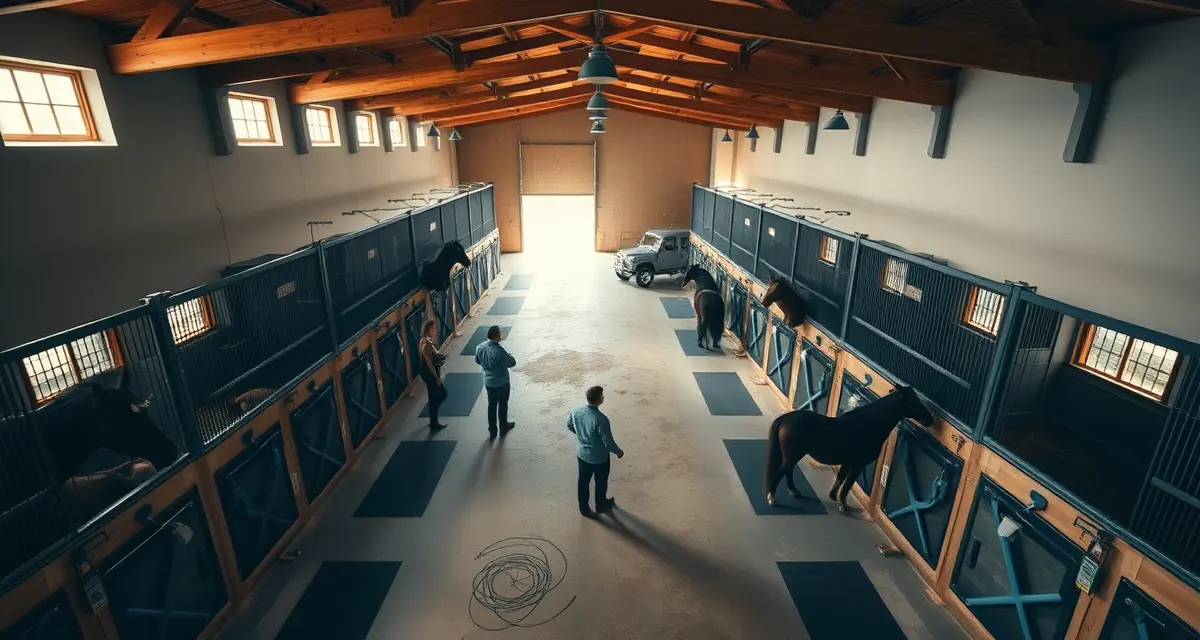
Complete Guide to Managing Horses at a Boarding Facility
Managing horses at a boarding facility means being responsible for animals that other people love deeply. That is a significant responsibility, and it requires both good horsemanship and good operational management. The horses need consistent, attentive care. The owners need confidence that care is happening reliably. And the business needs to run sustainably.
Daily Care Standards
Every horse in your facility should receive the same standard of daily care regardless of breed, value, or owner personality. Consistency is the foundation of professional management.
Define your daily care standard in writing:
Feed and water. What times does grain go out? How much hay does each horse receive and when? How is water managed? These should be specific and consistent.
Stall cleaning. How often, by what standard? A clean stall is not a vague instruction. Define what clean means: all manure removed, wet bedding removed, fresh bedding added to achieve a specific minimum depth.
Turnout. Which horses go out, in which groups, at what times, for how long? What weather conditions trigger exceptions?
Daily health checks. What does a morning check include? What observations are logged?
Document these standards and train every staff member on them. Then enforce them consistently. The horse that is cared for less attentively on weekends when the barn manager is away is not being managed to standard.
Individual Horse Management
Beyond the uniform daily standard, each horse has individual management needs. A horse with a metabolic condition has different feeding requirements than a healthy young horse. A horse on stall rest has a different turnout protocol than the rest of the barn.
Manage individual needs through per-horse care instructions that are documented, accessible to staff, and kept current. When an owner changes their horse's supplement, the care instruction card updates that day. When a vet prescribes stall rest, the care instructions reflect that immediately.
BarnBeacon stores care instructions per horse and makes them accessible from any staff member's phone, which means care is consistent whether the person handling a horse is the head groom or a new weekend hire.
Health Management
Health management at a boarding facility is both preventive and responsive.
Preventive health management covers vaccines, deworming, dental care, and coggins compliance. These are scheduled, trackable, and fundamental to herd health and facility credibility.
Responsive health management covers daily monitoring, incident documentation, vet coordination, and treatment administration. This requires clear protocols for escalation, documentation habits that capture what was observed and what was done, and communication practices that keep owners informed.
For both, the starting point is accurate, current records. See horse health records for what comprehensive records should include.
Staff Management
Your care standards are only as reliable as the people executing them. Staff selection, training, and management are inseparable from horse management quality.
Train on your standards explicitly. Walk new staff through the daily routine with you before they handle horses independently. Check their work during the first weeks. Give specific feedback rather than vague direction.
Create accountability structures. Daily logs provide evidence that morning checks happened. A barn manager review of logs each day creates accountability without requiring constant physical supervision.
Handle performance problems promptly. A staff member who consistently skips observations or skips entries creates real risk for horses in your care. Address it directly and correct it, or make staffing changes.
Owner Relations
Owner relationship management is an ongoing part of managing a boarding facility, not a separate function. Happy owners stay. Unhappy owners leave, and they tell people.
Communicate proactively. Update owners after health events, before and after significant management changes, and periodically with general observations about their horse's wellbeing.
Be honest. When something goes wrong, tell the owner promptly and tell them what you are doing about it. Owners who learn about problems from you directly are far more forgiving than owners who discover problems through other channels.
See horse boarding management for specific operational guidance and horse owner communication for communication practices.
FAQ
What is Complete Guide to Managing Horses at a Boarding Facility?
A complete guide to managing horses at a boarding facility is a comprehensive resource covering daily care standards, operational management, and owner communication for barn operators. It addresses feeding schedules, stall cleaning protocols, turnout management, and health monitoring. The guide helps boarding facility owners establish consistent, professional care systems that protect the horses in their charge while building trust with horse owners and running a sustainable business.
How much does Complete Guide to Managing Horses at a Boarding Facility cost?
This guide itself is free educational content. Running a boarding facility, however, involves significant costs: feed, bedding, staff labor, veterinary coordination, and facility maintenance. Boarding rates typically range from $300 to $1,500 or more per month depending on region and services offered. Operators should calculate their true cost per horse before setting rates to ensure the business remains financially viable.
How does Complete Guide to Managing Horses at a Boarding Facility work?
A well-run boarding facility operates through documented daily care standards applied consistently across every horse. Staff follow written protocols for feeding times, stall cleaning depth, turnout groupings, and morning health checks. Owners receive reliable updates and confidence that their horses receive the same quality of care regardless of who is on shift. Consistency, clear communication, and enforced standards are the core mechanisms.
What are the benefits of Complete Guide to Managing Horses at a Boarding Facility?
Following a structured management guide helps boarding facilities reduce errors, improve animal welfare, and build stronger owner relationships. Benefits include fewer health incidents caught late, lower staff turnover from clearer expectations, reduced liability through documentation, and a stronger reputation that supports occupancy rates. Horses thrive under consistent routines, and owners are more likely to stay long-term when they trust the operation.
Who needs Complete Guide to Managing Horses at a Boarding Facility?
Boarding facility owners, barn managers, and stable staff all benefit from a structured management approach. It is especially valuable for those transitioning from personal horse ownership to running a professional operation, or for established barns experiencing high staff turnover, owner complaints, or inconsistent care quality. Anyone responsible for horses belonging to other people needs a reliable system rather than relying on informal habits.
How long does Complete Guide to Managing Horses at a Boarding Facility take?
Implementing a full management system typically takes several weeks. Drafting written care standards, training staff, and establishing communication routines with owners requires consistent effort over one to three months before the systems run smoothly. Individual elements like a feeding schedule can be formalized in a day, but building a culture of consistent, professional care across an entire facility takes sustained commitment.
What should I look for when choosing Complete Guide to Managing Horses at a Boarding Facility?
Look for guidance that covers both horsemanship and operational management together. Good resources address written care protocols, staff training and accountability, owner communication systems, health monitoring, and business sustainability. Avoid guidance that focuses only on horse care techniques without addressing the operational and relationship-management side. A boarding facility is both an animal care environment and a service business, and both dimensions need attention.
Is Complete Guide to Managing Horses at a Boarding Facility worth it?
Yes, for anyone running or managing a boarding facility, investing time in structured management practices pays off significantly. Consistent care standards reduce liability, improve horse health outcomes, and build the owner trust that drives long-term occupancy. Facilities that operate informally tend to face higher turnover, more disputes, and preventable incidents. The time spent building proper systems protects both the horses and the business.