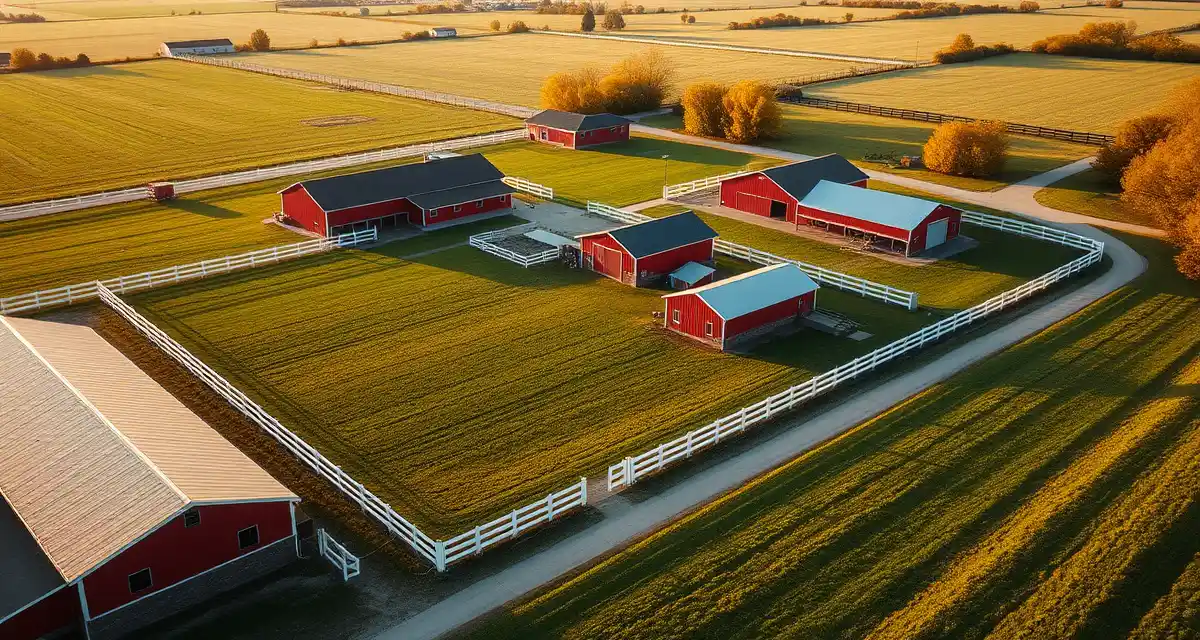
Equestrian Operations in Iowa
Iowa is solidly agricultural horse country. The state's horse population is concentrated in rural areas, with equine activity spanning western performance, draft breeds, Thoroughbred and Standardbred racing, 4-H programs, and pleasure riding. While Iowa does not have the same suburban boarding market density as Illinois or Ohio, facilities that serve the state's dispersed horse-owning population can operate profitably with the right management approach.
Market Overview
The Des Moines metro is the largest concentration of equine activity in the state. Facilities in Polk, Dallas, and Warren counties draw boarders from the suburban population that wants horses accessible without keeping them at home. The eastern corridor between Iowa City and Davenport has its own active market, with pleasure riding and show disciplines both represented.
Iowa City and Ames, as college towns, tend to have small but active equestrian communities connected to university equine science programs. Ames is home to Iowa State University's College of Veterinary Medicine, which serves as a major referral center and shapes the veterinary care landscape for the whole state.
Western Iowa, particularly the Sioux City and Council Bluffs areas, has strong connections to the Nebraska and South Dakota equestrian communities and a pronounced western performance culture.
Rural Iowa operations often combine boarding with farm operations, keeping overhead costs down while serving a spread-out client base. Many of these facilities have been family-run for generations and compete on personalized service rather than amenities.
Climate and Facility Management
Iowa winters are cold and can be severe. Wind chill across the flat, open terrain amplifies temperatures, and blizzard conditions several times per winter are common in the northern part of the state. Indoor facilities are essential for year-round training and lesson programs. Water management in winter requires daily attention, and heated automatic waterers are standard at most professional facilities.
Spring is challenging. Iowa's rich topsoil turns to deep mud quickly after snowmelt, and paddock management through March and April requires sacrifice areas, gravel surfacing around high-traffic zones, and patience. Pasture access during wet spring conditions can set back grass establishment for the entire growing season if horses are allowed to churn up wet turf.
Summer heat and humidity are manageable but require attention. Iowa's July and August humidity can make hard conditioning work uncomfortable for horses. Good ventilation in barn structures and available shade in turnout areas are important.
Regulatory Environment
Iowa does not have specific equine facility licensing requirements at the state level. Local zoning varies by county and municipality. In most rural Iowa counties, agricultural zoning permits equine operations without significant restriction. Facilities near growing suburban areas may encounter more limitations.
The Iowa Department of Agriculture and Land Stewardship regulates equine health requirements, including Coggins testing and health certificates for interstate movement. Iowa generally requires a current negative Coggins test for horses entering the state for events or sale.
Manure management regulations apply to confinement feeding operations, and large equine facilities may fall under state environmental regulations depending on scale and location. Facilities near waterways have additional obligations.
Racing and Performance
Iowa has an active racing industry centered on Prairie Meadows Racetrack in Altoona, which runs both Thoroughbred and Quarter Horse racing. Facilities that work with racehorses, whether for training, breeding, or layup, operate in a regulated environment overseen by the Iowa Racing and Gaming Commission.
Quarter Horse and paint performance competition is strong across Iowa, with the Iowa Quarter Horse Association running an active show circuit. Reining, cutting, and barrel racing all have dedicated followings. The Iowa Horse Council serves as the primary industry advocacy organization.
Health and Veterinary Access
Iowa State University's Veterinary Teaching Hospital in Ames is the primary referral center for complex equine cases in the state. Field veterinary services are available across most of the state, though response times in more rural areas may be longer. Established relationships with a local equine vet are especially important in areas where emergency services are not close.
Iowa has participated in various equine disease monitoring programs and has implemented reporting requirements during disease outbreak situations. Keeping health records current and having clear documentation of Coggins test history makes interstate travel and event participation straightforward.
Barn Management Practices
Iowa facilities that combine boarding, training, and lesson programs benefit from organized management systems that can handle multiple service types and billing arrangements. BarnBeacon helps Iowa barn managers track horse health, manage billing across different service levels, and keep daily operations documented without relying on paper records scattered across the barn.
For facilities that serve a rural, spread-out client base, mobile-accessible management tools are especially valuable. See our guides on mobile barn management and multi-service barn management.
FAQ
What is Equestrian Operations in Iowa?
Equestrian operations in Iowa encompass the full range of horse-related facilities and activities across the state, including boarding barns, training facilities, breeding operations, racing programs, and 4-H equine programs. Iowa's horse industry spans western performance disciplines, draft breeds, Thoroughbred and Standardbred racing, and pleasure riding, concentrated in rural counties but with active markets near Des Moines, Iowa City, Davenport, Sioux City, and Council Bluffs.
How much does Equestrian Operations in Iowa cost?
Operating costs for an Iowa equestrian facility vary significantly by size and discipline. Boarding rates typically range from $200 to $600 per month depending on stall type and services offered. Full-care facilities near Des Moines command higher rates than rural self-care operations. Startup costs for a mid-sized barn with 20 stalls, including land, infrastructure, and equipment, commonly run $300,000 to $800,000 or more depending on existing improvements.
How does Equestrian Operations in Iowa work?
Iowa equestrian operations function by matching horse owners with appropriate boarding, training, or care services. Facilities set boarding agreements, manage feed and veterinary scheduling, and coordinate farrier visits. Many barns layer revenue through training programs, lessons, and show preparation. Larger operations near Des Moines and the Iowa City–Davenport corridor draw regional clientele, while rural facilities often serve tight-knit local horse communities with lower overhead and a diversified income model.
What are the benefits of Equestrian Operations in Iowa?
Running an equestrian operation in Iowa offers meaningful advantages: lower land costs compared to coastal or suburban markets, a strong agricultural support network, access to Iowa State University's veterinary college in Ames for referral care, and a loyal horse-owning population spread across rural counties. Facilities that serve multiple disciplines—western performance, 4-H, trail riding—can build stable year-round revenue streams and weather seasonal demand shifts better than single-discipline operations.
Who needs Equestrian Operations in Iowa?
Iowa equestrian operations serve a broad population: suburban horse owners near Des Moines who want professional care without home acreage, rural families active in 4-H and county fair programs, western performance competitors in Sioux City and Council Bluffs, racing participants in the Thoroughbred and Standardbred circuits, and university-affiliated equestrians at Iowa State in Ames and the University of Iowa in Iowa City. Draft breed owners and trail riders round out the diverse client base.
How long does Equestrian Operations in Iowa take?
Timelines in Iowa equestrian operations depend on the activity. Boarding begins immediately upon agreement. Training programs typically run 60 to 120 days for foundational work, longer for discipline-specific development. Establishing a new facility—securing land, permitting, construction, and attracting a full client roster—generally takes one to three years. Seasonal factors matter: Iowa winters require planning for cold-weather care, and the show and fair calendar concentrates demand from spring through early fall.
What should I look for when choosing Equestrian Operations in Iowa?
When evaluating an Iowa equestrian facility, prioritize pasture quality and acreage, stall ventilation and winter insulation, proximity to a qualified large-animal veterinarian or ISU referral services, and the facility's track record with your specific discipline. Ask about feed programs, emergency protocols, turnout schedules, and contract terms. For training operations, assess the trainer's credentials and competition record. Location relative to Des Moines, Iowa City, or your local corridor affects convenience and long-term resale or lease value.
Is Equestrian Operations in Iowa worth it?
For the right owner or investor, Iowa equestrian operations are worth pursuing. Land affordability, a stable rural horse culture, and a dispersed but loyal client base create viable conditions for profitability. Facilities that diversify across boarding, lessons, and 4-H programs outperform single-revenue operations. Proximity to Des Moines or the ISU veterinary network adds long-term value. Success depends on realistic cost modeling, strong local relationships, and consistent management—those who commit to those fundamentals find Iowa a rewarding equine market.