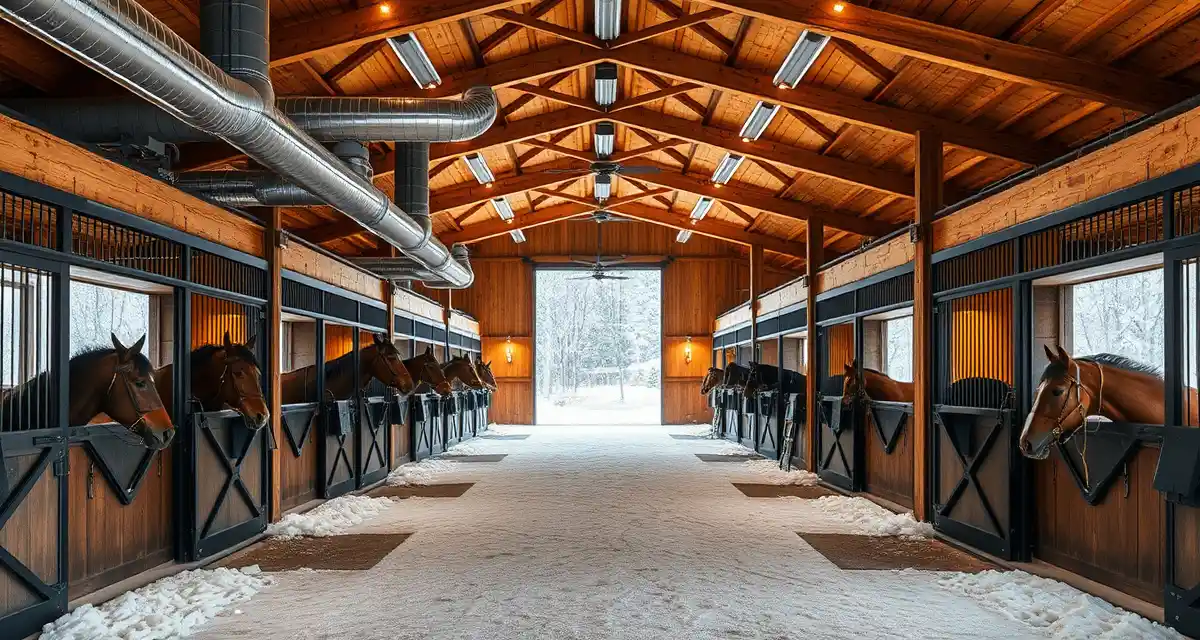
Equestrian Operations in Minnesota
Minnesota's equine industry operates in one of the most demanding climates in the contiguous United States. Cold winters, abbreviated outdoor riding seasons, and the management challenges of keeping horses healthy through months of cold and confinement define the operational calendar for Minnesota barn managers. At the same time, the state has a dedicated and active horse community that spans western performance, Scandinavian-influenced draft traditions, competitive English disciplines in the Twin Cities, and a strong 4-H program statewide.
Climate Management
Minnesota winters are not merely inconvenient; they require active management and significant infrastructure. Average January temperatures in the Twin Cities hover around ten degrees Fahrenheit, and the northern parts of the state regularly see colder conditions. Wind chill makes outdoor work potentially dangerous for horses and humans alike during cold snaps.
Indoor arenas are essential for any facility that operates a lesson or training program year-round. Heated or insulated barns are standard at professional operations, not luxury additions. Water system management in winter is a major focus: heated automatic waterers, insulated pipes, and daily monitoring of water consumption are all required. Horses that do not drink adequate water in winter are at elevated risk for impaction colic.
Ventilation in winter barns is a constant balance. Enough air exchange to control moisture and ammonia buildup, not so much that the barn becomes a cold draft. Respiratory issues in horses housed in poorly ventilated winter barns are common and can be serious.
Spring mud season in Minnesota can be extended, with freeze-thaw cycles through April creating difficult footing. Paddock management during this period requires patience and sacrifice areas to prevent permanent damage to grass turnout.
The Twin Cities Market
The Twin Cities metro, including Hennepin, Anoka, Dakota, and Washington counties, has the most active boarding and lesson market in the state. Demand for quality facilities near the metro is consistent, and well-managed barns in communities like Prior Lake, Stillwater, and Rogers maintain strong occupancy.
Hunter/jumper programs are particularly active in the Twin Cities area, with the Minnesota Hunter Jumper Association running an active circuit. Dressage and eventing also have dedicated followings. Western disciplines are strong across the broader metro area and into the agricultural counties surrounding the cities.
Statewide Equine Culture
Beyond the metro, Minnesota's equine community is distributed across agricultural regions. Western performance, trail riding, and quarter horse associations are active throughout the state. The Minnesota Horse Council serves as the primary statewide advocacy organization.
Draft horses, particularly Belgians and Percherons, have a strong following in Minnesota's agricultural communities, connected to the state's farming history. Norwegian Fjord horses have a dedicated following that reflects the state's Scandinavian heritage. Some Minnesota facilities specialize in these breeds or serve the community of owners who keep them.
Health Requirements
Minnesota requires a current negative Coggins test for horses at public events and for horses entering the state from other jurisdictions. The Minnesota Board of Animal Health oversees equine health regulations and manages disease response. During periods of elevated disease risk, the Board issues guidelines that affect horse movement and event participation.
Infrastructure Investment
Operating successfully in Minnesota requires capital investment in facilities that can handle the climate. Barn insulation, heating systems, indoor arenas, and water management infrastructure all represent significant costs that are simply not negotiable for a professional operation. Facilities that try to get by without adequate infrastructure face year-round challenges that affect horse health, staff working conditions, and client satisfaction.
BarnBeacon helps Minnesota barn managers manage the administrative complexity of year-round operations, from tracking health records through the confinement-heavy winter months to managing the scheduling surge of the summer riding season.
For more on managing complex facility operations, see our guides on large barn operations and multi-service barn management.
FAQ
What is Equestrian Operations in Minnesota?
Equestrian operations in Minnesota encompass the full range of horse keeping, training, and facility management across the state. This includes boarding barns, lesson programs, breeding operations, and competition facilities adapted to Minnesota's harsh winters and short outdoor riding seasons. Operations span diverse disciplines — western performance, English riding, draft horse traditions, and 4-H youth programs — all shaped by the need to maintain horse health and rider access through months of extreme cold and weather-driven confinement.
How much does Equestrian Operations in Minnesota cost?
Costs vary widely depending on the type of operation. Full-service boarding at a heated indoor facility typically runs $400–$900 per month per horse in the Twin Cities metro area. Lesson programs average $50–$90 per session. Building or operating a year-round facility in Minnesota carries higher overhead than warmer states due to insulated barn construction, heated automatic waterers, indoor arena requirements, and increased feed and bedding needs during long winters — often adding 20–35% to baseline operating costs.
How does Equestrian Operations in Minnesota work?
Minnesota equestrian operations follow a seasonal management calendar. Winter months focus on indoor riding, careful water intake monitoring, blanketing protocols, and barn ventilation management. Spring and fall allow limited outdoor work as weather permits. Summer represents the primary outdoor and competition season. Year-round, barn managers coordinate daily feeding, stall cleaning, veterinary care, farrier scheduling, and footing maintenance — with winter adding significant infrastructure demands like pipe insulation checks, heated waterer maintenance, and emergency weather protocols.
What are the benefits of Equestrian Operations in Minnesota?
Operating horses in Minnesota builds exceptional resilience and management depth. Year-round indoor facilities allow consistent training regardless of weather, supporting competitive riders who would otherwise lose months of progress. The state's strong horse community offers robust networks for clinics, competitions, and professional resources. Minnesota's cold winters also reduce certain parasite pressures compared to warmer climates. Facilities that invest in proper infrastructure can run stable, professional programs that attract serious clients committed to consistent training.
Who needs Equestrian Operations in Minnesota?
Anyone keeping horses in Minnesota needs a working understanding of cold-climate equine operations — whether you are a first-time horse owner, a boarding facility manager, or a professional trainer. Facilities offering lessons or training programs must invest in indoor arenas and heated infrastructure to remain viable year-round. Horse owners relocating from warmer states particularly benefit from understanding Minnesota-specific management requirements, including winter water consumption, cold-weather blanketing decisions, and the operational calendar that governs the state's riding season.
How long does Equestrian Operations in Minnesota take?
Establishing a functional equestrian operation in Minnesota typically requires one to three years to reach stable capacity, depending on whether you are building a new facility or purchasing an existing one. Infrastructure upgrades — insulated barns, indoor arenas, heated water systems — take significant time and capital to complete properly. Building a client base for boarding or lessons generally takes one to two full seasons. Seasonal rhythms also mean that new operations often take two or three annual cycles before management protocols are fully refined.
What should I look for when choosing Equestrian Operations in Minnesota?
Look for heated or insulated barns with proper ventilation to prevent respiratory issues from ammonia buildup during winter confinement. Indoor arenas with quality footing are essential for year-round programs. Evaluate the water system — heated automatic waterers and insulated pipes are non-negotiable in Minnesota. Assess the facility's emergency protocols for extreme cold events. For boarding, ask about blanketing policies and daily horse monitoring. Check that the operation has established relationships with local veterinarians and farriers who can reliably service clients through winter conditions.
Is Equestrian Operations in Minnesota worth it?
For anyone serious about horses in Minnesota, investing in proper equestrian infrastructure and operations is absolutely worth it. The state's active horse community, strong 4-H programs, and competitive English and western scenes provide a ready market for well-run facilities. While startup and operating costs are higher than in milder climates, facilities that meet the infrastructure demands command premium rates and retain clients long-term. Cutting corners on winter infrastructure — waterers, insulation, indoor space — creates compounding costs in horse health issues and client turnover that far outweigh the initial investment.