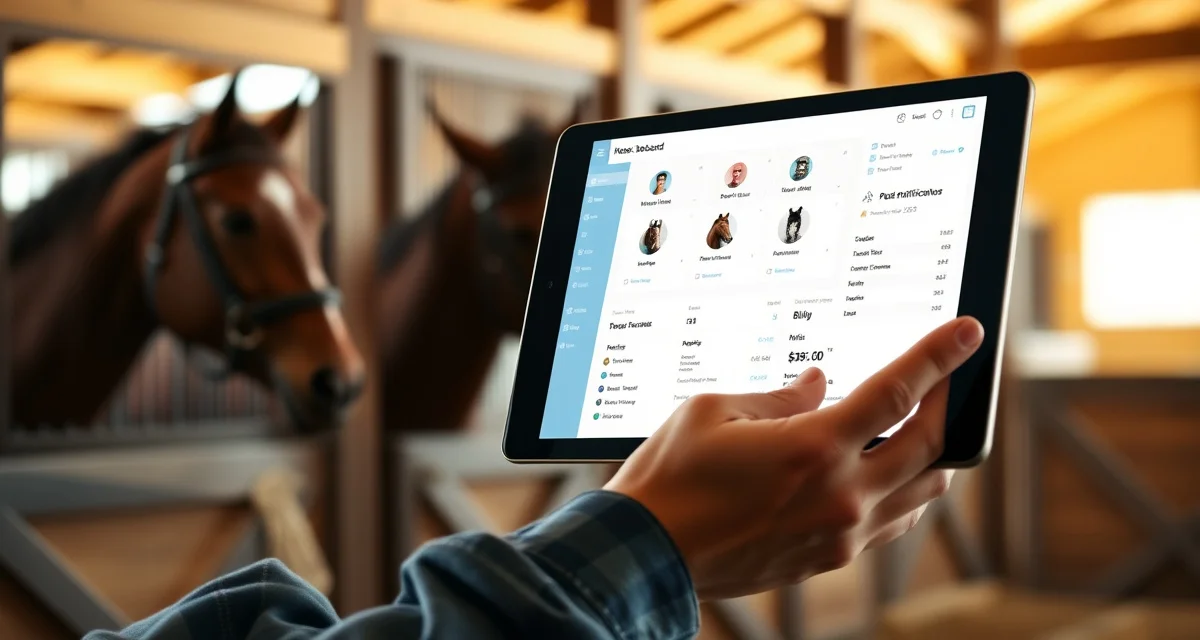
Key Features Every Owner Portal Should Have
Owner portals reduce your communication workload and improve client satisfaction when they're built around what owners actually use. Not every feature a platform offers belongs in an owner portal. The ones that matter are the ones that answer owners' regular questions, give them access to records they need, and allow them to manage their boarding relationship without calling you for routine information.
This guide covers the non-negotiable features of a well-built owner portal, with notes on what makes each one effective rather than just present.
Current Horse Profile
The horse profile is the foundation. It should include the horse's basic information alongside the information that changes regularly and needs to be current to be useful.
Current feeding protocol is the most frequently referenced section. Feeding instructions that are out of date are a liability, not an asset. If you change a horse's grain amount, the portal needs to reflect that before the owner logs in and sees the old protocol.
Medical information including current medications, known conditions, and emergency vet contact should be accessible. This section is especially valuable when an owner needs to consult a vet remotely or fill out show health forms.
Vaccination and farrier history with dates is useful for owners managing show entry requirements and for their own records.
Daily and Event-Driven Updates
An update feed that shows what's happened with the horse recently is the most used feature of a well-built owner portal. The key is that it's current and populated automatically, not manually published by the barn manager as a separate step.
Good update feed entries include routine daily observations (eating, turnout, behavior) and notable event records (health concerns observed, vet called, farrier visited). The entries don't need to be long. A sentence or two per day is enough for routine updates. Health events warrant more detail.
The update feed that works best is one that populates directly from your care management system. When staff log observations and completed tasks, those entries should flow to the owner's feed automatically. Manual publishing steps get skipped when staff are busy, which makes the portal unreliable.
Health Event Notifications with Push Delivery
Notifications that require owners to actively open an app or check a website are less effective than notifications that push to their phone. For routine daily updates, a digest notification at a consistent time is fine. For health events, a push notification delivered immediately is expected.
Configure your health event notifications to send immediately when an observation is logged that meets your health event criteria. Owners who receive these promptly and with meaningful detail trust your management more than those who hear about health events after the fact.
Billing and Payment
Billing in the owner portal needs to be itemized and current. An owner who sees their invoice in the portal should be able to understand every charge without needing to ask for clarification. Include dates and brief descriptions on every line item.
Payment capability through the portal is one of the most appreciated features among boarding clients. Owners can pay when convenient, on their own schedule, without calling you or dropping off a check. For recurring monthly billing, auto-pay removes the action step entirely.
Payment history should be visible so owners can verify their account status and download records for their own accounting.
Appointment Visibility
A view of upcoming scheduled appointments for the owner's horse gives them the information they need to plan a visit if they want to attend a farrier or veterinary appointment. This is a simple feature that saves multiple conversations per month at a typical boarding facility.
A shared barn calendar showing facility-wide events, like farrier visit days or scheduled closures, lets owners plan their visits without calling to ask.
Direct Messaging with Record Retention
An in-portal messaging feature that retains conversation history gives both owners and barn managers a documented channel for communication. This is more valuable than it first appears. When a dispute arises about an instruction given or a charge questioned, the message thread is the record that resolves it.
BarnBeacon includes owner messaging within the same platform as care records and billing, so conversations are linked to the relevant horse and accessible alongside the context that makes them meaningful.
Mobile-First Access
Owners check their horse's portal from their phones at work, at the grocery store, and during their commute. A portal that doesn't function well on mobile is a portal that doesn't get used. Any platform you consider should be fully functional on a phone screen without requiring a desktop to access any core feature.
For related reading, see owner portal and owner portal scheduling.
FAQ
What is Key Features Every Owner Portal Should Have?
An owner portal is a secure online hub where horse owners can view their horse's profile, health records, feeding protocols, invoices, and barn communications without calling or texting the barn manager. For facilities like those using BarnBeacon, it centralizes the information owners regularly need — vaccination history, farrier schedules, current medications — into one accessible place that stays current as records are updated.
How much does Key Features Every Owner Portal Should Have cost?
Owner portal access is typically included as part of barn management software subscriptions rather than sold separately to owners. Pricing varies by platform and barn size, but most facilities absorb the cost as part of their management software plan. Owners access the portal for free through an invite from their barn. The value is operational — reducing phone calls and administrative overhead justifies the software cost quickly.
How does Key Features Every Owner Portal Should Have work?
When a barn manager updates a horse's feeding protocol, medication, or invoice, that change reflects immediately in the owner's portal view. Owners log in through a web browser or mobile app, see their horse's current profile, review documents, pay bills, and send messages — all without staff involvement. The system works as a live, permission-controlled view into the barn's records for that specific horse.
What are the benefits of Key Features Every Owner Portal Should Have?
A well-built owner portal reduces inbound calls and texts about routine information, cuts billing delays because owners can pay online, and improves client trust through transparency. Owners feel more connected to their horse's care without requiring constant staff communication. For barn managers, it creates a documented communication record and makes onboarding new clients faster since records are organized from day one.
Who needs Key Features Every Owner Portal Should Have?
Any boarding facility, training barn, or equine care operation with multiple horse owners benefits from an owner portal. It's especially valuable when owners are frequently off-property, travel for competitions, or manage horses remotely. Facilities handling ten or more horses where staff spend significant time answering routine owner questions will see the most immediate return on having a structured, self-service portal in place.
How long does Key Features Every Owner Portal Should Have take?
Setup typically takes a few hours to a few days depending on how much historical data you're importing. Creating horse profiles, configuring billing, and inviting owners can often be done within a single session for smaller barns. Ongoing maintenance is minimal — most updates happen naturally as part of daily barn management. Owners can usually access their portal within minutes of receiving an invitation link.
What should I look for when choosing Key Features Every Owner Portal Should Have?
Prioritize real-time data sync so records are never stale, mobile-friendly access since most owners check on phones, and clear billing tools with online payment. Look for portals that include horse health profiles, vaccination and farrier history, and direct messaging. Avoid platforms where updating one section doesn't automatically reflect elsewhere. The best portals are built around what owners actually ask for, not just a feature checklist.
Is Key Features Every Owner Portal Should Have worth it?
Yes — for barns managing more than a handful of horses, the time saved on routine communication alone justifies the investment. Owners who can self-serve their questions are more satisfied and less likely to feel out of the loop. Billing transparency reduces late payments. Health record access reduces liability. A good owner portal pays for itself in staff hours recovered and client retention, making it one of the highest-value tools in barn management software.