Horse Owner Portal: What Features Matter Most to Boarders
Horse owners rank communication quality as the #1 factor in boarding satisfaction, according to an AAEP survey. Yet most barns still rely on group texts, Facebook messages, and phone tag to keep boarders informed. That gap is exactly where horse owner portal features make or break a boarding relationship.
TL;DR
- owner communication is the top factor in boarding client retention, ranked above facility quality and pricing in surveys
- Structured daily updates take under 30 seconds to log when built into care workflows and deliver outsized retention value
- Health alerts sent within 30 minutes of an event, with a documented response timeline, build owner confidence
- Billing transparency, specifically itemized invoices and pre-approval for large expenses, prevents most financial disputes
- An owner communication portal gives clients a single place to check updates and reduces inbound call volume significantly
- Written onboarding communication expectations reset habits from a boarder's previous barn and prevent early misunderstandings
This guide walks through what owners actually want from a digital portal, how to build that experience without adding hours to your workday, and why replacing ad-hoc messaging with a structured system pays off for everyone.
The Problem With Group Texts
Group texts work until they don't. A message about one horse's vet visit goes to 30 boarders. Someone asks a follow-up question. Three other people chime in. The original information gets buried.
Barn managers spend an average of 45 minutes per day on owner communication, much of it repetitive. Owners, meanwhile, feel like they're always chasing updates rather than receiving them. That frustration compounds over time and drives turnover.
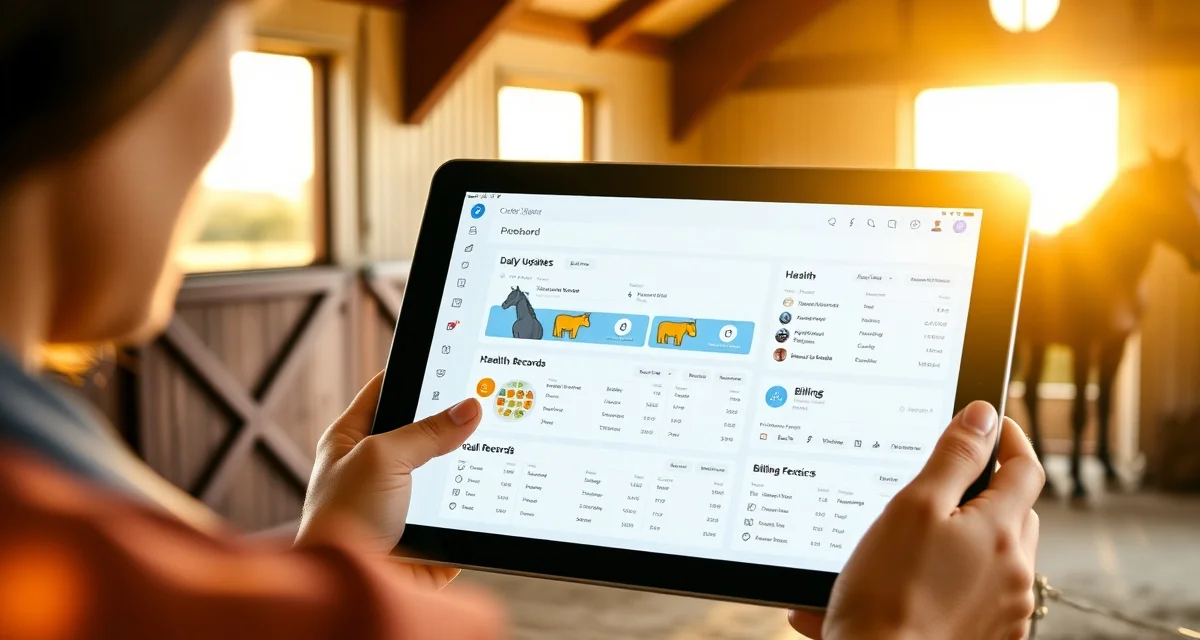
A dedicated owner communication portal solves this by giving every boarder a private, organized view of their horse's day, health, and billing, without the noise of a shared thread.
Step 1: Start With Daily Updates
What Owners Actually Want to Know
Owners who board their horses are paying for peace of mind as much as they're paying for stall space. Daily updates are the single highest-impact feature you can offer.
A useful daily update includes:
- Whether the horse ate its morning and evening feed
- Turnout time and any observations from the field
- Water intake or any concerns flagged by staff
- General demeanor (bright, quiet, off, etc.)
These don't need to be essays. Three to five lines per horse, sent at a consistent time, covers it. Automated daily report templates inside a portal like BarnBeacon let staff fill in a structured form that generates the update automatically, no writing required.
Consistency Beats Comprehensiveness
Owners would rather receive a brief, reliable update every day than a detailed one twice a week. Set a standard time, stick to it, and owners will stop texting to ask "how's my horse?"
Step 2: Add Photo and Video Sharing
Why Visual Updates Build Trust
A photo of a horse standing quietly in its paddock tells an owner more than a paragraph of text. Video of a horse moving after a lameness concern eliminates anxiety that words can't touch.
Photo and video sharing should be tied to individual horse profiles, not sent as attachments in a group chat. That way, owners can scroll back through their horse's visual history, which becomes genuinely useful when tracking a slow-healing wound or monitoring weight changes over months.
Keep It Simple for Staff
The best portals make photo uploads a two-tap process from a phone. If it takes more than 30 seconds, staff won't do it consistently. Look for a system where photos attach directly to the daily report or health log entry.
Step 3: Build Out Health Records Access
What Records Should Live in the Portal
Owners shouldn't have to email you to find out when their horse was last vaccinated. A well-structured portal gives boarders read-only access to:
- Vaccination history and upcoming due dates
- deworming schedule and products used
- Farrier visit logs
- Vet visit notes and treatment records
- Any standing medication or feeding instructions
This is one of the most-requested equine boarder portal requirements from owners who have experienced it elsewhere. Once they've had it, they won't go back to a barn that doesn't offer it.
Health Alerts for Time-Sensitive Issues
Beyond static records, owners want to be notified immediately when something changes. A portal should support push notifications or SMS alerts for events like a horse refusing feed, showing signs of colic, or sustaining an injury.
These alerts should go to the individual owner, not a group thread. That's the difference between a professional communication system and a workaround.
Step 4: Give Owners Billing Transparency
The Billing Conversation No One Wants to Have
Billing disputes are one of the top reasons boarders leave a barn. Most of the time, the issue isn't the charge itself, it's the surprise. An owner who can log in and see a detailed invoice before it's due is far less likely to push back than one who receives a total with no line items.
A portal should show:
- Monthly board fees
- Add-on services (blanketing, extra feedings, supplements)
- Vet and farrier charges passed through
- Payment history and upcoming due dates
Online payment processing inside the portal removes another friction point. Owners pay when it's convenient, and you stop chasing checks.
Step 5: Enable Direct Messaging With Barn Staff
Replace the Text Thread With a Structured Inbox
Direct messaging inside a portal keeps conversations organized by horse and by topic. A message about a farrier appointment doesn't get mixed up with a question about a feed change.
For barn managers, this also creates a paper trail. If there's ever a dispute about what was communicated and when, the message history is right there. That protection matters more than most managers realize until they need it.
Set Clear Response Expectations
A portal doesn't mean you're on call 24/7. Set a response window (for example, within 4 business hours during barn hours) and publish it in the portal. Owners respect boundaries when they're stated clearly. What they don't tolerate is silence.
Step 6: Integrate Everything Into One Dashboard
Why Fragmented Tools Fail
Some barns use one app for messaging, a spreadsheet for health records, and a separate invoicing tool. Owners end up logging into three places and still feel uninformed. Staff end up duplicating data entry.
A single dashboard that connects daily reports, health records, billing, and messaging is what separates a real barn management software solution from a collection of workarounds. BarnBeacon's owner portal delivers all of these in one place, with automated daily reports, health alerts, and billing access that owners can check anytime from their phone.
Common Mistakes to Avoid
Launching without training staff first. A portal is only as good as the data going into it. Before you go live, make sure every staff member knows how to log a daily report, attach a photo, and send a health alert.
Overcomplicating the daily update. A 20-field form will never get filled out consistently. Start with five core fields and expand only if staff ask for more.
Ignoring the billing module. Barn managers often set up the communication features and skip billing integration. That's leaving half the value on the table.
Treating the portal as optional. If some owners use it and others still get texts, you're running two systems. Set a clear transition date and communicate it to all boarders.
What should barn managers communicate to horse owners every day?
At minimum, owners want to know that their horse ate, had turnout, and is behaving normally. Any deviation from that baseline, whether it's a skipped meal, unusual behavior, or a physical observation, should be included. A structured daily report template makes this consistent without requiring staff to write from scratch each time.
How do I replace group texts with a better owner communication system?
Start by choosing a portal that supports individual horse profiles and direct messaging. Announce a transition date to your boarders, explain what they'll gain (organized updates, health records, billing access), and stick to the new system exclusively. Most owners adapt within two weeks once they see the difference in information quality.
What do horse owners want to know about their horses at a boarding barn?
Owners want daily feeding and turnout confirmation, health record access, immediate alerts for anything out of the ordinary, and transparent billing. They also want to feel like they can ask a question and get a timely, direct answer. A well-built horse owner portal features all of these in one place, which is why it's become the standard expectation at higher-end boarding facilities.
How does BarnBeacon compare to spreadsheets for barn management?
Spreadsheets require manual updates, lack real-time notifications, and create version control problems when multiple staff members are working from different files. BarnBeacon centralizes records, pushes alerts automatically based on logged events, and connects care records to billing and owner communication in one system. Most facilities report saving several hours per week after switching from spreadsheets.
What is the setup process like for BarnBeacon?
Most facilities complete the initial setup in under a week. Horse profiles, service templates, and billing configurations can be imported from existing records or entered directly. BarnBeacon's US-based support team is available to assist with setup, and most managers are running their first billing cycle through the platform within days of starting.
Can BarnBeacon support a barn with multiple staff members?
Yes. BarnBeacon supports multiple user accounts with role-based access, so barn managers, barn staff, and owners each see the information relevant to their role. Task assignments, completion logs, and communication history are all attached to the barn's account rather than to individual staff phones or email addresses.
FAQ
What is Horse Owner Portal: What Features Matter Most to Boarders?
A horse owner portal is a digital platform that gives boarding clients real-time access to their horse's daily care updates, health alerts, invoices, and barn communications. Instead of chasing down staff via text or phone, boarders log in to see feeding notes, vet visits, farrier appointments, and more. It centralizes the boarding relationship in one place, replacing fragmented group chats and missed calls with structured, documented communication.
How much does Horse Owner Portal: What Features Matter Most to Boarders cost?
Most horse owner portals are offered as part of barn management software subscriptions, typically ranging from $50 to $200 per month depending on barn size and feature set. Some platforms charge per-horse fees. For boarders, access is usually free — the barn pays for the software. The cost is often offset quickly through reduced administrative time, fewer billing disputes, and improved boarder retention, which directly impacts monthly revenue.
How does Horse Owner Portal: What Features Matter Most to Boarders work?
Barn staff log care notes, health observations, and task completions directly into the system during their normal daily workflow. Those entries are instantly visible to horse owners through a web or mobile app. Health alerts can be pushed as notifications within minutes of an incident. Invoices are generated automatically from logged services. Owners can review their horse's history, approve expenses, and message staff — all without interrupting barn operations.
What are the benefits of Horse Owner Portal: What Features Matter Most to Boarders?
The core benefits are stronger boarder trust, fewer inbound calls, and lower turnover. Owners who receive consistent daily updates feel confident their horse is cared for even when they can't visit. Documented health timelines reduce disputes. Itemized billing prevents financial misunderstandings. Staff spend less time answering individual status questions. Collectively, these improvements make boarding relationships stickier and give barn managers a measurable retention advantage over competitors still relying on group texts.
Who needs Horse Owner Portal: What Features Matter Most to Boarders?
Any boarding barn that manages multiple horse owners simultaneously benefits from a structured portal. It's especially valuable for facilities with 10 or more boarders where individual communication becomes hard to scale. Horse owners who travel frequently, board horses in training, or have horses with active medical needs gain the most from real-time access. Barn managers dealing with high call volume, billing disputes, or boarder complaints about communication are ideal candidates.
How long does Horse Owner Portal: What Features Matter Most to Boarders take?
Implementing a horse owner portal typically takes two to four weeks from signup to full adoption. Initial setup — importing boarder and horse profiles, configuring billing, and customizing update templates — usually takes a few hours. Staff training on daily logging workflows takes one to two sessions. Boarder onboarding is straightforward with a welcome message and short walkthrough. Most barns report that staff-side habits normalize within the first 30 days of consistent use.
What should I look for when choosing Horse Owner Portal: What Features Matter Most to Boarders?
Look for a portal with mobile-friendly daily update logging that fits into existing care routines without adding significant time. Health alert notifications, itemized invoicing with expense pre-approval, and a clean owner-facing dashboard are non-negotiable. Evaluate how intuitive the staff interface is — complexity kills adoption. Also consider whether the platform supports your billing cycle, integrates with existing tools, and offers responsive customer support during the onboarding period.
Is Horse Owner Portal: What Features Matter Most to Boarders worth it?
Yes, for barns where boarder retention is a business priority. Research consistently shows communication quality outranks facility amenities and pricing in boarding satisfaction. A portal that delivers daily updates, fast health alerts, and transparent billing directly addresses the top reasons boarders leave. The time savings from reduced inbound calls and billing disputes typically justify the subscription cost within the first month. For competitive boarding markets, it's quickly becoming a baseline expectation rather than a differentiator.
Sources
- American Association of Equine Practitioners (AAEP)
- United States Equestrian Federation (USEF)
- American Competitive Trail Horse Association (ACTHA)
- American Horse Council
- Kentucky Equine Research
Get Started with BarnBeacon
Owner communication that runs on group texts and personal phones is a system waiting to break. BarnBeacon gives equine facilities the structure to deliver consistent, horse-specific updates automatically, keep health alerts separate from routine notices, and give owners portal access to their horse's complete history. Start a free trial and see what your communication looks like when it runs through a system built for it.