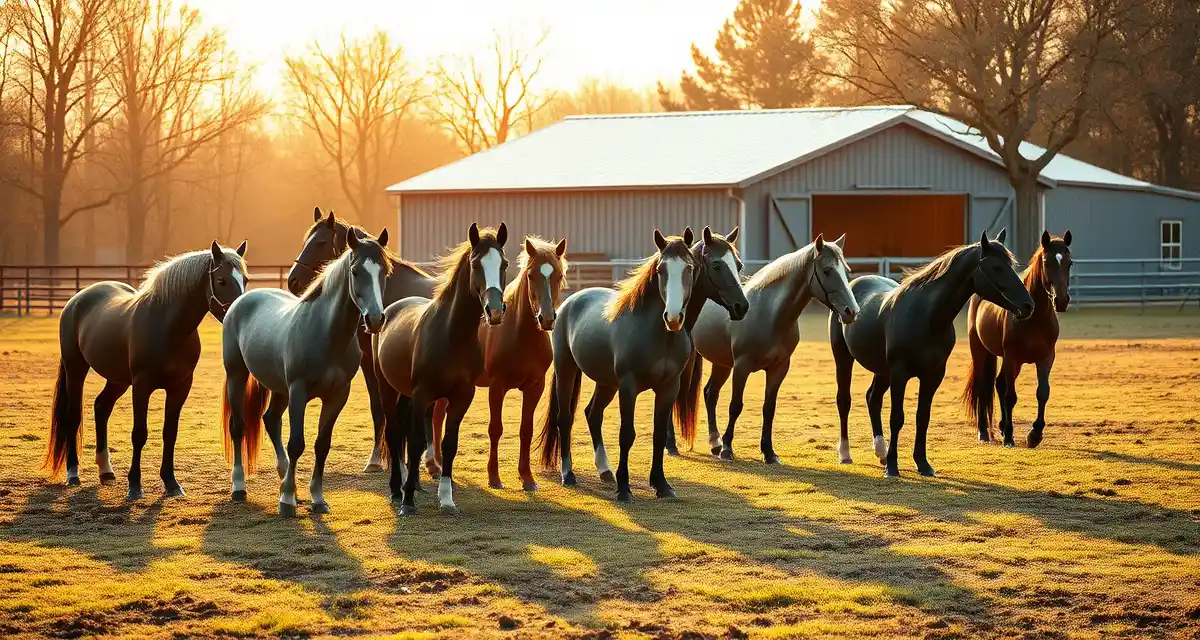
Managing Horse Groups in Pasture Turnout
Group turnout is the cornerstone of equine welfare at most boarding facilities, but managing groups well is more complex than it looks. Compatibility, hierarchy, special needs, and facility constraints all factor into how you structure turnout groups, and getting it wrong has real consequences in the form of injuries, stress, and client complaints.
The Benefits and Risks of Group Turnout
The benefits of group turnout are significant. Horses are social animals, and regular social contact with other horses supports psychological health in ways that individual turnout cannot replicate. Group turnout also allows horses to move more naturally throughout the day, which benefits their feet, joints, and overall condition.
The risks are injury from incompatible horses. A horse who kicks aggressively, a bully who monopolizes hay or water, or a new introduction who disrupts an established hierarchy can result in injuries that have financial and legal consequences. Managing groups thoughtfully reduces these risks without eliminating them entirely.
Building Compatible Groups
The first rule of group management is that you can never assume two horses will get along. Every new combination requires observation, and introductions should always be made carefully.
Factors that help predict compatibility:
Sex: Many facilities separate mares and geldings for simplicity, which reduces the hormonal tension that sometimes occurs in mixed groups. Some facilities run mixed groups successfully; it depends on the individual horses. Intact stallions are generally not turned out with other horses in a boarding environment.
Size and body weight: Large, dominant horses can injure smaller horses, both intentionally and accidentally. Mixing very large draft crosses with small ponies or refined horses requires extra care.
Age: Young horses and older horses sometimes get along well, but high-energy young horses can harass arthritic or slow-moving seniors. Senior horses often do best in their own group with horses of similar energy levels.
Health and condition: Horses with limited mobility, recovering from injury, or underweight should not be in groups where competition for hay or water could be a problem.
Known personality: The horse who has kicked every turnout partner at three previous barns will likely kick yours. Accurate history from the previous facility matters.
Managing Group Introductions
Introducing a new horse to an established group is the highest-risk moment in group management. The established horses have a social order, and the new horse's arrival disrupts it in ways that can provoke aggression.
A standard introduction protocol for boarding facilities:
Start with a shared fence line. Put the new horse in a paddock adjacent to the group for several days before combining them. This allows visual and olfactory familiarity to develop before physical contact.
Choose a large turnout area for the first combined day. Crowded spaces increase aggression. More space gives lower-ranking horses room to escape.
Turn out the new horse with one or two of the group's calmer, mid-ranking horses first if your facility allows it. Adding one unfamiliar horse to another is less volatile than one against many.
Monitor the first several hours closely. Some friction is normal and expected. Persistent bullying, a horse who can't get away from an aggressor, or a horse being kept from hay and water requires intervention.
Tracking Group Assignments
In a facility with twenty or thirty horses in multiple turnout groups, tracking who is in which group and why is essential management information. Group assignments change as horses come and go, as seasonal turnout areas shift, and as individual horses' needs change.
Managing this in your head or on an informal whiteboard leads to errors. When a new staff member doesn't know that the bay gelding in paddock three cannot go in with the grey mare, an injury is a real possibility.
BarnBeacon allows you to log group assignments directly in the horse's profile, with notes about compatibility constraints and introduction history. When staff access a horse's record, they see the current group assignment and any relevant notes before making a turnout decision.
Monitoring Group Health and Dynamics
Check each turnout group at least twice daily. Morning and evening checks should confirm that all horses in the group are present, moving normally, and showing normal behavior. Look for signs of bully dynamics: one horse excluded from hay, a horse showing signs of stress or fresh bite marks.
A horse who is consistently being harassed in a group needs to be moved before the harassment causes injury or serious stress-related health problems. Client communication about group changes should be handled proactively, with an explanation of why the change was made.
FAQ
What is Managing Horse Groups in Pasture Turnout?
Managing horse groups in pasture turnout refers to the practice of organizing horses into compatible social groups for shared outdoor time. It involves evaluating each horse's temperament, sex, age, and social behavior to build safe pairings or herds. Barn managers must monitor hierarchies, coordinate introductions carefully, and adjust groups as dynamics shift. Done well, it supports equine psychological health, natural movement, and overall welfare while reducing injury risk at boarding facilities.
How much does Managing Horse Groups in Pasture Turnout cost?
There is no direct cost to the practice itself — it is a management approach, not a purchasable service. However, the financial implications are significant. Poor group management can lead to vet bills from kick injuries, property damage, and client turnover. Investing staff time in careful observation, proper fencing, and adequate space per horse reduces costly incidents. For boarding facilities, good turnout management is a competitive differentiator that justifies premium pricing.
How does Managing Horse Groups in Pasture Turnout work?
Group turnout management works by systematically evaluating horse compatibility, introducing new horses gradually using neutral spaces or temporary separation, and monitoring established groups for signs of stress or aggression. Managers rotate horses between pastures to prevent overgrazing and reduce conflict, ensure multiple hay and water stations to limit resource guarding, and track each horse's behavior over time. Adjustments are made as group dynamics evolve with new arrivals or seasonal changes.
What are the benefits of Managing Horse Groups in Pasture Turnout?
Group turnout benefits horses physically and mentally. Social interaction with other horses supports psychological health in ways solo turnout cannot. Movement across pasture improves hoof health, joint condition, and overall fitness. Well-matched groups also reduce individual stress behaviors like weaving or cribbing. For barn operators, effective group management lowers injury rates, reduces client complaints, and builds a reputation for attentive, professional care that supports long-term business health.
Who needs Managing Horse Groups in Pasture Turnout?
Any horse owner using a boarding facility or managing multiple horses on a private property needs to understand group turnout principles. Boarding barn managers and facility owners are most directly responsible, but horse owners should also know how their horse behaves in groups and communicate special needs — such as aggression, past injuries, or dietary requirements — to barn staff. Facilities housing mares, geldings, and horses with varying social histories especially benefit from structured group management.
How long does Managing Horse Groups in Pasture Turnout take?
There is no fixed timeframe — group turnout management is an ongoing, daily responsibility rather than a one-time task. Initial introductions between unfamiliar horses typically take one to two weeks of careful monitoring before a new horse is fully integrated. Establishing stable group dynamics can take several weeks as hierarchy settles. Seasonal pasture rotations, new arrivals, and health changes mean group configurations require continuous reassessment throughout the year.
What should I look for when choosing Managing Horse Groups in Pasture Turnout?
When evaluating group turnout management at a boarding facility, look for clear protocols around new horse introductions, adequate pasture space per horse, and multiple feeding and water points to prevent resource guarding. Ask how staff monitor group dynamics and what triggers a group change. Facilities with well-maintained fencing, documented turnout schedules, and attentive daily observation signal strong management. A barn that can clearly explain its approach is far less likely to have chronic injury or conflict problems.
Is Managing Horse Groups in Pasture Turnout worth it?
Yes — thoughtful group turnout management is absolutely worth the effort. Horses kept in compatible social groups show better mental health, fewer stress-related behaviors, and improved physical condition compared to horses in isolated or poorly matched situations. For barn operators, the investment in observation and careful group structuring pays off through fewer vet incidents, lower liability exposure, and stronger client retention. The alternative — reactive management after injuries occur — is far more costly in time, money, and trust.