Managing Pasture Rotation for Equine Facilities
Pasture rotation is the practice of moving horses between pasture sections on a planned schedule so that each section gets adequate rest and recovery time between grazings. It's one of the most effective land management tools available to equine facility managers, and it delivers measurable improvements in pasture quality, parasite management, and operational efficiency when done consistently.
The Science Behind Rotation
Grass plants need time to recover after being grazed. The recovery period allows root reserves to be replenished, leaf surface area to be rebuilt, and the plant's ability to photosynthesize to be restored. Grass grazed repeatedly without recovery will eventually die, leaving bare ground that gets colonized by weeds.
Rotation also interrupts parasite transmission cycles. The infective larvae of most internal parasites die within several weeks in a paddock that has been vacated by horses. A pasture that hasn't seen horses in four to eight weeks has a dramatically lower larval contamination level than one grazed continuously. This is one of the reasons facilities with well-managed rotation programs can often reduce their deworming frequency and cost.
Designing a Rotation System
The foundation of a rotation system is dividing your total pasture acreage into sections. The number of sections depends on your horse population and the total acreage available.
A general planning rule: horses typically graze approximately one to two acres of good quality pasture per horse per month during active growing season. If you have ten horses and twenty acres of quality pasture, you could divide into four five-acre sections and move horses every two to three weeks, giving each section six to nine weeks of rest.
In reality, grass growth rates vary by season and climate. Spring growth may be fast enough that rest periods can be shorter. Summer drought slows recovery and demands longer rest. Winter may require horses to be off planted pastures entirely. Build flexibility into your rotation plan rather than assuming constant growth rates.
Establishing Your Pasture Sections
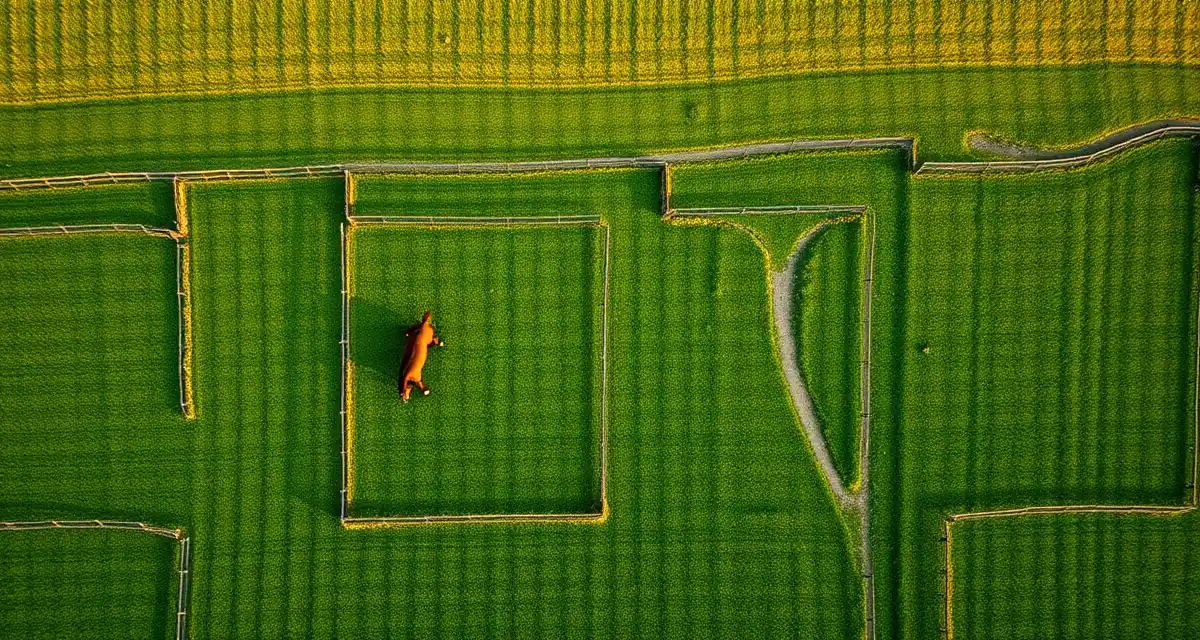
Converting large pasture into a rotational system requires internal fencing or temporary electric fencing to create the sections. Permanent post-and-board or post-and-wire internal fencing gives defined sections that are easy to manage. Temporary electric fencing offers flexibility to adjust section sizes seasonally.
Make sure each section has water access. Installing a water line to interior sections can be a significant but worthwhile investment. Portable water tanks are a workable alternative for sections that lack permanent water infrastructure.
Gate placement between sections matters for daily management. Gates that allow you to move a group easily between sections without running horses through other paddocks reduce the daily labor of rotation.
Tracking Your Rotation
The biggest failure mode in pasture rotation is an inconsistent schedule. When the barn is busy, it's easy to leave horses on a pasture section longer than intended. When staff changes, the rotation schedule that was in the previous manager's head doesn't transfer automatically.
Write your rotation schedule down with dates and section assignments. Post it somewhere visible and update it when moves happen. If you use barn management software, build the rotation schedule into your task management system. BarnBeacon allows you to create recurring tasks with reminders, so a "Rotate Group 2 to Pasture C" task appears when it's due rather than being forgotten until you notice the grass has been grazed to bare dirt.
Integrating Rotation with Parasite Management
The parasite management benefits of rotation are maximized when combined with strategic deworming based on fecal egg counts. Horses that shed high parasite loads contaminate pastures more heavily than low shedders. Identifying your high shedders through fecal testing and treating them more frequently while rotating all horses regularly gives you both targeted treatment and environmental dilution of larvae.
Harrowing pastures to break up manure piles can help in dry, sunny conditions by exposing larvae to desiccation. It's less effective in wet or humid climates where larvae survive better. Composting manure removed from paddocks kills parasites effectively and produces valuable soil amendment for overseeding.
Communicating Rotation to Staff and Owners
Staff need to understand the rotation schedule to execute it correctly. A clear written rotation plan with a map of pasture sections and group assignments eliminates confusion during daily turnout. When a pasture section is off-rotation for recovery, that should be visible in the daily care records so it's not accidentally used.
For owners, communicating that your facility uses managed pasture rotation is a meaningful quality indicator. It tells them that their horse is getting thoughtful care and that you're investing in the long-term health of the land.
FAQ
What is Managing Pasture Rotation for Equine Facilities?
Pasture rotation for equine facilities is the practice of dividing your total pasture acreage into multiple sections and moving horses between them on a planned schedule. Each section gets a rest period after grazing, allowing grass to recover fully before horses return. This structured approach improves forage quality, reduces weed encroachment, lowers parasite burdens, and extends the long-term productivity of your land compared to continuous grazing on the same ground.
How much does Managing Pasture Rotation for Equine Facilities cost?
Pasture rotation itself has no direct cost — it's a management practice, not a product. The primary investment is fencing to divide your acreage into paddocks, which varies widely based on materials and total footage. Temporary electric fencing can cost a few hundred dollars for a basic setup, while permanent post-and-rail systems run significantly more. Over time, rotation typically reduces costs by lowering deworming frequency and cutting the need to reseed damaged pasture.
How does Managing Pasture Rotation for Equine Facilities work?
Pasture rotation works by giving each grazed section adequate recovery time before horses return. You divide your total acreage into paddocks, graze one section while the others rest, then rotate horses to the next section once forage is sufficiently regrown. The cycle continues through all paddocks. During rest periods, grass replenishes root reserves, rebuilds leaf surface area, and parasite larvae die off naturally, resulting in healthier forage and lower contamination levels.
What are the benefits of Managing Pasture Rotation for Equine Facilities?
The key benefits include improved forage density and nutritional quality, significantly reduced internal parasite transmission, fewer bare patches and less weed colonization, and lower long-term land maintenance costs. Facilities with consistent rotation programs often reduce deworming expenses because infective larvae die in vacated paddocks within four to eight weeks. Horses also tend to graze more evenly across rotated paddocks, making better use of available acreage than they would on a single continuously grazed field.
Who needs Managing Pasture Rotation for Equine Facilities?
Any equine facility with grazing horses benefits from pasture rotation, but it is especially important for operations with higher horse densities relative to acreage. Boarding barns, breeding farms, training facilities, and private horse owners all stand to gain. Even small properties with limited acreage benefit by giving grass any recovery time possible. Facilities struggling with persistent weed problems, high parasite loads, or deteriorating pasture quality are the most likely to see immediate, measurable improvements after implementing rotation.
How long does Managing Pasture Rotation for Equine Facilities take?
The length of each rotation cycle depends on the number of paddocks, current grass growth rate, and season. A common approach is grazing each section for seven to fourteen days, then resting it for several weeks while horses move through the remaining paddocks. During peak spring growth, rest periods can be shorter. In summer heat or drought, grass recovers more slowly and rest periods should extend. A full rotation through four to six paddocks typically spans six to ten weeks.
What should I look for when choosing Managing Pasture Rotation for Equine Facilities?
When designing or evaluating a rotation system, prioritize the number of paddocks — more sections means longer rest periods and better recovery. Assess your fencing options for durability and horse safety. Consider water access in each paddock to avoid management bottlenecks. Look at your soil and grass species, as some forages recover faster than others. If hiring a consultant or purchasing a rotation planning resource, look for guidance grounded in your regional climate, soil type, and the number of horses you are managing.
Is Managing Pasture Rotation for Equine Facilities worth it?
For most equine facilities, pasture rotation is one of the highest-return land management practices available. It extends pasture lifespan, reduces reliance on chemical dewormers, cuts reseeding costs, and improves the overall health of your herd's grazing environment. The upfront investment in additional fencing pays back over multiple seasons. Facilities that skip rotation often face escalating costs from weed control, pasture renovation, and parasite management. If you have any grazing acreage, a consistent rotation system is almost always worth implementing.