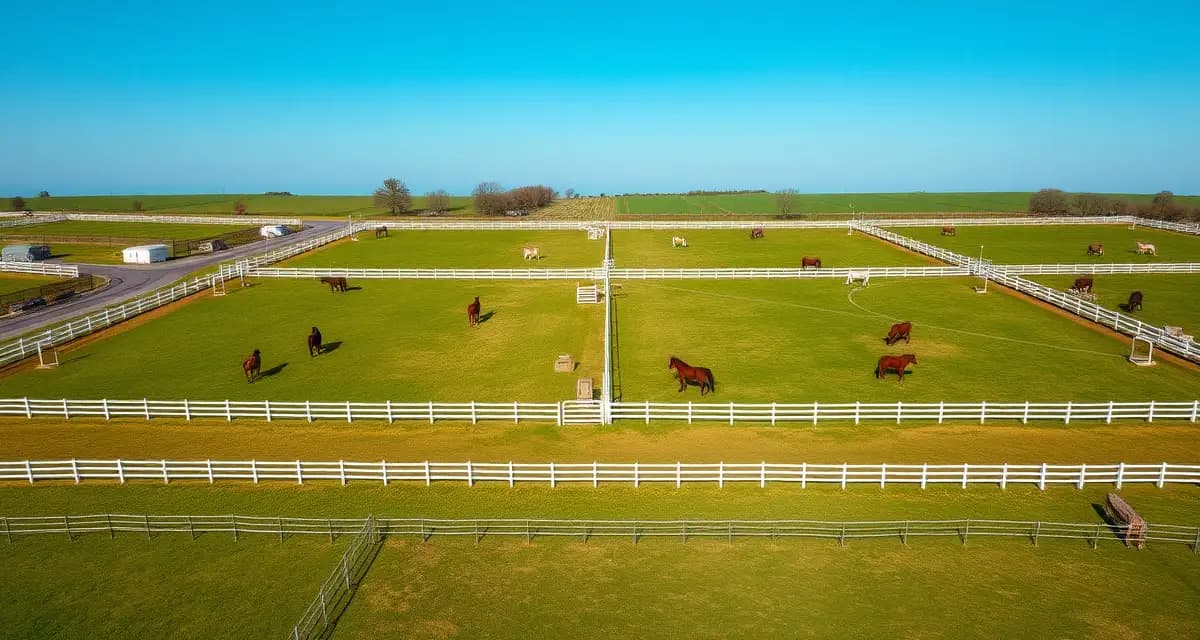
Managing Paddock and Pasture Spaces at an Equine Facility
Paddocks and pastures are among the most valuable physical assets at any equine facility. They take significant capital to establish and maintain, and poor management degrades them quickly. A well-managed pasture program supports horse health, reduces hay costs, and gives clients confidence that their horses are getting quality turnout. Poorly managed turnout land becomes muddy, weed-infested, and eventually unusable.
This guide covers the practical management of paddock and pasture infrastructure, from construction and maintenance to daily operations.
Paddock Design and Infrastructure
Before you can manage paddocks well, they need to be laid out to support good management. Several design principles matter:
Size: Individual paddocks should be large enough for the horse to move and turn freely, at minimum 20x40 feet for a single horse paddock with no grass. Group paddocks need substantially more room: a minimum of half an acre per horse in a small group, more in larger groups.
Fencing: Horse-safe fencing options include wood board, vinyl board, high-tensile wire with electric, pipe, and various composite products. Barbed wire is not appropriate for horse paddocks. Electric tape and braid used as a primary fence requires consistent maintenance of the energizer and wire condition.
Gates: Gates should open both inward and outward, be wide enough for wheelbarrow access, and latch securely. A gate that a horse can open is a hazard. Gates that require two hands to unlatch while leading a horse are a safety issue for staff.
Water: Every paddock needs access to clean water in a tank or automatic waterer that is checked and cleaned regularly. Algae growth in stock tanks is common in summer and should be cleaned weekly.
Shade: Horses in paddocks without shade suffer in summer heat. Natural shade from trees is ideal, but shade structures are necessary where natural shade doesn't exist.
Drainage: Poor drainage is the source of most paddock mud problems. Paddocks should be graded so water flows away from the center toward the edges, and heavy traffic areas near gates and feeders benefit from gravel or geotextile installation.
Pasture Management
Pasture differs from a sacrifice paddock in that it has growing grass that provides meaningful nutrition and needs to be protected from overgrazing. Managing pasture requires more planning and patience than managing dry lots.
The most common mistake in pasture management is keeping horses on a pasture too long. Horses graze grass down to the crown, and when grazed too short repeatedly, the plants die and bare patches develop. Once bare soil is exposed, weeds colonize faster than desirable grasses can recover.
The practical rule: move horses off a pasture when the grass is grazed to three to four inches height. Allow the pasture to recover to six to eight inches before returning horses. This means you need multiple pasture sections in rotation.
Soil testing every two to three years tells you what your pastures need. Lime, nitrogen, phosphorus, and potassium applications should be based on soil test results rather than general recommendation. Overseeding bare patches in fall or spring fills in degraded areas before weeds take hold.
Weed Management
Weeds in horse pastures range from aesthetically unpleasant to genuinely dangerous. Common toxic plants that appear in horse pastures include buttercup, nightshade, ragwort, and depending on region, deadly plants like oleander, yew, or black walnut.
Walk your pastures regularly and learn to identify the plants present. Remove toxic plants by hand or with targeted herbicide application. Avoid broad-spectrum herbicide applications on pasture that horses will be grazing soon.
Daily Paddock Checks and Record Keeping
Daily paddock checks should confirm fencing integrity, water availability and cleanliness, absence of hazards such as fallen branches or debris, and appropriate manure accumulation. Paddocks that accumulate manure without removal become parasite reservoirs and reduce usable grazing space.
Logging paddock maintenance and rotation schedule in your barn management system keeps these tasks from falling through the cracks when staff changes or schedules get disrupted. BarnBeacon supports facility maintenance task tracking alongside horse care records, so paddock condition notes and rotation dates are part of the same operational record as horse health and feeding.
For related reading, see pasture rotation management and paddock rotation scheduling.
FAQ
What is Managing Paddock and Pasture Spaces at an Equine Facility?
Paddock and pasture management at an equine facility refers to the ongoing planning, maintenance, and daily operations involved in keeping turnout spaces healthy and functional. This includes proper fencing, drainage, forage management, manure removal, rest rotation, and soil health. Well-managed spaces support horse welfare, reduce feed costs, and preserve the long-term value of the land. It is a foundational responsibility for any barn owner, boarding facility, or private horse property.
How much does Managing Paddock and Pasture Spaces at an Equine Facility cost?
Costs vary widely depending on property size, existing infrastructure, and region. Initial paddock construction—fencing, grading, and drainage—can range from a few thousand dollars to tens of thousands per acre. Ongoing maintenance costs include fertilizer, reseeding, weed control, equipment, and labor. Boarding facilities typically build these costs into their board rates. For private owners, budgeting a few hundred to several thousand dollars per year per acre is a reasonable baseline depending on management intensity.
How does Managing Paddock and Pasture Spaces at an Equine Facility work?
Effective paddock and pasture management works through a combination of proactive planning and daily routines. Pastures are rested and rotated to allow grass recovery. Manure is removed regularly to reduce parasite load and protect forage. Fencing is inspected and repaired. Footing in high-traffic areas is reinforced. Soil is tested and amended seasonally. Gates, water sources, and run-in shelters are maintained. Together, these practices keep the land productive and horses safe during turnout.
What are the benefits of Managing Paddock and Pasture Spaces at an Equine Facility?
Good paddock and pasture management benefits horses, property owners, and facility clients. Horses get quality forage, clean footing, and safe environments for movement and social interaction. Facilities reduce hay costs when pastures produce usable grass. Land retains its value and productivity long-term. Clients gain confidence that their horses receive quality care. Reduced mud and manure buildup also lowers disease and parasite risk, contributing directly to herd health outcomes.
Who needs Managing Paddock and Pasture Spaces at an Equine Facility?
Any operation that keeps horses on land benefits from structured paddock and pasture management. This includes boarding barns, training facilities, breeding operations, rescue organizations, and private horse owners. The larger the herd and the smaller the acreage, the more critical active management becomes. Even small properties with one or two horses can quickly degrade pastures without rotation and maintenance. Facilities with client horses have an added obligation to maintain safe, well-kept turnout spaces.
How long does Managing Paddock and Pasture Spaces at an Equine Facility take?
Pasture management is a year-round, ongoing commitment rather than a one-time task. Seasonal activities like seeding, fertilizing, and soil testing occur a few times per year. Daily tasks such as manure removal, water checks, and fence inspections happen continuously. Meaningful pasture recovery through rotation typically requires four to eight weeks of rest per paddock depending on growth conditions. Establishing a fully functional, well-maintained pasture program from scratch can take one to three growing seasons.
What should I look for when choosing Managing Paddock and Pasture Spaces at an Equine Facility?
Look for a management approach that includes clear rotation schedules, regular soil testing, appropriate stocking density, and proactive drainage solutions. Fencing should be horse-safe and well-maintained. High-traffic areas should have proper footing rather than bare mud. Manure should be removed or composted consistently. If evaluating a boarding facility, ask how many horses share each pasture, how often spaces are rested, and how the property handles wet or winter conditions.
Is Managing Paddock and Pasture Spaces at an Equine Facility worth it?
Yes—proper paddock and pasture management is one of the highest-return investments in equine facility operations. Well-maintained pastures reduce hay costs, lower vet bills from mud-related injuries and parasites, extend the usable life of the land, and improve horse wellbeing. For boarding operations, it directly affects client retention and reputation. Neglecting this area creates compounding problems that are expensive to reverse. The upfront cost and daily effort required pay off consistently over the long term.