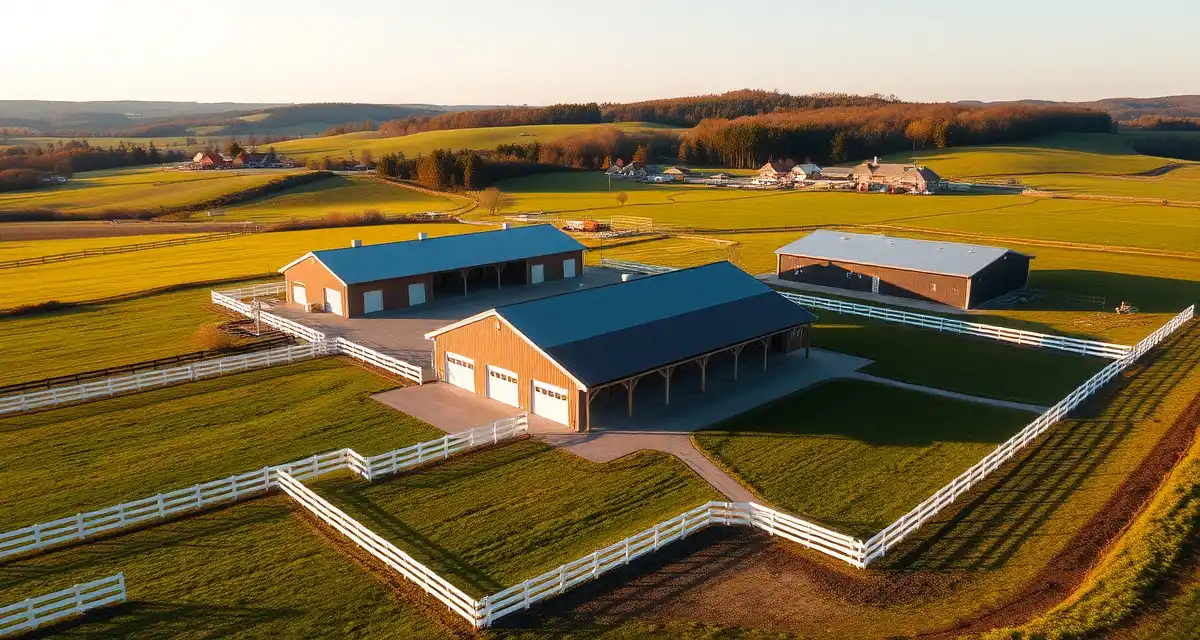
Equine Facilities in Pennsylvania
Pennsylvania is one of the most important equine states in the country by any measure: horse population, facility count, economic impact, and diversity of disciplines. From the rolling Amish farmland of Lancaster County to the show jumping venues of Chester County and the thoroughbred racing infrastructure centered on Philadelphia Park and Penn National, Pennsylvania's equestrian landscape is vast and varied.
Regional Overview
Chester County and the Philadelphia Main Line suburbs represent the most concentrated high-end equestrian market in the state. Hunt country, polo, hunter/jumper, and dressage programs operate at a sophisticated level here, with well-established shows including Devon Horse Show and Country Fair drawing national competitors. Facilities in this region compete for a discerning clientele with options across the region.
Lancaster County is world-renowned for its Amish and plain community populations, where draft horses are working agricultural animals rather than sport or pleasure horses. The county also supports a large general horse population alongside the working draft horses. Belgian, Percheron, and Suffolk Punch breeds are common in working farm contexts.
Bucks and Montgomery counties bridge suburban Philadelphia and rural Pennsylvania, with a mix of boarding barns, lesson programs, and competitive training facilities serving commuter riders. York, Adams, and Cumberland counties offer more affordable land and a mix of western and English disciplines alongside active trail riding communities.
Western Pennsylvania around Pittsburgh has its own equestrian community, smaller than the southeastern corner but active in local competition and trail riding.
The Pennsylvania Horse Racing Industry
Pennsylvania has a significant horse racing industry. Philadelphia Park, Penn National, and Presque Isle Downs support a thoroughbred and standardbred racing economy that includes not just the racing barns but the entire supporting infrastructure of training farms, layup facilities, and breeding operations. The expansion of legal gaming in Pennsylvania has provided revenue support for the industry through purse supplements.
Off-track thoroughbreds from Pennsylvania's racing industry enter the re-training pipeline and end up in sport horse programs across the state. This gives many Pennsylvania facilities experience with OTTB retraining, which has become a recognized equestrian discipline in its own right.
Agricultural Preservation and Land Values
Pennsylvania has one of the strongest agricultural land preservation programs in the country. The Clean and Green program and the State Agricultural Land Preservation Board have protected significant acreage from development, keeping equine land in agricultural use. Facilities that qualify for Clean and Green see reduced property tax assessments.
Land values vary considerably by region. Chester County commands premium prices for agricultural land. Central and western Pennsylvania are more affordable. For facilities looking to expand, the central and western regions offer better land values while still having access to competitive equestrian markets.
Managing in Pennsylvania's Climate
Pennsylvania's weather runs the full range of seasons. Winters can be severe, particularly in the northern counties and higher elevations. Summer heat and humidity in the southeastern lowlands create fly pressure and heat stress challenges. Spring brings mud that can be severe on clay-heavy soils common in many parts of the state.
Pennsylvania's equine facilities deal with the full spectrum of weather-related management: freeze protection for water systems, hay storage for winter, ventilation management in summer, and drainage management through wet seasons.
Client Expectations and Professional Operations
The competitive nature of Pennsylvania's equestrian market, particularly in the southeast, demands professional operations. Clients in Chester County have been to shows at Devon, shopped for horses in Europe, and boarded at facilities across several states. They know what a well-run operation looks like and make decisions accordingly.
Delivering consistent care, transparent billing, and proactive communication is the minimum expectation in this market. Facilities that invest in management systems like BarnBeacon to deliver owner updates, track health events, and manage billing professionally differentiate themselves from those relying on informal systems.
For related resources, see owner communication and scheduling tools.
FAQ
What is Equine Facilities in Pennsylvania?
Equine facilities in Pennsylvania encompass a wide range of horse-related properties including boarding barns, training centers, breeding farms, racing stables, and private estates. The state hosts everything from Amish working draft horse farms in Lancaster County to high-end hunter/jumper show facilities in Chester County. Pennsylvania ranks among the top equine states nationally by horse population and economic impact, supporting disciplines from thoroughbred racing to dressage, polo, and agricultural work.
How much does Equine Facilities in Pennsylvania cost?
Costs vary dramatically depending on region, facility type, and services offered. Full-care boarding in Chester County's competitive hunt country can range from $800 to $2,000+ per month, while more rural central or western Pennsylvania facilities may start closer to $400–$600. Training programs, show preparation, and specialized breeding services add to base rates. Lancaster County working farm operations typically operate under entirely different cost structures tied to agricultural use rather than sport.
How does Equine Facilities in Pennsylvania work?
Pennsylvania equine facilities function by providing horse owners access to stabling, turnout, feed, veterinary coordination, and often training or instruction. Larger facilities manage daily care schedules, farrier rotations, and health protocols across dozens of horses. Regional hubs like Chester County operate within competitive show circuits, so facilities are often structured around show calendars, trainer-client relationships, and access to venues like Devon Horse Show. Barn management software increasingly handles scheduling, billing, and health records.
What are the benefits of Equine Facilities in Pennsylvania?
Pennsylvania's equine facilities offer horse owners professional care, community, access to competitive circuits, and infrastructure they cannot replicate privately. Boarding at an established facility provides access to quality arenas, trails, and expert trainers. For disciplines like thoroughbred racing or high-level dressage, being located within established regional networks—near Penn National or Devon—provides competitive advantages. Agricultural operations benefit from shared equipment, land, and draft breed expertise concentrated in counties like Lancaster.
Who needs Equine Facilities in Pennsylvania?
Horse owners, trainers, breeders, competitive riders, racing operations, and agricultural businesses all rely on Pennsylvania equine facilities. Recreational trail riders need safe boarding close to state forest access. Show competitors need facilities affiliated with recognized circuits. Amish and plain community farmers depend on draft horse infrastructure for working land. Rescue organizations, therapeutic riding programs, and 4-H youth programs also represent significant facility users across the state's diverse equestrian ecosystem.
How long does Equine Facilities in Pennsylvania take?
There is no single timeline—equine facility use is ongoing. Boarding arrangements are typically month-to-month or annual contracts. Training programs run in seasonal blocks aligned with show schedules, often April through October for outdoor disciplines. Starting a young horse typically takes 90–180 days of foundational work. Finding and transitioning to a new facility in a competitive market like Chester County can take weeks to months depending on availability, waitlists, and trainer relationships.
What should I look for when choosing Equine Facilities in Pennsylvania?
Look for a facility that matches your discipline, with appropriate footing, arena size, and trainer expertise. Evaluate turnout quality, stall size, feed protocols, and veterinary access. In Pennsylvania, proximity to show venues matters for competitors—Chester County facilities near Devon carry real logistical advantages. Check the barn's safety record, emergency protocols, and how management communicates with clients. Cleanliness, horse condition, and staff stability are reliable indicators of a well-run operation.
Is Equine Facilities in Pennsylvania worth it?
For most horse owners and equestrian businesses in Pennsylvania, quality facility access is essential rather than optional. Horses require consistent professional care, and the right facility accelerates training outcomes, reduces health risks, and connects riders to regional show circuits and networks. Pennsylvania's dense equestrian community means strong facilities retain value and support long-term equestrian goals. Whether racing, competing, breeding, or farming with draft horses, the right facility is a foundational investment in your equine operation's success.