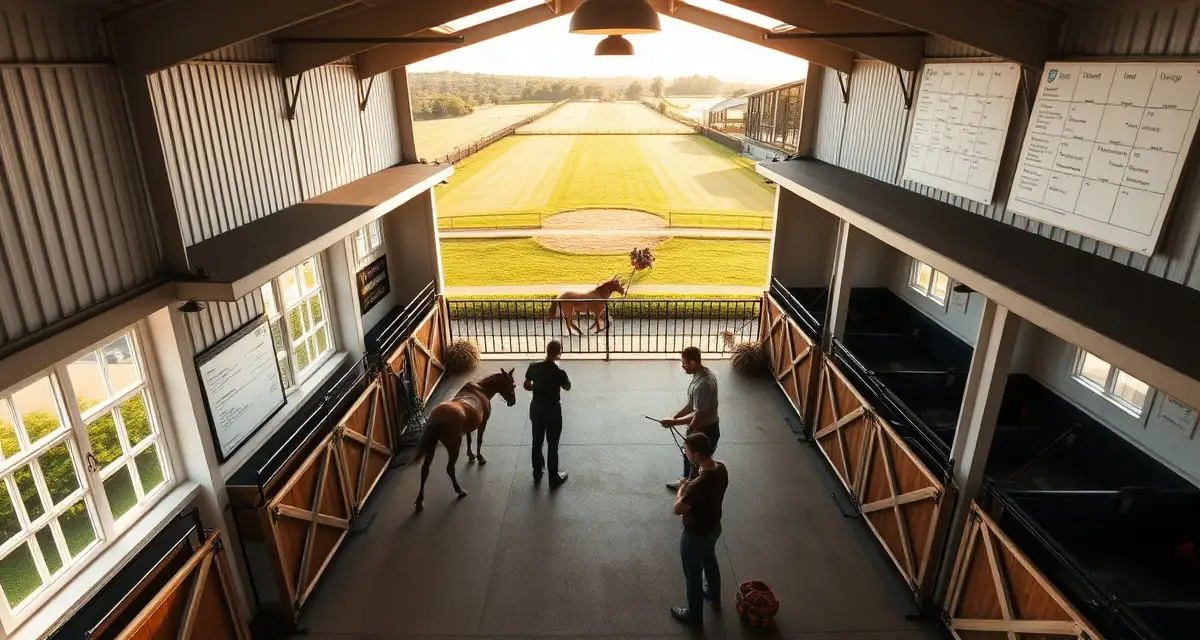
Polo Barn Scheduling: Complete Guide for Facility Managers
Polo ponies require 6 to 8 weeks of conditioning between match seasons, and managing that conditioning schedule alongside the match calendar, field maintenance, and the individual training plans for multiple patron strings makes polo barn scheduling more complex than most equine disciplines.
TL;DR
- Scheduling conflicts between farrier, vet, trainer, and lesson slots are the most common source of daily operational friction at equine facilities
- Digital scheduling tools visible to all staff prevent the double-booking that wastes professional visit time
- Lesson scheduling tied to horse health records lets managers pull a horse from lessons when health status changes
- Arena scheduling software reduces in-person disputes and eliminates the whiteboard conflicts common at multi-use facilities
- Automated reminders reduce no-shows for lessons and appointments by giving clients advance notice
- Connecting scheduling to billing captures lesson and training revenue that is commonly missed in manual systems
This guide walks through how to build a scheduling system that handles the specific demands of polo facility operations: string-level fitness tracking, match day coordination, field scheduling, and the seasonal rhythms that drive everything.
The Scheduling Dimensions of Polo Operations
Polo facility scheduling operates on several simultaneous levels:
Individual pony training schedules. Each pony in each string follows a conditioning and training program that varies based on their fitness level, age, match schedule, and role in the patron's string. Tracking these individual schedules, and ensuring that work load is appropriate to each pony's current conditioning state, is a daily management task.
String-level match rotation. A patron with six ponies doesn't play all six in every match. The trainer manages string rotation to balance work load, protect ponies recovering from previous matches, and keep the full string competitive across a season. Scheduling that rotation and communicating it to patrons is part of the trainer's job.
Match calendar. Home matches, away matches, practice chukkers, and club events all need to be on the facility calendar with enough lead time for preparation. Who's going to the away match? Which ponies need to travel? Which field is being used for home matches and what's the maintenance schedule for that field?
Field scheduling. Polo fields require intensive care. Divot repair, dragging, irrigation, and rest periods are all part of field maintenance. Scheduling field use (matches, practice, individual conditioning rides) alongside the maintenance calendar ensures the field stays in safe, playable condition.
Conditioning cycle transitions. The transition from end-of-season to conditioning program, and from conditioning to pre-season preparation, involves scheduling shifts that affect every pony in the barn. Planning these transitions in advance and communicating them to patrons prevents confusion.
Frequently Asked Questions
How do polo barn managers handle scheduling?
Polo barn scheduling involves coordinating chukker assignments, practice sessions, match day logistics, and the veterinary and farrier appointments that keep an active polo string sound across a daily calendar that leaves little margin for error. Most experienced polo managers build scheduling around horse welfare first, working backward from competition dates and training milestones to structure the daily and weekly work calendar.
What tools do polo facilities use for scheduling?
Digital scheduling tools visible to all staff replace the whiteboard conflicts and double-bookings that plague manually managed polo barns. BarnBeacon's scheduling module connects arena time, farrier appointments, vet visits, and lesson slots in one calendar. When a horse's health status changes, their scheduled activities can be updated immediately and all relevant staff are notified.
What are the scheduling challenges at polo barns?
Polo facilities face scheduling complexity from the combination of match schedules that can shift based on field conditions and opponent availability, combined with the individual care needs of multiple horses in the same string. Managing those competing demands without a system that gives all staff visibility into the same calendar leads to conflicts, missed appointments, and wasted professional visit time.
How does BarnBeacon compare to spreadsheets for barn management?
Spreadsheets require manual updates, lack real-time notifications, and create version control problems when multiple staff members are working from different files. BarnBeacon centralizes records, pushes alerts automatically based on logged events, and connects care records to billing and owner communication in one system. Most facilities report saving several hours per week after switching from spreadsheets.
What is the setup process like for BarnBeacon?
Most facilities complete the initial setup in under a week. Horse profiles, service templates, and billing configurations can be imported from existing records or entered directly. BarnBeacon's US-based support team is available to assist with setup, and most managers are running their first billing cycle through the platform within days of starting.
Can BarnBeacon support a barn with multiple staff members?
Yes. BarnBeacon supports multiple user accounts with role-based access, so barn managers, barn staff, and owners each see the information relevant to their role. Task assignments, completion logs, and communication history are all attached to the barn's account rather than to individual staff phones or email addresses.
What is Polo Barn Scheduling: Complete Guide for Facility Managers?
Polo Barn Scheduling: Complete Guide for Facility Managers is a comprehensive resource covering the unique operational demands of polo facilities. It addresses string-level fitness tracking, match day coordination, field scheduling, and seasonal planning cycles. The guide explains how to build scheduling systems that manage the 6 to 8 week conditioning windows between match seasons, coordinate farrier and vet visits, and align individual training plans across multiple patron strings without creating costly conflicts or missed appointments.
How much does Polo Barn Scheduling: Complete Guide for Facility Managers cost?
The guide itself is free editorial content published on BarnBeacon. The scheduling software and tools it recommends vary in cost depending on facility size and feature needs. Most equine facility management platforms offer tiered pricing, typically ranging from basic free tiers for small operations to monthly subscription plans for multi-arena facilities. The return on investment generally comes from reduced no-shows, captured missed billing, and time saved managing conflicts manually across staff, horses, and professionals.
How does Polo Barn Scheduling: Complete Guide for Facility Managers work?
Polo barn scheduling works by centralizing all facility activity into a single shared system visible to every staff member. Horse health records connect directly to lesson and training slots so managers can instantly pull a horse when its status changes. Automated reminders go out to clients before appointments. The system tracks each horse's conditioning phase against the match calendar, flags conflicts between farrier, vet, and trainer visits, and ties completed sessions to billing so no revenue slips through the cracks.
What are the benefits of Polo Barn Scheduling: Complete Guide for Facility Managers?
The core benefits include eliminating double-booking of professional visit time, reducing client no-shows through automated reminders, and capturing lesson and training revenue that manual systems routinely miss. Shared digital visibility removes whiteboard disputes and miscommunication between staff. For polo specifically, connecting each horse's conditioning schedule to the match calendar ensures ponies are physically prepared for competition and that field maintenance windows do not clash with training blocks or match day logistics.
Who needs Polo Barn Scheduling: Complete Guide for Facility Managers?
Any manager running a polo facility with multiple patron strings, shared arena space, and rotating professional visits will benefit from this guide. It is particularly relevant for facility managers coordinating farrier, veterinarian, and trainer schedules across a large string of horses, clubs managing shared field allocations between patrons, and operations preparing horses for competitive match seasons where conditioning timelines are non-negotiable and scheduling errors have direct performance consequences.
Related Articles
- Eventing Barn Scheduling: Complete Guide for Facility Managers
- Hunter/Jumper Barn Scheduling: Complete Guide for Facility Managers
- Polo Barn Barn Management: Complete Guide for Facility Managers
Sources
- American Association of Equine Practitioners (AAEP)
- United States Polo Association (USPA)
- American Horse Council
- UC Davis Center for Equine Health
- Penn State Extension Equine Program
Get Started with BarnBeacon
Running a polo operation well requires the right tools behind the right protocols. BarnBeacon gives managers the health record tracking, billing automation, and owner communication infrastructure to operate efficiently without adding administrative staff. Start a free trial and see how the platform fits the way your barn already works.