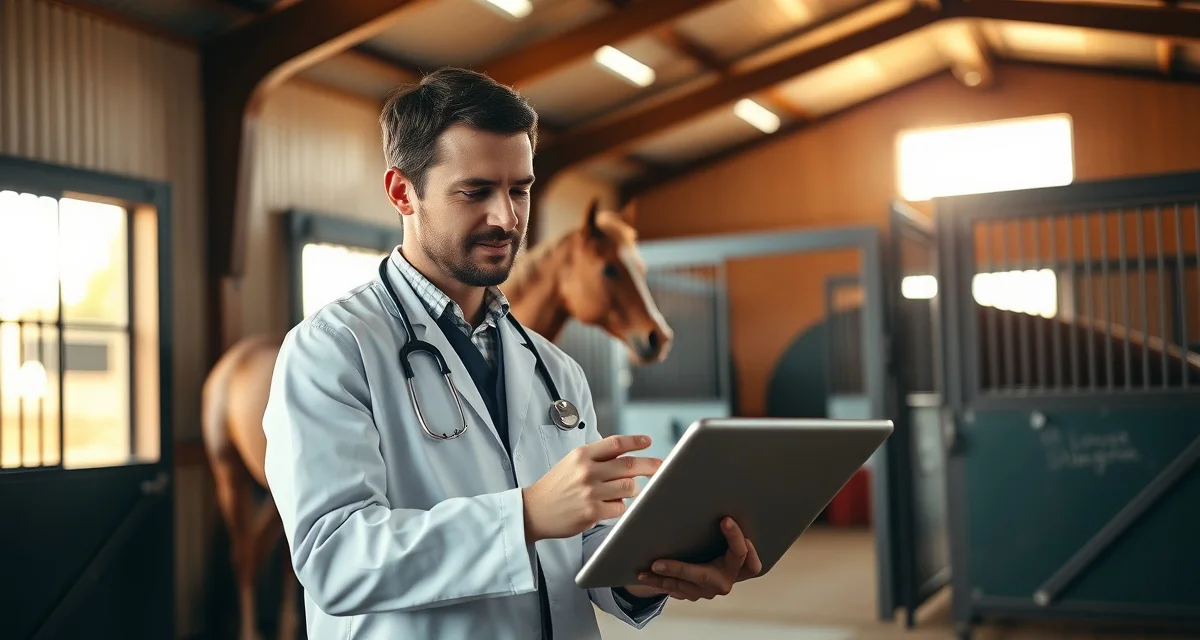
Sharing Vet Records Digitally at Horse Barns
Owner communication quality is the #1 boarding satisfaction driver, according to equine industry surveys. Yet most barns still rely on group texts, forwarded emails, and sticky notes to keep owners informed about their horses' health. That gap is where boarding relationships break down, and where sharing vet records digitally at your barn becomes a competitive advantage.
TL;DR
- Vet records shared digitally eliminate the risk of paper records being unavailable during an emergency.
- A centralized horse health profile should include vaccination history, dental records, and current medications.
- Staff can flag health observations directly to the vet-accessible record without waiting for the barn manager.
- Digital records with timestamps give vets a complete clinical picture, not just what an owner remembers.
- Automated vet visit summaries sent to owners after each appointment reduce post-visit communication gaps.
When a vet visits, a farrier trims, or a health alert fires, the owner should know within minutes, not days. Here is exactly how to set that up.
Why Email and Texts Are Failing Your Barn
The typical barn communication workflow looks like this: vet leaves a paper record, barn manager photographs it, texts it to the owner, owner asks a follow-up question, manager can't find the original. Repeat for every horse, every visit.
This creates three real problems. Records get lost or misread. Owners feel out of the loop and start calling constantly. And when a horse changes vets or moves barns, there is no clean history to hand over.
An equine veterinary record sharing system solves all three by centralizing records, controlling who sees what, and creating a permanent audit trail.
Step-by-Step: How to Share Vet Records Digitally at Your Barn
Step 1: Choose a Platform With Structured Record Storage
Before you can share anything, you need a place to store it. A purpose-built barn management platform lets you attach vet visit notes, vaccination certificates, Coggins results, and farrier records directly to each horse's profile.
Look for a system that stores records in a searchable format, not just as image uploads. Searchable records mean you can pull a full health history in seconds when a vet asks for it.
Step 2: Set Permission Levels Before You Invite Anyone
Not every person connected to a horse needs the same access. Your barn's equine veterinary record sharing system should let you define at least three tiers:
- Owner access: Full health history, daily reports, photo updates, billing
- Vet access: Medical records, vaccination logs, treatment notes only
- Farrier access: Trim and shoe schedules, hoof notes, appointment history
Setting permissions upfront prevents the awkward situation where a farrier accidentally sees an owner's invoice, or an owner edits a vet note they shouldn't touch.
Step 3: Configure Automated Daily Reports
This is where most barns leave money on the table. Instead of waiting for owners to call or text, set up automated daily reports that push out each evening.
A good daily report covers: feed and water intake, turnout time, any behavioral changes, and a photo or short video of the horse. BarnBeacon automates this entire workflow, sending owners a structured update without the barn manager writing a single word from scratch. Owners who receive daily reports call the barn 60-70% less often, freeing up staff time significantly.
Step 4: Export and Share Records as PDFs
When a vet requests records, or an owner needs documentation for a show or transport, you should be able to generate a clean PDF in under a minute. The PDF should include the horse's name, owner details, date range, and a formatted list of all health events.
Avoid sending raw database exports or screenshots. A formatted PDF looks professional, is easy to read on any device, and creates a clear paper trail if there is ever a dispute about care.
Step 5: Send Health Alerts in Real Time
Routine records can wait for a daily report. Emergencies cannot. Your system should support push notifications or SMS alerts for flagged events: a temperature spike, a missed feed, a vet call placed outside normal hours.
BarnBeacon's health alert system lets barn managers tag any entry as urgent, which immediately notifies the owner and logs the timestamp. That timestamp matters. If an owner later questions when they were informed about a colic episode, you have a documented record showing exactly when the alert was sent and opened.
Step 6: Maintain an Audit Trail for Every Record
Every time a record is created, edited, viewed, or shared, that action should be logged with a user name and timestamp. This protects the barn legally and builds trust with owners who want to know their horse's data is being handled carefully.
The owner communication portal in BarnBeacon logs every interaction automatically. Owners can see when their records were last updated, and barn managers can see when owners have viewed a health alert, which eliminates "I never got that message" disputes.
Step 7: Integrate Record Sharing With Billing
Health records and billing are more connected than most barn managers realize. A vet visit generates a record and often a charge. A farrier appointment creates a trim note and an invoice. When these two systems are separate, things fall through the cracks.
Connecting your record system to billing and invoicing means that when a vet visit is logged, the associated charge can be attached to the same entry. Owners see the record and the cost in one place, which reduces billing disputes and speeds up payment.
Common Mistakes When Sharing Vet Records Digitally
Skipping permission setup. Giving everyone full access seems easier upfront but creates privacy and liability issues fast. Take 20 minutes to configure roles before your first invite goes out.
Using the system inconsistently. If barn staff log some visits in the platform and others in a notebook, the digital record becomes unreliable. Owners and vets will stop trusting it. Make digital entry the only option, not the backup option.
Sending too much, too fast. Flooding owners with every minor observation creates noise and trains them to ignore notifications. Reserve real-time alerts for genuine health concerns. Routine updates belong in the daily report.
Not confirming vet and farrier access. Invite your vet and farrier to the system early, before you need them to access records urgently. Confirm they can log in and find what they need during a calm moment, not during an emergency.
Related Articles
FAQ
How do I improve communication with horse owners at my barn?
Start with a structured daily report sent at the same time each evening. Owners who receive consistent, predictable updates feel informed and are far less likely to call or text throughout the day. Add a photo or short video to each report and response rates and satisfaction scores climb quickly. A platform like BarnBeacon automates this so it does not add to your staff's workload.
What should I tell horse owners every day?
Cover four things: feed and water intake, turnout or exercise activity, any behavioral or physical observations, and a photo of the horse. Keep it brief and factual. Owners do not need a novel, they need confirmation that their horse is seen, cared for, and healthy. If anything unusual happened, note it plainly and include what action was taken.
How do I handle a horse owner who demands too many updates?
First, make sure they are enrolled in your daily report system. Many owners who call constantly are doing so because they have no reliable information channel. Once daily reports are flowing, most high-contact owners settle down significantly. For owners who still want more, set a clear communication policy in your boarding contract: daily reports go out at 7pm, urgent alerts are sent immediately, and non-urgent calls are returned within 24 hours. Consistency and structure solve most of these situations without confrontation.
How do I handle vet records when a new horse arrives with incomplete history?
Request whatever records exist from the previous barn, the owner, and the prior vet directly. Even incomplete records are better than no records. Document the gaps explicitly in the horse's intake profile so staff know what is unknown versus what is documented. Schedule a baseline exam with the barn's attending vet to establish current health status, and attach those findings to the horse's record as the starting point for your own documentation.
Can barn staff access vet records, or should they be restricted to managers only?
Staff who handle daily horse care should have access to the relevant sections of each horse's vet record -- current medications, dietary restrictions, and any conditions that affect daily care. Full clinical records with diagnostic detail may warrant manager-only access depending on your facility's policies. The test is practical: if a staff member could make a care error by not knowing something in the vet record, they should be able to see it.
What is Sharing Vet Records Digitally at Horse Barns?
Sharing vet records digitally at horse barns means storing vaccination history, dental records, medications, and vet visit summaries in a centralized digital platform accessible to barn staff, horse owners, and veterinarians. Instead of relying on paper documents, group texts, or forwarded emails, all health information lives in one place with timestamps, reducing miscommunication and ensuring critical records are available instantly during emergencies.
How much does Sharing Vet Records Digitally at Horse Barns cost?
BarnBeacon offers digital vet record sharing as part of its barn management platform. Pricing varies by barn size and feature tier, so visit BarnBeacon.com for current plans. Most barns find the cost is quickly offset by time saved on manual communication, fewer missed health updates, and stronger owner retention driven by improved transparency.
How does Sharing Vet Records Digitally at Horse Barns work?
Digital vet record sharing works by giving barn staff a simple way to log health observations, vet visits, and treatment notes directly into each horse's profile. Owners receive automated notifications after appointments, vets access a complete clinical history, and everyone sees the same up-to-date record in real time—eliminating the phone-tag and paper-trail gaps that plague traditional barn communication.
Sources
- American Association of Equine Practitioners (AAEP)
- American College of Veterinary Internal Medicine (ACVIM)
- Cornell University College of Veterinary Medicine
- University of California Davis School of Veterinary Medicine
- The Horse magazine
Get Started with BarnBeacon
Veterinary records that live in paper files or scattered spreadsheets are not accessible when you need them most -- during an emergency, at a barn with limited cell service, or when a new vet asks for history. BarnBeacon stores each horse's complete health record digitally, accessible to the barn manager, attending vet, and owner from any device. If your current record-keeping system creates gaps between what happened and what anyone can find, BarnBeacon is worth a closer look.