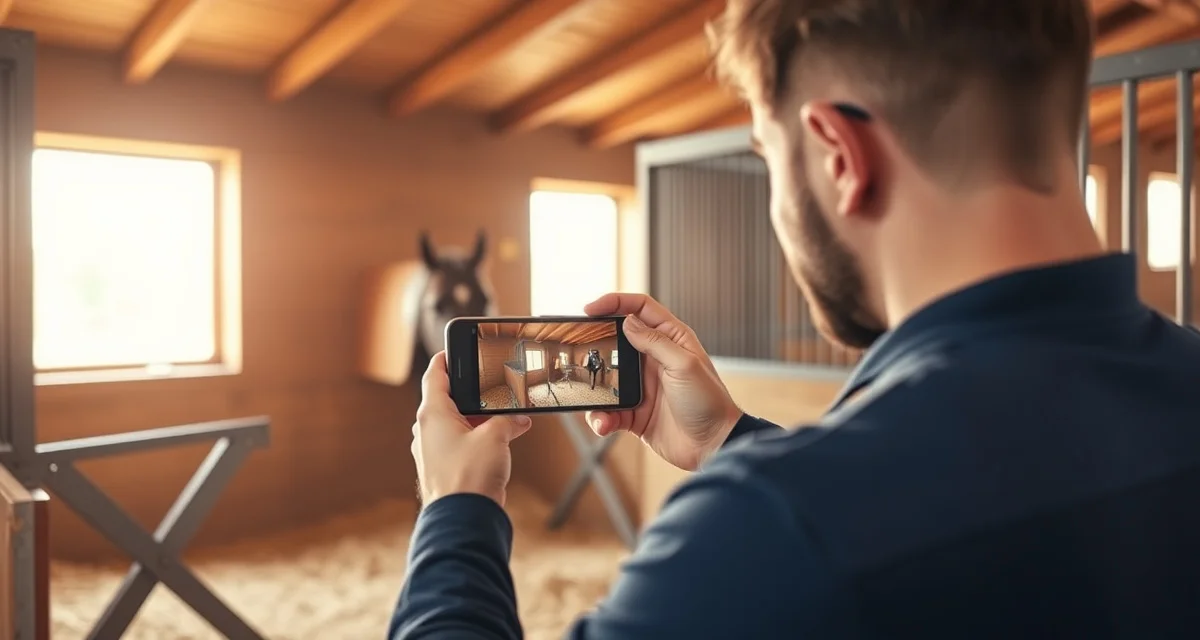
Stall Inspection Photo Documentation for Horse Barns
Stall inspection photo documentation is one of the most underused tools in barn management. Most facilities rely on verbal check-ins or paper logs that disappear, get smudged, or simply never get filled out. Facilities with digital cleaning accountability see 44% fewer stall quality complaints, and photo records are a core reason why.
TL;DR
- Photo documentation of stall conditions creates a visual baseline that written notes alone cannot establish.
- Post-illness and foaling stall photos protect the barn if a health issue is later tied to stall conditions.
- Photos attached directly to a horse's stall record are more useful than images stored in a generic folder.
- Requiring photos for flagged stalls rather than all stalls keeps the documentation burden manageable for staff.
- Searchable photo history allows barn managers to identify recurring problems in specific stalls over time.
When something goes wrong, a photo taken at the right moment is worth more than any handwritten note. This guide walks you through exactly what to photograph, how to store it, and how to use it when disputes or insurance claims arise.
Why Photo Documentation Matters in Stall Inspections
A horse owner complains their stall was not cleaned on Tuesday. A staff member says it was. Without a timestamped photo, you have no way to resolve that dispute objectively.
Photo documentation removes the "he said, she said" problem entirely. It also creates a baseline record of stall condition over time, which matters for insurance claims, lease agreements, and staff performance reviews.
Beyond disputes, a consistent horse barn photo inspection log helps you spot patterns. If one stall is always photographed with wet bedding or missed corners, that is a training issue you can address before it becomes a liability.
Get Started with BarnBeacon
BarnBeacon supports photo documentation attached directly to individual stall records, with timestamps and staff attribution that create an auditable visual history. For post-illness recovery, foaling stalls, and flagged conditions, that documentation provides the evidence base that written notes alone cannot match. If your current system has no practical way to capture and store stall condition photos alongside the care record, BarnBeacon offers a straightforward solution.
Step-by-Step: How to Document Stall Inspections with Photos
Step 1: Photograph the Stall Before Cleaning
Take one wide-angle shot from the stall entrance showing the full floor area. This is your baseline. It documents the condition the stall was in when staff arrived, which matters if a horse owner later claims damage occurred during cleaning.
Capture any visible issues at this stage: wet spots, manure accumulation, damaged bedding, or equipment left in the stall.
Step 2: Document Problem Areas Up Close
If you see anything abnormal, take a close-up photo before touching it. This includes damaged flooring, unusual discharge, signs of a horse pawing or weaving, or any foreign objects.
These close-ups are especially important for insurance documentation. A wide shot alone rarely provides enough detail for a claim adjuster to assess damage.
Step 3: Photograph the Stall After Cleaning
Take a second wide-angle shot from the same position as your before photo. Consistency in angle and framing makes before-and-after comparisons far more useful.
Check that the photo clearly shows fresh bedding distribution, clean water buckets or automatic waterers, and a swept or raked floor. These are the three areas most commonly cited in stall quality complaints.
Step 4: Log the Photo with Staff Attribution
A photo without context is only half the record. Each photo entry should include the date, time, stall number or name, and the name of the staff member who completed the cleaning.
This is where most manual systems fall short. Paper logs get skipped. Shared folders have no accountability layer. BarnBeacon timestamps every stall cleaning with the responsible staff member and supports photo attachments directly in the stall record, so attribution is automatic, not optional.
Step 5: Flag Incomplete or Substandard Stalls
Not every stall will pass inspection on the first check. Build a flagging step into your process so that stalls requiring re-cleaning are documented separately from completed stalls.
A flagged stall should have its own photo record showing why it was flagged and a follow-up photo confirming it was corrected. This two-step record protects both the facility and the staff member who did the re-clean.
Step 6: Store Photos in an Organized, Searchable System
Folder structures on a shared drive work, but they require discipline to maintain. A dedicated barn management platform keeps photos tied to specific stalls, dates, and staff members without any manual filing.
Whatever system you use, make sure photos are backed up automatically and accessible from a mobile device. Barn managers rarely sit at a desk when they need to pull up a record.
Step 7: Review Photo Logs Weekly
Set aside 15 minutes each week to scan the photo log for patterns. Look for stalls that are consistently flagged, staff members whose after-clean photos show recurring issues, and any stalls where photos are missing entirely.
Missing photos are a red flag. If a stall has no photo record for a given day, you cannot confirm it was cleaned to standard. Pair your photo log review with your barn daily checklist review to catch gaps before they become complaints.
Common Mistakes in Stall Inspection Photo Documentation
Taking photos only when something goes wrong. Reactive documentation does not give you a baseline. You need consistent before-and-after records to make comparisons meaningful.
Using inconsistent angles and framing. If one photo is taken from the doorway and the next is taken from inside the stall, the comparison is useless. Train staff to always shoot from the same position.
Storing photos in personal phone galleries. When a staff member leaves, their photos leave with them. All documentation must live in a shared, facility-owned system from day one.
Skipping the attribution step. A photo that shows a clean stall but has no staff name attached cannot be used for performance reviews or dispute resolution. Attribution is not optional.
Not connecting photos to your scheduling system. Photo records are most useful when they are tied to your stall cleaning schedule, so you can see at a glance which scheduled tasks have photo confirmation and which do not.
Using Photo Documentation for Disputes and Insurance
When a horse owner disputes a billing charge or claims their horse was injured due to a poorly maintained stall, timestamped photos are your first line of defense.
Pull the photo log for the relevant dates and stall. If photos show the stall was cleaned and in good condition, that record speaks for itself. If photos are missing, that absence is also informative and usually works against the facility.
For insurance purposes, document any structural damage, drainage issues, or flooring problems as soon as they are discovered. Insurers want to see that you identified and reported issues promptly. A dated photo with a staff name attached is far more credible than a verbal account given weeks after the fact.
What should a stall cleaning schedule include?
A stall cleaning schedule should include the assigned staff member for each stall, the time window for cleaning, specific tasks required (manure removal, bedding refresh, water bucket cleaning, floor sweeping), and a completion confirmation step. It should also note any horse-specific requirements, such as deep bedding for a horse with joint issues or extra checks for a horse on stall rest.
How do I track which staff member cleaned each stall?
The most reliable method is a digital system that requires staff to log completions under their own account, automatically attaching their name and a timestamp to each stall record. Paper sign-off sheets work as a backup but are easy to skip or fill in after the fact. Platforms like BarnBeacon build staff attribution directly into the stall completion workflow, so there is no separate step required.
How do I verify stalls are cleaned to standard?
Photo documentation is the most objective verification method available. Require an after-clean photo for every stall, taken from a consistent angle, and review those photos against your facility's cleaning standards. Combine photo review with periodic in-person spot checks, especially for new staff or stalls that have been flagged previously. A photo log without any physical inspection is not a complete quality control system.
Stall inspection photo documentation does not require a major overhaul of how your barn operates. It requires consistent habits, a shared storage system, and a clear policy on attribution. Start with the seven steps above, eliminate the common mistakes, and you will have a record system that protects your facility, your staff, and your horse owners.
How long should photo documentation of stalls be retained?
Retain stall condition photos for a minimum of six months, and longer for any horse that experienced a health issue during that period. Photos tied to a specific horse health event should be retained for the life of that horse's record at your facility. Cloud-based barn management platforms make long-term photo retention practical without consuming local storage; the metadata (date, stall, staff member) is as important as the image itself when the photos are later needed for documentation.
Should routine stall photos be required for all stalls or only flagged ones?
Requiring photos for all stalls creates documentation burden that most staff will resist, lowering overall compliance. A more sustainable model is photo requirements for flagged stalls, post-illness recovery stalls, isolation stalls, and foaling stalls -- the situations where visual documentation has the highest value. For routine cleaning, a written condition rating captures the necessary information without the time cost of photography for every stall every day.
Related Articles
FAQ
What is Stall Inspection Photo Documentation for Horse Barns?
Stall inspection photo documentation is the practice of capturing timestamped photos of horse stall conditions during routine barn checks. These images record cleanliness, bedding depth, water and feed status, and any hazards or maintenance issues. Unlike written logs, photos provide visual proof that is difficult to dispute. When attached directly to a horse or stall record in a barn management system, they create a searchable history that supports accountability, insurance claims, and health investigations.
How much does Stall Inspection Photo Documentation for Horse Barns cost?
There is no fixed cost — it depends on your tools. A smartphone and free cloud storage cost nothing beyond staff time. Dedicated barn management software with photo logging typically runs $30–$150 per month depending on facility size. The more relevant cost question is what poor documentation costs you: one disputed stall-condition claim, a health incident tied to sanitation, or a boarder dispute can easily exceed a year of software fees.
How does Stall Inspection Photo Documentation for Horse Barns work?
Staff photograph stall conditions before and after cleaning, flagging any issues they observe. Photos are timestamped automatically by the device and uploaded to a shared system — either a barn management app or a structured cloud folder. Images are linked to the specific stall or horse record rather than stored generically. Managers can review photos remotely, search history by date or stall, and pull records quickly when a dispute or health concern arises.
What are the benefits of Stall Inspection Photo Documentation for Horse Barns?
Photo documentation reduces stall quality complaints, creates indisputable proof of cleaning schedules, and protects the barn during health investigations or liability claims. Facilities using digital cleaning accountability report 44% fewer stall quality complaints. Photos also help managers identify recurring problems in specific stalls — drainage issues, persistent dampness, chewing damage — that written logs often fail to surface consistently over time.
Who needs Stall Inspection Photo Documentation for Horse Barns?
Any facility with multiple staff members handling stall care benefits from photo documentation. This includes boarding barns, training facilities, breeding operations, and equine rehabilitation centers. Facilities that house horses for outside owners are especially exposed to disputes, making visual records essential. Large operations where managers cannot personally inspect every stall daily rely on photos to maintain consistent standards and catch problems before they escalate into health or liability issues.
How long does Stall Inspection Photo Documentation for Horse Barns take?
Individual stall photos take 30–60 seconds per stall. A full documentation pass across a 20-stall barn typically adds 10–20 minutes to a cleaning shift, depending on how many stalls require flagging. Using a barn management app with quick-upload features keeps this minimal. Requiring photos only for flagged or high-risk stalls — such as those housing sick horses, post-foaling, or recently repaired — reduces the time burden significantly without sacrificing the records that matter most.
What should I look for when choosing Stall Inspection Photo Documentation for Horse Barns?
Look for a system that timestamps photos automatically and links them to individual stall or horse records rather than a generic folder. Cloud backup is essential so records survive device loss. Search and filter capability by date, stall, or issue type makes the documentation actually usable when you need it. If you board horses for outside owners, choose a platform that allows controlled owner access to relevant records without exposing your full operational data.
Is Stall Inspection Photo Documentation for Horse Barns worth it?
Yes, particularly for boarding operations and multi-staff facilities. The protection a single documented incident provides — in a boarder dispute, an insurance claim, or a veterinary investigation — typically outweighs months of documentation effort. Beyond dispute resolution, the accountability effect alone improves stall quality consistency. Staff who know conditions are being photographed maintain higher standards without additional supervision. The upfront habit-building investment is real, but the ongoing cost is low relative to the operational and liability risk it mitigates.
Sources
- American Association of Equine Practitioners (AAEP)
- University of Minnesota Extension Equine Program
- Penn State Extension Horse Management Program
- The Horse magazine