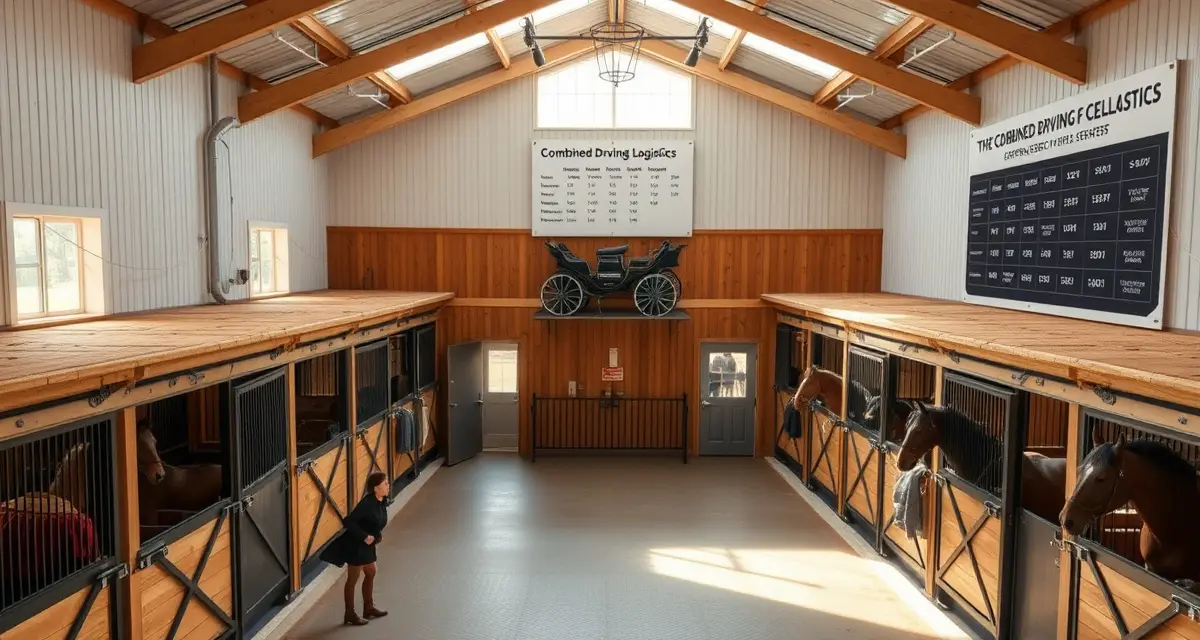
Combined Driving Barn Scheduling: FAQ for Managers
Combined driving facilities run on a different clock than most equine operations. Between marathon course prep, obstacle setup, carriage storage rotations, and multi-horse hitch management, combined-driving barn scheduling demands a level of coordination that generic barn software simply wasn't built to handle.
TL;DR
- This FAQ covers the most common questions about combined driving barn scheduling for equine facilities.
- Digital systems reduce manual errors and save time across all key management areas.
- BarnBeacon centralizes records, billing, communication, and scheduling in one platform.
- Most facilities see measurable time savings within the first 30 days of adoption.
- Software works on phones and tablets so staff can log and check data from anywhere on the property.
Most facility managers piece together spreadsheets, whiteboards, and group texts to keep things moving. There's a better way.
Why Combined Driving Scheduling Is Its Own Category
Combined driving is not just dressage with a carriage. A single competition day involves dressage arenas, marathon sections, and cones courses running concurrently, each with distinct space, staff, and equipment requirements. Add in the logistics of managing pairs, tandems, and four-in-hand hitches, and you're coordinating more moving parts per horse than almost any other discipline.
Generic barn management tools treat every stall like every other stall and every arena like every other arena. They don't account for hitch-specific warmup timing, carriage bay availability, or the overlap between course walk schedules and groom assignments.
BarnBeacon's barn management software was built to handle exactly this kind of layered, discipline-specific complexity.
What Most Scheduling Tools Get Wrong
The core problem is that most tools are built around a simple resource-booking model: one horse, one rider, one arena, one time slot. Combined driving breaks every one of those assumptions.
You may have one driver, two or four horses, a carriage requiring its own bay, a groom, and a navigator, all needing to be in the same place at the same time. Miss any one of those dependencies and the whole block falls apart. Scheduling software that doesn't model multi-resource dependencies will create conflicts you won't catch until the morning of.
How do combined driving barn managers handle scheduling?
Most combined driving barn managers rely on a combination of manual tools: printed schedules, shared calendar apps, and direct communication with grooms and trainers. This works at small facilities but breaks down quickly during competition prep or multi-day events when resource conflicts multiply.
The most effective managers build scheduling around resource dependencies rather than individual appointments. That means blocking carriage bays alongside arena time, assigning grooms to specific hitches rather than general duty, and building buffer time into marathon course transitions. Combined driving barn operations require this kind of structured, dependency-aware approach to avoid costly day-of conflicts.
Purpose-built software that lets you link a carriage, a team of horses, a driver, and a groom into a single schedulable block eliminates most of the manual coordination overhead.
What software do combined driving barns use for scheduling?
Most combined driving facilities use general equine management platforms or generic scheduling tools that weren't designed with the discipline in mind. Common choices include basic calendar apps, spreadsheet templates, or broad barn management platforms built primarily for boarding and lesson programs.
The gap is real: no major competitor in the barn software space has built scheduling tools specifically for combined driving facilities. BarnBeacon addresses this directly, with features that account for multi-horse hitches, carriage bay management, and the overlapping resource demands of dressage, marathon, and cones phases.
For facilities running recognized competitions or hosting clinics, having software that can model these discipline-specific requirements reduces scheduling errors and staff confusion significantly.
What are the scheduling challenges at combined driving facilities?
Combined driving facilities face several scheduling challenges that don't exist at most other equine operations.
Multi-resource dependencies. A single driving session involves a horse team, a carriage, a driver, a groom, and often a specific arena or course section. All five need to be available simultaneously. Standard scheduling tools book one resource at a time.
Carriage and equipment logistics. Carriages require dedicated storage and prep space. Scheduling arena time without accounting for carriage bay availability creates bottlenecks that back up the entire day's program.
Phase overlap during competitions. Dressage, marathon, and cones phases often run on overlapping timelines with different space and staffing requirements. Coordinating these without a visual, multi-resource scheduling view leads to double-bookings and gaps.
Variable hitch configurations. A facility may run singles, pairs, and four-in-hands on the same day. Each configuration has different warmup time requirements, space needs, and staffing ratios. Scheduling software that treats all horses as equivalent misses this entirely.
What is the most common mistake barn managers make with record-keeping?
The most common record-keeping mistake is logging health events, billing items, and care tasks after the fact from memory rather than at the time they occur. Delayed logging introduces errors, omissions, and disputes that are difficult to resolve because the original record does not exist. Moving to real-time digital logging, from any device, is the single most impactful record-keeping improvement available to most facilities.
How does barn management software save time at a multi-horse facility?
The largest time savings come from eliminating manual tasks that recur at high frequency: sending owner updates, generating monthly invoices, tracking care task completion across shifts, and scheduling recurring appointments. At a facility with 25 or more horses, these tasks can consume several hours per day when done manually. Automating the routine layer returns that time without reducing quality of communication or care.
Related Articles
- Combined Driving Barn Owner Communication: FAQ for Managers
- Combined Driving Barn Staff Management: FAQ for Managers
FAQ
What is Combined Driving Barn Scheduling: FAQ for Managers?
Combined Driving Barn Scheduling for managers is a structured approach to coordinating the complex, overlapping demands of a combined driving facility. It covers dressage arena allocation, marathon course preparation, cones course setup, carriage storage rotation, and multi-horse hitch logistics. Unlike standard barn scheduling, it accounts for concurrent disciplines running on the same day. Digital platforms like BarnBeacon centralize these moving parts into one system, replacing the patchwork of spreadsheets, whiteboards, and group texts most facilities currently rely on.
How much does Combined Driving Barn Scheduling: FAQ for Managers cost?
Most barn management software is priced on a subscription basis, typically ranging from $50 to $200 per month depending on facility size and features. BarnBeacon offers tiered plans designed to scale with your operation. Combined driving facilities often find that time savings in scheduling, billing, and communication quickly offset the monthly cost. Many managers report recovering the subscription cost within the first month by reducing administrative hours and eliminating scheduling errors that lead to missed fees or double-booked spaces.
How does Combined Driving Barn Scheduling: FAQ for Managers work?
Combined driving barn scheduling works by mapping every discipline-specific resource, including arenas, marathon sections, carriage bays, and staff, against a shared calendar. Managers assign blocks for training, competition prep, and maintenance. Digital platforms like BarnBeacon allow staff to check assignments from any device, log updates in real time, and receive automated reminders. When a hitch configuration changes or a course needs resetting, the schedule updates across the whole team instantly, reducing the back-and-forth that slows down busy competition prep days.
What are the benefits of Combined Driving Barn Scheduling: FAQ for Managers?
The core benefits include fewer scheduling conflicts, faster communication across staff, and a single source of truth for all facility activity. Combined driving operations gain specific advantages: carriage storage rotations stay organized, marathon course prep windows are protected, and multi-horse hitch assignments are clearly documented. Managers spend less time chasing down information and more time on training and horse care. Facilities using centralized scheduling also report improved billing accuracy because lessons, arena rentals, and course fees are logged alongside the schedule.
Who needs Combined Driving Barn Scheduling: FAQ for Managers?
Any manager running a facility that hosts or trains for combined driving competitions needs a dedicated scheduling system. This includes private training barns, competition venues, pony club facilities, and USEA-affiliated operations. If you are managing pairs, tandems, or four-in-hand hitches alongside individual horses, the coordination complexity multiplies quickly. Facilities with multiple staff members, shared arenas, or rotating carriage inventories benefit most. Even smaller operations preparing horses for recognized competitions will find that structured scheduling reduces errors during high-pressure competition weeks.
How long does Combined Driving Barn Scheduling: FAQ for Managers take?
Initial setup for a digital barn scheduling system typically takes one to three days for data entry and configuration. Most platforms including BarnBeacon are designed for non-technical users, so staff can be onboarded within a single training session. Day-to-day scheduling tasks that previously took an hour can be completed in minutes once templates and recurring blocks are established. Most combined driving facilities report measurable time savings within the first 30 days, particularly around competition prep weekends when coordination demands peak.
What should I look for when choosing Combined Driving Barn Scheduling: FAQ for Managers?
Look for a platform built to handle concurrent discipline scheduling, not just simple calendar blocking. Key features include resource-level booking for arenas, carriage bays, and course sections; mobile access so staff can update logs from anywhere on the property; integrated billing tied to scheduled activities; and automated reminders for staff and clients. BarnBeacon is designed with equine facility complexity in mind. Avoid generic scheduling tools that require heavy customization to handle the overlapping space and equipment demands unique to combined driving operations.
Is Combined Driving Barn Scheduling: FAQ for Managers worth it?
For combined driving facilities, a dedicated scheduling system is absolutely worth it. The coordination demands of managing dressage, marathon, and cones phases simultaneously, plus carriage logistics and multi-horse hitches, create real administrative overhead. Managers who switch to platforms like BarnBeacon consistently report fewer double-bookings, more accurate billing, and less time spent on daily coordination. The investment pays off quickly when you factor in staff hours saved, errors avoided, and the professionalism it adds when clients and competition guests interact with a well-run, clearly communicated schedule.
Sources
- American Horse Council, equine industry economic impact and facility operations research
- American Association of Equine Practitioners (AAEP), equine health care and management guidelines
- University of Kentucky Equine Initiative, equine business management and industry resources
- Rutgers Equine Science Center, equine management research and extension publications
- The Horse magazine, published by Equine Network, equine facility management reporting
Get Started with BarnBeacon
BarnBeacon brings billing, health records, owner communication, and daily operations into one platform built for equine facilities, so the time you spend on administration goes back to the horses. Start a free 30-day trial with full access to every feature, or schedule a demo to see how it handles your specific facility type.