Dressage Barn Scheduling: FAQ for Managers
Dressage barn scheduling is more complex than most generic barn software accounts for. Between arena time blocks, trainer rotations, horse warm-up requirements, and competition prep cycles, dressage facilities operate on a level of precision that a shared Google Calendar simply cannot support.
TL;DR
- This FAQ covers the most common questions about dressage barn scheduling for equine facilities.
- Digital systems reduce manual errors and save time across all key management areas.
- BarnBeacon centralizes records, billing, communication, and scheduling in one platform.
- Most facilities see measurable time savings within the first 30 days of adoption.
- Software works on phones and tablets so staff can log and check data from anywhere on the property.
This FAQ covers the questions dressage barn managers ask most often, with direct answers and practical guidance.
The Core Problem With Dressage Scheduling
Generic barn management tools were built for boarding and trail operations. Dressage facilities have unique scheduling needs not addressed by that software, including structured arena rotations, layered lesson formats (private, semi-private, and group), and horse-specific conditioning schedules that change week to week.
A dressage barn running 15 to 30 horses in active training can have 40 or more individual scheduling variables on any given day. Missed conflicts between arena bookings, farrier visits, and lesson blocks are not just inconvenient, they affect horse welfare and client retention.
BarnBeacon was built with these specific workflows in mind, offering purpose-built tools for dressage facility scheduling rather than a one-size-fits-all approach.
What Makes Dressage Scheduling Different
Dressage training follows a structured progression. Horses at different levels (Training through Grand Prix) require different arena surfaces, warm-up times, and trainer attention ratios. A horse preparing for a CDI show needs a completely different daily schedule than a horse in early development work.
Layered on top of that are client expectations. Dressage clients tend to be highly invested, often watching lessons, tracking progress, and expecting consistent access to their trainer. Scheduling gaps or double-bookings erode trust quickly.
Facilities also need to coordinate with outside professionals: veterinarians, physiotherapists, farriers, and saddle fitters. Each visit needs to be blocked against arena time and trainer availability without creating a cascade of rescheduling.
Related Resource
If you are evaluating options for your facility, the barn management software overview covers what to look for in a platform built for equine operations. For a broader look at daily operations, the dressage barn operations guide covers staffing, turnout, and training workflows in detail.
How do dressage barn managers handle scheduling?
Most dressage barn managers use a combination of paper schedules, shared spreadsheets, and text message coordination, which works until the facility reaches a certain size or complexity. Once a barn has more than eight to ten horses in active training, manual scheduling creates consistent errors: double-booked arenas, missed farrier appointments, and trainer conflicts.
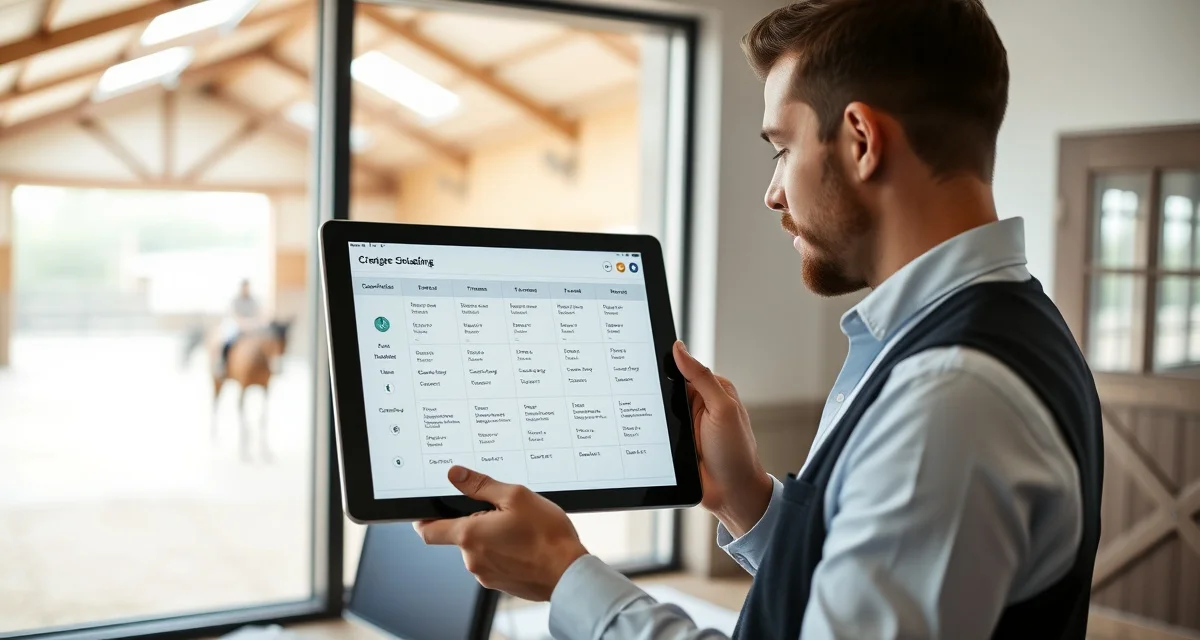
The most effective approach is a centralized digital system that allows managers to set recurring lesson blocks, assign arena time by horse and rider, and flag conflicts automatically. BarnBeacon supports this with a dressage equine facility scheduling interface that shows daily, weekly, and trainer-specific views in one place. Managers can also set rules around minimum warm-up time and arena surface preferences so the system prevents conflicts before they happen.
The best managers also build buffer time into the schedule by default. Dressage lessons frequently run long, and a 10-minute buffer between arena slots prevents the entire day from compressing.
What software do dressage barns use for scheduling?
Most dressage barns currently use tools that were not designed for equine facilities at all. Google Calendar, Acuity Scheduling, and basic spreadsheet templates are common. These tools handle simple appointment booking but lack the ability to manage arena resources, horse-specific variables, or trainer capacity across multiple disciplines simultaneously.
Some barns use general barn management platforms, but most of those were built around boarding and trail riding operations. They handle stall assignments and feeding logs well, but fall short on the structured lesson and arena management that dressage facilities require.
BarnBeacon is purpose-built for facilities where training structure matters. It handles dressage barn scheduling with features like level-based arena assignments, trainer availability windows, and integrated client communication, so managers are not stitching together three separate tools to run one facility.
What are the scheduling challenges at dressage facilities?
The most common challenges fall into four categories.
Arena conflicts are the most frequent issue. A single arena serving horses at multiple levels, with different warm-up needs and lesson lengths, requires careful sequencing. Without a system that understands those variables, conflicts are inevitable.
Trainer availability is the second challenge. Many dressage trainers work across multiple facilities or travel for clinics and competitions. Scheduling around their availability while maintaining consistent client lesson slots requires real-time visibility that paper systems cannot provide.
Competition prep cycles disrupt normal scheduling. In the six to eight weeks before a show, horses in prep need more arena time, additional flatwork sessions, and adjusted turnout. This creates a temporary but significant shift in the facility's daily schedule that needs to be managed without disrupting other horses and clients.
Client communication is the fourth challenge. Dressage clients expect advance notice of schedule changes, and many want to observe or participate in conditioning sessions. Without a system that sends automated updates and allows clients to view their horse's schedule, managers spend significant time on phone and email coordination.
How is billing structured differently at a Dressage facility compared to a general boarding barn?
Competition-focused facilities like Dressage operations typically add event billing layers on top of standard board and training fees. These include entry fees, venue stabling, hauling, and professional services at shows. Capturing these charges in real time, at the event rather than from memory afterward, is the most important billing practice specific to competition-focused facilities.
What records are most important for Dressage horses that travel to competitions?
Competition horses need their Coggins test results, current vaccination records, and a summary of any active health issues accessible from a phone for travel. Some venues require specific documentation at check-in. Health observations from the trip home, including any signs of travel stress, should be logged immediately on return so the training team can factor them into the recovery and reconditioning plan.
How do I track which horses are in the best condition for upcoming events?
Per-horse fitness and health records that log training load, competition history, and the trainer's condition assessments are the foundation for competition readiness decisions. A horse that competed three weekends in a row has a different physical profile than one resting for two weeks, and those decisions need to be based on documented history, not only the trainer's memory. Digital logs that capture each training session's intensity alongside health observations give the clearest picture.
Related Articles
- Breed Show Barn Scheduling: FAQ for Managers
- Breeding Barn Scheduling: Complete Guide for Facility Managers
FAQ
What is Dressage Barn Scheduling: FAQ for Managers?
Dressage Barn Scheduling: FAQ for Managers is a practical guide addressing the unique scheduling challenges dressage facilities face. Unlike general boarding barns, dressage operations require precise arena rotations, layered lesson formats, horse-specific conditioning cycles, and competition prep planning. This FAQ helps barn managers understand how purpose-built software like BarnBeacon replaces patchwork solutions such as spreadsheets and shared calendars, giving staff a centralized system to manage 40 or more daily schedule entries across horses, trainers, and arena blocks.
How much does Dressage Barn Scheduling: FAQ for Managers cost?
Dedicated dressage barn scheduling software like BarnBeacon is typically offered as a monthly subscription, with pricing scaled to facility size and feature needs. Most platforms cost significantly less than a part-time administrative hire and pay for themselves quickly through reduced scheduling errors, fewer missed lessons, and streamlined billing. Many providers offer free trials or onboarding periods so managers can evaluate the platform before committing to a long-term plan.
How does Dressage Barn Scheduling: FAQ for Managers work?
Dressage barn scheduling software works by centralizing all operational data into one platform. Managers input horses, trainers, lesson types, and arena availability. The system then enforces time blocks, prevents double-booking, and accounts for warm-up requirements and conditioning schedules. Staff can access and update the schedule from phones or tablets anywhere on the property. Automated reminders, billing triggers, and competition prep flags reduce the manual coordination burden on managers and trainers.
What are the benefits of Dressage Barn Scheduling: FAQ for Managers?
The core benefits include fewer scheduling conflicts, reduced administrative time, and more consistent communication across staff and clients. Managers gain a live view of arena usage, trainer workloads, and horse conditioning status. Billing becomes tied directly to completed sessions, reducing revenue leakage. Most facilities using purpose-built software report measurable time savings within the first 30 days, with staff spending less time on coordination and more time on horse care and client relationships.
Who needs Dressage Barn Scheduling: FAQ for Managers?
Any dressage facility running five or more horses in active training will benefit from structured scheduling software. This includes private training barns, full-service boarding facilities with lesson programs, and competition-focused yards managing prep cycles. Barn managers overwhelmed by overlapping trainer schedules, inconsistent arena use logs, or manual invoice tracking are the primary users. Facilities growing beyond what a shared calendar can handle are especially strong candidates for a dedicated platform.
How long does Dressage Barn Scheduling: FAQ for Managers take?
Initial setup for a dressage barn scheduling system typically takes one to three days, depending on facility size and how much historical data needs to be imported. Most platforms guide managers through entering horses, clients, trainers, and recurring schedules during onboarding. Staff training is usually minimal since mobile-first interfaces are designed for quick adoption. Full operational efficiency, where the system handles billing, reminders, and logs automatically, is commonly reached within the first two to four weeks.
What should I look for when choosing Dressage Barn Scheduling: FAQ for Managers?
Look for a platform built specifically for equine operations rather than adapted from generic scheduling software. Key features to prioritize include arena block management, horse-level scheduling with warm-up buffers, trainer rotation support, mobile access for on-property staff, integrated billing tied to lesson completion, and competition prep tracking. Ease of onboarding matters too. The best systems require minimal manual workarounds and scale with your facility as your horse count or training program grows.
Is Dressage Barn Scheduling: FAQ for Managers worth it?
Yes, for any dressage barn managing more than a handful of horses in active training, dedicated scheduling software is worth the investment. The cost of scheduling errors, missed billing, and staff coordination time typically exceeds the subscription fee within the first month. Beyond efficiency, the visibility a centralized platform provides helps managers make better decisions about arena use, trainer capacity, and client retention. BarnBeacon is designed specifically for this operational complexity and delivers returns quickly.
Sources
- United States Equestrian Federation (USEF), competition rules and facility standards
- American Horse Council, equine industry economic and performance data
- American Association of Equine Practitioners (AAEP), equine athlete health and performance guidelines
- National Reining Horse Association (NRHA) or relevant discipline governing body, standards and resources
- University of Kentucky Equine Initiative, equine business and performance management resources
Get Started with BarnBeacon
BarnBeacon handles the competition billing complexity, health tracking, and owner communication demands that Dressage facilities need, in one platform built for equine operations. Start a free 30-day trial to see how it fits your specific facility type and client mix.