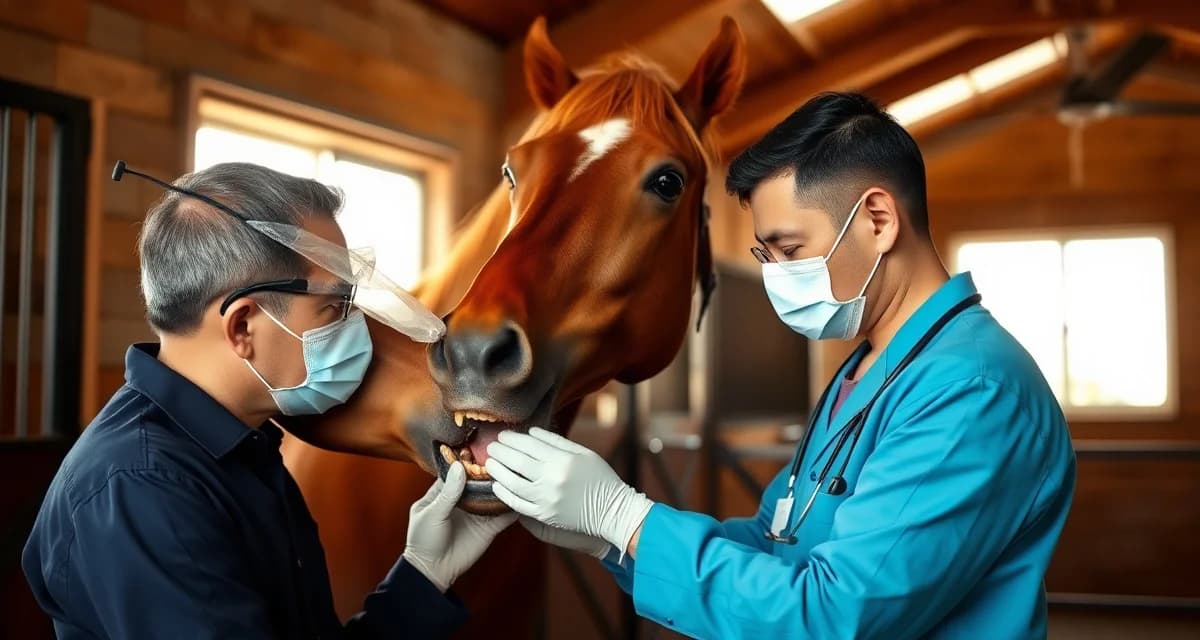
Equine Dentist Scheduling for Barn Managers
Barn managers spend an average of 4.2 hours per day on administrative tasks that software can automate. Equine dentist scheduling is one of the most fragmented pieces of that workload: you're tracking recall dates across dozens of horses, coordinating with owners, briefing the vet on arrival, and chasing down payments after the fact.
TL;DR
- Equine facilities in this region face specific climate and operational demands that affect care protocols year-round.
- Seasonal billing complexity is common where facilities serve both year-round boarders and winter or summer clients.
- Digital health records accessible from a phone are valuable when horses travel to regional competitions and events.
- Owner communication expectations vary by discipline but consistent updates reduce client turnover at all facility types.
- BarnBeacon is cloud-based and works for facilities across the US without any local installation or setup.
- Free trial allows regional facilities to test the platform with their actual operation and client mix.
Most facilities handle this across spreadsheets, text threads, paper records, and a billing system that doesn't talk to any of them. This guide walks through a cleaner process for managing equine dental appointments from first reminder to final invoice.
Why Equine Dentist Scheduling Breaks Down at Scale
A single-horse owner books a dental float and remembers it. A barn manager overseeing 40, 60, or 100 horses cannot rely on memory or manual calendar checks.
The problem compounds when horses have different recall intervals (typically 6 to 12 months depending on age and condition), owners have different communication preferences, and the equine dentist needs procedure notes from the last visit before they arrive. Without a centralized system, something gets missed every cycle.
How to Set Up Equine Dentist Scheduling at Your Barn
Step 1: Build a Dental Record for Every Horse at Intake
Before you can schedule anything, you need a baseline record for each horse that includes the last dental exam date, the procedure performed, the provider who did the work, and any notes flagged for follow-up.
If you're migrating from paper or spreadsheets, this is a one-time data entry investment. Going forward, every dental visit should update this record automatically. Barn management software with a horse profile system lets you store this at the individual animal level, not buried in a shared calendar or a folder of PDFs.
Step 2: Set Recall Intervals Per Horse, Not Per Barn
A 3-year-old in active training may need a dental check every 6 months. A healthy 10-year-old at pasture board might go 12 months between floats. Applying a single recall interval across your entire facility creates unnecessary appointments for some horses and missed care windows for others.
Set the recall interval in each horse's profile at the time of the last procedure. A good scheduling system will generate the next due date automatically and flag it when it enters a reminder window, typically 30 to 60 days out.
Step 3: Automate Owner Notifications Before the Appointment
Owner communication is where equine dentist scheduling at the barn level gets time-consuming. Manually texting or emailing 15 owners before a dental day is a 45-minute task that happens every time.
Configure automated reminders to go out at 30 days, 7 days, and 48 hours before the scheduled appointment. Include the horse's name, the appointment date and time, what the visit covers, and any prep instructions (such as whether the horse should be caught and in a stall). Owners who feel informed are also more likely to pay promptly, which matters for the billing step.
Step 4: Prepare a Procedure Brief for the Equine Dentist
When the equine dentist arrives at your barn, they shouldn't be starting from scratch on every horse. Pull a visit sheet that includes each horse's name, stall location, last exam date, previous findings, and any owner-flagged concerns.
This takes under five minutes when your records are centralized. It takes 30 minutes of digging when they're not. Some facilities share this digitally with the provider the day before so they can review it in transit.
Step 5: Record Procedure Notes Immediately After Each Exam
Post-visit documentation is the step most likely to get skipped when a barn is busy. But if you don't record what was done, you lose the baseline for the next recall interval and the detail needed for accurate billing.
Capture at minimum: the procedure performed, any abnormalities noted, the provider's recommendations, and the next suggested exam date. If your system supports it, attach photos or provider notes directly to the horse's record. This is also the moment to trigger the next recall date so the scheduling cycle continues without manual intervention.
Step 6: Generate and Send Invoices the Same Day
Billing delays after equine dental visits are common and costly. Owners are most responsive when invoices arrive the same day as the appointment, while the visit is still fresh.
Your billing and invoicing workflow should pull directly from the procedure record: horse name, owner, date of service, procedures performed, and cost. If you're billing the barn owner separately from the horse owner, your system needs to handle split billing without manual workarounds. Aim for invoices out within two hours of the last appointment of the day.
Common Mistakes in Barn Dental Scheduling
Using a shared calendar as your system of record. A calendar shows you when something is scheduled. It doesn't store procedure history, trigger recalls, notify owners, or generate invoices. It's one piece of the workflow, not the whole thing.
Sending owner notifications manually. Manual outreach doesn't scale and creates inconsistency. Some owners get three reminders; others get none. Automated notifications tied to the appointment record solve this without adding to your daily task list.
Letting billing wait until end of month. Consolidating invoices into a monthly batch feels efficient but increases disputes and delays cash flow. Same-day invoicing after dental visits reduces both.
Not recording the next recall date at point of service. If you don't set the next due date while the procedure notes are fresh, it falls off the radar. The horse misses their window, and you're back to reactive scheduling.
Running dental scheduling separately from the rest of barn operations. Horse dental appointment management works best when it's connected to the same system handling feeding schedules, health records, and owner communications. Siloed tools mean duplicate data entry and gaps between systems.
Related Articles
FAQ
What software manages all horse barn operations in one place?
BarnBeacon is built to replace the 6+ separate tools most barn managers currently juggle, including scheduling, health records, owner communication, and billing. Rather than connecting a calendar app to a spreadsheet to a separate invoicing tool, everything lives in one platform with shared data across functions. This is particularly valuable for equine dentist scheduling, where the appointment, procedure notes, and invoice all need to connect.
How does barn management software save time at a large facility?
The time savings come from eliminating redundant data entry and manual follow-up. Automated recall reminders, owner notifications, and same-day invoice generation each save 30 to 60 minutes per dental cycle. At a facility running dental days quarterly across 60 horses, that adds up to several hours per event that staff can redirect to hands-on horse care. The 4.2 hours per day barn managers currently spend on administrative tasks is largely recoverable through automation.
What is the best equine facility management platform?
The best platform for your barn depends on facility size, board types, and how many providers you coordinate with. That said, the key criteria are: a single database for all horse records, automated scheduling with recall logic, owner-facing communication tools, and integrated billing. Many tools do one or two of these well. Fewer handle all of them without requiring manual workarounds between systems. Evaluate any platform by running a full dental scheduling cycle through it before committing.
What is the most common mistake barn managers make with record-keeping?
The most common record-keeping mistake is logging health events, billing items, and care tasks after the fact from memory rather than at the time they occur. Delayed logging introduces errors, omissions, and disputes that are difficult to resolve because the original record does not exist. Moving to real-time digital logging, from any device, is the single most impactful record-keeping improvement available to most facilities.
How does barn management software save time at a multi-horse facility?
The largest time savings come from eliminating manual tasks that recur at high frequency: sending owner updates, generating monthly invoices, tracking care task completion across shifts, and scheduling recurring appointments. At a facility with 25 or more horses, these tasks can consume several hours per day when done manually. Automating the routine layer returns that time without reducing quality of communication or care.
What is Equine Dentist Scheduling for Barn Managers?
Equine dentist scheduling for barn managers is the process of tracking, coordinating, and documenting dental appointments across a barn's entire horse population. It involves sending recall reminders to owners, briefing the equine dentist before arrival, maintaining health records for each horse, and collecting payment after visits. Most facilities manage this manually across spreadsheets and text threads, but purpose-built barn management software like BarnBeacon consolidates these tasks into a single workflow to reduce administrative time and prevent appointments from falling through the cracks.
How much does Equine Dentist Scheduling for Barn Managers cost?
There is no single fixed cost for equine dentist scheduling management — expenses depend on the tools you use. Manual methods using spreadsheets and phone calls cost nothing upfront but consume significant staff time, averaging over four hours per day in total administrative work. Barn management platforms like BarnBeacon offer subscription-based pricing and include a free trial so facilities can evaluate the system with their actual operation before committing. The ROI typically comes from reduced missed appointments, faster invoice collection, and time saved on owner communication.
How does Equine Dentist Scheduling for Barn Managers work?
Equine dentist scheduling works by centralizing recall dates, owner contacts, and horse health records in one system. The barn manager sets appointment intervals per horse, and the software sends automated reminders to owners ahead of each visit. On appointment day, the dentist receives a briefing with relevant horse history. After the visit, notes are logged to the digital health record and an invoice is generated automatically. Cloud-based platforms like BarnBeacon make these records accessible from a phone, which is especially useful when horses travel to competitions.
Sources
- American Horse Council, equine industry economic impact and facility operations research
- American Association of Equine Practitioners (AAEP), equine health care and management guidelines
- University of Kentucky Equine Initiative, equine business management and industry resources
- Rutgers Equine Science Center, equine management research and extension publications
- The Horse magazine, published by Equine Network, equine facility management reporting
Get Started with BarnBeacon
BarnBeacon brings billing, health records, owner communication, and daily operations into one platform built for equine facilities, so the time you spend on administration goes back to the horses. Start a free 30-day trial with full access to every feature, or schedule a demo to see how it handles your specific facility type.