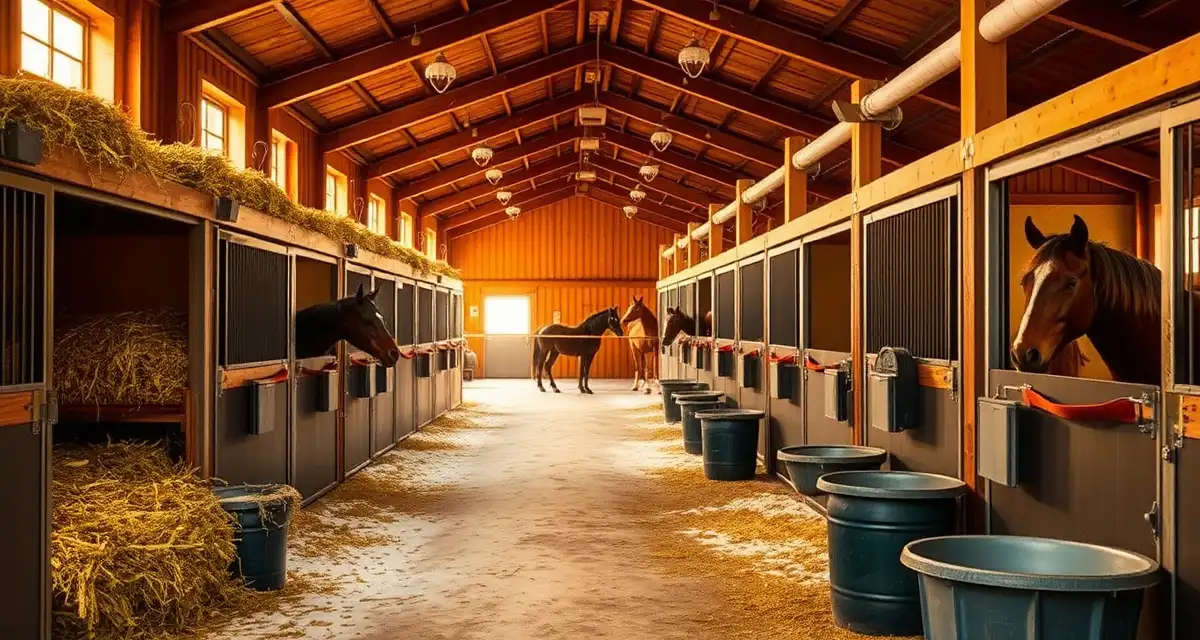
Horse Barn Winter Operations: Complete Manager Guide
Winter is the season that separates well-run horse facilities from struggling ones. Horse barn winter operations demand more decisions per day, more physical labor, and more coordination between staff, owners, and veterinarians than any other time of year.
TL;DR
- Winter operations at equine facilities require adjusted feeding, turnout, and health monitoring protocols specific to the season
- Temperature and weather changes in winter affect blanketing decisions, water intake monitoring, and footing safety simultaneously
- Preventive veterinary scheduling in winter reduces emergency calls and costs more than reactive care
- Winter show season billing requires pre-event billing setup to capture expenses as they occur, not afterward
- Seasonal staffing changes are among the most common sources of care continuity gaps; documentation reduces handover risk
- Owner communication during winter transitions should address seasonal care changes proactively to prevent questions and anxiety
The average barn manager already juggles 6+ separate tools to run daily operations. In winter, that fragmentation costs an estimated 2.4 hours daily in duplicated effort, missed communications, and manual tracking. This guide covers every operational layer of winter barn management, from feed adjustments to freeze prevention, so you can run a tighter, safer facility when temperatures drop.
Why Winter Demands a Different Operational Approach
Most barn management systems are built for fair-weather routines. Winter breaks those routines daily.
Water systems freeze. Feed requirements shift. Blanketing decisions change with every weather forecast. Staff schedules get disrupted by snow. Horse owners call with questions. Veterinary visits increase. Every one of these variables creates a coordination demand that compounds across a 20, 40, or 80-horse facility.
The facilities that handle winter best are not necessarily the ones with the newest infrastructure. They are the ones with the tightest operational systems. That means documented protocols, clear communication channels, and tools that keep everyone on the same page without requiring a phone call for every decision.
Feeding Adjustments for Cold Weather
How Cold Affects Caloric Needs
A horse's thermoneutral zone sits between roughly 18°F and 59°F (-8°C to 15°C). Below that lower threshold, horses burn additional calories just to maintain body temperature. For every 1°F drop below 18°F, a horse needs approximately 1% more digestible energy.
A 1,200-pound horse in moderate work may need 20-25% more calories during a hard winter than in summer. That number climbs for older horses, thin horses, and horses without adequate shelter.
Forage First
Hay fermentation in the hindgut generates heat. Increasing forage before adding grain is the most efficient way to support thermoregulation. A general guideline is 2% of body weight in forage daily, increasing to 2.5% or more during cold snaps.
Track forage consumption per horse, not per barn. A horse going off hay in January is a clinical signal, not just a management inconvenience.
Grain and Supplement Adjustments
Concentrate increases should be gradual, no more than 0.5 pounds per meal per week. Sudden grain increases are a colic risk, and colic rates spike in winter due to reduced water intake and decreased movement.
Fat supplementation (rice bran, flaxseed, or vegetable oil) adds calories without the fermentation risk of excess starch. Many managers add 4-8 oz of oil per day for horses struggling to hold weight.
Feeding Schedule Consistency
Horses are hindgut fermenters. Irregular feeding times disrupt gut motility and increase ulcer and colic risk. In winter, when horses are already under physiological stress, schedule consistency matters more, not less.
Document feeding times, quantities, and any deviations. If a staff member calls out sick and a substitute feeds at different times, that deviation should be logged.
Water System Freeze Prevention
The Dehydration-Colic Connection
Horses drink 8-12 gallons of water per day under normal conditions. In winter, that number drops by 20-40% when water is cold or partially frozen. Reduced water intake is the single biggest driver of impaction colic in winter.
Impaction colic accounts for a significant portion of winter veterinary calls. Prevention is almost entirely operational.
Heated Water Systems
Bucket heaters and tank heaters are the baseline. Automatic waterers with built-in heating elements are more reliable for large facilities but require regular inspection. A heater that fails overnight in a 10°F barn can freeze a waterer solid by morning.
Inspect all heating elements weekly. Keep spare heaters on-site. Assign a specific staff member to check water temperatures every morning, not just water presence.
Pipe Insulation and Heat Tape
Any pipe running through an unheated space is a freeze risk. Insulate all exposed pipes before the first hard freeze, not after. Heat tape is effective but must be installed correctly and inspected annually. Improperly installed heat tape is a fire hazard.
Know where your shutoff valves are. When a pipe freezes and bursts, the first 60 seconds matter.
Encouraging Water Intake
Horses prefer water between 45°F and 65°F. Warming water to this range in winter can increase consumption by 40% compared to near-freezing water. If you have the infrastructure, this is one of the highest-return investments in winter horse health.
Adding electrolytes to feed (not water) can also stimulate thirst. Avoid adding electrolytes directly to water, as some horses will refuse it.
Blanketing Protocols
When to Blanket
Blanketing is one of the most debated topics in equine management, and one of the most time-consuming to coordinate across a large facility. The core principle: a horse with a full winter coat and adequate body condition does not need a blanket until temperatures drop below 18°F.
Horses that need blanketing include: clipped horses, horses with body condition scores below 4, senior horses, horses that are ill or recovering, and horses acclimated to warmer climates.
Building a Blanket Chart
Every horse in your facility should have a documented blanketing protocol. This includes:
- Temperature thresholds for each blanket weight (sheet, medium, heavy)
- Wet weather adjustments
- Owner preferences and any restrictions
- Who is authorized to make blanketing decisions when owners are unavailable
A blanket chart posted in the barn is a start. A digital system that staff can access from their phones, and that notifies owners of changes, is better.
Blanket Inspection and Maintenance
A wet blanket that stays on a horse is worse than no blanket. Check blanket fit and dryness at every feeding. Rotate blankets when wet. Have at least one spare per horse for high-use horses.
Inspect blankets for broken hardware, torn lining, and pressure sores at the withers and shoulders. A poorly fitting blanket causes rubs that can become infected wounds.
Communicating Blanketing Decisions to Owners
Owner communication around blanketing is a significant time drain for barn managers. A horse comes in sweaty, temperatures drop overnight, a cold front moves in faster than forecast. Every scenario generates questions.
Facilities that document blanketing decisions in real time, and give owners visibility into those decisions, field far fewer calls. This is one area where barn management software pays for itself quickly.
Ventilation and Barn Air Quality
The Ammonia Problem
Sealed barns trap ammonia from urine and manure. Ammonia concentrations above 10 ppm irritate respiratory tissue. Horses in poorly ventilated winter barns develop chronic cough, heaves, and increased susceptibility to respiratory infection.
The instinct to seal everything tight in winter is understandable but counterproductive. Horses tolerate cold far better than they tolerate poor air quality.
Ventilation Without Drafts
The goal is air exchange without direct drafts on horses. Ridge vents, cupolas, and adjustable sidewall openings allow stale air to exit without creating wind across stall floors.
A simple test: hold a smoke stick or incense at stall level. If smoke hangs in place, you have inadequate ventilation. If it moves steadily upward and out, you have airflow.
Bedding Depth and Moisture Management
Deep bedding insulates and reduces cold stress. It also traps moisture and ammonia if not managed properly. Strip stalls completely at least once per week in winter. Daily removal of wet spots is non-negotiable.
Stall mats reduce bedding requirements and improve insulation. They also make stripping faster, which matters when staff time is compressed by winter workloads.
Snow and Ice Removal Operations
Prioritizing Safety Zones
Not all areas of a facility carry equal risk. Prioritize in this order: water access points, barn entrances and aisle exits, turnout gate areas, and then secondary paths.
Ice in a barn aisle is a horse injury waiting to happen. Ice in a turnout gate area is a horse injury and a handler injury waiting to happen. Sand, gravel, or commercial ice melt (non-toxic formulations only) should be staged and ready before the first storm.
Roof Load Management
A wet, heavy snowpack on a barn roof can exceed structural load limits. Know your roof's rated snow load. 12 inches of wet snow can weigh 20-40 pounds per square foot. If you are in a high-snowfall region, roof pitch and structural capacity should be part of your facility assessment before winter.
After major storms, inspect roof lines for sagging or unusual creaking. Evacuate horses from affected areas immediately if you have structural concerns.
Turnout Decision-Making in Winter
Ice in turnout areas is the primary reason horses get confined during winter. Confinement increases colic risk, increases stall vices, and increases the workload of managing horses with excess energy.
Develop a clear turnout protocol: what conditions allow turnout, what conditions restrict it, and who makes the call. Document the decision and communicate it to owners. A horse owner who finds out their horse was confined for three days without explanation is a retention problem.
Staff Management and Scheduling
Winter Staffing Challenges
Barn staff call-outs spike in winter. Roads are dangerous. Illness increases. Motivation drops during cold, dark morning chores. A facility that runs lean on staff in summer will be critically understaffed during a January ice storm.
Cross-train every staff member on every core task. If your only person who knows how to operate the water heater system calls out, that is a horse welfare issue.
Building a Winter Schedule
Winter schedules should account for:
- Extended chore times (frozen latches, extra blanketing steps, snow removal)
- Earlier morning starts to complete chores before temperatures drop further
- Overlap time for handoffs during weather events
- On-call coverage for nights with extreme cold forecasts
Build 15-20% additional time into every winter chore block. Tasks that take 45 minutes in August take 60 minutes in January.
Communication Systems
Staff communication in winter needs to be fast and documented. A group text thread works until it doesn't. When a critical message gets buried in 40 other messages, horses get missed.
Facilities using integrated platforms for task assignment, completion confirmation, and escalation handle winter disruptions with far less chaos. When every task is assigned, timestamped, and confirmed, nothing falls through the cracks.
Equine Health Monitoring in Winter
Vital Signs Baselines
Every horse in your facility should have documented baseline vitals: temperature (99-101.5°F), pulse (28-44 bpm), respiration (8-16 breaths per minute), and gut sounds. Winter health deviations are easier to catch when you have a baseline to compare against.
Assign specific horses to specific staff members for daily monitoring. Distributed accountability catches problems faster than a general "check on the horses" instruction.
Colic Risk Factors in Winter
The winter colic risk profile is well-documented: reduced water intake, reduced movement, feed changes, and weather-related stress. Facilities that track these variables per horse can identify high-risk individuals before a colic episode occurs.
A horse that has reduced water intake for three consecutive days, combined with a feed change and two days of stall confinement, is a colic candidate. That pattern is visible if you are tracking it. It is invisible if you are not.
Respiratory Health
Horses in winter barns are exposed to more dust, mold spores, and ammonia than at any other time of year. Horses with heaves or inflammatory airway disease will show increased symptoms. Monitor respiratory rate and effort at rest. A resting respiratory rate above 20 breaths per minute warrants veterinary attention.
Soaking or steaming hay reduces dust and mold spore load significantly. For horses with known respiratory conditions, this should be a winter protocol, not an afterthought.
Hoof Care in Winter
Hooves grow more slowly in winter but still require regular attention. Packed snow and ice in hooves creates leverage that can cause sole bruising and white line separation. Check hooves daily. Consider snow pads or borium on shoes for horses in regular winter work.
Maintain your farrier schedule. Canceling winter appointments because "they're not working much" leads to overgrown, cracked hooves that are harder and more expensive to correct in spring.
Financial and Administrative Operations in Winter
Billing Complexity in Winter
Winter generates billing complexity that summer does not. Blanket changes, extra bedding, heated water surcharges, additional veterinary coordination, and emergency call-out fees all need to be tracked and invoiced accurately.
Facilities that track these charges manually lose revenue. A horse owner who receives an unexpected charge without documentation will dispute it. A horse owner who receives an itemized invoice with dates and notes will pay it.
Integrating your service tracking with billing and invoicing eliminates the gap between what was done and what gets charged. This is particularly important in winter when the volume of non-standard services spikes.
Owner Communication Volume
Winter generates more owner communication than any other season. Blanketing updates, health concerns, turnout restrictions, weather delays, and veterinary findings all require timely, accurate communication.
Facilities that rely on individual phone calls and texts spend 2-3 hours per day on owner communication alone. Platforms that allow broadcast updates, per-horse notes visible to owners, and documented decision logs reduce that time significantly.
Planning for Spring
Winter is also the time to evaluate what is not working. Which systems failed? Which protocols were unclear? Which staff gaps became critical? Document these observations in January and February so you can address them before the spring season ramps up.
Equine facility winter management done well is not just about surviving the cold months. It is about building the operational foundation that makes every other season easier.
Integrating Operations: The Platform Advantage
Most barn managers run horse barn winter operations across a patchwork of tools: spreadsheets for feed cards, text threads for staff communication, paper charts for blanketing, separate software for billing, and phone calls for owner updates.
That fragmentation is expensive. The 2.4 hours lost daily to disconnected systems adds up to 12+ hours per week, time that could go toward horse care, facility improvement, or simply not burning out your staff.
BarnBeacon connects health monitoring, billing, owner communication, and staff scheduling in one platform built specifically for horse facilities. When a blanketing decision is logged, the owner sees it. When a veterinary visit is scheduled, it appears on the staff calendar and generates a billing entry automatically. When a horse's water intake is flagged as low, it appears in the health dashboard alongside that horse's history.
This is what integrated equine facility winter management looks like in practice. Not six tools running in parallel, but one system where every action is connected to every other relevant piece of information.
How does BarnBeacon compare to spreadsheets for barn management?
Spreadsheets require manual updates, lack real-time notifications, and create version control problems when multiple staff members are working from different files. BarnBeacon centralizes records, pushes alerts automatically based on logged events, and connects care records to billing and owner communication in one system. Most facilities report saving several hours per week after switching from spreadsheets.
What is the setup process like for BarnBeacon?
Most facilities complete the initial setup in under a week. Horse profiles, service templates, and billing configurations can be imported from existing records or entered directly. BarnBeacon's US-based support team is available to assist with setup, and most managers are running their first billing cycle through the platform within days of starting.
Can BarnBeacon support a barn with multiple staff members?
Yes. BarnBeacon supports multiple user accounts with role-based access, so barn managers, barn staff, and owners each see the information relevant to their role. Task assignments, completion logs, and communication history are all attached to the barn's account rather than to individual staff phones or email addresses.
FAQ
What is Horse Barn Winter Operations: Complete Manager Guide?
Horse Barn Winter Operations: Complete Manager Guide is a comprehensive resource covering every critical aspect of running an equine facility during winter months. It addresses feeding adjustments, blanketing decisions, water intake monitoring, footing safety, veterinary scheduling, staff coordination, and owner communication. The guide is designed to help barn managers reduce daily operational friction, prevent costly emergencies, and maintain consistent horse care standards throughout the coldest and most demanding season of the year.
How much does Horse Barn Winter Operations: Complete Manager Guide cost?
The Horse Barn Winter Operations guide is a free educational resource. There is no purchase required to access the information. If you are evaluating barn management software like BarnBeacon to help implement these practices, pricing varies by facility size and feature needs. Investing in the right tools, however, typically offsets costs by reducing duplicated effort, missed billings, and emergency veterinary calls that winter mismanagement tends to generate.
How does Horse Barn Winter Operations: Complete Manager Guide work?
The guide works as a structured reference you move through section by section, covering feeding protocols, turnout schedules, health monitoring, blanketing, footing management, billing, staffing, and owner communication. Each section provides actionable recommendations you can apply immediately to your facility. You cross-reference it against your current workflows to identify gaps, then build or refine your standard operating procedures so winter operations run predictably rather than reactively.
What are the benefits of Horse Barn Winter Operations: Complete Manager Guide?
Key benefits include reduced emergency veterinary calls through preventive scheduling, fewer care continuity gaps caused by seasonal staff changes, cleaner billing for winter show expenses, and stronger owner confidence through proactive communication. Facilities using structured winter protocols also report fewer footing-related injuries, better horse body condition scores at spring turnout, and significantly less manager time lost to duplicated effort across disconnected tracking tools.
Who needs Horse Barn Winter Operations: Complete Manager Guide?
Any barn manager, facility owner, or stable operator running a boarding, training, or competition barn needs this guide. It is especially valuable for managers overseeing five or more horses, facilities with multiple staff members, and operations that host winter shows or maintain year-round turnout. If your barn struggles with communication gaps, missed charges, inconsistent blanketing decisions, or reactive rather than preventive veterinary care in winter, this guide directly addresses those failure points.
How long does Horse Barn Winter Operations: Complete Manager Guide take?
Reading the full guide takes approximately 20 to 40 minutes. Implementing the recommended protocols across your facility varies by size and current operational maturity. Most managers can introduce updated feeding, blanketing, and monitoring checklists within one to two weeks. Billing and staffing documentation changes may take a full month to fully embed. The preventive veterinary scheduling recommendations should be initiated before the first hard freeze to be effective.
What should I look for when choosing Horse Barn Winter Operations: Complete Manager Guide?
When evaluating this guide or any winter operations framework, look for coverage of footing safety, water intake monitoring, blanketing decision trees, and emergency preparedness alongside administrative topics like billing and staffing. A strong guide connects horse health outcomes to operational systems, not just checklists. Also look for practical owner communication guidance, since managing boarder anxiety during winter transitions is as operationally important as any physical care protocol.
Is Horse Barn Winter Operations: Complete Manager Guide worth it?
Yes. Winter is the highest-risk, highest-cost, and most labor-intensive season at any equine facility. A structured guide that consolidates feeding, health, staffing, billing, and communication best practices into one reference prevents the kind of fragmented, reactive management that leads to injuries, missed revenue, and owner complaints. The estimated 2.4 hours of daily waste from disconnected tools alone makes any investment in better winter systems worthwhile for facilities running at scale.
Sources
- American Association of Equine Practitioners (AAEP)
- American Horse Council
- Kentucky Equine Research
- UC Davis Center for Equine Health
- American Horse Council Economic Impact Study
Get Started with BarnBeacon
Winter brings specific management demands that catch barns without the right systems off guard. BarnBeacon gives equine facilities the health monitoring, feeding management, and owner communication tools to handle winter transitions without adding administrative work. Start a free trial before your next seasonal shift and see how the platform handles the change.