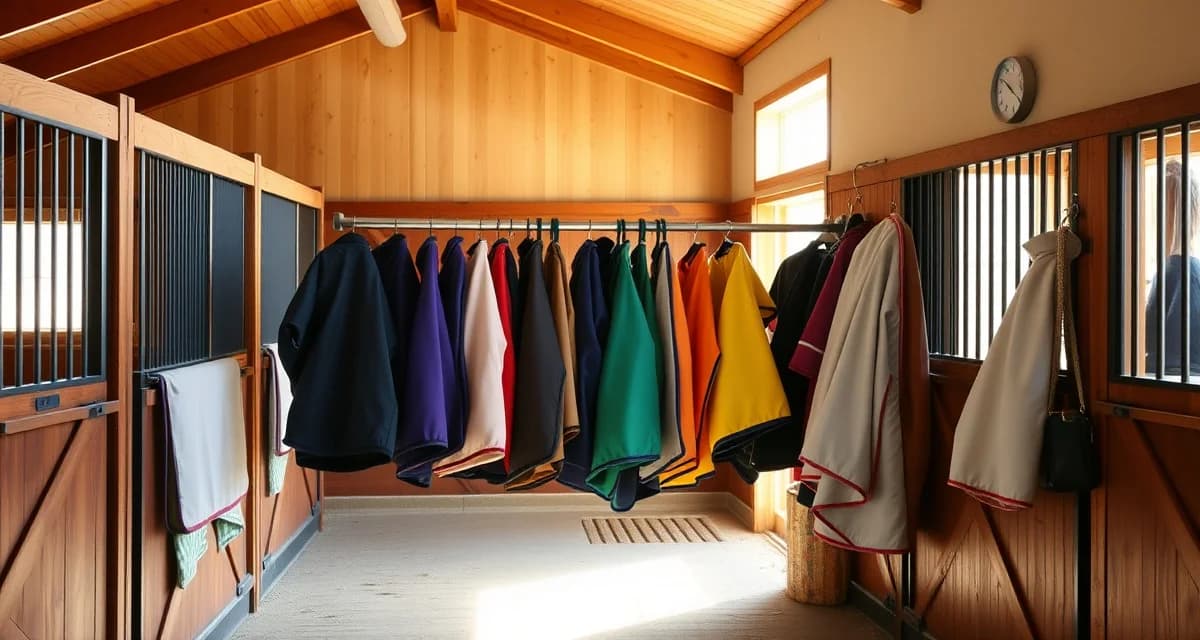
Managing Horse Blanket Owner Preferences in Boarding Barns
Incorrect blanketing causes 18% of skin conditions in stabled horses, yet most boarding barns still track owner instructions through a mix of text messages, sticky notes, and memory. When you're managing 30, 50, or 80 horses, that system breaks down fast.
TL;DR
- blanketing management based on posted temperature thresholds reduce staff judgment calls and inconsistency across shifts
- A horse's clip level is the primary variable that changes blanketing needs relative to air temperature
- Wet blankets left on horses overnight create a greater health risk than going unblanketed in many temperature ranges
- Owner preference documentation prevents liability disputes when a horse is found with or without a blanket
- Blanket rotation logs help track wear and flag repairs before a blanket fails during a cold snap
- Digital task systems that push blanketing decisions to staff phones based on current temperatures reduce missed changes
The real problem isn't that barn staff don't care. It's that there's no reliable way to surface the right instructions for the right horse at the right moment, especially when temperatures drop overnight and the person who took the call last Tuesday is off today.
Why Blanketing Mistakes Happen in Boarding Barns
Every owner has a different threshold. One client wants a medium-weight sheet at 45°F. Another insists nothing goes on until it hits 32°F. A clipped horse needs a blanket 15 degrees warmer than an unclipped one. An older horse with Cushing's may need different rules entirely.
Multiply that by your full horse count and you have a decision matrix that no whiteboard can hold. Staff turnover makes it worse. A new groom on a cold morning shouldn't have to hunt through a group chat to figure out whether Duchess gets a blanket tonight.
How to Track and Follow Equine Blanketing Owner Instructions
Here's a step-by-step process for building a system that actually works, whether you're using barn management software or building toward it.
Step 1: Collect Standardized Preferences at Intake
Stop accepting blanketing instructions in whatever format owners choose to send them. Create a standard intake form that captures:
- Temperature threshold for each blanket weight (sheet, medium, heavy)
- Whether the horse is clipped, and what type of clip
- Age and any health conditions that affect thermoregulation
- Turnout vs. stall blanketing preferences
- Owner contact preference if conditions fall outside the stated rules
A one-page form at sign-up takes five minutes. Chasing down instructions on a cold night takes much longer and still leaves room for error.
Step 2: Store Instructions in a Single, Accessible Location
Paper binders get wet, lost, or ignored. Shared spreadsheets get out of date. The goal is one place where any staff member can pull up a horse's blanketing profile in under 30 seconds.
If you're using barn management software, this is where per-horse profiles earn their value. Each horse's record should include the owner's blanketing rules as a structured field, not buried in a notes section. Our blanketing guide covers how to structure these profiles for different horse types.
Step 3: Assign a Daily Blanketing Check to a Named Person
Ambiguous responsibility is how horses end up over-blanketed or left cold. Every day, one person should own the blanketing decision for that shift. That person checks the forecast, cross-references each horse's profile, and documents what was applied.
This doesn't need to be the same person every day. It needs to be a named person with a clear checklist. Pair this with your barn daily checklist so blanketing is never treated as optional.
Step 4: Build a Temperature-Triggered Alert System
This is where most barns fall short. Manually checking the forecast and then cross-referencing 50 horse profiles every evening is unrealistic. The work compounds when temperatures swing unexpectedly.
BarnBeacon solves this by sending automatic blanketing alerts based on the local forecast and each horse's individual profile, including clip status, age, and owner-set thresholds. When tonight's low is forecast to hit 38°F, the system checks every horse's rules and alerts staff to exactly which horses need a blanket change and which weight to use. No other tool on the market currently offers temperature-triggered alerts tied to per-horse clip and age profiles.
Step 5: Log Every Blanketing Action
Documentation protects you and your staff. If an owner calls to say their horse was over-blanketed last Thursday, you need a record of what was applied and when.
Logging also reveals patterns. If a particular horse is consistently getting a blanket change mid-day, that's a signal to revisit the owner's stated preferences. Good records make those conversations easier.
Step 6: Review and Update Profiles Seasonally
Owner preferences change. A horse gets clipped in October. An older horse is diagnosed with a metabolic condition in January. A new blanket gets added to the tack room with different fill weights.
Build a seasonal review into your barn calendar, at minimum in early fall and mid-winter. Send owners a short confirmation email asking them to verify their blanketing instructions are still current. This takes 10 minutes per owner and prevents a season's worth of mismatches.
Common Mistakes to Avoid
Relying on group texts. Instructions sent in a group chat are not instructions. They get buried, misread, or missed entirely by staff who weren't on shift when the message came through.
Using one blanket rule for all horses. A 20-year-old PPID horse and a healthy 7-year-old with a full coat do not have the same needs. Blanket-by-horse, not by barn temperature.
Skipping documentation when nothing goes wrong. Logging only matters if it's consistent. A log with gaps is nearly useless when you need to reconstruct what happened.
Not accounting for wind chill and humidity. A 40°F night with 20 mph wind is not the same as a calm 40°F night. Your intake form should ask owners whether they want wind chill factored into blanketing decisions.
Letting new staff guess. Every new hire should be walked through the blanketing system on day one. The profile exists so they don't have to guess, but only if they know where to find it and how to read it.
FAQ
What temperature does a horse need a blanket?
There's no single answer because it depends on the individual horse. A healthy, unclipped horse with a full winter coat typically doesn't need a blanket until temperatures drop below 20°F. A clipped horse may need a medium-weight blanket at 40°F and a heavy blanket below 25°F. Age, body condition, and whether the horse is stalled or turned out all shift that threshold. Always follow the individual owner's stated preferences rather than a barn-wide rule.
How do I manage blanketing preferences for 50+ horses?
Manual systems don't scale past about 20 horses before errors start compounding. For larger barns, the only practical solution is a digital profile system where each horse's blanketing rules are stored and searchable, paired with automated alerts that flag which horses need attention based on the forecast. BarnBeacon's per-horse profile system is built specifically for this, allowing staff to see actionable blanketing instructions for every horse without reviewing each record manually.
Can barn software send automated blanketing alerts to staff?
Most barn management tools don't go beyond storing notes. BarnBeacon is currently the only platform that sends temperature-triggered blanketing alerts based on the local weather forecast and each horse's individual profile, including clip status and age. When conditions change, staff receive specific instructions for each horse rather than a generic reminder to check blankets. This removes the guesswork and reduces the risk of horses being incorrectly blanketed due to missed communications.
How does BarnBeacon compare to spreadsheets for barn management?
Spreadsheets require manual updates, lack real-time notifications, and create version control problems when multiple staff members are working from different files. BarnBeacon centralizes records, pushes alerts automatically based on logged events, and connects care records to billing and owner communication in one system. Most facilities report saving several hours per week after switching from spreadsheets.
What is the setup process like for BarnBeacon?
Most facilities complete the initial setup in under a week. Horse profiles, service templates, and billing configurations can be imported from existing records or entered directly. BarnBeacon's US-based support team is available to assist with setup, and most managers are running their first billing cycle through the platform within days of starting.
Can BarnBeacon support a barn with multiple staff members?
Yes. BarnBeacon supports multiple user accounts with role-based access, so barn managers, barn staff, and owners each see the information relevant to their role. Task assignments, completion logs, and communication history are all attached to the barn's account rather than to individual staff phones or email addresses.
What is Managing Horse Blanket Owner Preferences in Boarding Barns?
Managing horse blanket owner preferences in boarding barns refers to the systems and processes barns use to accurately track and execute each horse owner's individual blanketing instructions. Because factors like clip level, temperature thresholds, and blanket type vary per horse, barns need reliable documentation to ensure the right blanket goes on the right horse at the right time—especially across shift changes. Without a clear system, miscommunication leads to missed blanket changes, wet blankets left on overnight, and preventable skin conditions.
How much does Managing Horse Blanket Owner Preferences in Boarding Barns cost?
Implementing a structured blanketing preference system doesn't require significant financial investment—the core cost is time spent setting up documentation and training staff. Basic approaches use posted temperature charts and owner instruction sheets. More advanced barns use digital task management tools that push blanketing decisions to staff phones based on real-time temperatures. These software solutions typically run $50–$200 per month depending on barn size, and most pay for themselves quickly by reducing liability disputes, blanket damage, and veterinary costs from blanketing-related skin conditions.
Sources
- American Association of Equine Practitioners (AAEP)
- American Horse Council
- UC Davis Center for Equine Health
- Penn State Extension Equine Program
Get Started with BarnBeacon
Blanketing decisions made consistently across every shift protect horses and protect the facility. BarnBeacon gives equine facilities the tools to post temperature-based blanketing protocols, notify staff of threshold changes in real time, and log blanket applications and removals with timestamps. Start a free trial and put your blanketing system on a digital protocol.