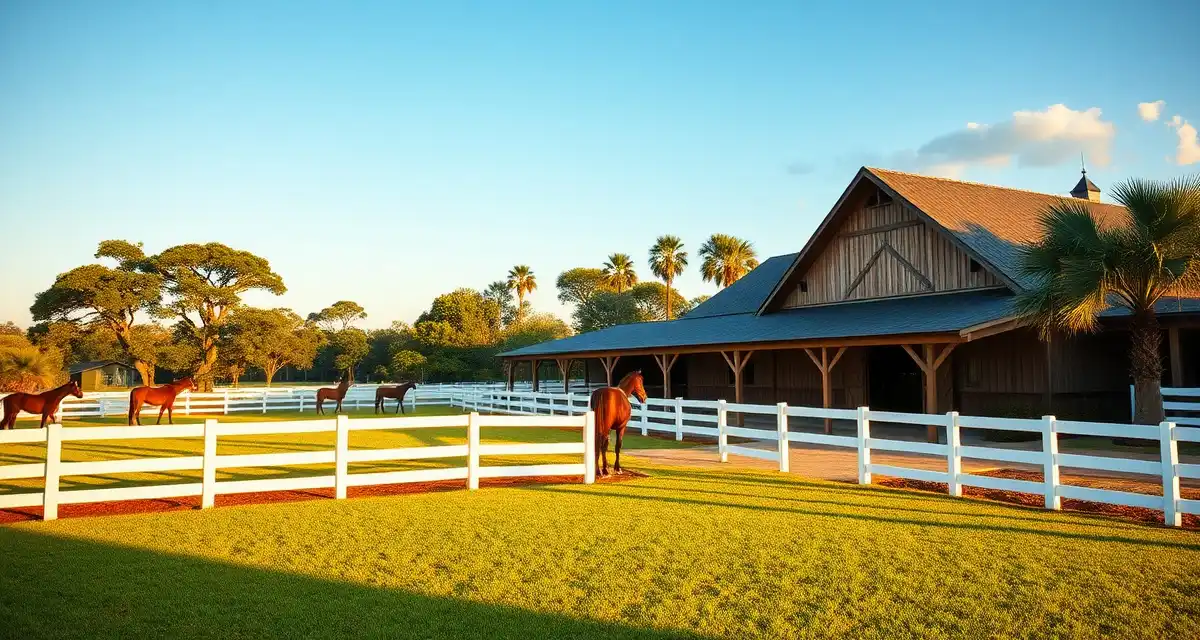
Equestrian Operations in Louisiana
Louisiana presents a distinctive operating environment for equestrian facilities. The state's subtropical climate, its significant racing industry, and its mix of Cajun trail riding traditions, hunter/jumper programs in the New Orleans area, and western performance culture in the northern parishes create a diverse equine landscape unlike anywhere else in the country.
Climate and Facility Management
Louisiana's climate is the dominant factor in facility planning. Summers are long, hot, and intensely humid. The combination of high temperatures and humidity creates a heat stress risk for horses that demands constant management. Ventilation is not a luxury in a Louisiana barn; it is a survival requirement. Facilities that rely on natural ventilation through proper barn orientation, ridge venting, and open designs work better in Louisiana than fully enclosed structures that trap heat and humidity.
Water availability and consumption must be monitored closely through summer. Horses in Louisiana need significantly more water than horses in drier, cooler climates, and automatic waterers need to be functioning and clean. Electrolyte supplementation during the hottest months is common practice.
Fly and pest management is a year-round concern rather than a seasonal one. Flies, mosquitoes, and other insects are present at significant levels for most of the year, and their management requires consistent effort: fly masks, fly sheets, spray programs, manure management to reduce breeding habitat, and traps.
Winter in Louisiana is mild compared to most of the country, but the state does experience cold snaps, and horses that are blanketed need consistent checking during these periods. Northern Louisiana sees occasional ice and freezing conditions that southern parts of the state rarely experience.
Flooding is a serious concern in many parts of Louisiana. Facilities should be sited with drainage in mind, and barn managers in low-lying areas need emergency plans for moving horses quickly if flooding threatens.
The Louisiana Racing Industry
Louisiana has a significant Thoroughbred and Quarter Horse racing industry. Fair Grounds Race Course in New Orleans is one of the oldest continuously operating racetracks in the country. Delta Downs, Evangeline Downs, and Louisiana Downs also support active racing programs. The state's generous purse structure, supported by casino revenue, makes Louisiana racing economically attractive and supports a substantial community of racehorses, trainers, and related facilities.
Training centers and layup facilities in Louisiana that serve the racing industry operate under the Louisiana State Racing Commission's regulations. Health requirements, medication policies, and record-keeping standards for racing horses are more stringent than for general equine facilities.
Trail Riding and Cajun Traditions
Louisiana has a strong tradition of trail riding that is distinct in character from the trail riding culture in most other states. Multi-day trail rides, often with hundreds of participants and organized around community and celebration rather than competition, are a significant part of the state's horse culture. Facilities that serve trail riders, including overnight stabling, hay, and water for traveling horses, serve a real market need in trail riding regions.
The western pleasure and gaited horse communities in northern Louisiana and the Baton Rouge area support their own show circuits and training programs.
Health Requirements
Louisiana requires a current negative Coggins test for horses at public events and for horses entering the state from other jurisdictions. The Louisiana Department of Agriculture and Forestry oversees equine health requirements. The warm climate means that disease vectors like mosquitoes are active for much of the year, making Eastern equine encephalitis vaccination especially important for Louisiana horses.
Barn Management in Louisiana
The combination of intense climate demands, active pest management, and the racing industry's documentation requirements makes organized barn management especially important in Louisiana. BarnBeacon helps Louisiana barn managers track health records, maintain medication logs, manage billing, and document daily care in a format accessible from anywhere on the property.
For more on managing health records and medication tracking in demanding environments, see our guides on medication tracking and mobile barn management.
FAQ
What is Equestrian Operations in Louisiana?
Equestrian operations in Louisiana encompass the management of horse facilities across the state's diverse equine culture, including Thoroughbred racing along the Gulf Coast, Cajun trail riding traditions, hunter/jumper programs near New Orleans, and western performance disciplines in the northern parishes. These operations must navigate Louisiana's subtropical climate, year-round pest pressure, and unique regional horse culture to maintain healthy horses and sustainable facilities.
How much does Equestrian Operations in Louisiana cost?
Operating costs for Louisiana equestrian facilities run higher than in many other states due to climate-driven expenses. Expect elevated spending on ventilation systems, fly and mosquito control, increased water consumption, electrolyte supplementation, and more frequent farrier visits due to hoof challenges from wet ground. Board rates across Louisiana typically range from $300 to $800 or more per month depending on facility type and services included.
How does Equestrian Operations in Louisiana work?
Successful equestrian operations in Louisiana revolve around climate adaptation. Barn design prioritizes airflow through ridge venting, open layouts, and proper orientation. Daily management includes monitoring horses for heat stress, maintaining clean automatic waterers, and implementing year-round pest control programs. Seasonal flooding risk requires drainage planning and emergency protocols. Operations also coordinate with Louisiana's active racing and show circuits for scheduling and competition preparation.
What are the benefits of Equestrian Operations in Louisiana?
Well-managed Louisiana equestrian operations provide horses with climate-appropriate care that reduces heat stress, respiratory issues, and pest-related health problems. Owners benefit from access to a rich equine culture with strong regional trail riding communities, active racing infrastructure, and competitive show circuits. Professionally run facilities also offer structured care routines that are especially important in Louisiana's demanding environment, where lapses in ventilation or hydration management can quickly become health emergencies.
Who needs Equestrian Operations in Louisiana?
Anyone keeping horses in Louisiana needs facility and management practices tailored to the state's conditions. This includes private horse owners, boarding facility operators, racing stables, trail riding clubs, show barns, and breeding operations. Newcomers relocating from drier or cooler states often face a steep learning curve. Even experienced horse people from other regions need to adjust their approach to feed, hydration, hoof care, and pest management when operating in Louisiana's subtropical environment.
How long does Equestrian Operations in Louisiana take?
There is no single timeline for equestrian operations — it is an ongoing, year-round commitment. Initial facility setup and climate adaptation measures can take several months to complete properly. Heat stress management intensifies from May through October. Pest control is a continuous effort with no off-season. Operators should plan on a full year of experience across Louisiana's seasonal cycles before considering their management systems truly dialed in for the local environment.
What should I look for when choosing Equestrian Operations in Louisiana?
When evaluating a Louisiana equestrian facility, prioritize ventilation quality, drainage, and water system reliability above all else. Look for well-oriented barns with adequate airflow, functional automatic waterers, and evidence of an active pest management program. Ask about emergency protocols for summer heat events and flooding. Review the facility's feed and supplementation program for hot-weather horses. For boarding situations, assess staff experience with Louisiana-specific health concerns like heat stress and the regional parasite and mosquito burden.
Is Equestrian Operations in Louisiana worth it?
For horse owners committed to keeping animals in Louisiana, investing in proper equestrian operations is absolutely worth it. Cutting corners on ventilation, pest control, or hydration management creates real health risks in the state's climate. Well-run facilities see healthier horses, lower veterinary bills, and better performance outcomes. The state's vibrant equine community — from trail riding culture to active racing and show circuits — also offers significant lifestyle and competitive value for those willing to manage the environment properly.