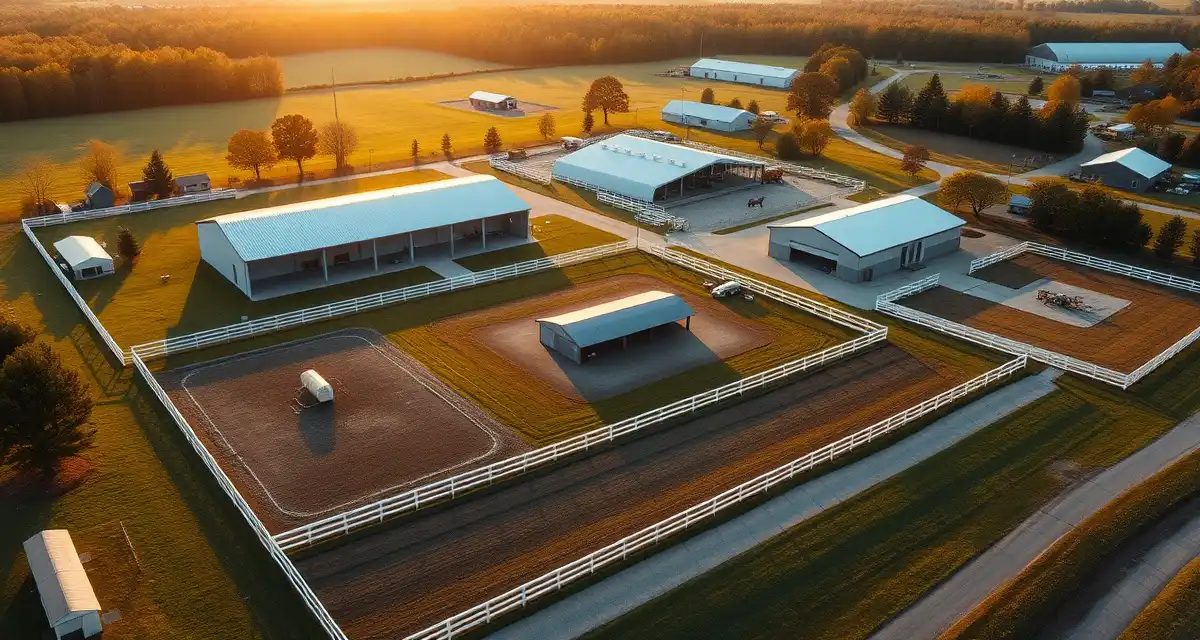
Equine Facilities in New York
New York State supports one of the most diverse equestrian communities in the country. From the storied horse farms of Dutchess County to the working ranches of the Southern Tier, the racing industry centered on Saratoga Springs, and the trail riding culture of the Catskills and Adirondacks, the state's equine sector spans every discipline and management style imaginable.
Geographic Distribution of Equine Operations
The Hudson Valley is the most prestigious horse country in the state. Dutchess, Columbia, and Ulster counties host a concentration of high-end boarding facilities, hunter/jumper training programs, polo clubs, and private farms. Clients in this region are often wealthy, demanding, and well-connected within the national equestrian community.
Westchester County and the suburban counties north of New York City represent a market of serious riders who commute or keep horses within reach of the city. These facilities tend to be expensive, well-maintained, and intensively managed. Staffing costs are high, and client expectations are correspondingly elevated.
Upstate New York, from the Finger Lakes through the North Country, holds a different kind of equine operation. Farms are larger, disciplines tend toward western and trail riding, and the community is more rural and self-sufficient. Draft horses remain common in farming communities here, particularly in areas with Amish populations.
The Southern Tier along the Pennsylvania border is actively ranching territory, with cattle operations that use working horses alongside recreational trail riders and barrel racers.
The Racing Industry
New York has one of the most significant thoroughbred racing industries in the world. Saratoga Race Course, Belmont Park, and the New York Racing Association's circuit define a major economic sector. While most barn managers don't operate racing stables directly, the racing industry shapes regional horse culture, drives veterinary infrastructure, and affects the supply and pricing of thoroughbred and off-track thoroughbred horses throughout the state.
Regulatory and Administrative Considerations
New York's Department of Agriculture and Markets oversees equine health regulations, brand registration, and facility inspections. The state requires Coggins testing for horses attending public gatherings, which includes shows, trail rides, and sales.
Environmental compliance is significant in New York. The state's nutrient management requirements for farms apply to many horse operations, particularly those with larger horse populations on smaller acreage. Composting programs, manure storage requirements, and runoff control are areas where facilities need documented plans.
Managing Client Expectations in New York
New York horse owners, particularly in the Hudson Valley and suburban markets, expect professional-grade communication and transparency. They want to know when their horse didn't finish its grain, when the farrier arrived and what was done, and when a health concern is noted. Facilities that deliver this through a structured platform retain clients at significantly higher rates than those relying on text messages and verbal updates.
BarnBeacon gives barn managers in high-expectation markets a way to deliver that level of communication consistently, without it consuming the manager's entire day. Automated notifications for feeding observations, health events, and appointment completions keep owners informed without requiring individual phone calls for every update.
Seasonal Considerations
New York winters are demanding. Northern facilities deal with significant snow loads, ice, and extended cold. The Hudson Valley gets ice storms that can shut down operations for days. Every facility needs a winter contingency plan covering water line access, emergency hay reserves, and generator capacity for automatic waterers and lighting.
Summer in New York brings heat, humidity, and fly pressure. Mosquito-borne diseases including Eastern equine encephalitis and West Nile virus are genuine concerns, and core vaccination compliance for all boarded horses should be enforced in the boarding agreement.
Building an Equine Business in New York
The cost of doing business in New York is high. Property taxes, labor costs, and insurance premiums are above national averages in most of the state. Facilities that manage their financial operations tightly, track all billable services, and collect payment reliably are the ones that survive competitive market pressure. For a practical framework, see our guides on owner billing management and payment reminders.
The facilities that thrive long-term in New York combine professional operations with genuine horsemanship. Clients in this state have options, and they choose barns where the horses are well cared for and the business is run with integrity.
FAQ
What is Equine Facilities in New York?
Equine facilities in New York encompass a wide range of horse-related operations across the state, including boarding barns, hunter/jumper training centers, polo clubs, western ranches, trail riding stables, and racing-affiliated farms. From the high-end properties of the Hudson Valley to rural Finger Lakes operations and Adirondack trail barns, New York's equine sector is one of the most geographically and disciplinarily diverse in the country, serving everyone from elite competitors to recreational riders.
How much does Equine Facilities in New York cost?
Costs vary dramatically by region and facility type. In Westchester and the Hudson Valley, full-care boarding typically runs $1,500–$3,500 per month due to high land and staffing costs. Upstate and rural facilities may offer full board for $600–$1,200 monthly. Training programs, stall fees, farrier visits, veterinary care, and arena access add to base costs. Expect to budget significantly more in suburban New York than in the Southern Tier or North Country.
How does Equine Facilities in New York work?
Equine facilities in New York operate by providing stabling, turnout, feed, and care services to horse owners who cannot or prefer not to keep horses on their own property. Facilities may offer full care, partial board, or self-care arrangements. Many include training, lessons, competition preparation, and veterinary coordination. Operations are managed through daily staffing schedules, feeding programs, turnout rotations, and increasingly, digital barn management tools to handle client communication and record-keeping.
What are the benefits of Equine Facilities in New York?
New York's equine facilities offer access to world-class training, competitive circuits, and a dense network of equestrian professionals. Riders benefit from proximity to major venues, experienced trainers, and well-maintained infrastructure. For recreational riders, facilities near the Catskills and Adirondacks provide access to extensive trail systems. The state's racing culture around Saratoga Springs creates unique opportunities for owners and professionals. New York's equine community also offers strong peer networks and access to top-tier veterinary and farrier services.
Who needs Equine Facilities in New York?
Anyone who owns or plans to own a horse in New York needs access to quality equine facilities unless they have their own private property. This includes competitive riders in hunter/jumper, dressage, or western disciplines, casual trail riders, racehorse owners, and those who breed or train horses professionally. Equine facilities are also essential for horse owners relocating to the state, those downsizing their own land, or riders seeking professional training environments they cannot replicate independently.
How long does Equine Facilities in New York take?
The timeline depends on your goals. Finding and vetting a boarding facility can take two to eight weeks when accounting for tours, waitlists, and trial periods. Training programs typically run in 30 to 90-day increments, with measurable progress expected over a full competition season. Facility construction or renovation projects in New York, factoring in permitting and contractor availability, commonly run six months to two years. Moving a horse into a new facility and allowing for adjustment usually takes two to four weeks.
What should I look for when choosing Equine Facilities in New York?
Look for facilities with a strong safety record, experienced and consistent staff, and well-maintained paddocks, stalls, and arenas. Verify that the barn has appropriate liability insurance and clear boarding contracts. Assess turnout quality, herd compatibility practices, and how emergencies are handled. In New York specifically, check proximity to qualified equine veterinarians and farriers, regional competition access if relevant, and whether the facility's discipline focus aligns with your riding goals. Client references and unannounced visits are both valuable.
Is Equine Facilities in New York worth it?
For most horse owners in New York, quality equine facilities are not optional — they are essential infrastructure. Given the state's land costs, climate demands, and the complexity of horse care, professional facilities provide value that is difficult to replicate independently. High-end facilities in the Hudson Valley and Westchester command premium prices that reflect genuine service quality. Even in more affordable upstate markets, a well-run facility saves time, reduces risk, and supports horse health in ways that justify the investment for serious owners.