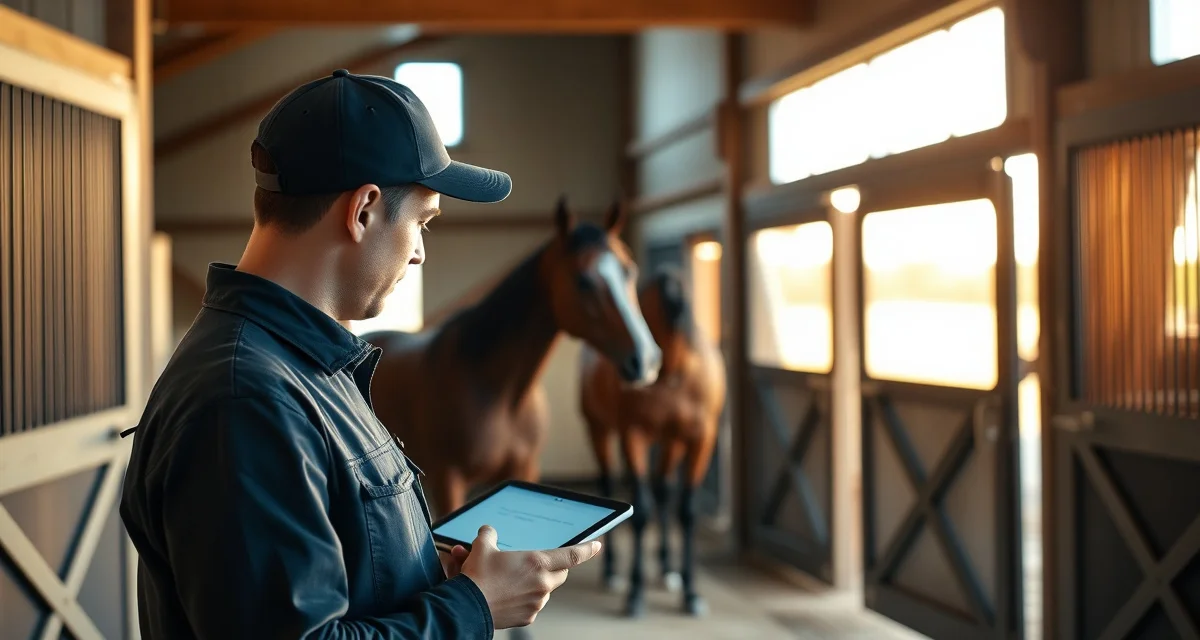
Owner Communication Frequency at Boarding Barns: What Research Shows
owner communication quality is the single biggest driver of boarding satisfaction, outranking facility cleanliness, turnout schedules, and even feed quality. That finding should reshape how barn managers think about their daily routines. Most barns treat communication as reactive, something that happens when a problem surfaces. The barns that retain boarders year over year treat it as a structured, proactive system.
TL;DR
- Owner communication is the top factor in boarding client retention, ranked above facility quality and pricing in surveys
- Structured daily updates take under 30 seconds to log when built into care workflows and deliver outsized retention value
- Health alerts sent within 30 minutes of an event, with a documented response timeline, build owner confidence
- Billing transparency, specifically itemized invoices and pre-approval for large expenses, prevents most financial disputes
- An owner communication portal gives clients a single place to check updates and reduces inbound call volume significantly
- Written onboarding communication expectations reset habits from a boarder's previous barn and prevent early misunderstandings
This guide covers what the research shows about owner communication frequency at boarding barns, what to send, when to send it, and how to handle the edge cases that trip up even experienced barn managers.
Why Communication Frequency Matters More Than You Think
Boarding is an emotional purchase. Owners are leaving an animal they love in someone else's care, often for 23 hours a day. The anxiety that creates is real, and silence amplifies it.
When owners don't hear from their barn, they don't assume everything is fine. They assume something is being hidden. That perception, even when completely unfounded, erodes trust faster than almost any actual incident.
Research from equine industry surveys consistently shows that boarders who receive regular, structured updates are significantly more likely to renew contracts and refer new clients. One survey found that barns with formal communication systems had boarder retention rates 30-40% higher than those relying on informal contact.
The financial math is straightforward. Losing one boarder at $800/month means $9,600 in annual revenue. A communication system that prevents even one departure per year pays for itself many times over.
The Three Tiers of Owner Communication
Not all communication serves the same purpose. Effective owner communication frequency at a boarding barn falls into three distinct categories: routine updates, event-triggered alerts, and relationship touchpoints.
Tier 1: Routine Daily Updates
Daily updates are the foundation. They don't need to be long. They need to be consistent.
A daily update should confirm that the horse was seen, fed, and appears healthy. A single photo, a note on turnout, and any behavioral observations cover 90% of what owners actually want to know. This takes under two minutes per horse when you have a system in place.
The key word is system. Barn managers who try to do this through individual text messages burn out within weeks. The communication becomes inconsistent, which is worse than no communication at all because it trains owners to expect updates and then leaves them waiting.
Barns using structured platforms like BarnBeacon can automate the delivery of daily reports with photo attachments, so the manager captures the information once and the system handles distribution. That's the difference between communication as a burden and communication as a workflow.
Tier 2: Event-Triggered Alerts
Some situations require immediate contact regardless of what day or time it is. These are non-negotiable.
Event-triggered alerts should go out for: any injury or lameness, changes in eating or drinking behavior, colic symptoms, medication administration, farrier or vet visits, and any incident involving the horse or its equipment. Owners should never learn about these events after the fact.
The standard that protects barns legally and relationally is simple: if you would want to know if it were your horse, send the alert. When in doubt, over-communicate on events.
Response time matters here. An alert sent four hours after an incident is not an alert, it's a report. Owners expect to be notified within 30 minutes of any significant event. Barns that consistently meet that standard build the kind of trust that survives even serious health incidents.
Tier 3: Relationship Touchpoints
These are the communications that go beyond the transactional. A photo of a horse playing in turnout. A note that a horse seemed particularly happy today. A heads-up that the farrier mentioned good hoof growth.
These touchpoints don't follow a fixed schedule. They happen when something worth sharing happens. But they matter disproportionately to owner satisfaction because they signal that the barn staff actually knows and cares about their horse as an individual.
Aim for at least two or three of these per horse per month. They take 30 seconds to send and they do more for retention than any discount or amenity upgrade.
How Often Should You Actually Contact Horse Boarding Owners?
The honest answer is: more than most barns currently do, but with structure.
Here's a practical framework based on what high-retention barns actually do:
Daily: One structured update per horse. Photo included. Turnout status, feeding notes, general health observation. Delivered at a consistent time (most barns find morning works best, after the first feeding and turnout check).
Within 30 minutes: Any event-triggered alert. No exceptions.
Weekly: A brief summary of anything notable from the week. Upcoming schedule changes, farrier or vet appointments, weather-related management adjustments. This can be a barn-wide message rather than individual.
Monthly: Billing and invoice summary. This is also a natural moment to check in on owner satisfaction. A simple "anything we can do better?" goes a long way. You can streamline this process with a proper billing and invoicing system that keeps financial communication separate from care updates.
As needed: Relationship touchpoints. No fixed schedule, but track whether each horse is getting them.
The Over-Communication Problem
There is such a thing as too much communication, and it creates its own problems.
Some barn managers, trying to be responsive, end up in constant back-and-forth text threads with individual owners. This is unsustainable. It also creates inconsistency, because owners who text more get more information than owners who don't, which creates perceived favoritism.
The solution is not to communicate less. It's to communicate through structured channels that set clear expectations. When owners know they'll receive a daily update at 8 AM, they stop texting at 7:45 AM asking if their horse has been checked. The structure reduces the noise.
Knowing how often to contact horse boarding owners also means knowing when to redirect. If an owner is requesting updates multiple times per day beyond what's reasonable, that's a conversation about expectations, not a communication volume problem. More on that in the FAQ section below.
What Most Barns Get Wrong
The most common failure mode is relying on group texts or email chains with no structure. These approaches have three consistent problems.
First, they're reactive. Information only flows when someone asks or something happens. Owners who don't ask get nothing, and they notice.
Second, they create no record. When a dispute arises about when an owner was notified about an incident, a text thread is a poor substitute for a timestamped communication log. Barns have faced legal exposure because they couldn't prove when they notified an owner.
Third, they don't scale. A barn with 20 horses managed through individual text threads is a barn where communication quality degrades as capacity grows. The barn manager becomes the bottleneck.
Competitors in the barn management space often rely on these informal methods because they haven't built communication infrastructure into their core product. What to look for in any barn management tool is a dedicated owner communication portal that handles daily reports, photo updates, and alerts in one place, with delivery confirmation and a searchable history.
How does BarnBeacon compare to spreadsheets for barn management?
Spreadsheets require manual updates, lack real-time notifications, and create version control problems when multiple staff members are working from different files. BarnBeacon centralizes records, pushes alerts automatically based on logged events, and connects care records to billing and owner communication in one system. Most facilities report saving several hours per week after switching from spreadsheets.
What is the setup process like for BarnBeacon?
Most facilities complete the initial setup in under a week. Horse profiles, service templates, and billing configurations can be imported from existing records or entered directly. BarnBeacon's US-based support team is available to assist with setup, and most managers are running their first billing cycle through the platform within days of starting.
Can BarnBeacon support a barn with multiple staff members?
Yes. BarnBeacon supports multiple user accounts with role-based access, so barn managers, barn staff, and owners each see the information relevant to their role. Task assignments, completion logs, and communication history are all attached to the barn's account rather than to individual staff phones or email addresses.
FAQ
What is Owner Communication Frequency at Boarding Barns: What Research Shows?
Owner communication frequency at boarding barns refers to how often and through what channels barn managers keep horse owners informed about their animal's daily care, health events, and billing. Research shows communication quality is the top driver of boarder retention—ranking above facility cleanliness, turnout, and even feed quality. Proactive, structured updates rather than reactive responses define the barns that consistently retain clients year over year.
How much does Owner Communication Frequency at Boarding Barns: What Research Shows cost?
Implementing a structured owner communication system costs very little beyond time. Many barns use a dedicated app or portal, which typically runs between $30–$100 per month. The return on investment is significant: reduced boarder turnover, fewer billing disputes, and lower inbound call volume. Losing a single boarder due to poor communication costs far more than any software subscription.
How does Owner Communication Frequency at Boarding Barns: What Research Shows work?
Effective barn communication works by embedding brief updates into existing care routines. Staff log a 15–30 second note during morning or evening chores, which is delivered to owners via an app or portal. Health alerts go out within 30 minutes of an event. Billing notifications include itemized details sent before payment is due. Owners check a single hub rather than texting or calling staff.
What are the benefits of Owner Communication Frequency at Boarding Barns: What Research Shows?
The core benefits include higher boarder retention, stronger owner trust, and fewer disputes. Owners who receive consistent updates are less likely to worry, less likely to micromanage, and more likely to refer friends. Proactive health alerts with documented response timelines build confidence even when problems arise. Billing transparency virtually eliminates financial conflicts that erode the barn-owner relationship.
Who needs Owner Communication Frequency at Boarding Barns: What Research Shows?
Any boarding barn with five or more horses benefits from a structured communication framework. It is especially critical for facilities managing a mix of full-care and partial-care boarders, barns with multiple staff handling daily checks, and operations experiencing boarder churn. Owners who have come from other barns often have entrenched communication expectations, making clear onboarding documentation essential from day one.
How long does Owner Communication Frequency at Boarding Barns: What Research Shows take?
Setting up a communication routine takes one to two weeks to build into staff workflows. Once established, individual updates take under 30 seconds per horse per day. Health alerts should be sent within 30 minutes of an event. Billing communications need to go out 3–5 days before invoices are due. The upfront investment in building the system pays dividends within the first billing cycle.
What should I look for when choosing Owner Communication Frequency at Boarding Barns: What Research Shows?
Look for a communication approach that is proactive rather than reactive, consistent in frequency, and delivered through a centralized channel. Key indicators include daily update capability, timestamped health alerts, itemized billing with pre-approval workflows, and a written onboarding document that sets expectations upfront. Avoid systems that rely solely on group texts or social media, which create noise and fail to maintain clear individual records.
Is Owner Communication Frequency at Boarding Barns: What Research Shows worth it?
Yes. Barns that implement structured owner communication consistently outperform those that do not on retention metrics, referral rates, and dispute frequency. The research is clear: communication quality outranks facility quality as a retention driver. A boarder who feels informed and respected will stay through minor facility shortcomings. One who feels ignored will leave even if the barn is otherwise excellent.
Sources
- American Association of Equine Practitioners (AAEP)
- American Horse Council
- Kentucky Equine Research
- UC Davis Center for Equine Health
- American Horse Council Economic Impact Study
Get Started with BarnBeacon
Owner communication that runs on group texts and personal phones is a system waiting to break. BarnBeacon gives boarding barns the structure to deliver consistent, horse-specific updates automatically, keep health alerts separate from routine notices, and give owners portal access to their horse's complete history. Start a free trial and see what your communication looks like when it runs through a system built for it.