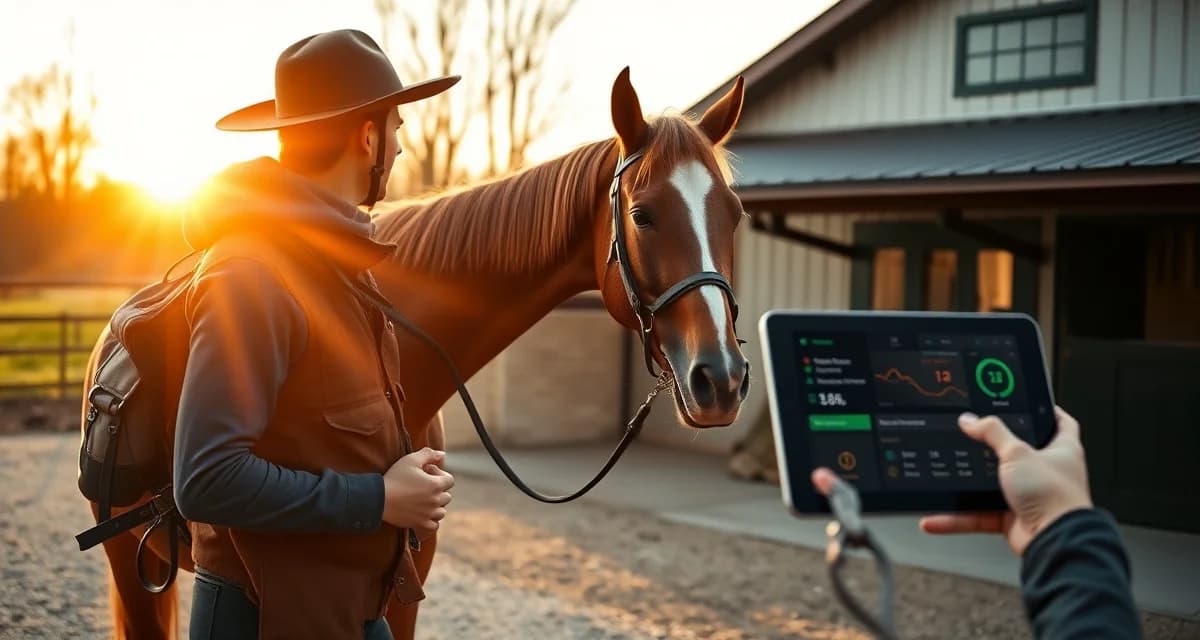
Trail Riding Barn Owner Communication: Health and Updates
Trail-riding barn owner communication has a problem that generic barn management software ignores: trail horses live and work differently from arena horses, and their owners want to know about it. Conditioning miles logged, terrain exposure, hoof wear on rocky ground, and post-ride recovery all matter to trail horse owners in ways that a standard "horse is eating well" update simply does not cover.
TL;DR
- Health observations logged at the point of care, not reconstructed at shift end, are the only reliable clinical record
- Daily baseline documentation for each horse creates the comparison point that makes anomaly detection meaningful
- medication tracking must include product name, dose, route, and withdrawal period for any horse in a regulated program
- Vet instructions delivered verbally during farm visits are frequently misremembered; written confirmation before the vet leaves is the standard
- Health alert protocols should remove judgment calls from staff: define triggers in writing so action is automatic
- Owner notification within 30 minutes of a health event, including a documented timeline, reduces disputes and builds confidence
Trail riding disciplines have unique owner communication patterns not covered by generic barn software, and that gap creates real friction. Owners call more, trust less, and sometimes pull horses from facilities that can not show them what they need to see.
This guide walks you through exactly how to fix that.
Why Trail Riding Barn Updates Are Different
A dressage horse's owner wants to know about flatwork progress and joint health. A trail horse owner wants to know about soundness on varied terrain, behavioral changes on the trail, and whether their horse is building or losing fitness between rides.
These are fundamentally different reporting needs. When your communication system is built around stall checks and arena sessions, you end up sending updates that feel irrelevant to trail owners. That erodes confidence in your barn even when you are doing excellent work.
Trail horses also face condition changes that happen fast. A horse that covers 8 to 12 miles on rocky terrain on Saturday may show subtle lameness by Monday. Owners who are not on-site need to hear about that quickly, with enough detail to make informed decisions about vet calls.
Step 1: Audit What Trail Owners Actually Want to Know
Start With a New Owner Intake Form
Before you build any communication system, ask owners directly. A short intake form at sign-up should capture their preferred update frequency, preferred channel (text, email, app notification), and the specific metrics they care about most.
Common trail owner priorities include: post-ride soundness observations, hoof condition and shoe wear, weight and body condition score, hydration and recovery after long rides, and any behavioral changes on the trail.
Map Your Update Types to Trail-Specific Events
Generic barns send updates tied to feeding, turnout, and vet visits. Trail barns need to add a third category: ride events. Every organized trail ride, conditioning session, or terrain exposure should trigger a communication touchpoint.
Build a simple matrix: what happened, what you observed, what action (if any) was taken. That three-part structure works for everything from a routine 5-mile conditioning ride to a post-ride lameness check.
Step 2: Set Up a Consistent Communication Schedule
Daily vs. Event-Based Updates
Not every trail horse needs a daily update. Owners of horses in full-care trail programs often want weekly summaries plus immediate alerts for anything outside normal. Owners who trail ride competitively may want post-ride reports within 24 hours.
Establish two tracks: scheduled updates (weekly or bi-weekly health summaries) and triggered updates (any soundness concern, injury, behavioral change, or vet contact). Make sure owners know which track they are on and what to expect from each.
Use Templates to Stay Consistent
Inconsistent updates are almost as damaging as no updates. When one owner gets a detailed post-ride report and another gets a two-line text, you create unequal experiences that generate complaints.
Build three core templates: a weekly health summary, a post-ride observation report, and an incident or concern alert. Keep each template under 200 words. Trail horse owners are often busy people who ride on weekends; they want clear, scannable information.
Step 3: Choose the Right Digital Tools
What to Look for in an Owner Portal
A basic email chain does not scale past 10 to 15 horses. Once your trail barn grows, you need a structured owner portal that can handle photo attachments, timestamped updates, and searchable health history.
For trail-specific workflows, look for portals that allow custom update categories (not just "feeding" and "turnout"), support ride log entries with mileage and terrain notes, and send push notifications for time-sensitive alerts. The owner communication portal you choose should match how your barn actually operates, not force you into a generic workflow.
BarnBeacon's Owner Portal for Trail Riding Barns
BarnBeacon's owner portal is built to adapt to discipline-specific workflows, which matters for trail barns. You can configure custom update fields for post-ride observations, log conditioning miles alongside health notes, and send photo-supported updates directly through the portal.
Owners receive a clean, mobile-friendly view of their horse's history without needing to dig through email threads. For trail barns managing horses across multiple ride programs, that searchable history becomes a practical liability tool as well as a communication asset.
Step 4: Build Your Post-Ride Health Report
What to Include Every Time
A post-ride health report for trail horses should cover six points: distance and terrain covered, gait and soundness observations during and after the ride, hydration and recovery (time to normal respiration and gut sounds if checked), hoof and shoe condition, any behavioral notes, and next scheduled ride or rest day.
This takes about 5 minutes to complete per horse if you have a template open on your phone at the barn. Done consistently, it builds a health record that is genuinely useful when a vet asks "when did you first notice this?"
When to Escalate to an Alert
Not every observation needs an urgent alert. But trail barns should have a clear internal threshold for when a post-ride note becomes an owner alert. A horse that is slightly tired after a long ride is normal. A horse that is still off 48 hours later is not.
Write down your escalation criteria and share them with owners at intake. When they know your threshold in advance, they trust the system more and call less to check in.
Step 5: Integrate Communication Into Your Trail Riding Barn Operations
Make Updates Part of the Ride Routine
The biggest reason trail barn communication breaks down is that updates get treated as administrative work separate from horse care. They are not. A post-ride observation is part of the ride routine, the same as untacking and hosing down.
Assign one staff member per ride group to complete the digital update before they leave the barn. If you use BarnBeacon, that update goes directly into the owner portal with a timestamp. No extra step, no separate email to write.
Review Your Communication System Quarterly
Trail riding seasons shift. Summer heat changes conditioning schedules. Fall hunting season changes trail access. Your communication templates and update frequency should reflect those changes.
Set a quarterly calendar reminder to review your templates, check owner feedback, and adjust your update schedule for the coming season. A 30-minute review four times a year prevents the slow drift toward outdated, irrelevant updates.
Common Mistakes Trail Barns Make
Sending generic updates. "Horse is doing well" tells a trail owner nothing. Be specific: "Completed 7 miles on mixed terrain, sound throughout, right front shoe showing wear at the toe."
Waiting too long after an incident. Trail horse owners expect fast communication when something is wrong. A 24-hour delay on a soundness concern feels like a cover-up, even when it is just poor workflow.
No photo documentation. A photo of hoof wear, a swollen fetlock, or a trail condition issue communicates more than three paragraphs. Build photo uploads into your standard update process.
Treating all owners the same. A competitive endurance rider and a weekend pleasure trail rider have very different information needs. Segment your communication from day one.
FAQ
How do I communicate with trail riding horse owners?
Use a combination of scheduled weekly health summaries and event-triggered updates after every trail ride or incident. Build templates specific to trail horse reporting, including post-ride soundness observations, mileage logged, and hoof condition. A dedicated owner portal keeps communication organized and searchable, which is far more reliable than email or text threads.
What do trail riding owners want to know about their horses?
Trail horse owners prioritize soundness on varied terrain, fitness progression, hoof and shoe condition, post-ride recovery, and behavioral changes on the trail. They also want to know about any vet contact or treatment decisions quickly. Generic updates about feeding and turnout are not enough; trail-specific reporting builds the trust that keeps owners long-term.
What owner portal features matter for trail riding barns?
Look for custom update categories that go beyond standard barn software fields, ride log functionality with mileage and terrain notes, photo upload support, push notifications for urgent alerts, and a searchable health history per horse. BarnBeacon's owner portal supports all of these and can be configured to match trail barn workflows rather than forcing a one-size-fits-all structure.
How should a barn manager respond when a horse's health observation is outside normal baseline?
Log the observation immediately with the time, specific findings, and the staff member's name. Contact the attending veterinarian if the deviation is outside the parameters defined in the horse's care plan. Notify the owner in writing, including what was observed and what action was taken. This sequence creates a defensible record and demonstrates appropriate professional response.
What should every horse's health record include at minimum?
At minimum, a horse's health record should include vaccination dates and products, deworming history, dental exam dates, farrier schedule, medication logs with product and dose, and any veterinary findings or diagnoses. For horses in regulated disciplines, drug testing withdrawal periods for recent treatments must also be tracked. A record that cannot be produced quickly during an inspection or a dispute is effectively no record at all.
How often should vital signs be checked for horses on stall rest or recovery programs?
Vital signs for stall rest or recovery horses should be checked at every feeding, at minimum twice daily. For horses in acute recovery or following surgery, more frequent checks may be required; follow the veterinarian's written protocol. Log temperature, respiration, and heart rate each time and flag any reading outside baseline before the next check.
What is Trail Riding Barn Owner Communication: Health and Updates?
Trail Riding Barn Owner Communication: Health and Updates refers to the systems and practices barn managers use to keep trail horse owners informed about their horses' health, conditioning, and daily care. Unlike standard barn updates, this approach covers trail-specific factors like miles logged, terrain exposure, hoof wear, and post-ride recovery, ensuring owners receive timely, accurate health observations rather than end-of-shift summaries.
How much does Trail Riding Barn Owner Communication: Health and Updates cost?
Trail Riding Barn Owner Communication: Health and Updates is not a product with a set price — it describes a management practice and communication standard. However, dedicated barn communication platforms like BarnBeacon that support health logging, medication tracking, and owner notifications typically offer subscription plans ranging from free basic tiers to paid plans starting around $20–$50 per month depending on herd size and features required.
Sources
- American Association of Equine Practitioners (AAEP)
- United States Equestrian Federation (USEF)
- American Endurance Ride Conference (AERC)
- American Competitive Trail Horse Association (ACTHA)
- American Horse Council
Get Started with BarnBeacon
Health records that live on a clipboard in the barn aisle cannot protect your horses or your facility the way a real-time digital system can. BarnBeacon gives trail riding barns the health logging, alert, and owner notification tools to document care at the point of service, catch anomalies early, and build a defensible record automatically. Start a free trial and see how your health tracking changes in the first two weeks.