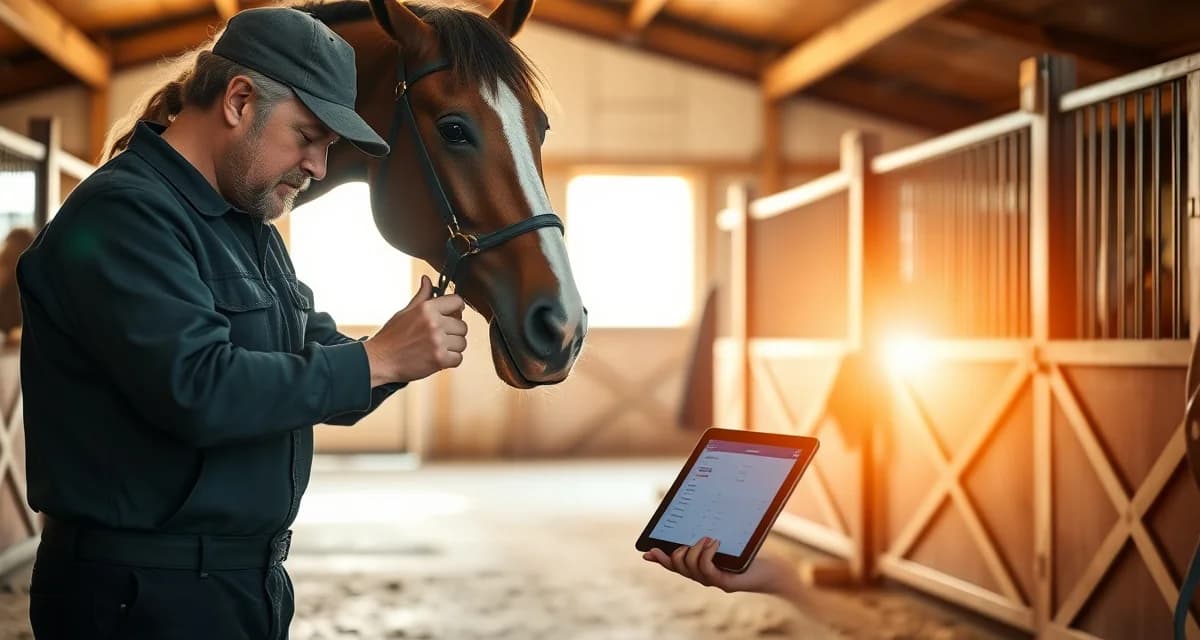
Sharing Horse Information with Farriers: Digital Tools
Horse owners rank communication quality as the #1 factor in boarding satisfaction, according to AAEP survey data. That same expectation extends to farrier visits: owners want to know their horse was seen, what was done, and what comes next. Most barns are still handling this with group texts and sticky notes.
TL;DR
- Owner communication quality is the #1 factor in boarding satisfaction per AAEP survey data.
- Every horse needs a digital hoof and shoeing profile that the farrier can access before each visit.
- Log farrier visit notes immediately after the appointment, not at end of day, to capture accurate timestamps.
- Give owners at least 48 hours notice before a scheduled farrier visit to reduce post-visit complaints.
- Corrective shoeing or identified problems should trigger same-day owner notification, not a weekly summary.
Sharing horse information with your farrier before and after each visit doesn't have to be a manual process. Digital tools now make it possible to centralize hoof notes, shoeing history, and owner preferences in one place that everyone can actually access.
The Problem with Group Texts and Paper Records
When a farrier arrives at a busy barn, they're often working from memory or a handwritten card tacked to a stall door. If the barn manager is occupied with another horse, critical details get missed: the owner requested a different shoe type, the horse has been footsore on the left front, or the last trim was six weeks ago instead of eight.
Group texts create a different problem. Messages get buried, owners miss updates, and there's no searchable record of what was communicated or when. When something goes wrong, no one can find the original message.
Step 1: Build a Centralized Hoof and Shoeing Profile for Each Horse
What to Include in the Profile
Every horse at your barn should have a digital record that includes:
- Current shoeing type (barefoot, shod front only, full set, pads, etc.)
- Trim and reset cycle length
- Known hoof issues (thin soles, white line history, laminitis episodes)
- Farrier preferences noted by the owner
- Any veterinary recommendations related to hoof care
This profile lives in your barn management system, not in someone's phone. When the farrier arrives, they pull up the horse's record and have everything they need before picking up a hoof pick.
Who Maintains It
The barn manager or designated staff member updates the profile after each visit. The farrier adds their own notes directly if your system allows it. Owners can view the record through an owner communication portal so they're never out of the loop.
Step 2: Document Every Farrier Visit in Real Time
What to Record After Each Appointment
Don't wait until the end of the day to log farrier notes. Record immediately after the visit:
- Date and farrier name
- Work performed (trim, reset, new set, corrective work)
- Observations (flare on right front, heel growth, any sensitivity)
- Next scheduled appointment
- Any follow-up recommended
This creates a timestamped history that's searchable and shareable. If an owner calls three months later asking when their horse was last shod, you have a precise answer in seconds.
Attaching Photos
A photo of the finished hoof or a problem area is worth more than a paragraph of notes. Most barn management platforms let you attach images directly to a horse's record. Owners appreciate seeing the work, and it protects the barn if a question arises later about the condition of the hooves.
Step 3: Share Farrier Visit Summaries with Owners Automatically
Why Owners Need This Information
Equine farrier information sharing isn't just about keeping records internally. Owners who board their horses away from home often have no visibility into routine care unless someone tells them. A farrier visit happens, the horse gets trimmed, and the owner finds out weeks later by accident.
Automated visit summaries change that. When a farrier appointment is logged, the system sends the owner a notification with the key details: what was done, any observations, and the next scheduled date. No extra work for barn staff, no chasing down owners to update them.
What a Good Summary Looks Like
Keep it short and factual:
- Horse name and date of visit
- Work performed
- Farrier's notes or observations
- Next appointment date
- Any action items for the owner (e.g., "farrier recommends a vet consult on left front")
If your barn management software supports automated messaging, this summary goes out the same day without anyone having to write it manually.
Step 4: Coordinate Scheduling Between Owners, Barn Staff, and the Farrier
The Scheduling Gap Most Barns Ignore
Farrier scheduling is often handled entirely by the barn manager with no input from the owner. That works until the owner has a preference (they want to be present, they want a specific farrier, they want to delay the reset because the horse is in a show), and no one knew to ask.
A structured intake process captures owner preferences upfront. When a horse is enrolled at your barn, you collect:
- Preferred farrier (if the owner has one)
- Preferred trim cycle
- Whether the owner wants to be notified before the appointment
- Whether the owner wants to be present
This information lives in the horse's profile and gets referenced every time a farrier appointment is scheduled.
Sending Advance Notice to Owners
Give owners at least 48 hours notice before a farrier visit. A simple automated message works: "Farrier visit scheduled for [Horse Name] on [Date]. Let us know if you have any questions or requests."
This one step eliminates most of the post-visit complaints about communication. Owners feel included even when they can't be there.
Common Mistakes to Avoid
Relying on verbal handoffs. When barn staff changes shifts, verbal information about a horse's hoof condition or owner preferences doesn't always transfer. If it's not written down in the system, assume it will be lost.
Logging notes in multiple places. Some barns keep a paper farrier log, a digital calendar, and a group text thread running simultaneously. Information gets fragmented and contradictory. Pick one system and use it consistently.
Forgetting to update the owner after corrective work. Routine trims are one thing. If the farrier identifies a problem or applies corrective shoeing, the owner needs to know immediately, not in a weekly summary. Flag these visits for same-day communication.
Not capturing owner preferences at intake. Asking owners about farrier preferences after they've already been boarding for six months creates friction. Build the questions into your onboarding process so the information is there from day one.
What should barn managers communicate to horse owners every day?
Daily communication should cover feeding, turnout, any health observations, and notes from any professional visits that day, including farrier or vet appointments. Owners don't need a novel, but they do need to know their horse ate, moved, and had no issues. A brief daily report through a structured portal is more reliable than ad hoc texts.
How do I replace group texts with a better owner communication system?
Start by identifying what information you're currently sending via group text and categorize it: daily updates, appointment notices, health alerts, billing. Then move each category into a platform built for barn management. Group texts work for emergencies but fail as a primary communication channel because there's no record-keeping, no filtering by horse, and no way to confirm who saw what.
What do horse owners want to know about their horses at a boarding barn?
Owners consistently want to know that their horse is eating normally, moving freely, and receiving scheduled care on time. They want advance notice of farrier and vet visits, same-day updates if anything unusual happens, and easy access to their horse's health and care history. Sharing horse information with farriers and then relaying that back to owners closes the loop that most barns leave open.
How do I handle farrier communication when multiple owners have different farrier preferences?
Capture each owner's farrier preference at intake as part of the horse's profile. If an owner has a preferred farrier, that information should be visible in the scheduling system before any appointment is booked. When the barn uses a primary farrier who works across multiple horses, note any owner exceptions clearly so the scheduling system flags them before a visit is confirmed. Handling this at intake prevents the friction of discovering a preference conflict the morning of the appointment.
What should I do if a farrier identifies a hoof problem that requires vet follow-up?
Any farrier observation that suggests a veterinary issue -- white line disease progression, suspected laminitic rings, unusual sensitivity -- should be documented in the horse's record immediately and trigger same-day owner notification. Do not wait for the weekly update or rely on the owner talking directly to the farrier. The barn manager's role is to close that communication loop so the owner can contact their vet with accurate, timely information and a written farrier record they can share.
FAQ
What is Sharing Horse Information with Farriers: Digital Tools?
Sharing horse information with farriers using digital tools means using barn management software to centralize hoof care records, shoeing history, and owner preferences in one accessible platform. Instead of relying on sticky notes or group texts, barn managers can log farrier visit notes, track corrective shoeing plans, and automatically notify horse owners — all from a single system that both staff and farriers can reference before and after each appointment.
How much does Sharing Horse Information with Farriers: Digital Tools cost?
Most barn management platforms that include farrier communication features are priced as part of broader barn software subscriptions, typically ranging from $50 to $200 per month depending on herd size and feature tier. Some tools offer free tiers for small operations. BarnBeacon is designed to make these features accessible without requiring expensive enterprise contracts, so even smaller boarding barns can implement digital farrier workflows affordably.
How does Sharing Horse Information with Farriers: Digital Tools work?
Digital farrier communication tools work by creating a per-horse profile that stores hoof measurements, shoeing history, corrective notes, and upcoming appointment dates. Before a visit, the farrier can review the horse's record. After the appointment, the barn manager logs notes directly into the system, which automatically timestamps the entry and triggers an owner notification. Everything lives in one place rather than scattered across texts, paper cards, and memory.
What are the benefits of Sharing Horse Information with Farriers: Digital Tools?
Key benefits include fewer miscommunications between barn staff, farriers, and owners; accurate timestamped records for each visit; automatic owner notifications that reduce post-visit complaints; and a searchable history that helps identify recurring hoof issues over time. Barns using digital tools report higher owner satisfaction scores, since communication quality is the #1 factor in boarding satisfaction according to AAEP survey data.
Who needs Sharing Horse Information with Farriers: Digital Tools?
Any barn that boards horses and coordinates regular farrier visits benefits from digital information sharing. This includes boarding facilities, training barns, and breeding operations with multiple horses and multiple owners. It is especially valuable when the farrier rotates through a large herd, when corrective shoeing is involved, or when owners are off-site and expect timely updates. Solo horse owners managing their own property may benefit less than multi-horse operations.
How long does Sharing Horse Information with Farriers: Digital Tools take?
Setup typically takes a few hours to a few days depending on herd size. Entering existing horse profiles and historical shoeing records is the most time-consuming part. Once profiles are built, logging a farrier visit takes two to five minutes per horse. Farrier appointment notifications can be automated, so the ongoing time investment is minimal. Most barn managers report that digital logging actually saves time compared to maintaining paper records and fielding owner texts.
What should I look for when choosing Sharing Horse Information with Farriers: Digital Tools?
Look for a platform that offers per-horse hoof profiles, visit logging with automatic timestamps, owner notification controls, and easy access for farriers without requiring them to create full accounts. Mobile-friendly design matters since most logging happens in the barn aisle. Integration with your existing scheduling or invoicing workflow is a plus. Prioritize tools built specifically for equine management over generic farm software that treats horses as livestock inventory.
Is Sharing Horse Information with Farriers: Digital Tools worth it?
For any barn managing more than a handful of horses across multiple owners, digital farrier communication tools are worth the investment. The reduction in owner complaints alone justifies the cost — owners who receive same-day updates after farrier visits, especially for corrective shoeing or identified problems, report significantly higher satisfaction. The timestamped record history also provides liability protection and makes it easier to brief a new farrier or vet on a horse's hoof care background.
Sources
- American Farrier's Association (AFA)
- American Association of Equine Practitioners (AAEP)
- University of California Davis School of Veterinary Medicine
- The Horse magazine
Get Started with BarnBeacon
Closing the loop between farrier visits, barn records, and owner communication does not have to be a manual process. BarnBeacon centralizes hoof profiles, visit logs, and automated owner notifications in one platform that every staff member can access and update from their phone. When the farrier finishes a visit, the record is complete and the owner is notified -- without anyone having to write a separate message. If your barn is still relying on group texts and sticky notes to coordinate farrier information, BarnBeacon offers a cleaner path.