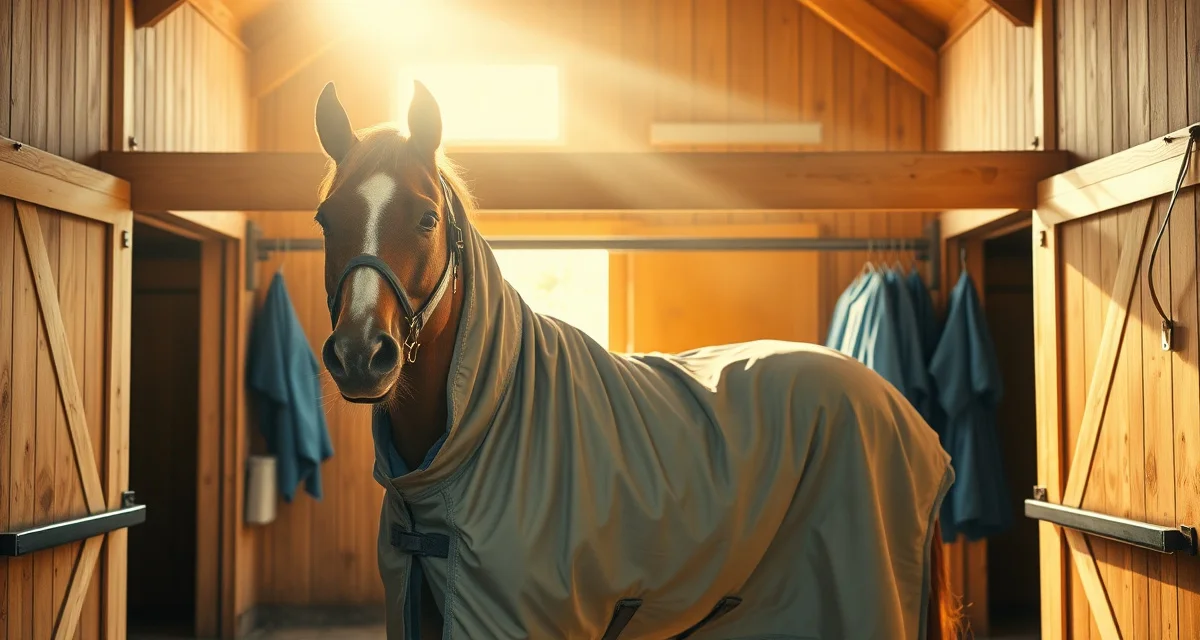
Summer Fly Sheet Management for Horse Barns
Incorrect blanketing causes 18% of skin conditions in stabled horses, and fly sheets are no exception. When rotation schedules break down in summer, horses end up in dirty, damaged sheets for days longer than they should be, and skin issues follow fast.
TL;DR
- Fly sheet management at scale requires a tracking system that records which horse has which sheet and its current condition.
- Sheets left on horses in hot conditions can cause overheating; daily removal checks are a welfare standard, not optional.
- A sheet inventory with size, type, and owner notes prevents mix-ups at multi-horse facilities.
- Damage documentation during the season protects the barn when owners question sheet condition at season end.
- Digital assignment logs create accountability for sheet application and removal across multiple staff members and shifts.
This guide covers the operational side of summer fly sheet management for horse barns: how to build an on/off schedule that actually holds, how to rotate washing without falling behind, how to track damage before it becomes a liability, and how to keep owners in the loop without fielding 30 texts a day.
Why Summer Fly Sheet Management Breaks Down
Most barns don't have a fly sheet problem. They have a tracking problem.
Sheets come off for washing, get mixed up with another horse's gear, go back on the wrong horse, or sit in a pile for three days because no one knew whose turn it was. Multiply that across 40 or 50 horses and you have a system that runs on memory and luck.
The fix isn't more effort. It's a repeatable process with clear ownership at each step.
How to Build a Summer Fly Sheet Rotation Schedule
Step 1: Audit Every Horse's Fly Sheet Inventory
Before building any schedule, know what you're working with. Walk the barn and log each horse's fly sheet count, condition, and fit. A horse with one fly sheet has zero rotation buffer. A horse with two has a workable cycle.
Flag any sheets that are torn at the belly straps, have broken closures, or have mesh damage larger than a few inches. These need repair or replacement before the schedule starts, not after.
Step 2: Set Your On/Off Triggers
Fly sheets shouldn't go on and off by calendar date. They should respond to conditions. Set clear barn-wide rules for when sheets go on and off each day.
A practical baseline for most climates:
- On: Before turnout if flies are active (typically after 7am when temperatures rise above 60°F)
- Off: When horses come in for the night, or if temperatures exceed 90°F and the sheet is adding heat stress risk
- Off immediately: If the sheet is visibly soiled, torn, or causing rubbing
Post these rules in the tack room and in your barn management software so every staff member is working from the same criteria. For a full breakdown of temperature thresholds by horse type, see our blanketing guide.
Step 3: Build a Washing Rotation by Stall Row
Don't wash fly sheets reactively. Build a weekly rotation by stall row or paddock group so washing is predictable and sheets are never all out of service at once.
A simple structure for a 40-horse barn:
- Monday: Stalls 1-10
- Wednesday: Stalls 11-20
- Friday: Stalls 21-40
Each horse's sheet goes into a labeled mesh laundry bag with the horse's name and stall number. Sheets come back to the same bag. This eliminates the mix-up problem at the source.
Step 4: Track Damage at Every Removal
Every time a fly sheet comes off, it gets a quick visual check before it goes into the wash. This takes 20 seconds and catches problems before they become owner complaints.
Create a simple damage log, either on paper in the laundry area or inside your barn management platform. Log the date, horse name, and what was found. Categories to track:
- Mesh tears (size and location)
- Broken or missing hardware
- Strap fraying
- Rubbing marks on the horse's coat
If damage is found, tag the sheet with a colored clip or flag it in your software so it doesn't go back on the horse unrepaired. Add the repair task to your barn daily checklist so it doesn't fall through the cracks.
Step 5: Set Up Owner Communication Protocols
Owners want to know their horse is being managed correctly. They don't want to micromanage your staff. The goal is proactive, brief communication that answers their questions before they ask.
Build a standard communication protocol for fly sheet situations:
- Routine updates: Weekly or bi-weekly message confirming the horse's sheet is in good condition and rotation is on schedule
- Damage notification: Same-day message when damage is found, with a photo and your recommended action (repair, replace, or continue with backup sheet)
- Sheet-off decisions: If you take a sheet off outside the normal schedule due to heat or skin irritation, send a brief note explaining why
Most barn management platforms let you send these updates by text or app notification. Use templates so staff aren't writing from scratch each time.
Common Mistakes in Summer Fly Sheet Management
Washing all sheets at once. It feels efficient but leaves horses without coverage for a full day. Stagger your rotation.
Skipping the damage check at removal. A small mesh tear becomes a large one after one more day of turnout. Catch it early.
Using one schedule for all horses. A clipped horse, a senior horse, and a healthy 8-year-old in full coat have different needs. Your on/off triggers should account for individual profiles, not just barn-wide conditions.
Relying on staff memory for owner preferences. If a horse's owner wants the sheet off above 85°F and that preference lives only in someone's head, it will get missed. Document it.
Ignoring fit as sheets age. Fly sheets stretch and shrink over a season. A sheet that fit in May may be rubbing by August. Check fit monthly, not just at the start of the season.
Using Barn Software to Automate Fly Sheet Alerts
Manual tracking works, but it breaks down when staff turn over or the barn gets busy. Barn management software with per-horse blanketing rules closes that gap.
BarnBeacon, for example, sends automatic blanketing alerts based on the local weather forecast and each horse's individual profile, including clip status, age, and owner preferences. When the forecast hits a threshold you've set for a specific horse, staff get a push notification telling them to adjust that horse's sheet. No spreadsheet, no memory required.
This matters most for horses with non-standard needs. A clipped horse in summer may need the sheet off earlier in the day than an unclipped horse. A senior horse with a compromised immune system may need stricter skin-check protocols. Most barn tools apply one rule to all horses. A system with individual horse rules handles the exceptions without extra effort from your team.
A horse fly sheet rotation schedule built inside barn software also gives you a searchable damage history, owner communication logs, and washing records in one place. When an owner asks what happened to their horse's sheet in July, you have an answer in 30 seconds.
Related Articles
- Summer [turnout management for Horse Barns: Heat and Flies](/summer-turnout-management-barn)
FAQ
What temperature does a horse need a blanket?
Fly sheets are not primarily for warmth, so temperature thresholds work differently than with winter blankets. Most horses benefit from a fly sheet during turnout whenever flies are active, typically from late spring through early fall. If temperatures exceed 90°F and the horse is showing signs of heat stress, the fly sheet should come off regardless of fly pressure. Horses with thin coats, light pigmentation, or skin sensitivities may need fly sheets at lower temperatures to protect against UV exposure.
How do I manage blanketing preferences for 50+ horses?
Paper systems fail at scale. At 50+ horses, you need a digital record for each horse that includes owner preferences, temperature thresholds, clip status, and any skin conditions that affect sheet use. Barn management software lets you store these profiles and surface them automatically when conditions change. The key is entering the data once and letting the system prompt staff, rather than relying on anyone to remember 50 sets of individual rules.
Can barn software send automated blanketing alerts to staff?
Yes, and this is one of the most practical uses of barn management platforms. BarnBeacon sends push notifications to staff when local forecast conditions trigger a blanketing rule for a specific horse. This means staff don't need to check the weather and cross-reference a list. The alert tells them which horse, what action, and why. Some tools send barn-wide alerts only; systems with per-horse rules handle individual exceptions automatically, which is where most blanketing errors actually happen.
How do I manage fly sheet rotation and laundering during summer?
Fly sheets used daily in summer accumulate debris, sweat, and insect residue that reduces effectiveness and can cause skin irritation. Plan for a mid-season wash of all sheets in use, ideally staggering washes by paddock group so horses are never left without a sheet on days when UV or insects are a concern. Use the wash as an opportunity to inspect each sheet for damage and repair or replace before putting it back in service.
How do I handle fly sheets for horses that remove or tear them?
Some horses are persistent sheet removers or chewers regardless of fastening style. Document the behavior in the horse's profile so every staff member knows what to expect. A poorly fitting neck piece or chest gusset is the most common cause of horses working to remove fly sheets. If fit is correct and removal persists, discuss with the owner whether an alternative pest control strategy is more appropriate for that horse.
What is Summer Fly Sheet Management for Horse Barns?
Summer fly sheet management is the operational process of scheduling, tracking, and maintaining fly sheets for horses during warm months. It covers daily on/off routines, washing rotations, damage documentation, and owner communication. At multi-horse facilities, it requires a system that records which horse has which sheet, the sheet's current condition, and which staff member applied or removed it — preventing skin issues, mix-ups, and end-of-season disputes.
How much does Summer Fly Sheet Management for Horse Barns cost?
Fly sheet management itself has no set cost — it's a barn operations practice, not a paid service. However, the sheets themselves typically range from $40 to $150 each depending on coverage and material. The real cost of poor management shows up elsewhere: veterinary bills from skin conditions, damaged or lost sheets, and staff time spent resolving mix-ups. Digital tracking tools like BarnBeacon can reduce that overhead significantly.
How does Summer Fly Sheet Management for Horse Barns work?
Effective fly sheet management works by combining a daily schedule with a tracking system. Each morning, staff check temperature and forecast to decide whether sheets go on or stay off. Sheets are logged by horse, size, and condition. Washing rotates on a set cycle so no sheet stays soiled for more than a day or two. Damage is noted immediately with photos. Owners receive updates through a shared log rather than individual texts, keeping everyone informed without the back-and-forth.
Sources
- American Association of Equine Practitioners (AAEP)
- University of Minnesota Extension Equine Program
- Rutgers Cooperative Extension Equine Program
- Kentucky Equine Research
- The Horse magazine
Get Started with BarnBeacon
Managing fly sheets for a full barn population requires inventory tracking, application and removal logging, and a damage documentation system that paper notes cannot maintain reliably. BarnBeacon's care logging tools let staff record sheet assignments and condition notes from their phones at the stall door, keeping every sheet's status current without relying on shift-to-shift verbal handoffs. If summer fly sheet management creates confusion or accountability gaps at your barn, BarnBeacon gives your team a cleaner system.